A Telugu Panchangam PDF is the fastest way to carry the traditional almanac on your phone, yet most “free download” pages still serve a file that is years out of date. This guide fixes that problem. Below you will find the current Telugu year, the legitimate places to get a Telugu Panchangam PDF, and a plain-English walkthrough of how to actually read one.
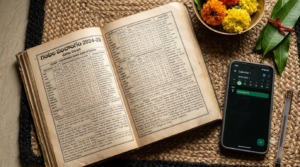
Independence notice: srivyasapooja.in is an independent devotional guide. We are not affiliated with Tirumala Tirupati Devasthanams (TTD), any peetham, or any panchangam publisher, and we do not sell, host, or issue panchangams. Every download and purchase mentioned here routes to an official or authorised source.
Telugu Panchangam PDF at a Glance
- Current Telugu year: Sri Parabhava Nama Samvatsara (2026–2027), the 40th year of the 60-year cycle.
- Started on: Ugadi, 19 March 2026.
- Free official PDFs: TTD (tirumala.org) and Sringeri Sharada Peetham release theirs online.
- Free online panchangam: Drik Panchang and Prokerala show daily tithi without any download.
- Paid gantala panchangam: Mulugu, Nemani, Butte Veerabhadra and others sell through their own stores and Amazon.
What Is a Telugu Panchangam PDF?
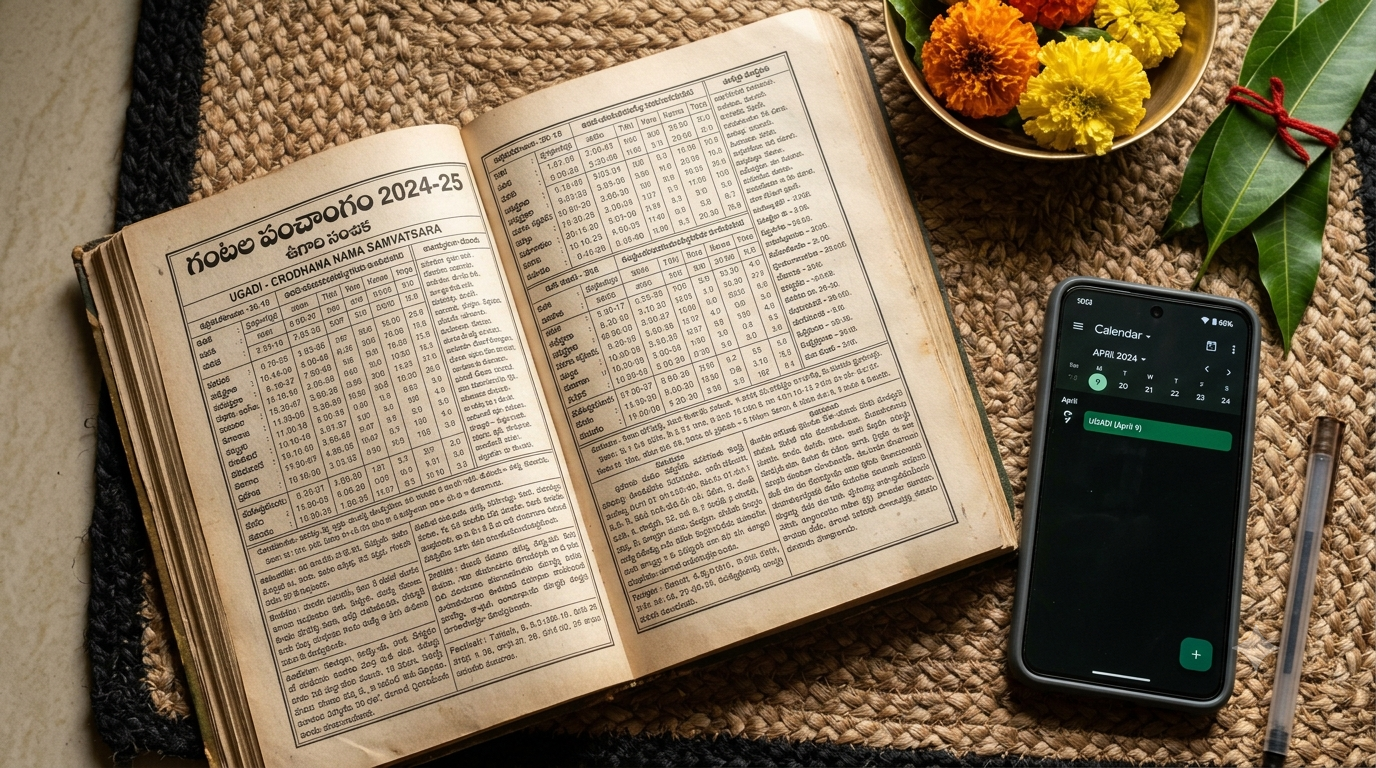
A Telugu Panchangam PDF is simply a digital copy of the Hindu almanac written for Telugu readers. The word panchangam means “five limbs” of time. Those five parts are tithi (lunar day), vara (weekday), nakshatra (star), yoga, and karana.
Together these five decide whether a moment is auspicious. Because priests and families use them to fix a muhurtham, the almanac stays central to weddings, housewarmings, and naming ceremonies. A PDF just makes that reference portable, so you can check a date without opening the printed book.
Which Telugu Year Are We In Now?
We are currently in Sri Parabhava Nama Samvatsara, which began on Ugadi, 19 March 2026, and runs until the next Ugadi in 2027. In the traditional 60-year cycle, Parabhava is the 40th year. Scholars read the name not as “defeat” but as conquering ego and moving toward humility.
Each Telugu year carries its own name, and the cycle repeats after all sixty are done. Since the year changes every Ugadi, any panchangam is tied to one specific samvatsara. That is exactly why a 2022 file is useless for planning a 2026 event.
Recent Telugu Years and Their Ugadi Dates
| Telugu Year | Samvatsara Name | Ugadi Date |
|---|---|---|
| 2021–2022 | Plava | 13 April 2021 |
| 2022–2023 | Shubhakruth | 2 April 2022 |
| 2023–2024 | Shobhakruth | 22 March 2023 |
| 2024–2025 | Krodhi | 9 April 2024 |
| 2025–2026 | Vishwavasu | 30 March 2025 |
| 2026–2027 | Parabhava (current) | 19 March 2026 |
| 2027–2028 | Plavanga | 7 April 2027 |
Dates follow the lunisolar calendar, so they shift by a few weeks each year. A day’s difference can appear between publishers because regional traditions vary. When a date really matters, cross-check it on the official portal before you commit.
Where to Download a Telugu Panchangam PDF Safely
Here is the honest part that most sites skip. Many “free” pages circulate copyrighted gantala panchangams as unauthorised PDFs, which is neither legal nor safe. Instead, split your search into three clean routes.
First, use free official PDFs from institutions that publish their own almanac. Second, read a free online panchangam when you only need today’s tithi. Third, buy the commercial gantala panchangam directly from its publisher when you want the full printed detail.
Free Telugu Panchangam PDF Sources You Can Trust
Tirumala Tirupati Devasthanams (TTD) releases its official panchangam every year, usually around Ratha Saptami and Ugadi. You can reach it through the official TTD website. Because it comes straight from the temple, it is both free and reliable.
The Sringeri Sharada Peetham also publishes its panchangam in Telugu, Kannada, and Tamil on its official site. If you follow the Smarta tradition, that edition suits you well. Our detailed look at the Sringeri Sharada Peetham panchangam covers its language editions, and both sources are legitimate, so you avoid the copyright risk entirely.
For daily needs, a free online panchangam is often enough. Sites such as Prokerala and Drik Panchang show today’s tithi, nakshatram, rahukalam, and varjyam for your city. You get the same core data without downloading anything.
Paid Gantala Panchangam Editions
The gantala panchangam is the thick, detailed almanac most Telugu families keep at home. More than fifteen editions exist, and each carries its publisher’s name. Popular ones include Mulugu (Subhatithi), Nemani, Butte Veerabhadra, Chilakamarthi, and the TTD Relangi Tangirala edition.
These are copyrighted books, so the fair way to own one is to buy it. The Mulugu official site sells the Subhatithi edition, while most others are on Amazon and in temple-town bookshops. Prices stay modest, though they change yearly, so confirm the current amount at the store.
Popular Gantala Panchangam Editions Compared
Each publisher has a loyal following, so the “best” edition depends on your family tradition. Many Tirumala devotees trust the TTD Relangi Tangirala panchangam, and our guide to the TTD Relangi Tangirala edition explains its release schedule. The Nemani Vari edition is another widely circulated choice, so you can also read our Nemani Vari panchangam guide.
| Edition | Known For | Where to Get It |
|---|---|---|
| TTD Relangi Tangirala | Temple-aligned dates | TTD stalls; tirumala.org |
| Mulugu (Subhatithi) | Clear muhurtham tables | mulugu.com; Amazon |
| Nemani Vari | Wide circulation | Bookshops; Amazon |
| Butte Veerabhadra (BVG) | Detailed daily notes | Bookshops; Amazon |
Because the content overlaps heavily, most families simply pick the author they grew up with. If you are new to it, start with the TTD or Mulugu edition. Both are easy to find and clearly laid out.
How to Read a Telugu Panchangam
A panchangam looks dense, yet a few terms unlock most of it. Start with tithi, the lunar day, because festivals and vratams follow it rather than the English date. Next comes nakshatra, the star of the day, which guides many muhurthams.
Then check the daily “bad time” windows before you plan anything important. Families avoid rahukalam and yamagandam for new beginnings, while durmuhurtham marks short inauspicious slots. Varjyam is another window people skip when fixing a start time.
Finally, look for the amritakalam or abhijit muhurtham, which tradition treats as favourable. Once you can find these rows, the rest of the page becomes far easier to follow. Practice on today’s date, and the layout quickly starts to make sense.
Telugu Panchangam PDF vs the Printed Almanac
Should you download a Telugu Panchangam PDF or buy the printed book? For quick daily checks, the PDF or an online panchangam wins on convenience. You can search a date on your phone in seconds, so you carry the whole year everywhere.
The printed gantala panchangam still holds an edge for depth. It lays out the full year, so priests and serious planners prefer it for weddings and long-range muhurtham work. Many households keep both, using the digital copy daily and the book for big decisions.
Do You Need a City-Specific Panchangam?
Timings like sunrise, rahukalam, and tithi shift with your location. A panchangam printed for Hyderabad will not match Dallas or London exactly. So if you live abroad, prefer an online panchangam that lets you set your city.
Free tools such as Prokerala and Drik Panchang adjust these timings automatically. For festival dates, though, most Telugu families worldwide still follow the Andhra Pradesh and Telangana calendar. That keeps celebrations in sync with relatives back home.
A downloaded file, by contrast, fixes one region’s timings on the page. It works well for the year’s festival list and yearly predictions. For precise daily muhurtham abroad, pair it with a city-aware online panchangam.
Panchanga Sravanam and Why the Year’s Almanac Matters
On Ugadi day, families gather for Panchanga Sravanam, the ceremonial reading of the new almanac. A priest recites the year’s Rashiphalalu, or zodiac predictions, along with forecasts for rain and harvest. Many devotees believe that listening on Ugadi sets a good tone for the whole year.
These forecasts are matters of faith and Vedic tradition, not guaranteed outcomes, so treat them as cultural guidance. Still, the reading remains a cherished ritual across Andhra Pradesh and Telangana. It is also the moment the fresh panchangam formally comes into use.
Shubhakruth 2022–2023 and Other Past-Year PDFs
If you specifically need an older almanac, that content still exists for reference. The 2022–2023 year was Sri Shubhakruth Nama Samvatsara, which began on Ugadi, 2 April 2022. It is useful now only for checking a past date, not for planning ahead.
The years since have moved through Shobhakruth (2023–2024), Krodhi (2024–2025), and Vishwavasu (2025–2026). For any of these, the same rule applies: reach for the official or authorised edition rather than a random file. Our related guides on this site cover several of these editions in detail.
How to Spot a Fake Telugu Panchangam PDF Site
Because so many people search the almanac before Ugadi, low-quality sites rush to grab that traffic. A few checks keep you safe. If a page demands an upfront “processing fee” to download a supposedly free panchangam, leave it.
Watch for sites that ask for personal details, an app install, or a payment just to open a PDF. A genuine free source, like a temple or peetham, never gates its own almanac behind data collection. When in doubt, go to the official portal you already recognise.
Insider Tips Most Guides Miss
- Match the publisher to your tradition: Smarta families often prefer Sringeri; many others follow the TTD or Mulugu editions.
- Check the samvatsara name, not just the year: the name confirms you have the right edition at a glance.
- Bookmark a free online panchangam for daily tithi, and keep the printed gantala panchangam for detailed muhurtham work.
- Buy early: popular editions sell out in bookshops soon after Ugadi.
Before You Download
The smart approach is simple. Use a free official Telugu Panchangam PDF from TTD or Sringeri for trusted year data, lean on a free online panchangam for daily checks, and buy the gantala edition when you need depth. Above all, avoid pirated files and any site that charges you to open a “free” download. That way you stay legal, accurate, and ready for the current Parabhava year.
Frequently Asked Questions
What is the current Telugu Panchangam year?
The current Telugu year is Sri Parabhava Nama Samvatsara (2026–2027). It began on Ugadi, 19 March 2026, and it is the 40th year in the traditional 60-year cycle. The next year, Plavanga, starts at Ugadi 2027.
Where can I get a free Telugu Panchangam PDF?
You can get a free Telugu Panchangam PDF from the official TTD website and from the Sringeri Sharada Peetham site. Both publish their own almanac online. For daily tithi alone, free sites such as Prokerala and Drik Panchang need no download at all.
Is downloading a gantala panchangam PDF for free legal?
Commercial gantala panchangams like Mulugu, Nemani, and Butte Veerabhadra are copyrighted books. Sharing them as free PDFs is unauthorised. The fair route is to buy the edition from its publisher, from Amazon, or from a temple-town bookshop.
What is the difference between a panchangam and a gantala panchangam?
A panchangam is any Hindu almanac listing tithi, nakshatra, and muhurtham. A gantala panchangam is a specific detailed printed edition popular in the Telugu states. It packs daily timings, festival dates, and yearly predictions into one book.
When is the new Telugu Panchangam released each year?
Most publishers release the new panchangam just before Ugadi, when the Telugu year changes. TTD usually issues its edition around Ratha Saptami and Ugadi. So the fresh almanac for a year appears in the weeks leading up to that Ugadi.
Was 2022–2023 the Shubhakruth year?
Yes. The 2022–2023 Telugu year was Sri Shubhakruth Nama Samvatsara, and it began on Ugadi, 2 April 2022. That edition is now useful only for looking up past dates. For current planning, use the 2026–2027 Parabhava panchangam.
Can I rely on panchangam predictions for major decisions?
Panchangam forecasts and muhurthams are part of Vedic tradition and personal faith, not guaranteed results. Many families still consult them for timing weddings and ceremonies. For legal, financial, or medical decisions, always seek a qualified professional as well.