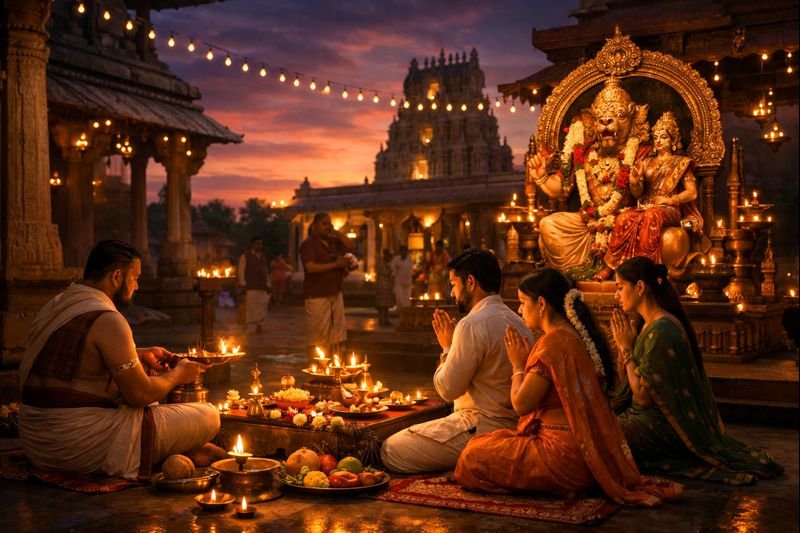
Narasimha Jayanti 2022: Essential Date, Significance & Rituals
Narasimha Jayanti 2022 was a sacred Hindu festival celebrated to honor the divine appearance of Lord Narasimha, the fourth incarnation of Lord Vishnu. This auspicious day fell on Saturday, 14 May 2022, aligning with the Vaishakha Shukla Chaturdashi (14th lunar day of the bright fortnight) of the Hindu calendar.
Understanding Narasimha Jayanti
Narasimha Jayanti is observed annually on the Chaturdashi Tithi in the month of Vaishakha, which usually occurs in April–May according to the Gregorian calendar. The festival celebrates the moment Lord Vishnu assumed the fierce yet protective form of Narasimha — half-man, half-lion — to save his devotee Prahlada and destroy the demon king Hiranyakashipu.
This incarnation symbolizes the ultimate victory of righteousness (dharma) over evil and the divine protection offered to true devotees. Narasimha Jayanti carries deep spiritual meaning for Vaishnavas and devotees across India and around the world.
Date And Timing Details For Narasimha Jayanti 2022
In 2022, Narasimha Jayanti was observed on:
| Festival | Date (2022) | Day |
|---|---|---|
| Narasimha Jayanti | 14 May 2022 | Saturday |
As per the Panchang (Hindu calendar), the Chaturdashi Tithi began in the afternoon and extended into the next day. The auspicious evening (Sayana Kala) puja time was approximately 4:22 PM to 7:04 PM.
On the other hand, devotees observed fasting, performed special pujas, and offered prayers within this sacred time window to receive the most spiritual benefit. Many temples also hosted special events and rituals during this period.
Legend Of Lord Narasimha
According to Hindu mythology, Hiranyakashipu was a powerful demon king who wished to be worshipped as God. He received a boon that made him virtually invincible: he could not be killed by man or beast, inside or outside, during day or night, or by any weapon. His son Prahlada, however, was a devoted follower of Lord Vishnu.
Therefore, unable to tolerate his son’s devotion to Vishnu, Hiranyakashipu challenged Prahlada’s faith. In response, Lord Vishnu emerged as Narasimha — half-man, half-lion — at twilight (neither day nor night), on the threshold of a courtyard (neither inside nor outside), placed the demon on his lap (neither earth nor air), and destroyed him with his claws (not a weapon).
Rituals And Practices For Narasimha Jayanti
1. Fasting (Vrat)
Devotees traditionally observe a strict fast on Narasimha Jayanti. Some choose a full fast without food and water, while others may consume fruits and milk. The fast is usually broken after the Chaturdashi Tithi ends the following day.
2. Morning Preparations
Devotees wake up early, take a purifying bath before sunrise, and dress in clean, fresh clothes. This ceremonial purification helps devotees focus on devotion and prayer.
3. Puja And Offerings
Puja is performed before an idol or image of Lord Narasimha. Offerings typically include fresh flowers, fruits, sweets, incense, coconut, kumkum (vermillion), and kesar (saffron). Devotees chant Narasimha mantras, including the Narasimha Kavach and hymns from the Vishnu Sahasranama.
4. Reading Sacred Texts
Devotional readings from the Bhagavata Purana, including the story of Prahlada and Narasimha, deepen devotees’ spiritual connection. This practice fosters inner strength and reinforces the themes of devotion and justice.
5. Charity And Acts Of Service
Charitable deeds such as donating food, clothes, and essential items to the needy are considered auspicious on Narasimha Jayanti. Such acts of kindness embody the spirit of dharma, which the festival celebrates.
Personal Observations And Insights
When I visited major Narasimha temples — including the TTD Official Website listed Sri Varaha Narasimha Temple — the devotion during Jayanti was palpable. Devotees gather hours before the puja to offer prayers and witness the evening rituals.
Also, what surprised me was the diversity of celebrations across India. In South India, especially Andhra Pradesh, Narasimha Jayanti draws large crowds at temples like Ahobilam and Simhachalam, where the history of Narasimha’s legend is woven into local traditions.
I personally recommend that first-time observers attend the twilight puja (Sayana Kala) — believed to be the exact time Lord Narasimha’s divine form manifested — to fully feel the spiritual energy of the day.
Tips And Best Practices For Observance
- Plan Your Fast: Decide whether to observe a complete or partial fast and prepare accordingly the day before. Ensure you consult a reliable Panchang for timing based on your location.
- Respect Ritual Times: Perform key rituals during Sayana Kala for maximum auspiciousness.
- Prepare Puja Items Ahead: Arrange flowers, fruits, and offerings in advance to avoid last-minute rush.
- Involve Family: Invite family members to participate in readings, chants, and prayers — this fosters shared devotion and spiritual growth.
- Avoid Common Mistakes: Do not break your fast before the Tithi ends. Also, avoid distractions like phone usage during puja to maintain focus.
Common Mistakes To Avoid
- Incorrect Timing: Many people follow generalized timings without checking their own city’s Panchang, leading to missed auspicious moments.
- Skipping Preparations: Rushing into rituals without proper cleansing, prayer space setup, and offerings can lessen the spiritual experience.
- Breaking Fast Too Early: Devotees sometimes break their fast before Tithi completion; always confirm the Tithi end time for your region.
Frequently Asked Questions (FAQ)
When Is Narasimha Jayanti 2022 Celebrated?
Narasimha Jayanti 2022 was celebrated on 14 May 2022 (Saturday), corresponding to Vaishakha Shukla Chaturdashi of the Hindu calendar.
Why Is Narasimha Jayanti Important?
This festival honors Lord Vishnu’s manifestation as Narasimha to protect his devotee Prahlada and defeat the demon king Hiranyakashipu, symbolizing the triumph of good over evil.
How Is Narasimha Jayanti Observed?
Devotees observe fasting, perform puja with special offerings, chant mantras, read sacred stories, and engage in acts of charity.
What Is The Best Time For Puja?
The Sayana Kala (evening) puja time — typically a few hours before sunset — is considered most auspicious, based on Panchang timings for your area.
Can I Celebrate At Home?
Yes. You can create a puja altar at home, follow the ritual steps, chant mantras, and involve your family in readings and prayers.


+ There are no comments
Add yours