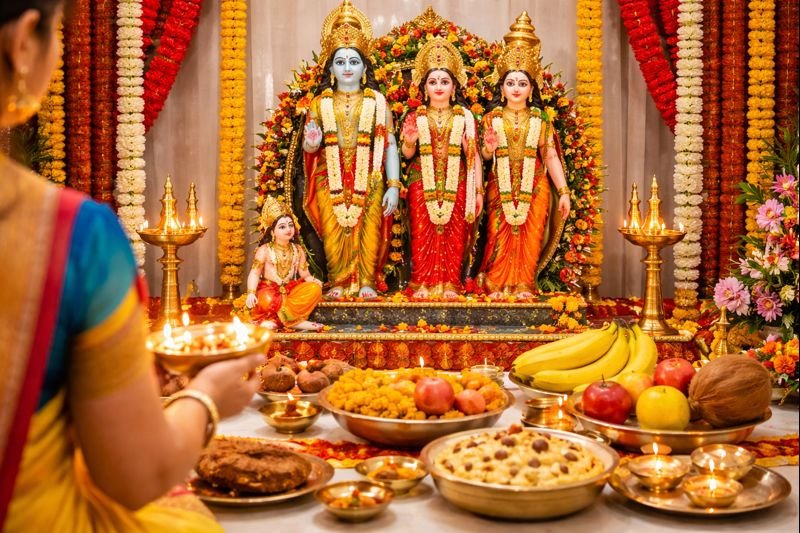
Sri Ramanavami Pooja Vidhanam Guide For Devotees
Sri Ramanavami Pooja Vidhanam is a traditional Hindu ritual performed to celebrate the birth of Lord Sri Rama, observed on the Chaitra Shukla Navami tithi (the ninth day of the waxing moon in the Hindu month of Chaitra). This pooja vidhanam covers the essential steps, mantras, materials, and practices to perform the ceremony with devotion. Devotees undertake this sacred ritual to seek the blessings of Sri Rama for spiritual upliftment, peace, prosperity, and success in life. Sri Rama Navami is one of the most revered festivals in the Vaishnavite calendar, and this detailed pooja guide helps individuals perform it at home or in a temple context.
What Is Sri Ramanavami Pooja Vidhanam
Sri Ramanavami Pooja Vidhanam refers to the step-by-step ritual process described in scriptures and traditions that honors Lord Rama on his birthday. The day marks the birth of Lord Rama, the seventh avatar of Lord Vishnu, in the holy city of Ayodhya. Celebrated during the spring season (Chaitra), this festival is deeply rooted in devotion, meditation, and recitation of Sri Rama’s divine names and glory.
The pooja vidhanam includes purification, invocation (avahanam), offerings, recitation of sacred mantras such as the Shri Rama Ashtottara Shatanama (108 names of Sri Rama), and concludes with aarti and prasad distribution.
Significance Of Sri Ramanavami
Sri Ramanavami commemorates the divine birth of Lord Sri Rama, believed to have appeared to destroy evil and uphold dharma (righteousness). Devotees observe fasting, kirtan, and scriptural readings, especially passages from the Ramayana – Wikipedia, describing Rama’s life, virtues, and ideal conduct. The day also marks the victory of good over evil, reflected in Rama’s life story.
Temples worldwide celebrate this festival with grand processions, recitations of Rama’s names, and enactments of chapters from the Ramayana. What surprised me most when I visited a local Rama temple during Navami was the sense of community — families gathered hours before dawn to chant, meditate and share prasadam together, reflecting the unity the festival inspires.
Preparation Before Starting The Pooja
A successful Sri Ramanavami Pooja Vidhanam begins with preparation. Cleanse your body and wear fresh, preferably traditional attire (white or yellow). Clean the pooja space with water and decorate it with rangoli, flowers, and incense. Draw a small swastika using turmeric and vermilion to sanctify the pooja setup.
Materials Required
| Material | Purpose |
|---|---|
| Idol or picture of Lord Rama | Main deity for worship |
| Tulasi/Mango leaves | Symbol of purity |
| Flowers, especially Tulasi | Offerings during pooja |
| Incense sticks and lamp | For aarti and sanctification |
| Naivedyam (fruits/sweets) | Offerings to the deity |
| Panchamrita (milk, curd, honey etc.) | Ritual bathing and offerings |
| Mantra book or list | Recitation of Rama Ashtottara Shatanama |
Setting up all materials beforehand allows the pooja process to flow smoothly without interruption. I personally recommend arranging everything neatly the night before, especially if performing the pooja during early morning auspicious hours.
Step-By-Step Sri Ramanavami Pooja Vidhanam
1. Sankalpa (Resolve)
Sankalpa is the devotee’s vow to undertake the pooja. Sit facing east or north and state your intention to perform the Sri Ramanavami Pooja with a pure heart. Mention your name and family lineage mentally or aloud. This establishes spiritual focus before beginning the ritual.
2. Dhyanam (Meditation)
Meditate on Lord Rama’s form and virtues. Traditional texts provide a specific dhyana mantra saluting Rama’s appearance and attributes. Recite this while visualizing Lord Rama at the center of your pooja space. This step aligns the mind with divine consciousness and prepares you for invocation.
3. Avahanam (Invocation)
Invoke Lord Rama by chanting specific mantras. Invite the deity into the idol or photo before you. A popular invocation mantra is “Sri Ramaagachha Bhagavan – Raghaveera Nrupottama…”, welcoming Rama to the sacred space. Devotees often include the entire Ram Navami mantra sequence.
4. Asana & Padya
Offer a seat (asana) and wash Lord Rama’s feet (padya) with clean water. This symbolizes respect and hospitality toward the divine guest.
5. Arghya & Achamaniyam
Offer water to the deity (arghya) followed by achamaniyam — symbolic sipping of water as part of purification before recitation and offerings begin.
6. Panchamrita Snanam (Ritual Bath)
Pour panchamrita (a mixture of milk, curd, honey, sugar, and ghee) over the deity to signify cleansing and sanctification. This traditional step is believed to bring auspiciousness and divine grace.
7. Alankaram (Decoration)
After bathing, dress the idol or image with clean clothes and adorn with flowers and sacred threads. Tulasi garlands are especially auspicious since Tulasi is dear to Lord Rama.
8. Naivedyam (Food Offering)
Prepare traditional dishes like kheer, fruits, sweets, and coconut to offer Lord Rama. Place them in front of the deity and chant Rama’s names or the Rama Ashtottara Shatanama list (108 names).
9. Aarti
Perform aarti using a lit lamp. Circle the lamp clockwise before the deity, accompanied by ringing bells and chanting “Jai Shri Ram.” The aarti signifies the removal of darkness and ignorance. I noticed during one Navami pooja I attended that synchronizing the ring of bells with group chanting elevated the spiritual atmosphere significantly.
10. Pradakshina & Prayers
Walk clockwise (pradakshina) around the deity with folded hands, silently praying for peace and blessings. Complete a minimum of three circumambulations for auspicious results.
11. Mantra Recitation
Recite the Rama Ashtottara Shatanama (108 names of Lord Rama) or other Rama stotras. This acts as the core spiritual element of the pooja.
12. Prasad Distribution
After completing the ritual, distribute the offered food (prasad) to family members and guests. Consuming prasad is believed to invite divine blessings into your home.
Tips And Best Practices
- Perform the pooja on an auspicious muhurta (timing) as per local panchang (Hindu calendar).
- Wake up before sunrise and bathe to purify body and mind.
- Use fresh flowers and pure ghee for diya lighting.
- Ensure minimal distractions during chanting to maintain focus.
- Keep pooja area clean and clutter-free.
Common Mistakes To Avoid
- Starting the pooja without proper Sankalpa or mental focus.
- Skipping the Dhyanam (meditation) step before invocation.
- Using stale flowers or food items.
- Rushing through mantras instead of proper pronunciation.
- Neglecting the final Prasad distribution to family and guests.
Frequently Asked Questions
When Should Sri Ramanavami Pooja Be Performed?
Rama Navami is observed on the Chaitra Shukla Navami tithi. The auspicious timing varies each year and is listed in Hindu calendars (panchang); usually the pooja is performed during the morning hours.
Can I Perform Sri Ramanavami Pooja At Home?
Yes. You can perform this pooja at home following the steps above. Having a clean sacred space and devotion is more important than elaborate settings.
Is There A Specific Mantra I Must Chant?
The recitation of Rama’s names, especially the Rama Ashtottara Shatanama, is considered powerful and beneficial. You may also chant Rama Raksha Stotra or other Rama slokas during the pooja.
What If I Miss The Exact Auspicious Time?
If you miss the muhurta, perform the pooja as soon as possible with devotion and correct steps. Lord Rama’s grace is believed to be accessible beyond strict timings for sincere worshippers.
Conclusion
Sri Ramanavami Pooja Vidhanam is a deeply sacred and spiritually enriching ritual that allows devotees to honor Lord Rama’s divine incarnation. With proper preparation, heartfelt chanting, and adherence to the steps outlined above, you can perform this pooja at home or in temples with authenticity and devotion. May Sri Rama bestow peace, virtue, joy, and success upon you and your family.


+ There are no comments
Add yours