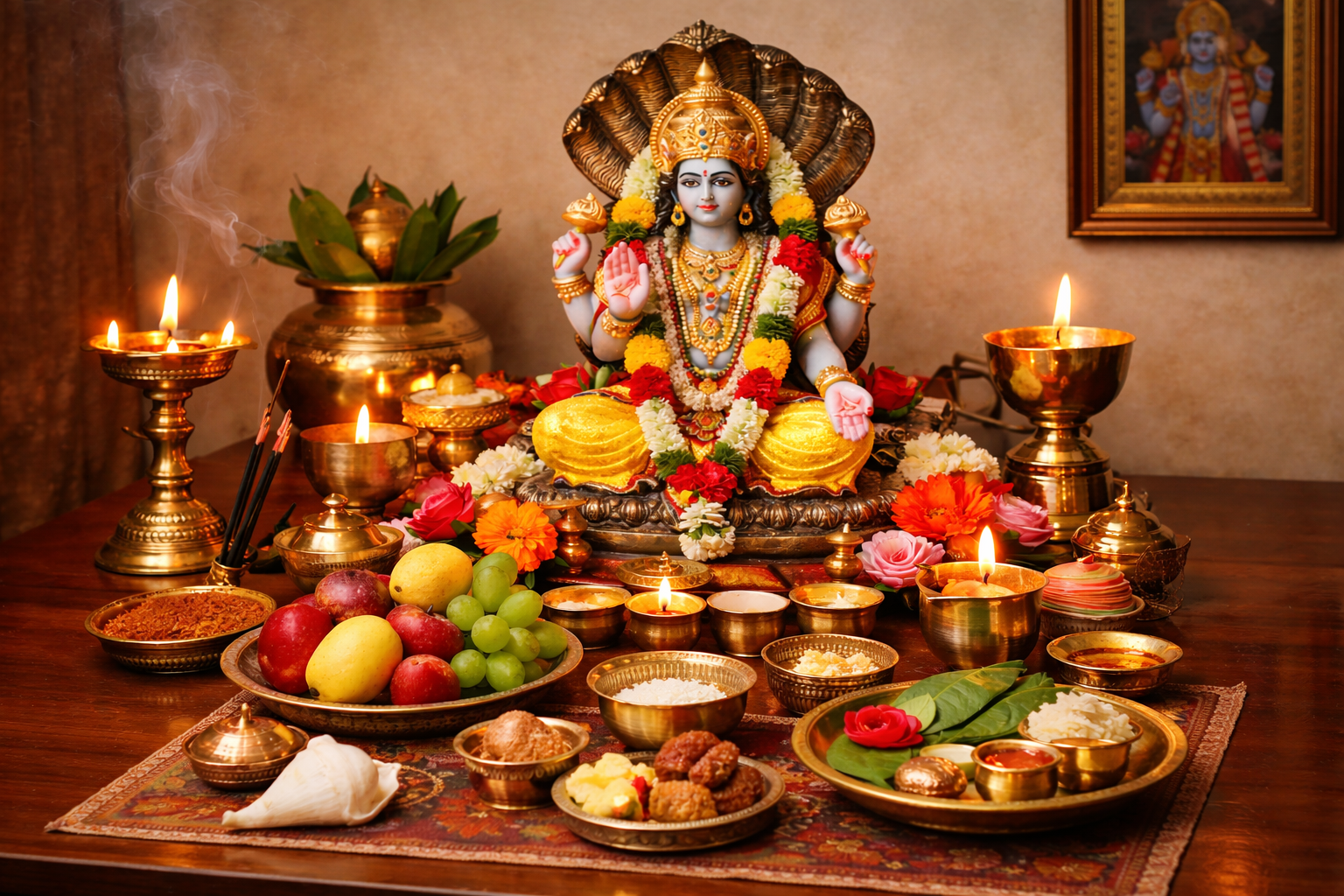
Vishnu Shodashopachara Pooja Vidhanam Step-by-Step Guide
Vishnu Shodashopachara Pooja Vidhanam refers to the traditional 16-step ritual worship of Lord Vishnu, performed with devotion and precise steps to invite divine grace and blessings. This guide explains each phase of the ritual, preparations, tips, common mistakes, and frequently asked questions for those who want to practice this sacred worship at home or in the temple.
What Is Shodashopachara Pooja?
Shodashopachara means “sixteen services” (षोडश = sixteen; उपचार = services) offered to the deity as part of a complete worship ritual. This tradition is rooted in ancient Hindu practices and is mentioned in scriptures and temple traditions throughout India. It aims to honor the deity with food, rituals, meditation, and offerings that appeal to all senses.
Preparations For Vishnu Shodashopachara Pooja
Before beginning the main worship, certain preparations ensure purity and focus. These include:
- Clean the puja place and deity idol or image.
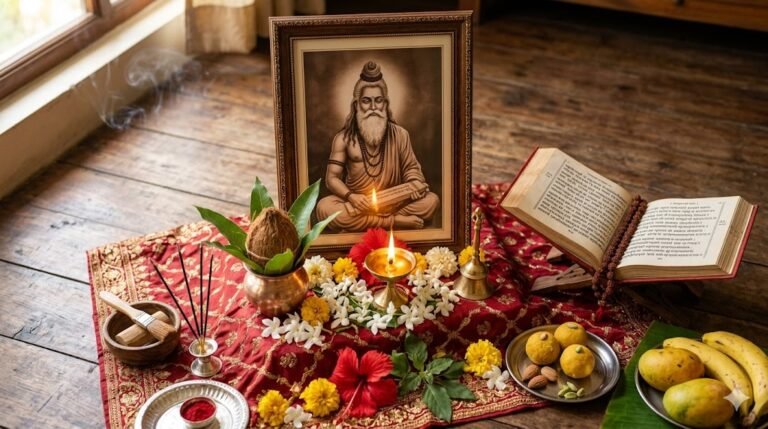
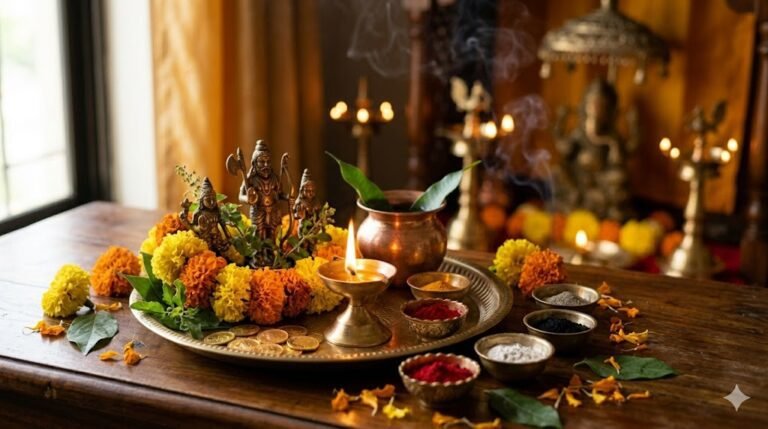
- Arrange worship items: flowers, incense, lamps, cloths, water, Panchamrita (milk, curd, honey, sugar, ghee), fruits, and food offerings.
- Perform Ganapati puja or Sankalp (resolve) to remove obstacles and seek divine support.
- Take bath and wear clean clothes; sit facing the deity with devotion.
16 Steps Of Vishnu Shodashopachara Pooja Vidhanam
The core of the ritual consists of 16 upacharas, offered in a specific sequence. Each step welcomes Lord Vishnu and offers respect in a unique way.
1. Avahana (Invocation)
Invoke Lord Vishnu into the idol or image. Mentally quiet the mind and chant a mantra such as “Om Shri Vishnave Namah” to invite the presence of the divine.
2. Asana (Offering Seat)
Offer a seat to Lord Vishnu symbolically so that He may feel welcomed and comfortable at the worship place.
3. Padyam (Water For Feet)
Offer water to wash the deity’s feet, acknowledging humility and service. Use a small vessel with clean water.
4. Arghyam (Water With Offerings)
Offer water with rice or flowers to the deity as a respectful offering using your right hand.
5. Achamaniyam (Sipping Water For Purification)
Offer sip of water to purify the lips and mouth of the deity — symbolic of cleansing before deeper worship.
6. Snanam (Bath)
Perform a symbolic bath with Panchamrita (milk, curd, honey, ghee, sugar) and water. This represents purification and sanctification.
7. Vastra (Clothing)
Offer new or clean cloth to the deity as a mark of respect. This step symbolizes covering and honoring the divine form.
8. Yajnopavita (Sacred Thread)
Offer the sacred thread to affirm eternal spiritual discipline.
9. Gandham (Sandalwood/Fragrance)
Apply fragrant powders like sandalwood paste to the deity, symbolizing purity and sweet presence.
10. Pushpam (Flowers)
Offer flowers while chanting the deity’s names. Flowers symbolize beauty, devotion, and surrender.
11. Dhoopam (Incense)
Offer incense sticks or dhoop to please the deity with fragrance that purifies the atmosphere.
12. Deepam (Light)
Light a lamp (deepam) and rotate it in front of the deity to signify the removal of darkness and invitation for divine light.
13. Naivedyam (Food Offering)
Offer cooked food, fruits, sweets, or prasadam to Lord Vishnu. This step shares nourishment and gratitude.
14. Tambulam (Betel Leaves/Areca)
Offer betel leaves and nuts as part of concluding offerings, symbolizing auspiciousness and completion.
15. Namaskaram (Prostration)
Bow down or prostrate before the deity, recognizing devotion and surrender.
16. Pradakshina (Circumambulation)
Walk clockwise around the deity or shrine to show reverence and gratitude. This completes the ritual and signifies respect for deity’s presence.
Personal Experience And Insight
When I visited the TTD Official Website temple rituals page and observed the detailed priestly worship, I noticed how each of the 16 steps aligns with inner spiritual focus. What surprised me was how each upachara activates a different sense — sight, sound, smell, touch, and taste — creating a temple-like experience even at home.
I personally recommend practicing the steps in a calm, uncluttered space with clear intention. Beyond reciting mantras, internal visualization of the deity enhances devotion and connection.
Tips And Best Practices
- Prepare all items before starting to avoid interruptions during worship.
- Maintain silence and focus; avoid distractions like phones or unrelated conversations.
- Chant mantras with correct pronunciation for better resonance.
- If performing with family, divide roles (one person for mantra chanting and another for offerings) to maintain rhythm.
- End with prayers for peace, well-being, and spiritual growth.
Common Mistakes To Avoid
- Starting without cleansing the puja area or body.
- Skipping Ganapati puja or Sankalp — this can cause lack of focus.
- Using damaged or stale offerings like wilted flowers or old food.
- Rushing through mantras — slow, deliberate chanting brings clarity.
- Ignoring the proper sequence — the order of upacharas matters in tradition.
FAQs About Vishnu Shodashopachara Pooja Vidhanam
What Does Shodashopachara Mean?
Shodashopachara literally means offering sixteen services in a ritualistic worship. Each service has its own spiritual symbolism and place in the ritual.
Can I Perform This At Home?
Yes — You can perform Shodashopachara Pooja at home with an idol or picture of Lord Vishnu and all necessary items arranged in advance.
Do I Need A Priest?
A priest is helpful for accurate mantra chanting and deep understanding of traditional sequences, but a devotee can perform the ritual themselves with study and devotion.
When Is The Best Time To Perform?
Early morning after sunrise is considered auspicious for performing Vishnu Pooja as it aligns with calm surroundings and positive energy.
Is There A Mantra Sequence To Follow?
Yes — While chanting, devotees usually follow specific Vishnu mantras like “Om Shri Vishnave Namah” or Dhyana mantras for meditation, followed by offerings with corresponding mantras. Many sources provide full mantra text in Sanskrit.
Observing the full Vishnu Shodashopachara Pooja Vidhanam with devotion and proper sequence can enrich spiritual life and bring inner peace, harmony, and blessings from Lord Vishnu.
+ There are no comments
Add yours