Ahobilam temple steps do not have one single total. Ahobilam has shrines across Lower Ahobilam, Upper Ahobilam and forest trails. So the commonly repeated figure of 450–500 steps is misleading for the whole pilgrimage.
Sri Ahobila Mutt says vehicles can reach the main Upper Ahobilam area. From there, the shrine needs a climb of about 50 steps.
Sri Vyasa Pooja is an independent pilgrim guide. We are not affiliated with Sri Ahobila Mutt, the temple administration or the Andhra Pradesh government. We do not take bookings, payments or donations.
Ahobilam Temple Steps: The Short Answer
There is no official single number for all the steps at Ahobilam. The climb changes by shrine. So Upper Ahobilam needs about 50 steps from the road-access point.
Malola involves about 100 steps from the Kroda side. Meanwhile, the Pavana walking route begins with roughly 250 steep steps.
Jwala Narasimha is harder. However, Sri Ahobila Mutt describes that route by terrain and walking time, not a fixed step count. Ugra Sthambham is harder again. So the useful question is not “How many steps are there?” but “Which shrine am I trying to reach?”
| Route or shrine | Verified access detail | Effort level |
|---|---|---|
| Upper Ahobila Narasimha | Road access, then about 50 steps | Moderate |
| Malola Narasimha | About 100 steps from the Kroda side | Moderate |
| Pavana Narasimha on foot | About 250 steep steps, then roughly 4 km walking | Hard |
| Jwala Narasimha | Rocky riverbed and narrow hill path; no single official step total | Hard |
| Ugra Sthambham | Steep extension beyond the Jwala route | Very hard |
These route details come from the Sri Ahobila Mutt visitor guide. Trail conditions can change after rain, repairs or forest restrictions. So treat every walking time as planning guidance, not a guarantee.
Why the 450–500 Step Figure Is Misleading
The old draft said pilgrims climb around 450–500 steps to reach Upper Ahobilam. That is the main factual problem in the page. The Sri Ahobila Mutt guide says vehicles can reach Upper Ahobilam. The main shrine is about 50 steps above the road-access point.
Some travel accounts count one stair section and present that number as the total for “Ahobilam Temple.” However, Ahobilam is not one staircase. The Nava Narasimha shrines sit on different roads, footpaths, forest tracks and steep hill sections.
This distinction matters for elderly pilgrims and families. A visit to Lower Ahobilam and the main Upper shrine needs far less effort. Continuing to Jwala or Ugra Sthambham is much harder.
Ahobilam Temple Steps by Shrine and Route
The safest way to plan Ahobilam temple steps is shrine by shrine. Sri Ahobila Mutt describes some routes with step counts and others with distance or walking time. That is more useful than forcing every trail into one number.
Ahobilam Temple Steps to Upper Ahobilam
Upper Ahobilam itself is not a 450–500 step climb from Lower Ahobilam. A road connects Lower and Upper Ahobilam. Sri Ahobila Mutt describes the final approach to Ahobila Narasimha as about 50 steps. This makes the main Upper shrine more accessible than the deeper forest shrines.
The road journey between the two settlements is about 8 km according to Sri Ahobila Mutt. If you want Lower Ahobilam, Karanja and the main Upper shrine, the day is easier. The Jwala circuit demands much more walking.
Ahobilam Temple Steps to Kroda and Malola Narasimha
Kroda, also called Varaha Narasimha, lies on the walking route from the main Upper Ahobilam shrine toward Jwala. Sri Ahobila Mutt places Kroda about 1 km from the main Upper shrine. From the Kroda side, Malola is reached by a side climb of about 100 steps.
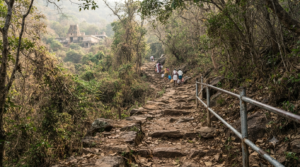
The Malola section is still a hill walk, so footwear matters. For Ahobilam temple steps, surface condition matters as much as the count. Stone can become slick after rain.
Ahobilam Temple Steps to Jwala Narasimha
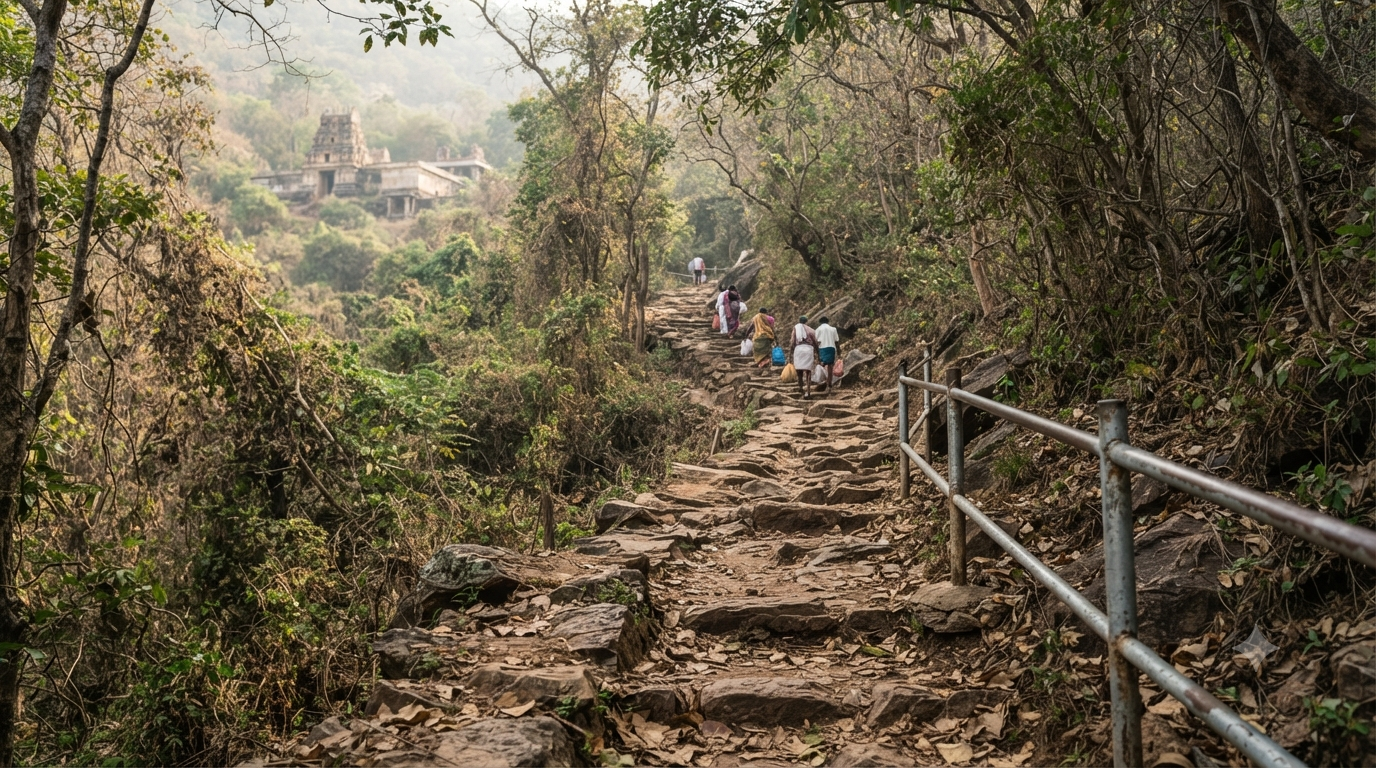
There is no reliable official fixed total for the Jwala climb. Sri Ahobila Mutt describes a climb through rocks on a riverbed. Then a narrow hill path continues for about an hour. The Mutt also places Jwala several kilometres from the main Upper Ahobilam temple, so the route is more than a staircase.
An Andhra Pradesh Tourism ropeway proposal also calls the final Jwala approach steep and difficult. It describes roughly 500 metres of walking from the bridge. Because the route mixes rocks, trail and constructed steps, one staircase number can create the wrong expectation.
Ahobilam Temple Steps to Pavana Narasimha
Pavana has one of the clearest verified figures in the official route description. Sri Ahobila Mutt says the walking route begins with about 250 very steep steps. It then continues for around 4 km over comparatively level ground. That makes the route much more demanding than the main Upper shrine.
The Mutt also notes a rough vehicle route to Pavana, although conditions can change. Road and local vehicle availability can change, however, so never assume a jeep option will be operating when you arrive. Confirm current access at Ahobilam before choosing the route.
What About Ugra Sthambham?
Ugra Sthambham is not a normal temple stair climb. It is a strenuous hill extension beyond the Jwala side. Sri Ahobila Mutt describes it as a hard climb that demands preparation. The Mutt recommends using a guide because navigation and terrain become more demanding.
Ahobilam temple steps are a poor measure for Ugra Sthambham. Plan it by fitness, daylight, weather and trail conditions. If the rocks are wet or visibility is poor, turning back is a sensible decision rather than a failed pilgrimage.
Which Ahobilam Shrines Need Little Trekking?
Several shrines are much easier to reach than Jwala, Pavana or Ugra Sthambham. Karanja Narasimha sits beside the road between Lower and Upper Ahobilam. Yogananda and Chatravata are near Lower Ahobilam and are generally approached over easier ground.
Bhargava Narasimha is also near the lower area, although local road conditions can be rough. For the spiritual meaning and location of all nine shrines, use our Nava Narasimha temples Ahobilam guide.
A person with limited mobility can still have a meaningful Ahobilam visit. There is no single compulsory climbing standard for the whole pilgrimage.
Planning Ahobilam Temple Steps Safely
The main safety issue with Ahobilam temple steps is not the number alone. Uneven rock, heat, rain, stream crossings and long walking sections make the upper routes tiring. Start early, carry drinking water and use footwear with good grip.
- Choose the shrine route before you start, because each one demands a different level of fitness.
- Avoid rushing the Jwala or Ugra Sthambham trail late in the day.
- During or after rain, allow extra time because rock and stone steps can become slippery.
- Carry essential medicines and a small amount of food if you are taking a long forest route.
- Do not rely on mobile signal throughout the upper forest sections.
- Follow on-site forest and temple instructions even if an older online guide says otherwise.
People with heart, breathing, balance or significant knee and joint problems should judge the harder routes carefully. Pregnant pilgrims and anyone recovering from illness should also avoid strenuous climbs unless a doctor says the activity is suitable.
How Long Should You Allow for the Climb?
The number of Ahobilam temple steps does not predict the full travel time. Darshan queues, forest terrain, rest stops and the distance between shrines matter just as much. The official Mutt guide says a Jwala trip covering Kroda and Malola can take around three hours for the return circuit.
A Pavana walking trip can also take around three hours according to the Mutt, so start early. Ugra Sthambham adds another demanding climb beyond the Jwala side. For a first visit, a two-day plan is more comfortable than trying to race through every shrine.
Our Ahobilam travel guide gives a practical two-day route. Also check the Nava Narasimha darshan timings guide before entering the forest routes.
How to Reach Ahobilam Before Starting the Trek
Planning Ahobilam temple steps starts with reaching the right base. Ahobilam lies in Allagadda mandal of Nandyal district, Andhra Pradesh. The Nandyal District administration places it about 68 km from Nandyal and about 28 km from Allagadda.
Andhra Pradesh State Road Transport Corporation information lists bus services from Allagadda toward Ahobilam. Schedules change, so check the current service before travel rather than relying on an old timetable. If you come by car, separate the road-access shrines from the true trekking routes in your plan.
For flights, check current services to airports in the wider region before fixing an itinerary. Flight schedules change often. So an evergreen guide should not name one airport “best” without checking live connections for your date.
Do You Need a Guide for the Forest Routes?
You do not need a private guide for every Ahobilam shrine. However, Sri Ahobila Mutt recommends a guide for Ugra Sthambham. It also says the Jwala path requires careful attention. That advice matters more than an unofficial “easy” label.
Use recognised local arrangements on arrival and avoid private phone numbers copied from old blogs. Sri Vyasa Pooja does not arrange guides, jeeps, darshan or accommodation. For current route information, use the Sri Ahobila Mutt page and on-site temple or forest instructions.
Are There Entry Tickets for Climbing the Steps?
The old draft described a ₹50 darshan ticket as though every pilgrim must buy it. That claim was not supported by the primary route sources reviewed for this refresh, so it has been removed. Do not confuse changing special-darshan or seva charges with a universal fee for walking the temple routes.
If you want a paid seva or special darshan, check the official Devasthanam channel before travel. Fees and availability can change. Meanwhile, the physical climb still depends on your chosen shrine.
Best Time for the Ahobilam Climb
Cooler months are generally easier for the upper trails because heat adds strain to steep walking. Monsoon and post-rain days can make stone, mud and rock surfaces slippery, even when the forest looks at its best.
Start hill routes in daylight and avoid building a plan around the last possible darshan time. If rain, forest restrictions or poor trail conditions affect access, change the route rather than forcing the original schedule.
Before You Go
The key correction is simple: Ahobilam temple steps are not one 450–500-step staircase. The main Upper Ahobilam shrine is road-accessible with about 50 final steps. Other shrines involve rocky tracks and longer forest walks.
Choose your shrines first, then judge the physical demand. That approach gives families, elderly devotees and trekkers a much more realistic plan than any single step count.
FAQ About Ahobilam Temple Steps
How many steps are there in Ahobilam Temple?
There is no single official total for Ahobilam because the shrines use different routes. The main Upper shrine needs about 50 steps from road access. Malola has about 100 steps from Kroda, while Pavana begins with about 250 steep steps.
Is Upper Ahobilam a 500-step climb?
No. Sri Ahobila Mutt says Upper Ahobilam can be reached by road, followed by about 50 steps. The 450–500 figure online likely reflects another section or a personal route count. It does not match the main Upper Ahobilam access.
How many steps are there to Malola Narasimha?
Sri Ahobila Mutt describes Malola as about 100 steps to the side from the Kroda route. The approach still includes hill walking, so the physical effort is greater than the step count alone suggests.
How many steps are there to Jwala Narasimha?
No authoritative source reviewed here gives one fixed Jwala step total. Sri Ahobila Mutt describes a rocky riverbed and narrow uphill path. The climb takes about an hour from the Upper Ahobilam side. Treat unofficial totals as estimates.
Can elderly pilgrims visit Upper Ahobilam?
Many elderly pilgrims may find the main Upper shrine manageable. Road access reduces the final climb to about 50 steps. Jwala, Pavana and Ugra Sthambham are much harder. Individual health and mobility matter more than age alone.
Can children complete the Ahobilam trek?
Children may manage the easier shrines with close supervision, but difficult forest routes need more care. Wet rocks and long climbs can be tiring. So families should choose routes based on the child’s fitness and current trail conditions.
Can all nine Nava Narasimha temples be visited in one day?
Some fit pilgrims attempt all nine in one day. However, that plan leaves little margin for queues, weather or rest. A two-day plan is usually more comfortable. This is especially true when Jwala and other forest shrines are included.
Are jeep or doli services guaranteed?
No. Local transport or assisted-carry options can depend on route conditions, demand and current local arrangements. Do not build the whole pilgrimage around an unconfirmed service. Verify availability after arrival through recognised on-site sources.