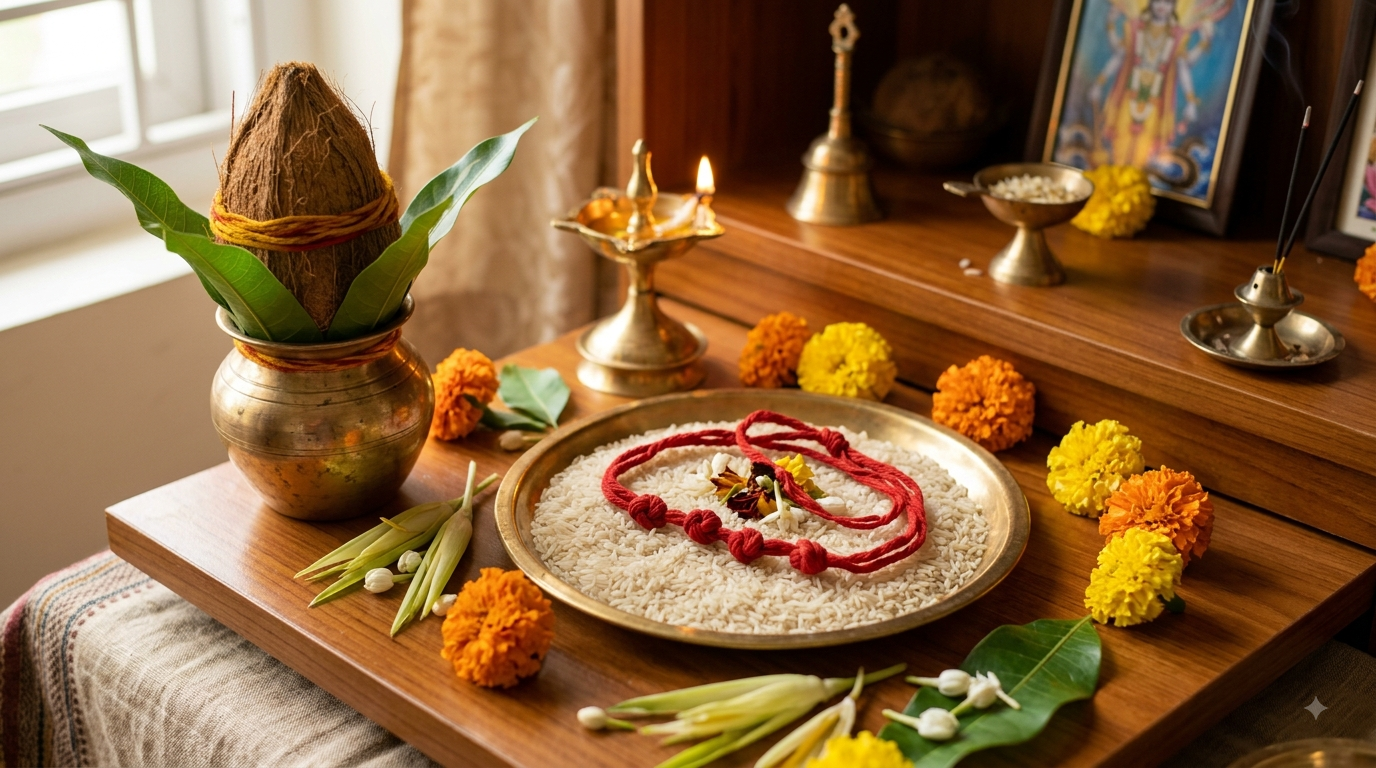
Anantha Padmanabha Swamy Vratham falls on Friday, 25 September 2026. The Chaturdashi tithi then stays valid until 11:06 PM that night. Most Telugu, Kannada and Marathi families keep this vratam at home, without calling a purohit.
Yet several popular pooja sites are printing a wrong 2026 date right now. So the first job is to fix that. Below you get the verified tithi window, the samagri list and the pooja vidhanam step by step. You also get the fourteen-knot thread rules, and a plan if you miss the day.
Sri Vyasa Pooja is an independent devotional guide. We have no affiliation with any temple, trust or devasthanam. We also take no bookings, donations or payments of any kind. For temple sevas and darshan, use the temple’s own official portal, which we link further down.
Anantha Padmanabha Swamy Vratham 2026 at a Glance
- Date: Friday, 25 September 2026 (Bhadrapada Shukla Chaturdashi).
- Tithi begins: 11:18 PM on 24 September 2026 (IST).
- Tithi ends: 11:06 PM on 25 September 2026 (IST).
- Deity: Lord Vishnu as Ananta, reclining on the serpent Shesha.
- Signature ritual: the Anantha Dhaaram, a red thread with fourteen knots.
- Same day: Ganesh Visarjan, which closes the ten-day Ganeshotsav.
When Does Anantha Padmanabha Swamy Vratham Fall in 2026?
Anantha Padmanabha Swamy Vratham 2026 falls on Friday, 25 September. The Chaturdashi tithi of Bhadrapada Shukla Paksha starts at 11:18 PM on 24 September. It then closes at 11:06 PM the following night. Because the tithi covers all of Friday’s daylight, families can start the pooja any time after sunrise.
| Detail | 2026 | Next two years |
|---|---|---|
| Festival day | Friday, 25 September 2026 | Tue, 14 Sep 2027 · Sat, 2 Sep 2028 |
| Hindu date | Bhadrapada Shukla Chaturdashi | Same tithi each year |
| Tithi start (IST) | 11:18 PM, 24 Sep 2026 | Confirm on a local panchang |
| Tithi end (IST) | 11:06 PM, 25 Sep 2026 | Confirm on a local panchang |
| Pooja window | Sunrise to 11:06 PM | Sunrise to tithi end |
| Ganesh Chaturthi that year | Monday, 14 September 2026 | Sat, 4 Sep 2027 · Thu, 23 Aug 2028 |
Sunrise shifts by a few minutes between Hyderabad, Bengaluru and Chennai. So the practical start of the pooja window moves slightly. The tithi end time, though, stays the same across India. Telugu households usually finish the sankalpa and the main archana around madhyahna, roughly late morning to early afternoon.
Why Several Websites Show a Wrong 2026 Date
At least one widely-read pooja portal currently lists the 2026 vratam as Tuesday, 13 October. That date is simply wrong. Chaturdashi of Bhadrapada Shukla Paksha cannot fall in mid-October in 2026, since Bhadrapada itself closes well before then.
The error creeps in when a site carries last year’s page forward. Adding a rough offset is not the same as recomputing the tithi. Drik Panchang, Samvat and mpanchang all resolve 2026 to 25 September. Drik Panchang also publishes the exact tithi start and end, so treat any date without a tithi window as unverified.
The Real Significance of Anantha Padmanabha Swamy Vratham
Ananta means endless. Padmanabha means the one from whose navel the lotus rose, carrying Brahma and creation itself. Put together, the name points to a Lord with no beginning and no end. He has no boundary of place or time either.
So Anantha Padmanabha Swamy Vratham is not a wish-list ritual. It is a yearly acknowledgement that whatever a household holds rests on something continuous. Health, income and relationships do not run on luck. That is also why the tradition attaches this vratam to regaining what was lost, rather than to gaining more.
What the Fourteen Knots Really Mean
The Anantha Dhaaram carries exactly fourteen knots. Each knot stands for one of the fourteen lokas of Hindu cosmology. Fourteen then repeats through the whole ritual: fourteen varieties of flowers, fourteen kinds of leaves, and often fourteen items of naivedyam.
The number is not decorative. Scripture describes the Lord as pervading all fourteen worlds. So tying fourteen knots becomes a compact way of saying that this protection covers everything, everywhere. Devotees believe Vishnu himself resides in the thread while a person wears it.
The Story of Kaundinya and Sushila
Sushila, walking with her husband Sage Kaundinya, saw women on a riverbank worshipping Ananta and tying a knotted thread. She learned the vratam from them and observed it herself. Kaundinya, unimpressed, pulled the thread off her arm and threw it into the fire.
What followed was steady ruin — wealth, respect and peace all drained away. Only after fourteen years of sincere observance did the sage recover what he had lost. Alongside this, the Mahabharata tradition holds that Krishna advised Yudhishthira to keep the same vratam during the Pandavas’ exile.
Pooja Samagri Checklist for Anantha Padmanabha Swamy Vratham
Nothing here is exotic. Still, the darbha grass and the ketaki flowers may need a day’s notice from your flower vendor. Keep everything ready the previous evening, because the morning goes faster than you expect.
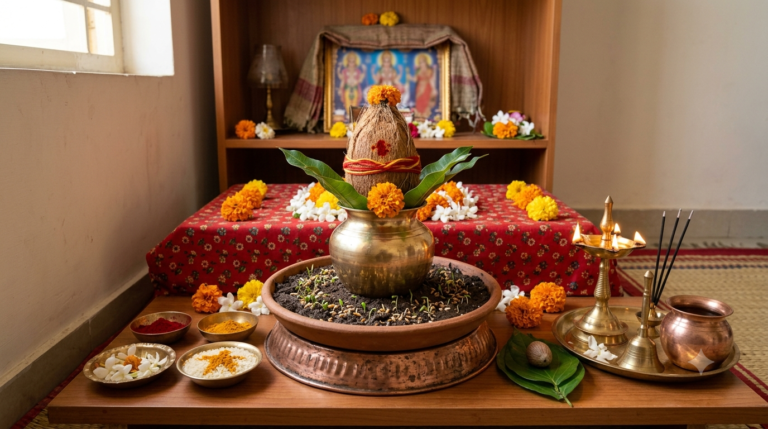
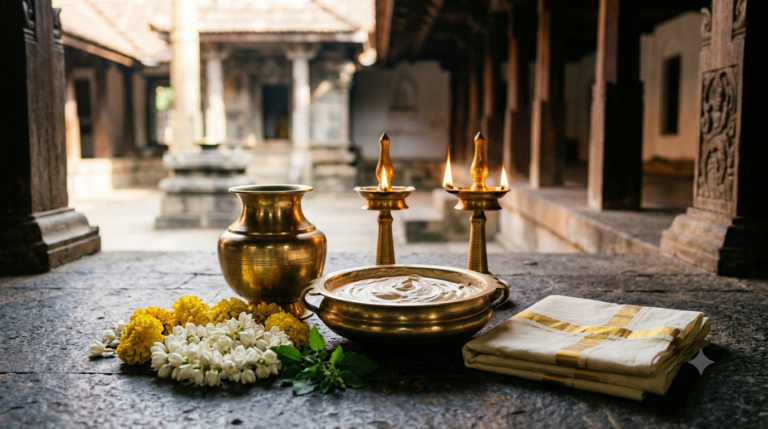
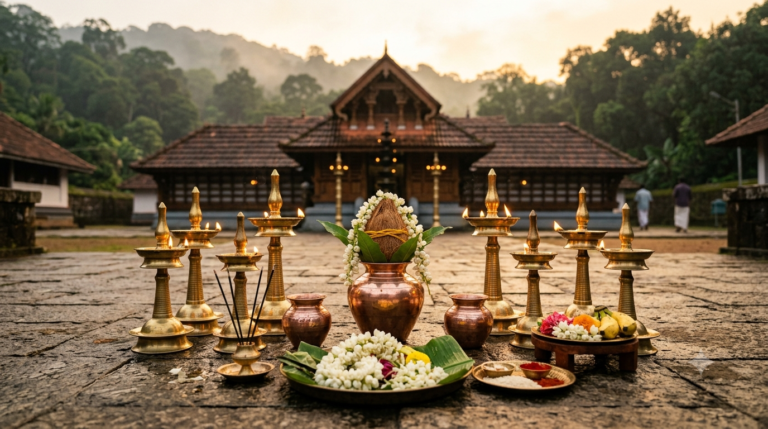
- Red cotton thread and turmeric, for the fourteen-knot Anantha Dhaaram.
- Darbha or durva grass, to shape the hooded serpent form of Ananta.
- Two kalashas, raw rice, coconuts, mango leaves and a clean cloth.
- Fourteen varieties of flowers and fourteen varieties of leaves.
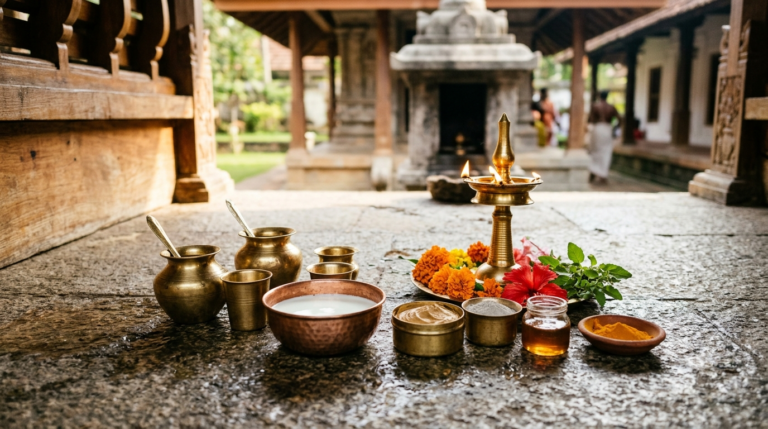
- Panchamrutam, jaggery and naivedyam such as poornam boorelu or payasam.
- Haldi, kumkum, akshata, sandal paste, incense, camphor and a ghee lamp.
- A printed vratha katha, so nobody is scrolling a phone mid-pooja.
Pooja Vidhanam: Performing Anantha Padmanabha Swamy Vratham at Home
Anantha Padmanabha Swamy Vratham follows the shodashopachara format. That means sixteen services to the Lord, from avahana to namaskara. A household version takes about ninety minutes. Start with Ganapati pooja, then Yamuna and Ananta, and close with the katha and the thread.
Morning Preparation
- Bathe early and clean the pooja room before you set anything up.
- Build a small mandapam and spread rice over a clean plate or tray.
- Shape the serpent form from darbha grass. Telugu families usually make a seven-hooded Shesha. Some Kannada households prepare fourteen hoods instead, so follow your family’s practice.
- Set two kalashas, one for Vishnu and one for Lakshmi, and place the darbha Ananta over them.
- Prepare the red thread with fourteen knots and keep it on the altar, next to the kalasha.
The Main Pooja
- Begin with pasupu Ganapati pooja, then take the sankalpa naming the tithi and your family.
- Invoke Yamuna Devi first, since she is worshipped before Ananta on this day.
- Perform the sixteen upacharas in order. They run from avahana and asana through snana, vastra and pushpa archana, then close with pradakshina and namaskara.
- Offer the archana with Vishnu Sahasranama if you can manage it. If not, the Anantha Padmanabha Ashtottaram is fully acceptable and much shorter.
- Offer the fourteen flowers and fourteen leaves, then the naivedyam.
- Read or listen to the vratha katha before the aarti, never after it.
Tying the Anantha Dhaaram
Show the thread to the Lord, offer it with kumkum and akshata, and only then tie it. In most Telugu and Kannada homes men tie it on the right arm above the elbow. Women tie it on the left. Some families have women wear it around the neck instead, and that variation is equally traditional.
How long you keep it also varies. One practice removes the thread after fourteen days. Another keeps it until the next Anant Chaturdashi. Ask an elder in your family rather than a random website, because regional customs diverge here.
Fasting Rules for Anantha Padmanabha Swamy Vratham
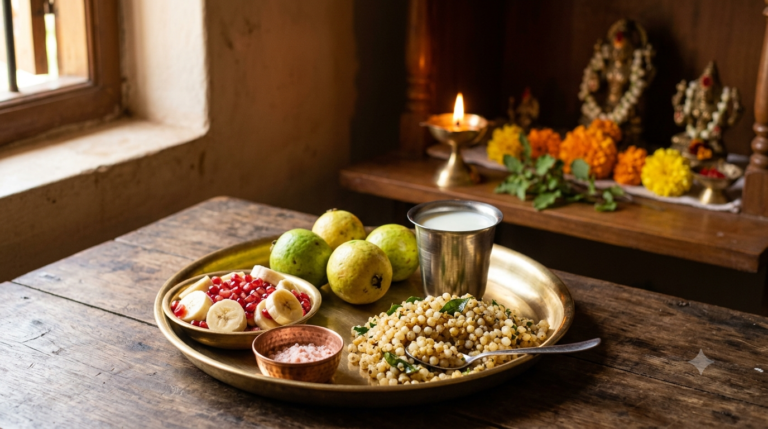
The fast runs from sunrise until the pooja finishes and the naivedyam is offered. After that, the family eats the prasadam together as the main meal of the day.
- Most households keep a phalahara fast — fruit, milk, curd and water until the pooja ends.
- Rice, onion, garlic and non-vegetarian food stay off the menu for the whole day.
- Men traditionally avoid shaving or cutting hair on the vratam day.
- A nirjala (waterless) fast is optional, and it is not required by the vratam.
- The same discipline applies to other Vishnu observances. If this is your first vratam, the Ekadashi fasting rules are a useful reference.
A Health Note Before You Fast
Fasting is a devotional choice, not a medical one. Diabetes, low blood pressure and ulcers all change the calculation. So do pregnancy, advanced age and regular medication. Talk to your doctor before skipping meals or water, since shastra itself permits a lighter fast in such cases.
Observing the pooja sincerely while eating normally is entirely valid. Nobody earns extra merit by collapsing during the archana.
The Fourteen-Year Vow, Explained Plainly
Many families take the vratam as a fourteen-year sankalpa rather than a single-year observance. That mirrors Kaundinya’s fourteen years and the fourteen knots. Couples commonly begin it in the first year of marriage.
In practice, you commit to the vratam every Bhadrapada Shukla Chaturdashi for fourteen consecutive years. In the fourteenth year, families perform an udyapana. That concluding pooja includes dana to a purohit or to a temple, and it formally closes the sankalpa.
Nobody has to take the fourteen-year vow to perform the pooja. A single-year observance is complete in itself, so do not let the longer commitment stop you from starting.
Temples Linked to Anantha Padmanabha Swamy Vratham in South India
If you would rather observe the day at a temple, three shrines carry a direct link with this form of Vishnu. Each one draws heavier crowds on Chaturdashi, so plan an early start.
Ananthagiri, Vikarabad — the Telangana Option
The Sri Anantha Padmanabha Swamy temple at Ananthagiri sits about 75 km from Gachibowli, Hyderabad. A two-lane hill road takes you up. The Telangana government’s Vikarabad district portal records a Skanda Purana tradition about the shrine. Rishi Markandeya installed it, the account says, during his yoga sadhana on these hills.
For Hyderabad families this is the most practical temple visit on the day, because it works as a morning drive. Read the district’s own Sri Anantha Padmanabha Swamy devasthanam page for the route before you set out.
Thiruvananthapuram and Kasaragod
Sree Padmanabhaswamy Temple in Thiruvananthapuram enshrines the eighteen-foot reclining Ananta Padmanabha. Devotees view the deity through three separate doors. Entry rules and the dress code stay strict, so check darshan slots in advance on the temple’s official booking portal.
Ananthapura Lake Temple near Kumbla in Kasaragod is the quieter option. Tradition treats it as the moolasthanam of the deity. It is also the only lake temple in Kerala. Crowds stay modest, which makes a Chaturdashi visit unusually peaceful.
Mistakes That Quietly Spoil Anantha Padmanabha Swamy Vratham
- Trusting an undated calendar. Cross-check the tithi window, not just the date, on a panchang such as Drik Panchang’s Anant Chaturdashi page.
- Skipping the katha. The story is not filler. Shastra treats hearing it as part of the ritual itself.
- Tying the thread before offering it. The thread is sanctified during the pooja, so tying it first empties the act of meaning.
- Counting the knots carelessly. Thirteen or fifteen knots defeats the symbolism — count them twice while the thread is still dry.
- Rushing the mantras. A slow Ashtottaram beats a hurried Sahasranama, especially if children are following along.
- Mixing up the two observances. Ganesh Visarjan happens on the same day, yet it is a separate ritual with its own timings.
What If You Miss the Day or Break the Vow?
Missing Chaturdashi is not a disaster, although the vratam is genuinely tied to that tithi. There is no alternative date that carries the same shastric weight, so plan the day properly. If something goes wrong, these are the realistic options families use.
- Running late: the tithi holds until 11:06 PM on 25 September 2026, so an evening pooja still counts.
- Travel or illness: perform a short Vishnu archana with the Ashtottaram, and resume the full vratam next year. Elders do not treat one missed year as a broken sankalpa.
- A fourteen-year vow interrupted: most purohits advise continuing the count and adding a prayaschitta archana. Restarting from year one is rarely necessary, though sampradayas differ.
- Samagri unavailable: substitute locally available flowers and leaves. Sincerity outranks the exact botanical list in every version of the tradition.
- Thread lost or broken: do not replace it casually. Keep it aside respectfully and immerse it in a water body or at the tulasi base.
Telugu Vidhanam, Ashtottaram and the Vrata Katha
Most searches for Anantha Padmanabha Swamy Vratham are really searches for the text. People want the Telugu vidhanam, the Ashtottaram and the katha in one place. Print them the night before, because reading from a phone screen with wet hands never goes well.
If you are budgeting, the samagri for a home vratam usually comes to a few hundred rupees. Packaged priest-plus-samagri services on third-party portals typically start around ₹4,000 and climb well past that. Most families simply do it themselves. Compare that with a monthly observance like the Sankashti Chaturthi vratam, which needs almost nothing.
Before You Begin
Fix 25 September 2026 in your calendar. Order the darbha grass and ketaki flowers a day early, and print the katha. Those three steps remove almost every last-minute problem people report.
Then keep the ritual simple and unhurried. A sincere shodashopachara, a properly knotted thread and the katha read aloud make a complete Anantha Padmanabha Swamy Vratham. If you observe other Vishnu vrathas through the year, the Vaikuntha Ekadashi vratam guide pairs naturally with this one.
Anantha Padmanabha Swamy Vratham: Your Questions Answered
What is the exact date of Anantha Padmanabha Swamy Vratham in 2026?
Friday, 25 September 2026. The Bhadrapada Shukla Chaturdashi tithi begins at 11:18 PM on 24 September. It ends at 11:06 PM on 25 September, so all of Friday’s daylight is valid for the pooja.
Is Anantha Padmanabha Swamy Vratham the same as Anant Chaturdashi?
Yes, it is the same tithi. Telugu and Kannada households say Anantha Padmanabha Swamy Vratham. North and West India generally say Anant Chaturdashi or Anant Chaudas. The Ganesh Visarjan processions happen on that same day.
How many days after Vinayaka Chavithi does it fall?
Chaturdashi arrives ten tithis after Chaturthi. So it lands on the tenth day of Ganesh Utsav, or the eleventh if you count Vinayaka Chavithi itself as day one. Older guides say “eleventh day” without explaining that, which causes the confusion.
Can unmarried people or women alone perform the vratam?
Yes. Couples perform it most often, especially for the fourteen-year sankalpa, but men, women and unmarried devotees can all observe it. Nothing in the shastra restricts it to married couples.
Which arm should the Anantha Dhaaram be tied on?
Men usually tie it on the right arm above the elbow, and women on the left. Some communities have women wear it around the neck. All three practices are traditional, so follow what your family does.
Do I need a purohit to perform this vratam at home?
No. The vratam was designed as a household observance, and a printed vidhanam plus the Ashtottaram is enough for most families. Inviting a purohit is optional and depends entirely on your comfort with the Sanskrit.
What should I offer as naivedyam?
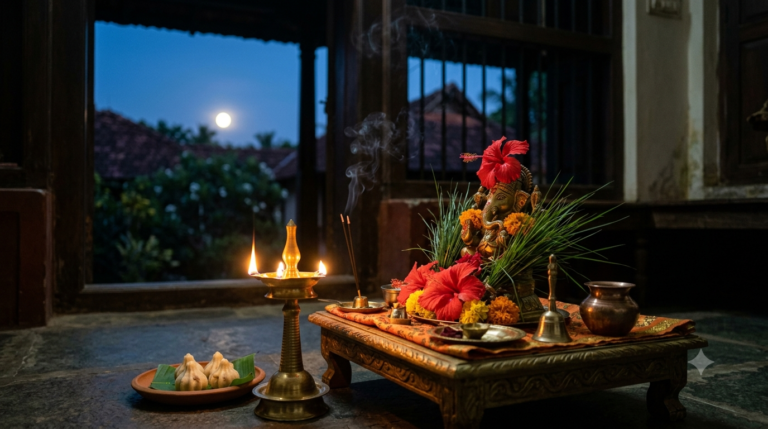
Poornam boorelu, athirasam, payasam and seasonal fruit are the usual offerings. Tamil families traditionally prepare twenty-eight athirasams and give fourteen away as dana, which is a lovely regional variation worth knowing.
Is fasting compulsory for Anantha Padmanabha Swamy Vratham?
A fast until the pooja concludes is the norm for Anantha Padmanabha Swamy Vratham, though nothing makes it compulsory. Anyone with a medical condition should eat normally and focus on the pooja instead, after checking with a doctor.
When is Anantha Padmanabha Swamy Vratham in 2027 and 2028?
Tuesday, 14 September 2027 and Saturday, 2 September 2028. Both follow Bhadrapada Shukla Chaturdashi. Still, confirm the tithi window on a local panchang closer to the day.