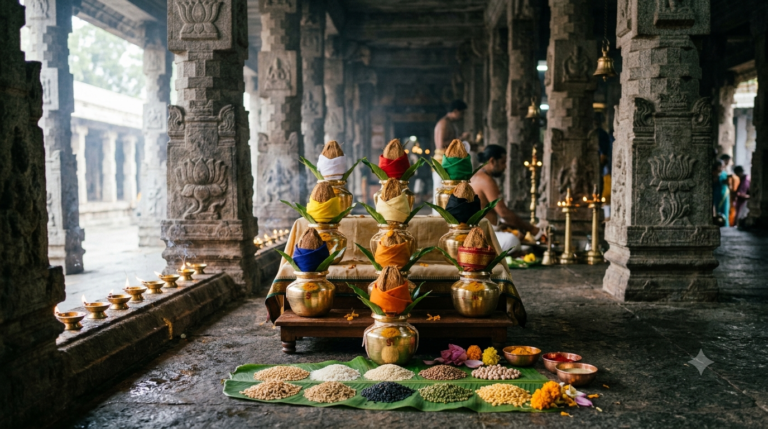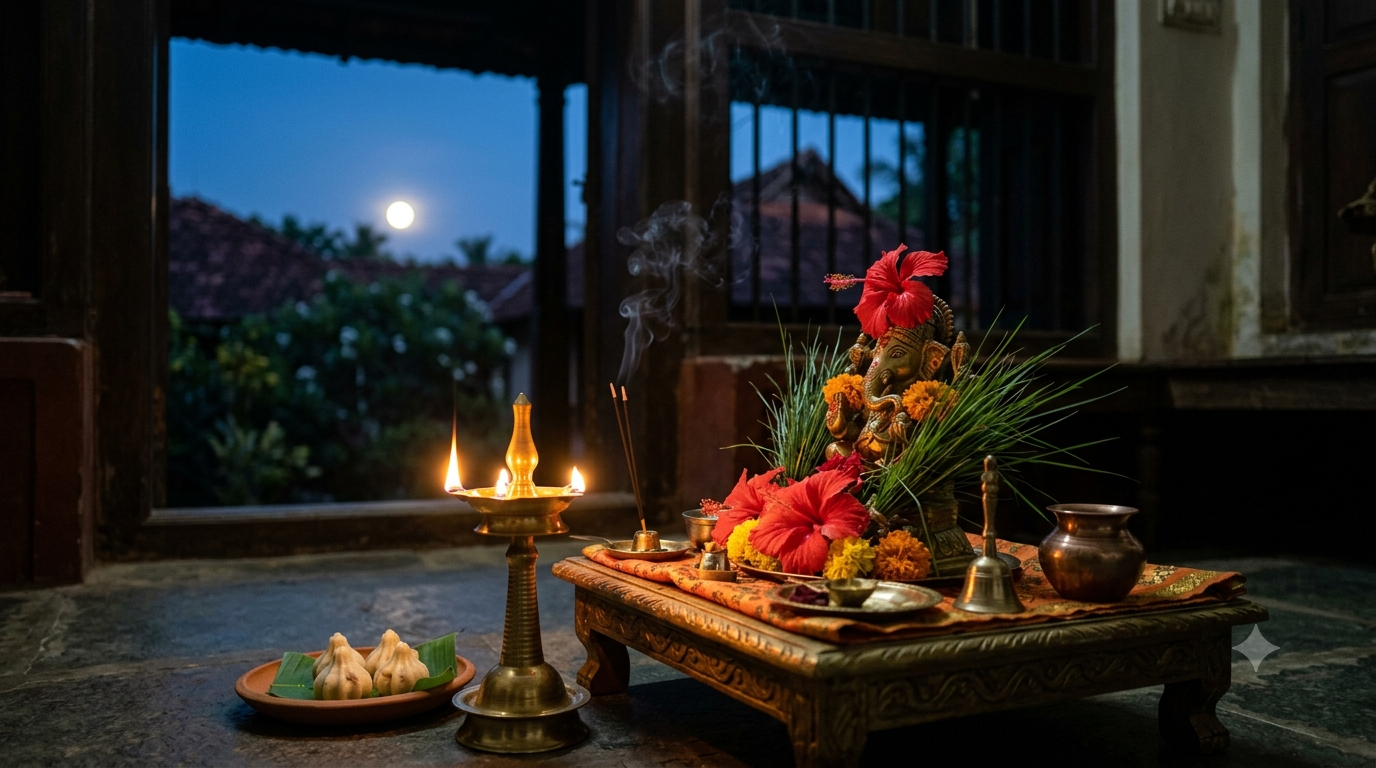
Sankashti Chaturthi Vratam is a monthly fast for Lord Ganesha that devotees break only after they sight the moon at night. It falls on the Chaturthi, the fourth day of the waning moon, in every single Hindu month. Millions keep this vow because they want obstacles cleared, worries calmed, and steady progress at home and work. This guide gives you the verified 2026 dates, the correct puja steps, the fasting rules, and the one moon-sighting detail that most calendars quietly get wrong.
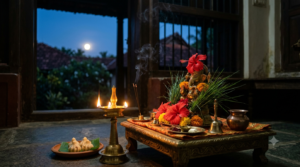
Sri Vyasa Pooja is an independent devotional guide. We are not affiliated with any temple or trust, and we do not accept bookings, poojas, or payments. Please treat every timing below as indicative, and confirm the moonrise for your own city before you break the fast.
Sankashti Chaturthi Vratam at a Glance
- Deity: Lord Ganesha, the remover of obstacles (Vighnaharta).
- When: Krishna Paksha Chaturthi, once in every lunar month.
- The fast: from sunrise until moonrise, broken after chandra darshan and arghya.
- 2026 count: 13 vrats, since one extra lunar month falls this year.
- Special days: three Angarki (Tuesday) Chaturthis in 2026.
- Other names: Sankatahara Chaturthi in the South, Sakat Chauth in the North.
What Is Sankashti Chaturthi Vratam?
Sankashti Chaturthi Vratam is a vow-based fast that seeks Ganesha’s grace to remove hardship. The word “Sankashti” means deliverance from difficult times, so the whole day points at troubles you want dissolved. Devotees stay on a fast through the day, then offer water to the moon at night before they eat.
Because Ganesha is invoked first in nearly every Hindu ritual, this monthly vrat carries very wide appeal. People keep it for career hurdles, health worries, delayed marriages, and simple family peace. While it is most popular in Maharashtra, Tamil Nadu, Andhra Pradesh, and Karnataka, the vrat is observed across India by men and women alike.
Tradition holds that the greatness of this fast is described in the Bhavishya Purana and the Narasimha Purana. Each month, Ganesha is worshipped under a different name and lotus-seat, so a devotee reads a different story every time.
Sankashti Chaturthi Vratam 2026 Dates
Here are all 13 Sankashti Chaturthi Vratam dates for 2026, checked against Drik Panchang. Because moonrise shifts by city, the table below lists only the date, weekday, and type, so you do not rely on a single wrong clock time for the whole country.
| Date (2026) | Weekday | Type / Notes |
|---|---|---|
| 6 January | Tuesday | Angarki Chaturthi; also Sakat Chauth (Magha) |
| 5 February | Thursday | Monthly vrat |
| 6 March | Friday | Monthly vrat |
| 5 April | Sunday | Monthly vrat |
| 5 May | Tuesday | Angarki Chaturthi |
| 3 June | Wednesday | Adhika Maasa vrat (extra month) |
| 3 July | Friday | Monthly vrat |
| 2 August | Sunday | Monthly vrat |
| 31 August | Monday | Monthly vrat |
| 29 September | Tuesday | Angarki Chaturthi |
| 29 October | Thursday | Monthly vrat (falls with Karwa Chauth) |
| 27 November | Friday | Monthly vrat |
| 26 December | Saturday | Monthly vrat |
So 2026 carries 13 fasts rather than the usual 12, because an extra lunar month, Adhika Jyeshtha, adds the 3 June vrat. The three Angarki days fall on 6 January, 5 May, and 29 September. Many older pages still claim only one Angarki this year, which is simply out of date.
Why Moon Sighting Decides Everything
The moon is the switch that ends the fast, and this is where readers most often slip. You do not break the fast at a fixed hour, and you do not follow a single all-India time. Instead, you break it only after the moon actually rises in your own sky and you offer arghya.
Printed calendars usually show one moonrise time for New Delhi. Yet the real moonrise in Chennai, Mumbai, Hyderabad, or Bengaluru can differ by many minutes. So use any printed time as a rough guide, then step out and confirm the moon before you eat. If clouds hide it, you may offer arghya towards the east at the expected time, as most families do.
How to Observe Sankashti Chaturthi Vratam
The vrat is simple, yet it rewards discipline more than show. Below is a clear order of the day that beginners can follow without a priest.
- Morning bath and sankalp: wake before sunrise, bathe, and take a quiet vow to keep the fast until moonrise.
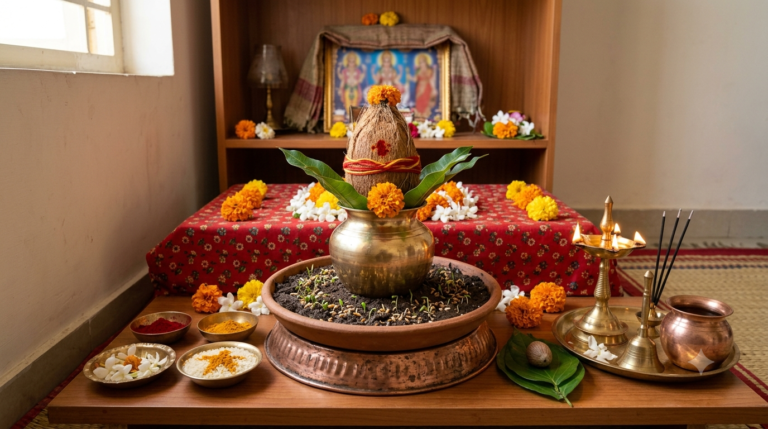
- Clean the altar: wipe the puja space, then place a Ganesha idol or picture facing east or north.
- Morning worship: light a lamp, offer durva grass, red flowers, sandal paste, and incense.
- Chant through the day: repeat “Om Gam Ganapataye Namaha”, or read the Sankashtanashana Ganapati Stotra.
- Evening puja: as moonrise nears, offer modak or laddu, and recite the month’s vrat katha.
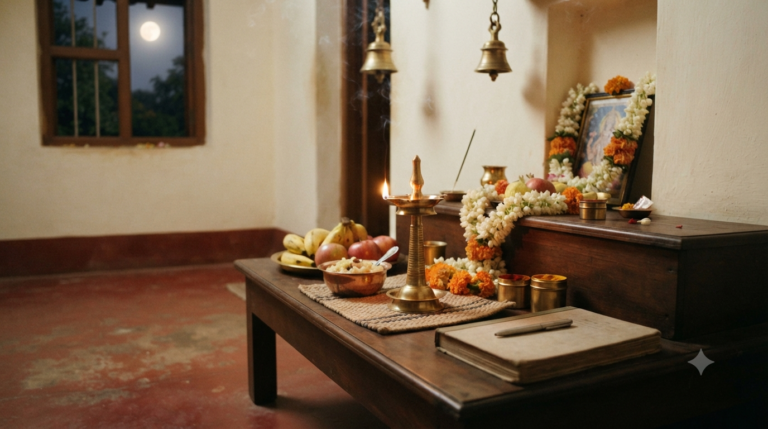
- Moon arghya: sight the moon, offer water and prayers, then break the fast with the prasad.
Many devotees also recite the Ganapati Atharvashirsha, a short Vedic hymn to Ganesha. The Vakratunda Mahakaya verse is another favourite, since it asks the Lord to make every task obstacle-free.
Fasting Rules and a Safety Note
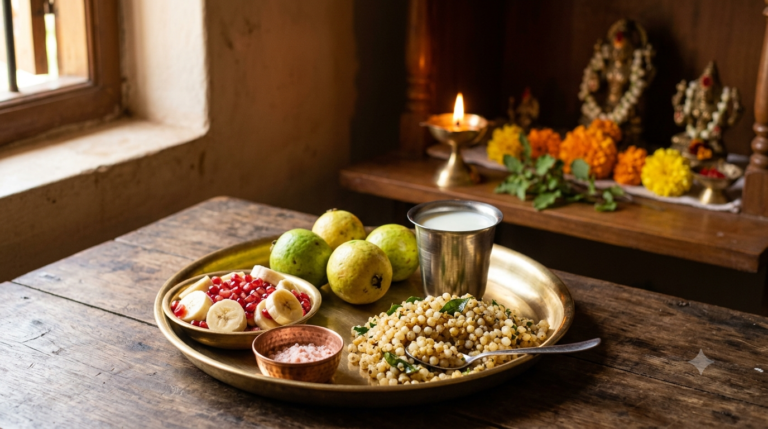
Fasting styles vary, so pick the one that suits your body and routine. A strict fast (nirjala) allows only water. A partial fast (phalahar) is far more common and gentler to keep.
On a partial fast, devotees usually eat fruits, milk, sabudana (sago) khichdi, potatoes, peanuts, and singhara or kuttu dishes. They avoid rice, wheat, ordinary lentils, onion, and garlic until the fast ends. Because til (sesame) and jaggery are winter staples, the Magha vrat, or Sakat Chauth, often features til-based sweets.
A gentle health note: a long fast is not wise for everyone. If you are pregnant, elderly, diabetic, or on regular medication, please choose a partial fast and speak to your doctor first. A vrat is meant to steady the mind, so never push your body into real distress; Ganesha’s blessing does not ask for that.
Angarki Chaturthi: The Tuesday That Counts Most
When Sankashti Chaturthi lands on a Tuesday, it becomes Angarki Chaturthi, the most prized form of the vrat. Tuesday is linked to Mangal (Mars), so the day is said to blend Mars energy with Ganesha’s grace. Devotees believe a single Angarki fast carries the merit of a full year of monthly vrats.
In 2026 you get three chances, on 6 January, 5 May, and 29 September. If you cannot keep all 13 fasts, these three are the ones to prioritise. Couples often keep Angarki for progeny and prosperity, while students keep it before exams for focus.
The 13 Forms of Ganesha Through the Year
One quiet beauty of the Sankashti Chaturthi Vratam is that Ganesha wears a new name each month. During every lunar month, he takes a different form and a different lotus-seat, or peeta. So the fast never feels repetitive, even when you keep it faithfully all year.
Each month also carries its own vrat katha, the short story you read before the moon arghya. In all there are 13 kathas, and the 13th belongs to the extra month that appears every few years. Reading the right story for the month keeps the vrat complete.
A few examples show the pattern clearly. January’s Magha fast honours Lambodara, the pot-bellied form, while February turns to Dwijapriya. March celebrates Bhalachandra, and April honours Vikata.
May’s Angarki belongs to Ekadanta, the single-tusked Lord. October’s Kartika fast, meanwhile, honours Vakratunda, the curved-trunk form from the famous opening verse. When you follow the right form and story, the Sankashti Chaturthi Vratam becomes a year-long walk through Ganesha’s many faces.
Sankashti Chaturthi Vratam vs Ganesh Chaturthi
People frequently mix up these two Ganesha days, yet their moon rules are opposite. Sankashti Chaturthi falls in the dark fortnight, and you must sight the moon to complete it. Ganesh Chaturthi, or Vinayaka Chaturthi, falls in the bright fortnight of Bhadrapada, and there you deliberately avoid looking at the moon.
That single difference trips up many first-time observers. So remember the rule plainly: on Sankashti you welcome the moon, while on Ganesh Chaturthi you turn away from it. Ganesh Chaturthi in 2026 falls on 14 September, a separate festival from the monthly vrat.
Common Mistakes to Avoid
Several myths circle this vrat online, and correcting them protects both your fast and your faith. First, this is not only a women’s fast; anyone may keep it. Second, it is not only a South Indian custom, since the North keeps it as Sakat Chauth too.
Third, do not trust one national moonrise time, as explained above. Fourth, avoid confusing the month names; each month has its own Ganesha form, such as Lambodara in January and Ekadanta in May. When a source repeats an obvious error, cross-check it with a trusted panchang before you plan your day.
Insider Tips Most Guides Skip
A few practical habits make the day smoother. Keep durva grass ready in advance, because fresh blades can be hard to find on the actual evening. Prepare the modak or prasad early, so you are not cooking while the moon rises.
Set a phone alert for the expected moonrise, then still confirm by eye. If your city sky is often cloudy, note the direction of east from your terrace beforehand. These small steps keep the vrat calm rather than rushed, which is the whole point of the fast.
Before You Begin the Vrat
Sankashti Chaturthi Vratam is one of the gentlest yet most trusted ways to seek Ganesha’s help through a hard patch. Fix the 2026 dates in your calendar, favour the three Angarki days if time is tight, and always break the fast only after your local moon appears. Keep the fast in a form your body can handle, read the month’s katha with attention, and let the discipline settle your mind. Do that, and the vrat gives you exactly what its name promises: relief from difficulty.
Frequently Asked Questions
What is the main purpose of Sankashti Chaturthi Vratam?
The fast asks Lord Ganesha to remove obstacles and grant success in difficult times. Devotees keep it for career, health, marriage, and family well-being. It is observed monthly on Krishna Paksha Chaturthi and broken after moonrise.
How many Sankashti Chaturthi fasts fall in 2026?
There are 13 Sankashti Chaturthi fasts in 2026. The year carries an extra one because an additional lunar month, Adhika Jyeshtha, adds the 3 June vrat. In a normal year there are 12.
When are the Angarki Chaturthi days in 2026?
Angarki Chaturthi falls whenever the vrat lands on a Tuesday. In 2026 that happens three times: 6 January, 5 May, and 29 September. These days are considered the most powerful for the fast.
Can I break the fast at a fixed time?
No, you should break it only after the moon rises in your own city and you offer arghya. Printed moonrise times are for reference and often differ from your local sky. Always confirm the moon by sight before eating.
What can I eat during the Sankashti fast?
Most people keep a partial fast with fruits, milk, sabudana, potatoes, and peanuts. Grains like rice and wheat, along with onion and garlic, are avoided until the fast ends. A strict fast allows only water, but it is optional.
Is Sankashti Chaturthi the same as Ganesh Chaturthi?
No, they are different Ganesha days with opposite moon rules. On Sankashti Chaturthi you sight the moon to end the fast. On Ganesh Chaturthi, which falls on 14 September 2026, you avoid looking at the moon.
Do I need a priest to keep this vrat?
No, you can keep the vrat at home without a priest. A simple puja, a Ganesha mantra, the vrat katha, and moon arghya are enough. Sincerity and discipline matter more than an elaborate ceremony.
Is fasting safe for everyone?
Not always, so listen to your body. Pregnant women, elderly devotees, diabetics, and those on medication should keep only a partial fast and consult a doctor first. The vrat is meant to steady the mind, never to harm health.
For verified dates and local moonrise timings, you can check the Drik Panchang Sankashti Chaturthi page, and for detailed ritual steps see the Ganesha puja vidhi guide. If you also plan the annual festival, read our Ganesh Chaturthi pooja vidhi and the related Swarna Gowri Vratha guide.