If you are pricing a navagraha shanti pooja, you have probably seen quotes swing from ₹500 to ₹23,000 for what looks like the same ritual. That gap is not greed alone. It happens because two completely different ceremonies share one popular name, and most pages never separate them. This guide draws the line clearly, so you pay for the ritual you actually need.
Sri Vyasa Pooja is an independent devotional guide. We are not affiliated with, endorsed by, or the official website of any temple, devasthanam, or endowments department. We accept no bookings, donations, or payments. Use the official temple counters and government portals linked below for every ticket and transaction.
Navagraha Shanti Pooja at a Glance
- What it is: Vedic worship of the nine grahas, performed to seek balance in planetary influences.
- The nine grahas: Surya, Chandra, Angaraka, Budha, Brihaspati, Shukra, Shani, Rahu and Ketu.
- Two formats: a japa and archana based navagraha shanti pooja, or a fire ritual known as Navagraha Homam.
- Duration: roughly 1 to 2 hours for the pooja format, and 4 to 6 hours for a full homam.
- Where: at a Navagraha temple counter, at a yagashala arranged by priests, or at home with a purohit.
- Cost reality: temple archana tickets run in tens or hundreds of rupees, while private homam packages run in thousands.
What Is Navagraha Shanti Pooja, Exactly?
Navagraha shanti pooja is a Vedic ritual in which a priest invokes and honours all nine planetary deities in one sitting. The core act is japa, meaning repeated chanting of each graha mantra, followed by archana, tarpanam and offerings of grains and cloth. Devotees perform it to seek relief from planetary periods that Vedic astrology treats as difficult.
The word shanti means pacification, not removal. Because of that, tradition frames the ritual as a way to soften a graha’s effect rather than delete it from a horoscope. That distinction matters when someone promises you a guaranteed outcome.
Navagraha Shanti Pooja Versus Navagraha Homam
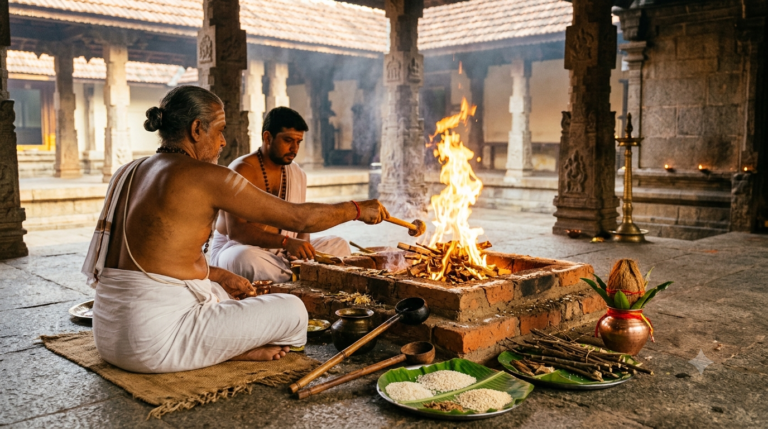
This is the single most expensive confusion in the whole topic. A navagraha shanti pooja centres on chanting and offerings before the graha idols or a kalasha. A Navagraha Homam adds a consecrated fire pit, ahutis into the flame, and usually several more priests.
Because the homam needs more hours, more priests and more samagri, it costs far more. Many booking pages sell the homam while the heading says pooja. So read the inclusions line, not the title.
| Feature | Shanti Pooja | Navagraha Homam |
|---|---|---|
| Core act | Japa, archana, tarpanam | Japa plus fire offerings |
| Typical duration | 1 to 2 hours | 4 to 6 hours, sometimes days |
| Priests | 1 to 3 | 4 to 9 |
| Usual setting | Temple mandapam or home | Yagashala or homa kunda |
| Cost band | Lower | Substantially higher |
What Does a Navagraha Shanti Pooja Cost?
Costs vary by route, so treat every figure below as indicative and confirm it at the counter. At government administered temples, graha archana tickets are often priced in tens or low hundreds of rupees. Karnataka endowment temples such as Ghati Subramanya list a combined Navagraha and Sarpa Shanti seva, although the figures circulating online conflict between about ₹5,000 and ₹7,000.
Private purohit services quote very differently. Published packages across booking sites range from roughly ₹3,000 for a short home pooja to ₹23,000 or more for a multi day paripoorna homam near Srikalahasti. Since none of these private rates come from a temple order, verify them before paying anything.
| Route | What you get | Indicative cost |
|---|---|---|
| Temple archana ticket | Archana at the graha shrines | Low, often under ₹200 |
| Temple seva counter | Listed navagraha or shanti seva | Roughly ₹5,000 to ₹7,000, confirm locally |
| Home pooja with purohit | Japa, archana, samagri | Roughly ₹3,000 to ₹6,000 |
| Full private homam | Multi priest fire ritual | ₹9,000 upward, sometimes far higher |
The Srikalahasti Mix-Up Worth Knowing
Thousands of devotees travel to Srikalahasti expecting a nine planet ceremony at the counter. The famous ticketed ritual there is the Rahu Ketu Dosha Nivarana Pooja, and it addresses only two shadow planets. A full nine graha ceremony at that town is a separate private arrangement held in yagashalas outside the temple.
So if your astrologer named Shani or Guru, a Rahu Ketu ticket does not cover it. Book the Rahu Ketu ritual only when Rahu or Ketu is the concern. Our guide to the Kalasarpa Dosha pooja at Srikalahasti explains that ritual separately.
Where to Perform Navagraha Shanti Pooja
Location changes the experience more than most guides admit. Some shrines house all nine grahas together, while others specialise in a single planet. Choose based on what your horoscope actually flags.
Suryanar Kovil, Kumbakonam
This eleventh century Chola temple near Kumbakonam is the standout choice. It is the only temple in Tamil Nadu with separate shrines for all nine planetary deities in one complex. Because of that, you can complete graha worship in a single visit instead of driving the nine temple circuit.
The temple is administered by the Tamil Nadu Hindu Religious and Charitable Endowments Department. Published darshan windows generally run from early morning until midday, then again through the evening. Timings shift on festival days, so confirm on the HR&CE portal before travelling.
Other Shrines Devotees Choose
- Navagraha Mandir, Guwahati: an eighteenth century hill shrine housing nine graha lingams under one roof.
- Thirunallar, Karaikal: the Shani sthalam, best suited when Saturn is the specific concern.
- Ghati Subramanya, Karnataka: known for Ketu and sarpa related sevas near Bengaluru.
- Kukke Subramanya: the reference point for Naga Pratishta and sarpa rituals.
Navagraha Shanti Pooja Procedure, Step by Step
The sequence below reflects the standard Vedic order that most purohits follow. Small regional variations exist, so accept your priest’s version if it differs.
- Snana and preparation: bathe, wear clean traditional clothes, and clean the pooja space.
- Ganapati pooja: the ritual opens with Ganapati worship to clear obstacles.
- Punyahavachanam and sankalpa: you state your name, gotra, nakshatra and the purpose.
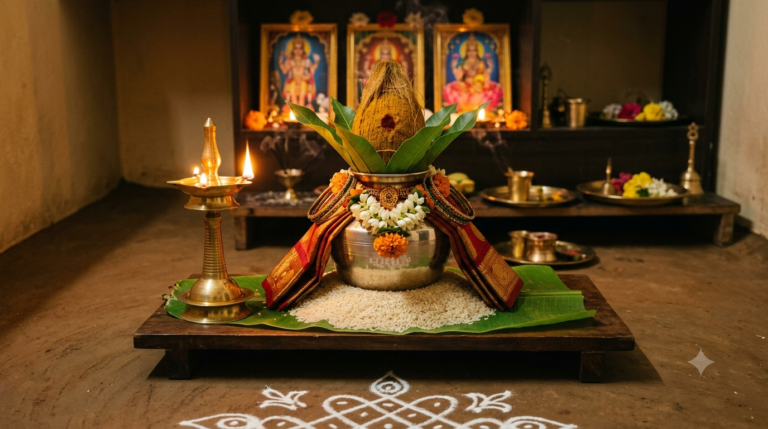
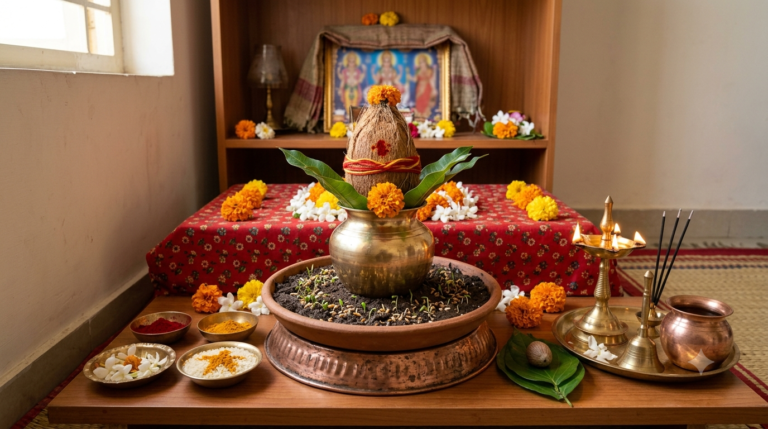
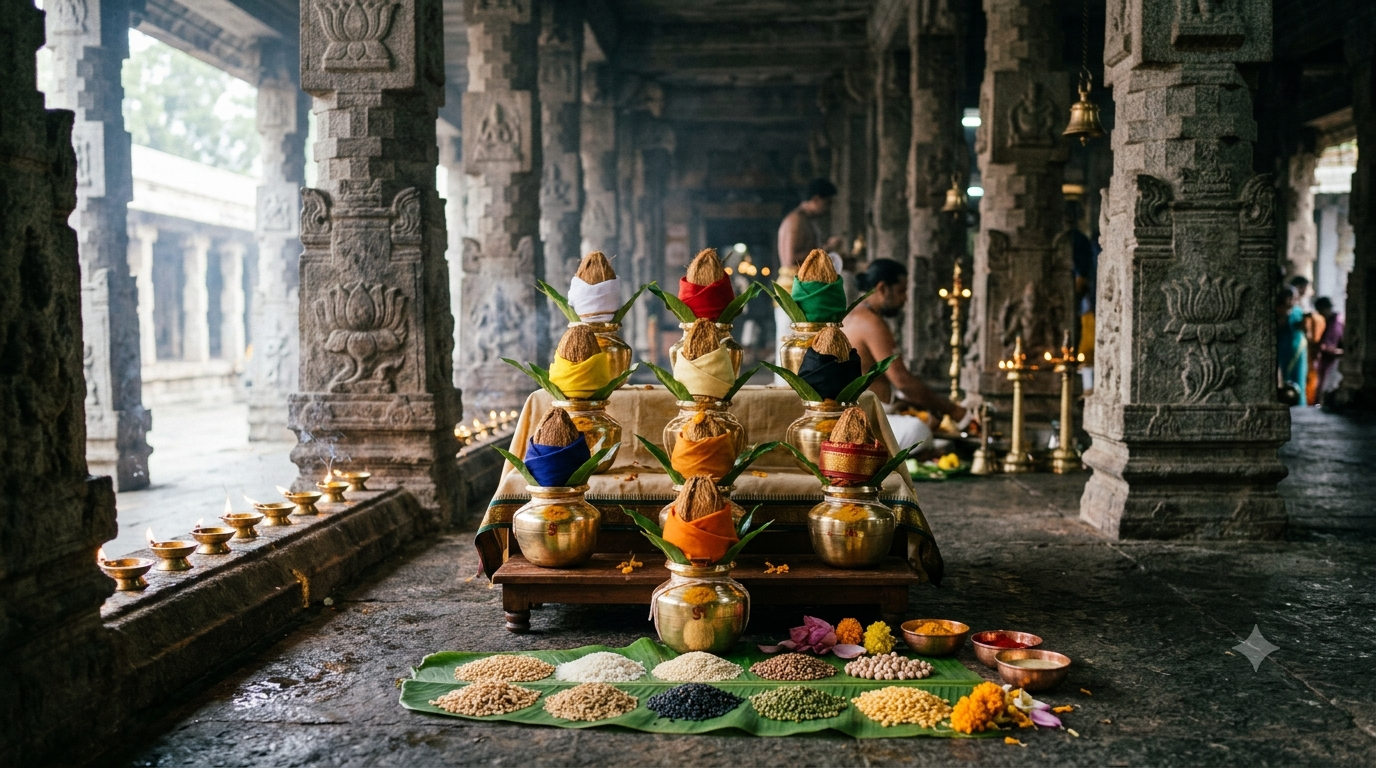
- Kalasha sthapana: the priest installs nine kalashas or a navagraha mandala representing each graha.
- Graha avahanam: each planetary deity is invited in the traditional order, starting with Surya.
- Japa: the assigned mantra count is chanted for every graha, which is the longest phase.
- Tarpanam and archana: water offerings and name recitation follow the japa.
- Homam, when included: ahutis go into the fire if you booked the homam format.
- Purnahuti and daana: the ritual closes with a final offering, then grains, cloth and dakshina are given away.
Samagri You Are Expected to Bring
Temple counters usually supply the kit, while home poojas often do not. Ask the moment you book, because a missing item can delay the muhurta.
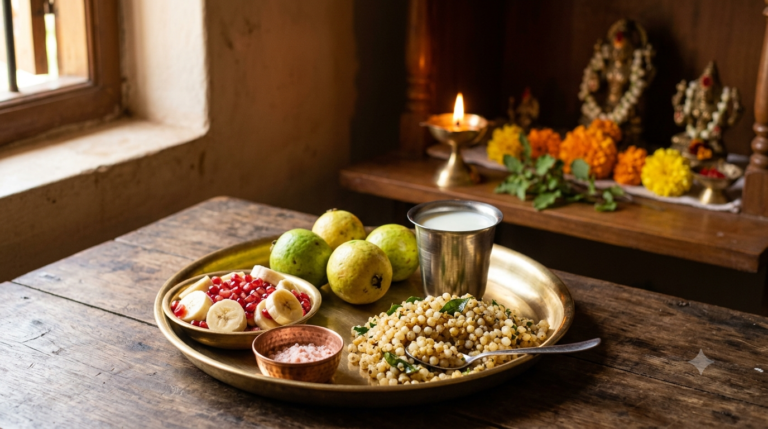
- Navadhanya, the nine grains linked to the nine grahas
- Nine coloured cloth pieces, one per graha
- Turmeric, kumkum, sandal paste and akshata
- Flowers, fruits, betel leaves, betel nuts and coconuts
- Ghee, sesame seeds and samidha wood if a homam is planned
- Copper kalashas, mango leaves and a clean white cloth
Choosing the Right Day and Muhurta
Tradition ties the muhurta to your birth chart rather than a fixed calendar date. A purohit or astrologer usually picks the day from your janma nakshatra and the running dasha. That is why two families rarely get the same recommended date.
Amavasya, Purnima and the start of a new dasha period come up often in practice. Sundays suit Surya centred worship, while Saturdays draw the largest crowds at Shani shrines. If you are combining the ritual with travel, book accommodation early for those days.
What This Ritual Can and Cannot Do
Navagraha shanti pooja belongs to faith and Vedic tradition. Devotees describe calmer decision making and renewed confidence after performing it sincerely. Those experiences are meaningful, yet they are not clinical outcomes.
No graha ritual is a medical treatment. The temple legend of Sage Kalava being cured of leprosy is scripture, not a health claim you should act on. If you have a diagnosed condition, continue with your doctor and treat the pooja as a parallel act of faith. Similarly, treat major money decisions as financial matters needing professional advice, since this article is not financial guidance.
Fasting deserves a practical word too. Many purohits suggest a light fast on ritual day, and long homams can run four hours in warm halls. Elderly participants, pregnant women, diabetics and anyone on regular medication should eat sensibly and carry water. Ask a doctor first when fasting is risky for you.
How to Spot a Fake Booking Page
Planetary remedies attract scam portals because the emotional pressure is high. A few checks protect you before money moves.
- Official ticketing sits on government domains such as aptemples.ap.gov.in or the state endowments portal, never on a private page.
- Genuine temples issue a receipt with the seva name and amount printed on it.
- Treat any demand for full advance payment to a personal UPI ID as a warning sign.
- Be cautious when a page promises a guaranteed result or a permanent cure.
- Many endowment temples still sell these sevas only at the counter, so an online offer deserves a phone check.
What Most Guides Get Wrong
First, a bigger japa count is not automatically better for you. The count should follow the graha the astrologer flagged, so paying for a paripoorna package when one graha is weak wastes money. Ask which grahas your package actually emphasises.
Second, a temple ritual does not outrank a home ritual by default. Tradition values the sankalpa and the priest’s competence above the venue. A careful home pooja beats a rushed batch slot.
Third, many devotees book a dosha specific ritual when a general shanti was intended, or the reverse. Our Kuja Dosha parihara pooja guide shows how narrowly targeted those rituals are. Read the seva description before you pay, since refunds are rare.
Before You Book
Start with your horoscope, not with a package price. Get the flagged grahas named in writing, then decide whether a japa based navagraha shanti pooja is enough or a homam is genuinely warranted. Next, choose the venue that matches those grahas, because Suryanar Kovil, Thirunallar and Srikalahasti serve very different needs.
Finally, confirm the current ticket rate at the temple counter or on the official state portal, such as the Andhra Pradesh endowments portal. Rates change by administrative order, so the number you read online may already be stale.
Frequently Asked Questions
How long does a navagraha shanti pooja take?
The japa and archana format usually takes 1 to 2 hours. A full Navagraha Homam runs 4 to 6 hours on the final day. Paripoorna versions with very high japa counts can spread across five or six days.
Can navagraha shanti pooja be performed at home?
Yes, and it is common practice. A qualified purohit can conduct the entire ritual at your home with the correct samagri and sankalpa. Confirm whether the priest brings the kit, because home bookings often exclude it.
Which temple is best for navagraha shanti pooja?
Suryanar Kovil near Kumbakonam suits most devotees because all nine graha shrines sit in one complex. Choose Thirunallar instead when Shani is the specific issue. Guwahati’s Navagraha Mandir is the strongest option in the northeast.
Is Srikalahasti Rahu Ketu pooja the same thing?
No. The Rahu Ketu Dosha Nivarana Pooja addresses only the two shadow planets. A nine graha ceremony is a separate, larger ritual and is arranged privately near the temple rather than sold at the main counter.
What is the ideal day to perform it?
The muhurta should come from your birth chart, since the dasha period matters more than the weekday. Amavasya, Purnima and dasha transitions are frequently recommended. Sundays suit Surya focused worship.
Do I need to fast for the pooja?
Many priests advise a light fast until the ritual ends. It is a tradition rather than a requirement. Anyone elderly, pregnant, diabetic or on regular medication should ask a doctor before fasting.
Can one person perform it for the whole family?
Yes, the sankalpa can name family members with their gotra and nakshatra. Many temples allow a couple to sit together for the same ticket. Confirm the permitted number of participants when you book.
How often should the ritual be repeated?
Most families perform it once during a difficult dasha or before a major life event. Some repeat it yearly on their birth nakshatra. There is no fixed rule, so follow your family purohit’s advice.