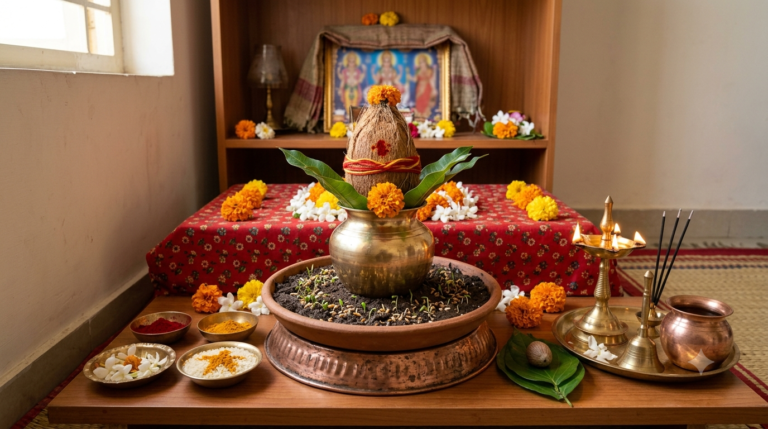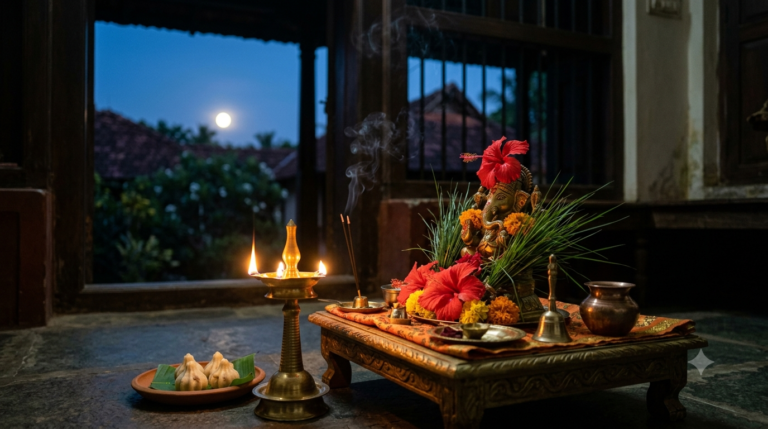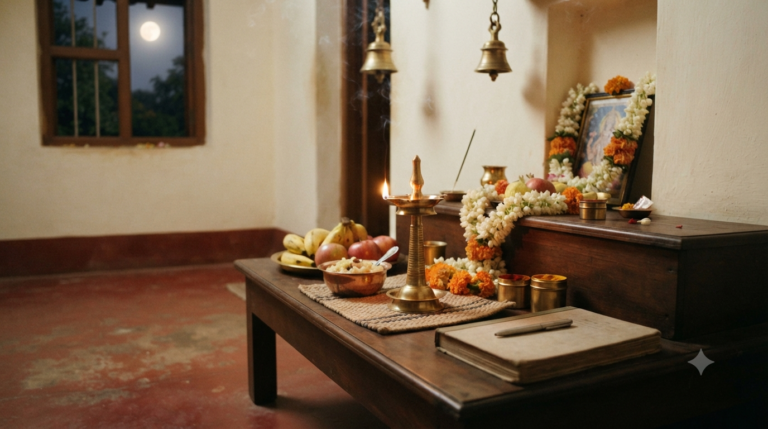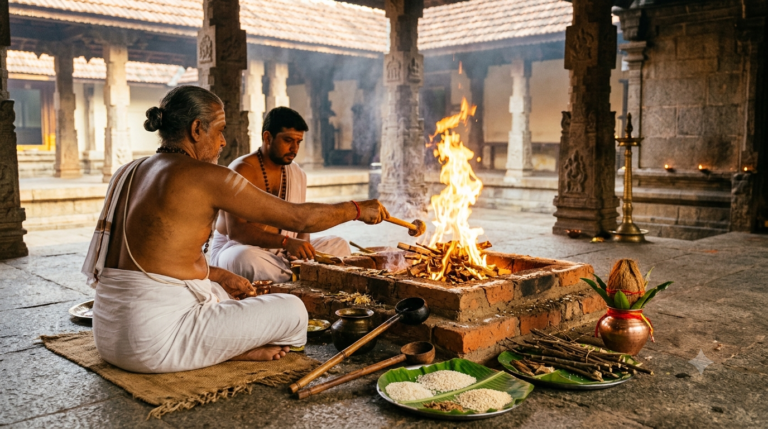
The Ekadashi fasting rules confuse more devotees than almost any other vrat in the Hindu calendar. Some households skip only rice. Others give up water entirely.
Meanwhile a third group breaks the fast whenever lunch feels convenient, which quietly undoes the whole observance. The tradition is far more precise than that, and it stretches across three days rather than one.
Sri Vyasa Pooja is an independent devotional guide. We are not affiliated with, endorsed by, or the official website of any temple, mutt, or trust. We accept no bookings, donations, or payments. For fasting dates in your own city, please use an authoritative panchang or your family purohit.
Ekadashi Fasting Rules at a Glance
- It is a three-day observance — a light single meal on Dashami, the fast on Ekadashi, and parana on Dwadashi.
- All grains and pulses are barred, so rice, wheat, corn, oats and every dal go off the plate.
- You choose the strictness in advance — waterless, water only, fruit only, or one evening meal.
- Parana happens after sunrise on Dwadashi, but never during Hari Vasara.
- Dates differ by city and by sampradaya, because the tithi is measured against local sunrise.
- Health comes first — the tradition itself exempts the sick, the elderly, children and expectant mothers.
Ekadashi is the eleventh lunar day of each fortnight, so it arrives twice every lunar month and roughly twenty-four times a year. Devotees observe it for Lord Vishnu. In an Adhik Maas year the extra lunar month adds two more, Padmini and Parama Ekadashi.
What the Ekadashi Fasting Rules Actually Cover
Here is the point most guides miss entirely. According to Drik Panchang, the Ekadashi fasting rules span three days, not one. Treating the vrat as a single-day exercise remains the commonest mistake in Indian homes today.
Dashami: the preparation day
On Dashami, the tenth lunar day, you eat a single meal in the afternoon. The reasoning is practical rather than mystical. Digestion should be complete before sunrise on Ekadashi so that no residual food remains in the stomach.
Older texts describe this state as ekabhukta, meaning one meal a day taken with a settled mind. Many families also avoid onion, garlic and heavy fried food from Dashami evening onward. Sleeping early helps, because the fast day traditionally begins before first light.
Ekadashi: the fast itself
The fast runs from sunrise on Ekadashi to sunrise the following morning. It is not a midnight-to-midnight window, and this trips up plenty of first-timers. Bathe early, offer tulsi and flowers to Lord Vishnu, and keep the day light on activity.
Dwadashi: parana closes the vrat
Parana means formally breaking the fast, and it happens on Dwadashi after sunrise. Tradition does not count the vrat as complete until you finish parana correctly. Serving food to others before you eat yourself forms part of the classical sequence.
Ekadashi Fasting Rules for Food: What Goes and What Stays
One restriction defines the whole day: no grains, no pulses. That single line separates Ekadashi from every other Hindu fast. Drik Panchang states plainly that the Ekadashi fasting rules bar all grains and cereals.
| Category | Avoid | Generally allowed |
|---|---|---|
| Grains | Rice, wheat, barley, oats, corn, ragi, jowar, bajra | None |
| Pulses | All dals, chana, rajma, soya, sprouts | None |
| Vegetables | Onion, garlic, leafy greens in strict practice | Potato, sweet potato, yam, lauki, pumpkin |
| Dairy | — | Milk, curd, buttermilk, paneer, ghee |
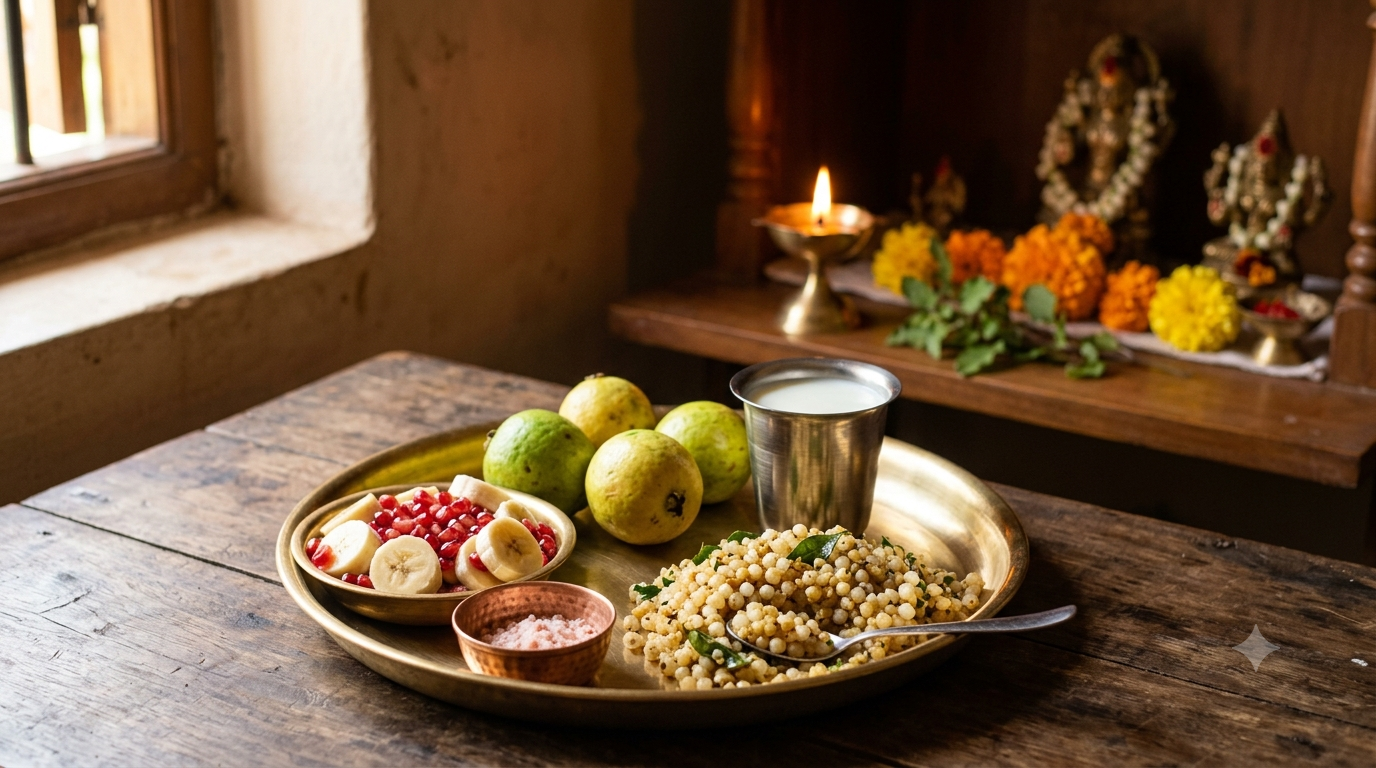
| Other | Commercial hing, table salt, tea and coffee | Fruits, nuts, sabudana, singhada, rock salt |
Two items on that list surprise people. Commercial asafoetida is usually cut with wheat flour, so it fails the grain test on a technicality. Coffee beans are botanically seeds of a fruit, yet the Drik Panchang food list still advises avoiding them, since beans of every kind fall outside the vrat.
The kuttu and samak question
Buckwheat flour and barnyard millet appear on almost every vrat recipe list. Strictly speaking, tradition debates their status, because both count as pseudo-grains rather than true fruits or tubers. Drik Panchang leans toward avoiding them altogether during Ekadashi fasting.
Here the Ekadashi fasting rules leave real room for family custom. Sanskrit sources predate these ingredients, so no ancient text rules on them directly. That gap explains why two devout households can reach opposite conclusions about the same packet of kuttu atta.
Many South Indian families never used them in the first place. If your household tradition permits them, follow your elders. When you are unsure about any ingredient, the safer route is simply to leave it out.
Ekadashi Fasting Rules by Body Capacity
The Ekadashi fasting rules do not demand one level of severity from everyone. Four recognised grades exist, and you pick one before the fast begins rather than negotiating with yourself at noon.
| Type | What it permits | Suits |
|---|---|---|
| Nirjala | No food, no water at all | Healthy adults with experience |
| Jalahar | Water only | Most regular observers |
| Ksheerbhoji | Milk and milk products | Those needing steady energy |
| Phalahari | Fruit and dairy | Beginners and working people |
| Naktabhoji | One non-grain meal before sunset | Elderly, students, the unwell |
Nirjala is normally reserved for Nirjala Ekadashi in Jyeshtha month. Attempting a waterless fast in peak summer without preparation is unwise. Deciding your grade in advance also removes the guilt that comes from an unplanned downgrade halfway through.
Parana Timing: Where Most Guides Go Badly Wrong
This deserves its own section because the error is so widespread. Several popular calendar sites instruct readers to perform parana during Hari Vasara, the first quarter of Dwadashi tithi. That advice is exactly backwards.
Drik Panchang is unambiguous on the point. Parana is prohibited during Hari Vasara. You wait for that quarter to pass, then break the fast.
The Ekadashi fasting rules set three conditions for a correct parana. It must fall after sunrise on Dwadashi. It must also happen before Dwadashi tithi ends.
Finally, it must avoid Hari Vasara entirely. Pratahkal, the morning stretch, remains the preferred window, while most authorities advise skipping Madhyahna.
Because Hari Vasara is calculated as one-fourth of the Dwadashi tithi duration, its length shifts every fortnight. So does the parana window itself, since it depends on your local sunrise. Look it up for your own city rather than borrowing a Delhi timing.
Why Your Neighbour Fasts on a Different Day
Two families on the same street can observe Ekadashi twenty-four hours apart, and both are correct. The Ekadashi fasting rules stay identical in both homes, yet the calendar date shifts. A tithi rarely lines up neatly with the solar day, so each tradition resolves the overlap in its own way.
Smarta households, meaning most family householders, take the first of the two days. Vaishnava observers often fast on the second, which is why ISKCON calendars sometimes print a later date. Sanyasis, widows and those seeking moksha are traditionally directed to the second day as well.
Staunch devotees occasionally keep both days. That is a devotional choice, not a requirement. If your family has always followed one pattern, continue with it rather than switching based on an app.
When Ekadashi and Pradosham Fall Together
This situation genuinely puzzles people, and few articles address it at all. Usually a single day separates Ekadashi from Pradosha Vratam. Sometimes they land back to back.
The traditional resolution is elegant. You perform a symbolic parana with water alone, then carry the Pradosh fast forward without eating a full meal. Two consecutive fasting days sound daunting, yet they remain perfectly normal within Hindu practice.
Households that already keep Sankashti Chaturthi Vratam will recognise the same tithi-driven logic at work. Because every vrat date hangs on the moon rather than the clock, occasional clashes are inevitable. Your family purohit can settle any case your panchang leaves unclear.
Health and Safety Before Devotion Turns Risky
Fasting is a spiritual discipline, never a medical treatment. No version of the Ekadashi fasting rules asks you to endanger your health. Ekadashi vrat should never replace prescribed medication, doctor visits, or any ongoing treatment plan, and no ritual described here cures a disease.
Traditional guidance itself exempts young children, the very elderly, seriously ill people, pregnant women and nursing mothers from strict fasting. They may eat permitted foods freely through the day and still keep the vrat’s spirit. If you live with diabetes, low blood pressure, kidney disease, or take regular medication, speak with your doctor before attempting any strict version.
Practical care matters too. Take medicines with water or milk as needed, since prescribed treatment outranks ritual strictness. Break the fast gently with fruit or milk before returning to normal food, because a heavy first meal after twenty-four hours is hard on the stomach.
What Experienced Observers Do Differently
- They read labels. Packaged masala blends, biscuits and namkeen almost always carry grain or legume binders.
- They cook once. Preparing food on Ekadashi pulls the day back toward the kitchen, defeating the purpose.
- They set a parana alarm. Missing the Dwadashi window is far commoner than accidentally eating rice.
- They keep rock salt stocked. Sendha namak replaces refined salt, and running out mid-fast is annoying.
- They plan around travel. Railway and highway food is grain-heavy, so carrying fruit and nuts saves the vrat.
One more habit separates seasoned observers from beginners. They treat the freed-up hours as the actual point of the day. Chanting, reading, or visiting a temple fills the space that cooking and eating normally occupy.
Before Your Next Ekadashi
The Ekadashi fasting rules reward preparation far more than endurance. Check your city’s tithi and parana timing on a reliable panchang, then decide your fasting grade a day ahead. Eat a single light meal on Dashami and keep grains and pulses off the plate entirely on the fast day.
Break the fast on Dwadashi after sunrise, once Hari Vasara has passed. If your health does not permit a strict fast, observe a gentler grade without hesitation. Devotion measured by anxiety helps nobody, and the tradition never asked for that.
Ekadashi Fasting Rules: Common Questions
Can I drink water during Ekadashi fasting?
Yes, the Ekadashi fasting rules allow water on every Ekadashi except Nirjala Ekadashi, which is specifically a waterless vow. Most devotees observe the Jalahar grade with water alone, or the Phalahari grade with fruit and dairy. Decide your grade before sunrise so the choice is deliberate.
What happens if I accidentally eat grains?
An honest mistake does not cancel the merit of a sincere effort. Acknowledge it, and continue the observance for the remainder of the day. Abandoning the vrat entirely over one slip is the larger error, since intention carries more weight than mechanical perfection.
Is Ekadashi fasting compulsory?
No, it is a voluntary vow taken by choice rather than obligation. Vaishnava households observe it as regular practice, while many other families keep only the major ones such as Vaikuntha Ekadashi. Nobody incurs a penalty for not observing it.
Why are rice and dal specifically forbidden?
Puranic tradition holds that papa-purusha, the personification of sin, takes shelter in grains on this tithi. A practical reading also exists, since grains and legumes are the heaviest items in a normal Indian diet. Removing them is what creates the fast in the first place.
Can I sleep during the day on Ekadashi?
Tradition discourages daytime sleep because the day is meant for remembrance rather than rest. That said, someone genuinely weak or unwell should rest without guilt. The vow targets sensory restraint, not physical exhaustion.
How many Ekadashis fall in one year?
Twenty-four Ekadashis occur in an ordinary lunar year, two in every lunar month. When an Adhik Maas is inserted, Padmini and Parama Ekadashi are added, taking the count to twenty-six. Consult a panchang for your region’s exact list.
Do I need a purohit to observe Ekadashi?
A household Ekadashi vrat needs no priest at all. A bath, a simple sankalpa, offerings to Lord Vishnu and the day’s restraint are enough. Families observing an udyapan, the concluding ceremony after years of fasting, usually do involve a purohit.
Can I eat at a wedding or function on Ekadashi?
You can attend, though the served meal will almost certainly contain grains. Most observers eat fruit or curd there and complete parana the next morning as usual. Explaining your vrat in advance to the hosts avoids awkwardness on the day.