The Ganapathi Homam procedure is a Vedic fire ritual dedicated to Lord Ganapathi, and families across South India perform it before weddings, housewarmings, new businesses, and almost every fresh start. Because Ganapathi is worshipped as Vighnaharta, the remover of obstacles, no auspicious event usually begins without invoking him first. This guide explains the full significance, importance, and step-by-step procedure in plain language, so you know exactly what happens, what it costs, and how to prepare. You will also see where popular websites get the details wrong.
Sri Vyasa Pooja is an independent devotional guide. We are not the official website of any temple or trust, and we do not accept bookings, donations, or payments on this page. For any paid seva, please use the official temple portal or a verified priest directly.
Ganapathi Homam Procedure at a Glance
- Deity: Lord Ganapathi (Ganesha), son of Lord Shiva and Goddess Parvathi.
- Purpose: Remove obstacles and invite success before any new beginning.
- Best time: Brahma Muhurtham, roughly 4:30 AM to 6:00 AM, before sunrise.
- Top days: Sankashti Chaturthi, Vinayaka Chaturthi, and Tritiya of Navaratri.
- Key offering: Ashta Dravya, the eight sacred substances, plus durva grass and modakam.
- Duration: Usually one to two hours for a standard home homam.
Who Is Lord Ganapathi, and Why Worship Him First?
Lord Ganapathi is the elephant-headed son of Lord Shiva and Goddess Parvathi, and the brother of Lord Subramanya Swamy. Devotees know him as Vinayaka, Vighneshwara, and Vighnaharta, because tradition holds that he clears the hurdles standing between effort and success. So Hindus invoke him at the very start of any pooja, ceremony, or venture.
This is why priests light his fire before every other deity. When a family plans a bigger ritual, such as a Chandi Homam or a Lakshmi Narasimha Homam, the Ganapathi worship still comes first. In short, honouring Ganesha is the traditional doorway to every other blessing.
Significance and Importance of the Ritual
The homam turns simple prayer into a focused fire ceremony. While a puja offers flowers and lamps, a homam channels mantras and offerings straight into Agni, the sacred fire, which devotees treat as a messenger to the divine. Because fire is seen as a purifying force, the ritual is believed to cleanse the space and the mind together.
Its importance is practical as well as spiritual. Many people schedule the Ganapathi Homam procedure before starting construction, launching a shop, or fixing a wedding date. Since Ganesha governs beginnings, the homam acts as a formal request for a smooth road ahead. That belief, rooted in Vedic tradition, keeps the ritual popular even today.
Benefits of Ganapathi Homam
Devotees perform this homam for a wide set of reasons, though every benefit below is a matter of faith and tradition rather than a guaranteed outcome.
- Removal of obstacles: the core purpose, whether the hurdle is in career, marriage, or study.
- Prosperity and wealth: especially through the Ashta Dravya form, linked to finance and business.
- Peace of mind: the chanting and fire are believed to calm anxiety and sharpen focus.
- Success in new ventures: a common reason to book it before a launch or exam season.
- Ketu remedy: in Vedic astrology, the homam is often suggested to soften a difficult Ketu period.
These benefits explain why some families repeat the ritual every year on their janma nakshatra. Still, treat astrological claims as belief, not as a substitute for medical care, legal advice, or sound financial planning.
Best Time and Auspicious Days
Timing carries real weight in this ritual. The Brahma Muhurtham window, roughly 4:30 AM to 6:00 AM before sunrise, is considered ideal, and the final offering ideally lands around sunrise. When the homam is held at a shop or office, priests often prefer this early slot; at home, some traditions allow it after sunrise too.
Certain days are especially auspicious. Sankashti Chaturthi and the Chaturthi of every month top the list, along with Vinayaka Chaturthi, Ganesha’s birthday. The Tritiya, or third day, of Navaratri is another favoured date.
For the exact tithi each month, check an authority such as Drik Panchang, since lunar dates shift every year. A priest can also fix the date around your janma nakshatra and yoga.
The Complete Ganapathi Homam Procedure, Step by Step
The Ganapathi Homam procedure follows a clear sequence, although small details vary by region and family tradition. Here is the standard flow a priest observes at home or in a temple.
- Preparation: the family wakes early, bathes, and cleans the pooja space. They decorate the doorway with thoranam and flowers.
- Sankalpa: the priest states your name, gotra, and intention, so the ritual carries your specific wish.
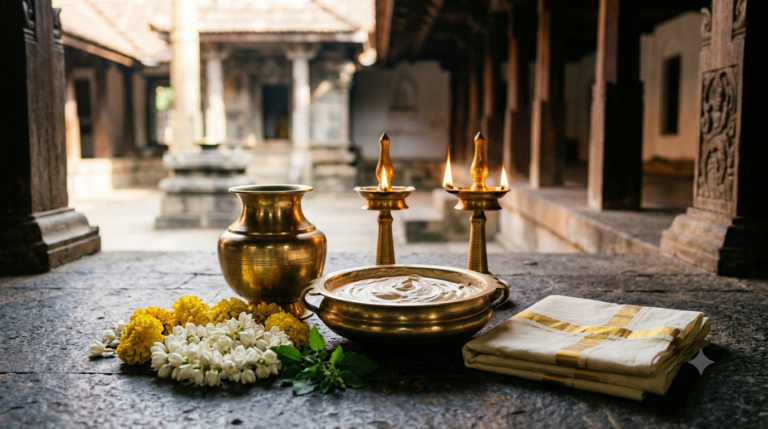
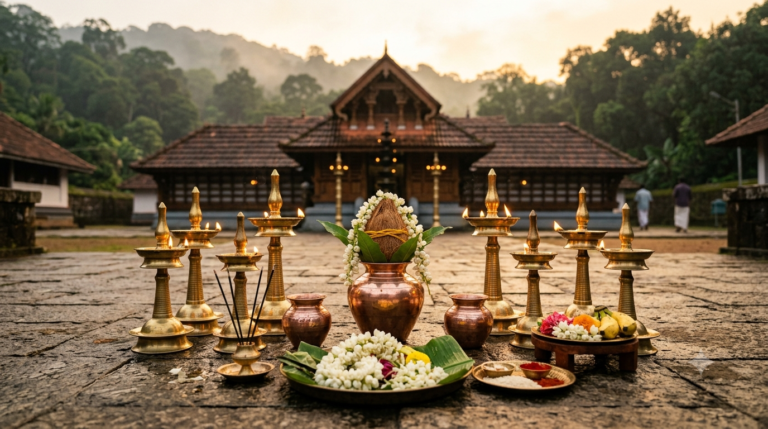
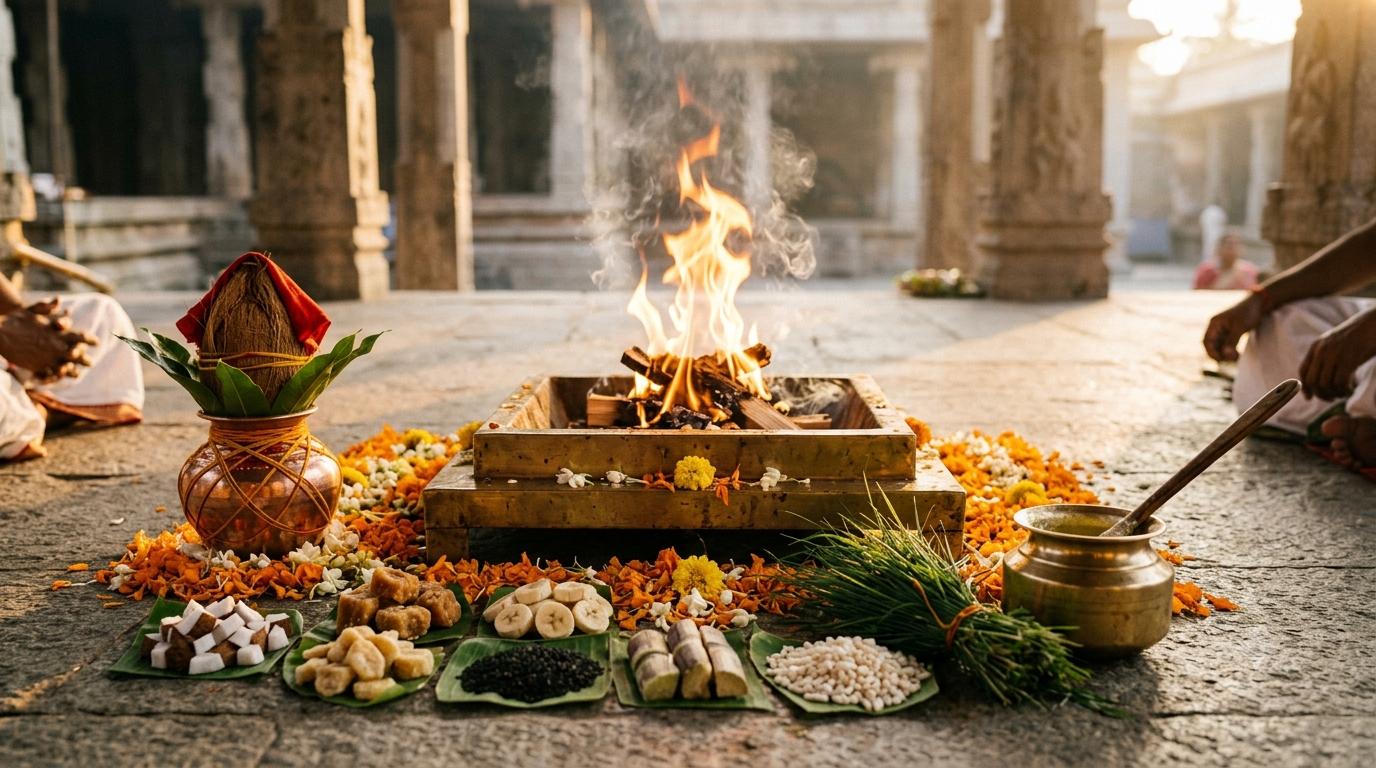
- Kalasha Sthapana: the priest installs a sacred pot of water, mango leaves, and a coconut to invite divine presence.
- Ganapathi Puja: Shodashopachara, the sixteen-step worship, welcomes the deity with flowers, incense, and naivedyam.
- Punyahavachanam: the priest sprinkles holy water to purify the space, the materials, and the participants.
- Agni Prathishthapana: the priest lights the homa kunda with ghee and wood while chanting Vedic mantras.
- Ahutis and Ashta Dravya: offerings go into the fire with each mantra round, including the eight sacred substances.
- Poornahuti: the final full offering seals the homam, ideally at sunrise.
- Deeparadhana and prasadam: the priest shows harathi, then shares modakam and sweets as prasadam.
Because each step has its own mantras, an experienced priest keeps the flow smooth and correctly timed.
Ashta Dravya: The Eight Sacred Offerings
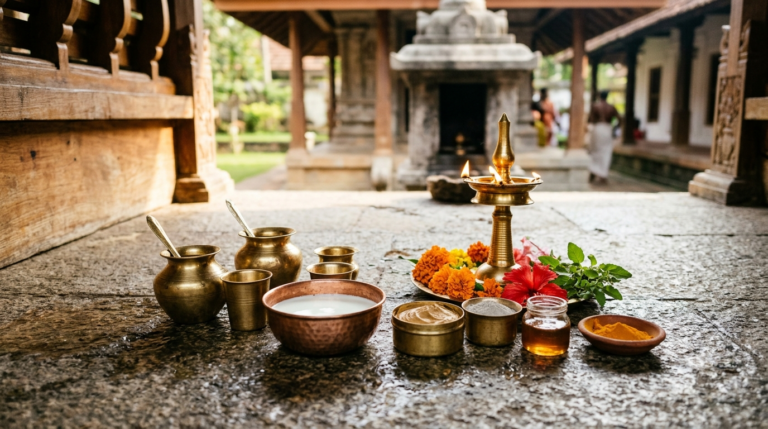
Ashta Dravya means eight substances, and this offering sits at the heart of the ritual. Here is where many websites mislead readers: they print one fixed list as if it were universal. In reality, the eight items vary by region and by text, so your priest may use a slightly different set than a guide online shows.
| Tradition | Common Ashta Dravya items |
|---|---|
| Common South Indian | Coconut, jaggery, banana, sesame, sugarcane, puffed rice, honey, beaten rice |
| Kerala style | Coconut, honey, jaggery, sugarcane, sweet appam, sweet ada, black sesame, banana |
| Tantra Ratnam text | Sugarcane, malarpodi, banana, aval, sesame, modakam, coconut, puffed rice |
If one item is missing, tradition allows jaggery, honey, and ghee as substitutes. Each substance is linked to a devata and to a quality, such as coconut for purity or modakam for the sweetness of success. So the exact list matters less than the devotion behind it.
Mantras Chanted During the Homam
Sound is central to the ceremony. The priest opens with the simple bija mantra, “Om Gam Ganapataye Namaha,” which most devotees can chant along. After that, deeper texts follow for the fire offerings.
Three mantras appear most often. The Ganapati Moola mantra invokes the deity’s core energy. The Ganapati Gayatri seeks wisdom and clarity, while the Ganapati Atharvashirsha, a longer Upanishadic hymn, is reserved for elaborate versions. Because correct pronunciation matters, most families rely on a trained priest rather than reading the text themselves.
Types of Ganapathi Homam
Not every homam is the same, and choosing the right type saves money and effort. Priests match the form to your goal, so it helps to know the main options before you book.
- Maha Ganapathi Homam: the general, all-purpose version for obstacle removal and success.
- Ashta Dravya Ganapathi Homam: focused on wealth, business, and career growth.
- Bala Ganapathi Homam: often chosen for children, health, and family wellbeing.
- Lakshmi Ganapathi Homam: combines Ganesha with Goddess Lakshmi for prosperity.
- Sri Vidya Ganapathi Homam: a rarer, advanced form performed by trained upasakas.
The core Ganapathi Homam procedure stays the same across these forms; only the scale, mantras, and offerings expand. When you are unsure, describe your situation to the priest, and let them recommend the fit. Since the elaborate forms cost more, this small conversation prevents overspending.
Ganapathi Homam Procedure at Home vs at a Temple
Both settings are valid, yet they suit different needs. The Ganapathi Homam procedure at home feels personal and lets the whole family take part, while a temple version brings scale, trained priests, and a consecrated fire pit. Your choice depends on space, budget, and how many people will attend.
- Choose home when you want an intimate ritual, a specific date, and direct participation.
- Choose a temple when you prefer larger arrangements, professional handling, or a public occasion.
A home homam needs a ventilated space, a metal homa kunda, and safe distance from curtains. Because open fire is involved, never perform it in a closed room or leave it unattended.
How Much Does the Homam Cost?
Cost is the question readers ask most, so here is an honest answer. Prices vary widely by city, priest, materials, and scale, which means no single figure fits everyone. A simple home homam is typically far cheaper than an elaborate temple ceremony with multiple priests.
As an indicative range, a standard Ganapathi Homam often falls between ₹2,500 and ₹15,000, though larger or specialised forms can cost more. Treat this as a rough guide only, not a fixed rate. Always confirm the current amount directly with your priest or the official temple portal before you commit, since these figures change over time.
What Most Guides Get Wrong About the Ganapathi Homam Procedure
Several myths circulate online, and correcting them is where the real value lies. First, many pages present one Ashta Dravya list as the only correct one, which is simply untrue; the set varies by region and tradition. Second, some sites claim a fixed nationwide price, yet costs genuinely differ by location and priest.
Third, a few guides imply you can book an “official” online slot for a home homam through a random portal. Be careful here. For a temple seva, use only the temple’s own official website, and for a home ritual, engage a verified priest directly.
Finally, no homam should ever be sold as a guaranteed cure for illness. Faith supports wellbeing, but it never replaces a doctor. For background on the deity behind the Ganapathi Homam procedure, the reference entry on Lord Ganesha is a useful starting point.
Safety and Health Notes
An open fire indoors needs common sense. Keep the room ventilated, place the homa kunda on a heat-proof base, and keep children and loose clothing away from the flames. Because smoke can build up, anyone with asthma or breathing trouble should sit at a distance.
Fasting is optional and light for most people. If you are pregnant, elderly, diabetic, or unwell, do not fast strictly, and speak to a doctor first. The homam is a spiritual practice, so treat any health or astrological claim as belief, never as medical treatment.
Before You Book
The Ganapathi Homam procedure rewards preparation more than expense. Fix the right date around a favourable tithi, pick the homam type that matches your goal, and engage a priest who explains each step clearly. Keep the setting safe, the intention sincere, and the offerings simple.
Do that, and the ritual becomes a calm, meaningful start to whatever you are beginning. For related rituals, you may also find our guides to the Lakshmi Narasimha Homam and the Maha Mrityunjaya Homam useful.
Frequently Asked Questions
What is the Ganapathi Homam procedure in simple terms?
It is a Vedic fire ritual for Lord Ganesha. A priest chants mantras and offers ghee, durva grass, and the eight Ashta Dravya substances into a sacred fire. The aim is to remove obstacles and bless a new beginning with success and peace.
Which day is best for Ganapathi Homam?
Sankashti Chaturthi and Vinayaka Chaturthi are the most auspicious, along with the third day of Navaratri. The Chaturthi of any month also works well. Because lunar dates shift yearly, confirm the tithi on a panchang or with your priest before fixing the day.
Can I perform Ganapathi Homam at home?
Yes, many families do. You need a ventilated space, a metal homa kunda, the pooja samagri, and ideally a trained priest for correct mantras. Keep the fire safe and never leave it unattended. A home homam is intimate, though a temple offers larger arrangements.
What are the Ashta Dravya used in the homam?
Ashta Dravya are eight sacred offerings, commonly coconut, jaggery, banana, sesame, sugarcane, puffed rice, honey, and beaten rice. The exact set varies by region and tradition, so your priest may use a slightly different list. If an item is missing, jaggery, honey, and ghee can substitute.
How long does the Ganapathi Homam take?
A standard home homam usually runs one to two hours. Elaborate temple versions, or forms like the Ashta Dravya or Sri Vidya homam, can take longer. Since the flow ideally ends with Poornahuti at sunrise, priests often start in the early Brahma Muhurtham window.
Is Ganapathi Homam a remedy for Ketu dosha?
In Vedic astrology, many priests suggest it to soften a difficult Ketu period. Treat this as a matter of faith and tradition rather than a guaranteed result. If you are facing real problems, combine devotion with practical action and professional advice where it matters.
How much does Ganapathi Homam cost?
There is no fixed rate. Costs depend on city, priest, materials, and scale, with an indicative range often between ₹2,500 and ₹15,000. Specialised forms cost more. Always confirm the current price with your priest or the official temple portal, since amounts change over time.
Do I need to fast before the homam?
Light fasting is customary but optional. Most people simply bathe and stay vegetarian on the day. If you are pregnant, elderly, or have a medical condition, do not fast strictly and consult a doctor first, because your health always comes before ritual custom.