The Dhanvantari Homam procedure is a Vedic fire ritual dedicated to Lord Dhanvantari, the physician of the gods and the divine source of Ayurveda. Most devotees search for it while a loved one is unwell, so they want two honest things. They want to know what the ritual actually involves, and what it can realistically do.
This guide answers both. It walks through the full procedure step by step, explains the mythology and the mantras, and gives clear cost and timing guidance. It also gently corrects a claim that many websites repeat, because a homam is a devotional practice for peace of mind, not a medical treatment.
Sri Vyasa Pooja is an independent pooja-service guide. We are not the official website of any temple, trust, or government body, and this article is not medical advice. For temple-specific sevas, always use the official temple portal, and for any illness, consult a qualified doctor.
Dhanvantari Homam at a Glance
- Deity: Lord Dhanvantari, an incarnation of Vishnu and the father of Ayurveda.
- Purpose (traditional): prayers for good health, healing, and a peaceful state of mind.
- Best day: Dhanvantari Jayanti, which falls on Dhanteras, on 6 November 2026.
- Typical duration: around three to five hours, depending on scale.
- Core act: priests chant Dhanvantari mantras while offering ghee and herbs into a sacred fire.
- Indicative cost: roughly ₹5,000 to ₹15,000, though it varies widely.
Who Is Lord Dhanvantari?
Lord Dhanvantari is revered in Hindu tradition as the divine physician. He is counted as an incarnation of Lord Vishnu, and he is honoured as the founder of Ayurveda, the ancient Indian science of life and healing.
According to the Puranas, Dhanvantari appeared during the Samudra Manthan, the churning of the cosmic ocean by the gods and demons. He rose from the waters holding the Amrit Kalash, the pot of nectar of immortality. Because he emerged bearing both the nectar and the knowledge of medicine, devotees turn to him when they pray for health and recovery.
He is usually depicted with four arms. In these forms, he holds a conch, a discus, a pot of nectar, and either a leech or a medicinal herb. So his very image links divine grace with the practical craft of healing.
Significance of the Dhanvantari Homam
The Dhanvantari Homam is performed to seek Lord Dhanvantari’s blessings for physical wellbeing, mental calm, and a supportive, positive home environment. It is essentially a prayer offered through fire, since Vedic tradition treats fire (Agni) as the carrier of offerings to the divine.
Families often choose this homam during a difficult health phase, before a surgery, or simply at the start of a new year for wellbeing. Some also pair it with the Maha Mrityunjaya Homam, another ritual associated with health and longevity. The intention matters more than the scale.
That said, the value here is spiritual and psychological. Understanding the Dhanvantari Homam procedure with this mindset helps you approach it well. It is not a claim that fire and mantras replace diagnosis, medicine, or a doctor’s care.
What Does the Dhanvantari Homam Procedure Involve?
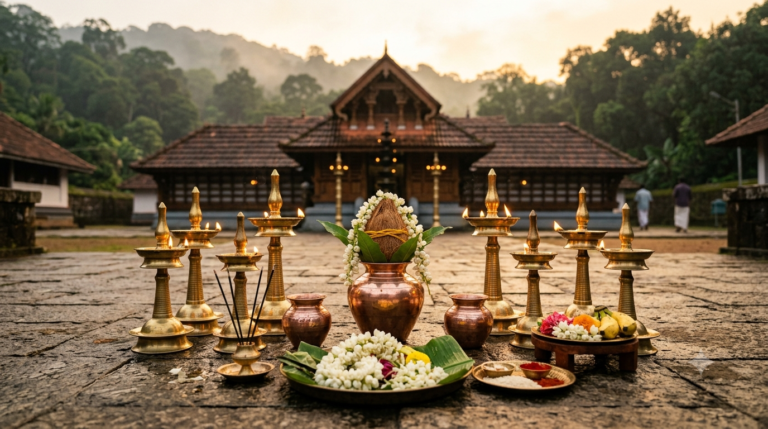
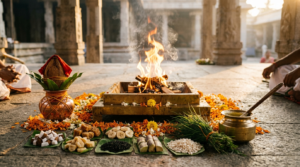
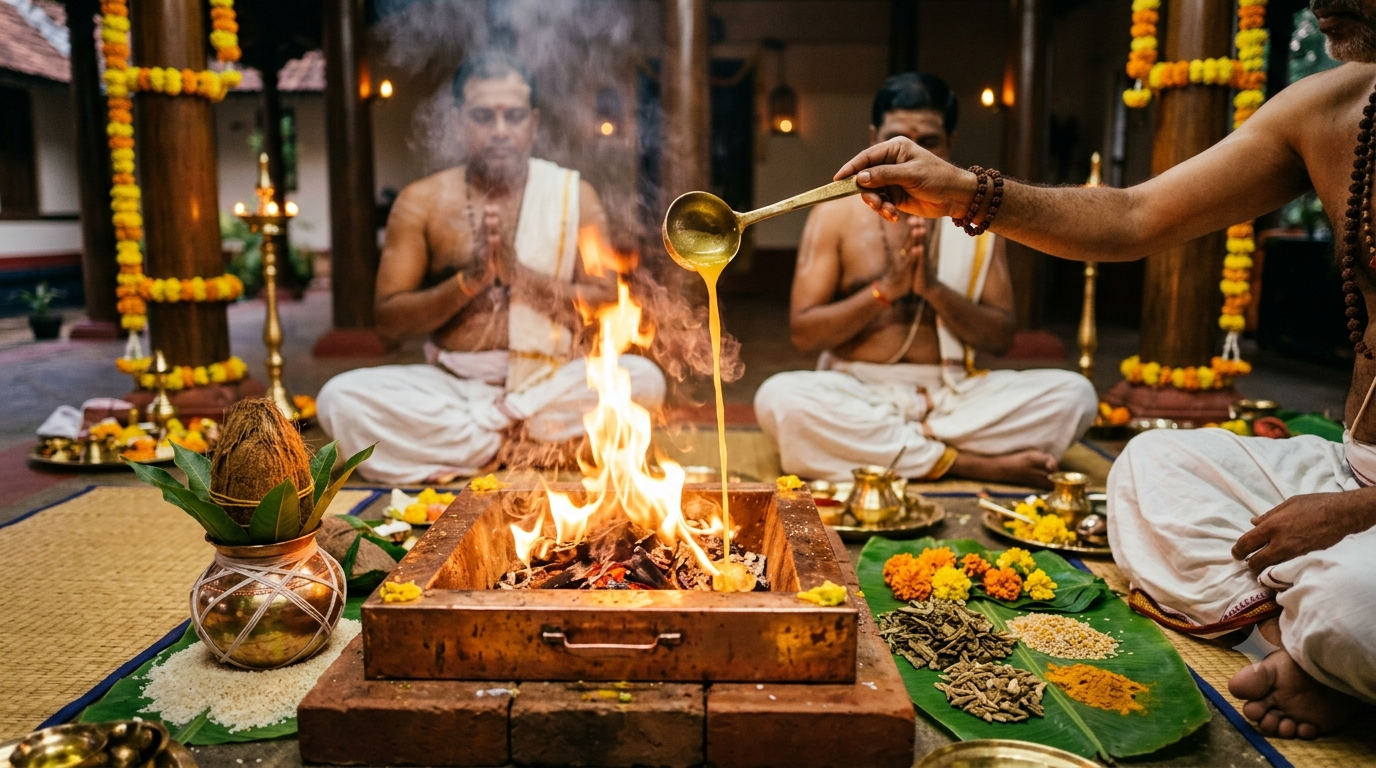
The Dhanvantari Homam procedure invokes Lord Dhanvantari into a sacred fire, then offers ghee, medicinal herbs, and grains into that fire while priests chant his mantras. A trained priest leads it, because correct pronunciation and sequence are considered essential. The ritual usually runs for three to five hours from start to finish.
Although customs differ by region and tradition, the core sequence stays remarkably consistent. Below is the typical flow, so you know what to expect on the day.
Dhanvantari Homam Procedure: Step by Step
- Ganapati Puja: the ritual opens with prayers to Lord Ganesha, so that obstacles are removed first.
- Sankalpa: the priest states the devotee’s name, gotra, and the purpose of the homam as a vow.
- Kalasha Sthapana: a sacred pot (kalash) is installed and Lord Dhanvantari is invoked into it.
- Agni Prathishta: the priest kindles the sacred fire in the homa kunda with wood.
- Mantra Japa and Ahuti: the priest chants Dhanvantari mantras and offers ghee and herbs into the flames.
- Purnahuti: a final full offering completes the fire ritual.
- Deeparadhana and Prasadam: the priest waves lamps, gives blessings, and distributes sacred ash and prasadam.
In many traditions, priests offer 108 medicinal herbs during the Dhanvantari Homam procedure. Each herb links the ritual to Ayurveda’s roots. Because the priest burns these herbs in ghee, the space fills with a distinctive, calming aroma.
Samagri: What You Need for the Ritual
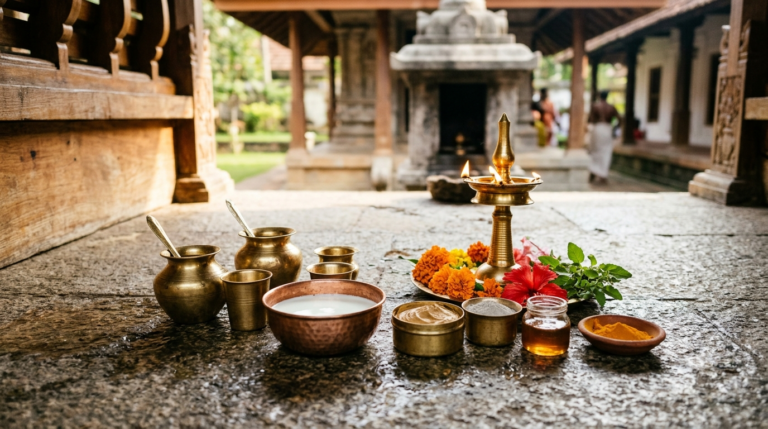
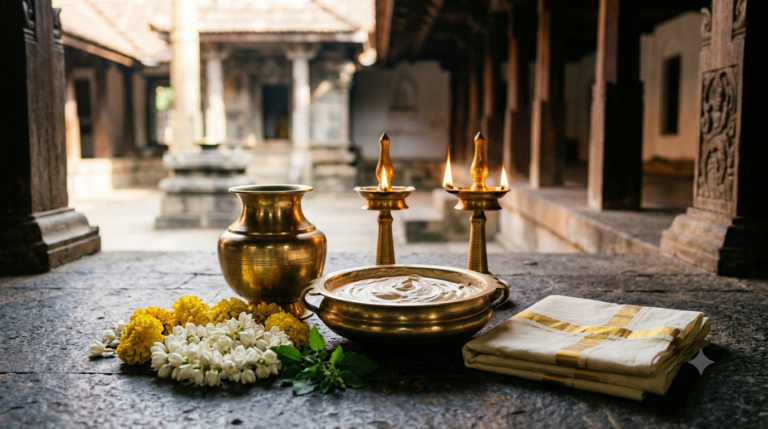
The materials are simple, yet each one carries meaning. Your priest will usually supply the specialised items, while you arrange the basics at home.
- Homa kunda: the fire pit, along with mango wood or dried cow-dung cakes as fuel.
- Ghee: clarified butter, the main oblation poured into the fire.
- Medicinal herbs: tulsi (holy basil), neem, and turmeric, among others.
- Grains and offerings: rice, sesame, flowers, fruits, and coconut.
- Kalash: a metal pot with water, mango leaves, and a coconut for invoking the deity.
Best Day for the Dhanvantari Homam
The most auspicious day is Dhanvantari Jayanti, the birth anniversary of Lord Dhanvantari. It coincides with Dhanteras, the first day of Diwali, which falls on the Trayodashi of Krishna Paksha in the month of Kartik. In 2026, Dhanteras and Dhanvantari Jayanti fall on Friday, 6 November.
Tithi start and end times shift by city. So check the exact muhurat on a trusted panchang such as Drik Panchang before you fix a time.
Beyond that single day, priests also recommend Ekadashi tithis and Mondays, since Monday is sacred to Lord Vishnu. Yet the homam can be performed on any suitable day when a health need arises, because sincerity matters more than the calendar.
Dhanvantari Jayanti Is No Longer National Ayurveda Day
Here is a correction many websites still miss. For years, National Ayurveda Day was observed on Dhanvantari Jayanti (Dhanteras), so the two were treated as the same occasion. That changed in 2025.
Through a Gazette Notification issued in March 2025, the Government of India fixed National Ayurveda Day permanently on 23 September every year, starting 2025. The Ministry of AYUSH made this shift so the day would have a stable global date instead of a moving lunar one. So Dhanvantari Jayanti remains the religious birth anniversary of the deity, while the government’s Ayurveda Day is now a separate, fixed date.
Dhanvantari Homam Procedure at Home, Temple, or Online
You can perform the ritual in three practical ways, and each suits a different situation. The table below compares them so you can decide quickly.
| Option | Best for | What to expect |
|---|---|---|
| At home | Families wanting a personal ceremony | Priest visits; you arrange space and basic samagri |
| At a temple | Those seeking a traditional temple setting | Book the seva through the official temple portal only |
| Online (live) | People far away or with mobility limits | Priests perform on your behalf; you join by video and receive prasadam by post |
For a temple seva, always book through that temple’s official website, since third-party booking numbers are a common source of fraud. For a home or online homam, engage a qualified priest through a trusted service. You can request a Dhanvantari Homam with experienced priests through Sri Vyasa Pooja, much as devotees book a Chandi Homam for protection and strength.
Cost of the Dhanvantari Homam Procedure
The cost of the Dhanvantari Homam procedure is not fixed, so treat any single figure with caution. As an indicative range, a modest home or online homam often costs around ₹5,000 to ₹15,000. Larger ceremonies with more priests, more chanting rounds, and elaborate offerings cost more.
Several factors drive the price up or down. These include the number of priests, the mantra repetitions, the quantity of herbs, and your city. Extra rituals also add to the total. Because these variables differ so much, always confirm the all-inclusive amount with your priest before you commit.
The Dhanvantari Mantra
Mantra chanting sits at the heart of the ritual. A widely used verse invokes Dhanvantari as the bearer of the nectar pot who removes fear of disease. In simple terms, the prayer salutes the divine physician and asks for health and protection.
Om Namo Bhagavate Dhanvantaraye Amrita-kalasha-hastaya Sarva-bhaya-vinashaya Sarva-roga-nivaranaya Trailokya-nathaya Sri Maha Vishnave Swaha.
Many devotees also chant the simpler Om Namo Bhagavate Vasudevaya, which honours Vishnu. If you chant at home, focus on calm, steady repetition rather than speed, since a peaceful mind is the real aim.
What the Homam Can and Cannot Do
This is the most important section, because it corrects widespread misinformation. Many pages claim the ritual can “cure” chronic illness, “eliminate all diseases,” or replace treatment. Those claims are not true, and repeating them can be harmful.
A homam is a faith practice. Its genuine benefits are devotional and emotional: a sense of hope, reduced anxiety, family togetherness, and a calmer environment during a hard time. These are real and valuable, yet they work alongside medicine, not instead of it.
So please keep this simple rule in mind. Continue your prescribed treatment, keep your doctor’s appointments, and never stop medication because of any ritual. If you or a family member faces a serious illness, medical care comes first, while the homam offers spiritual support. When you approach it this way, the tradition brings comfort without any risk.
Insider Tips Most Guides Skip
- Verify the priest: confirm the priest’s experience and lineage before booking, because skill and correct chanting matter.
- Ask for an all-in quote: get samagri, dakshina, and travel included in writing, so there are no surprises.
- Prepare the space: ensure good ventilation for the fire, and keep elderly or unwell family members at a comfortable distance from the smoke.
- Watch the fire safety: keep water nearby, tie back loose clothing, and never leave the flame unattended.
- Skip the middlemen: avoid random agents who promise “guaranteed cures,” since that is a clear red flag.
The Bottom Line
The Dhanvantari Homam is a meaningful tradition that brings families together in prayer for health and peace of mind. Perform it on Dhanvantari Jayanti (6 November in 2026) if you can, or on any Ekadashi or Monday that suits you. Choose a home, temple, or online format based on your situation, engage a qualified priest, and confirm the full cost upfront. Above all, treat the ritual as devotional support that sits beside proper medical care, never as a replacement for it.
Frequently Asked Questions
What is the Dhanvantari Homam?
It is a Vedic fire ritual dedicated to Lord Dhanvantari, the divine physician and father of Ayurveda. Devotees perform it to pray for good health, healing, and peace of mind. Priests chant his mantras while offering ghee and herbs into a sacred fire.
What is the Dhanvantari Homam procedure in short?
The Dhanvantari Homam procedure begins with Ganapati puja and a sankalpa vow. The priest then invokes Dhanvantari into a kalash, kindles the sacred fire, and offers ghee and herbs while chanting mantras. It ends with the purnahuti, deeparadhana, and distribution of prasadam.
When should the Dhanvantari Homam be performed in 2026?
The most auspicious day is Dhanvantari Jayanti, which coincides with Dhanteras on 6 November 2026. Ekadashi tithis and Mondays are also considered favourable. However, you can perform it on any suitable day when there is a health need.
Can the Dhanvantari Homam cure diseases?
No. The homam is a devotional practice, not a medical treatment. It can offer comfort, hope, and a calm mind, yet it does not replace doctors or medicine. Always continue prescribed treatment and consult a qualified physician for any illness.
How much does the Dhanvantari Homam cost?
Costs vary widely, so no single figure fits every case. As an indicative range, a home or online homam often falls between ₹5,000 and ₹15,000. The number of priests, herbs, and mantra rounds changes the final amount, so confirm it in advance.
Is National Ayurveda Day the same as Dhanvantari Jayanti?
Not anymore. Since 2025, the Government of India observes National Ayurveda Day on a fixed date of 23 September. Dhanvantari Jayanti remains the traditional religious birth anniversary of Lord Dhanvantari on Dhanteras.
Can I perform the Dhanvantari Homam at home?
Yes, many families do. A qualified priest can complete the full Dhanvantari Homam procedure at your home if you arrange the space and basic samagri. Ensure good ventilation, follow fire-safety basics, and keep unwell or elderly members away from heavy smoke.
Which mantra is chanted during the homam?
The main verse begins “Om Namo Bhagavate Dhanvantaraye,” which salutes the divine physician holding the nectar pot. Some devotees also chant “Om Namo Bhagavate Vasudevaya” for Vishnu. Steady, devoted repetition matters more than speed.