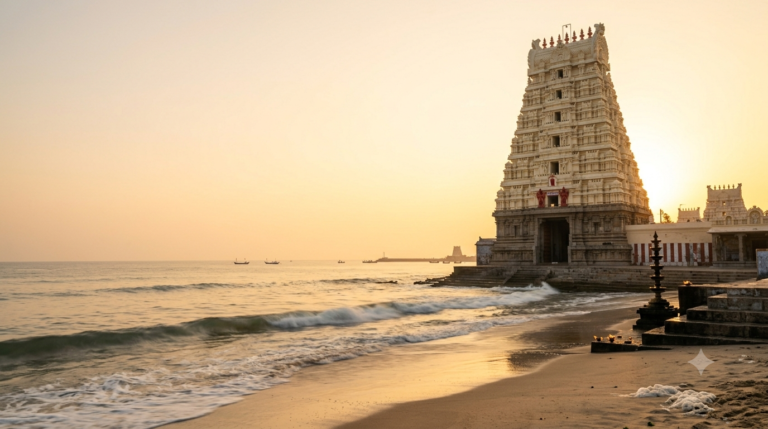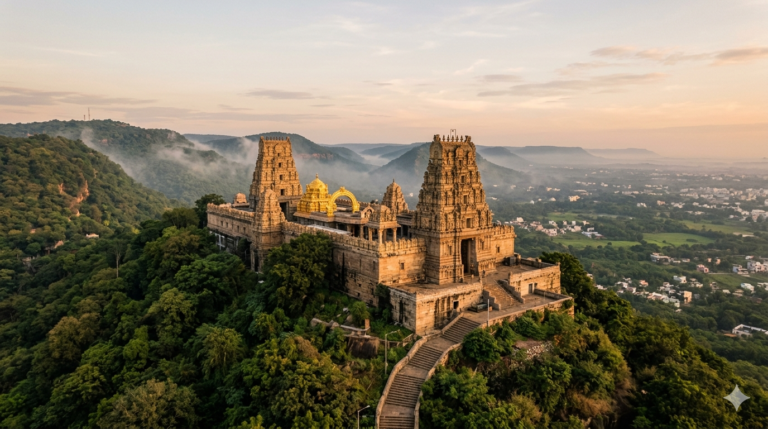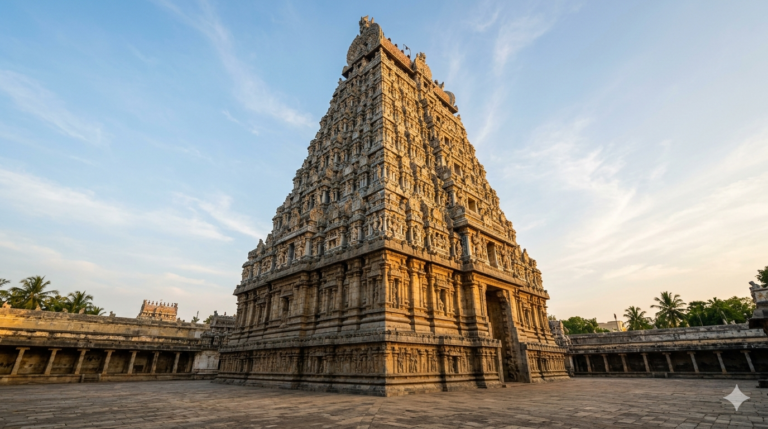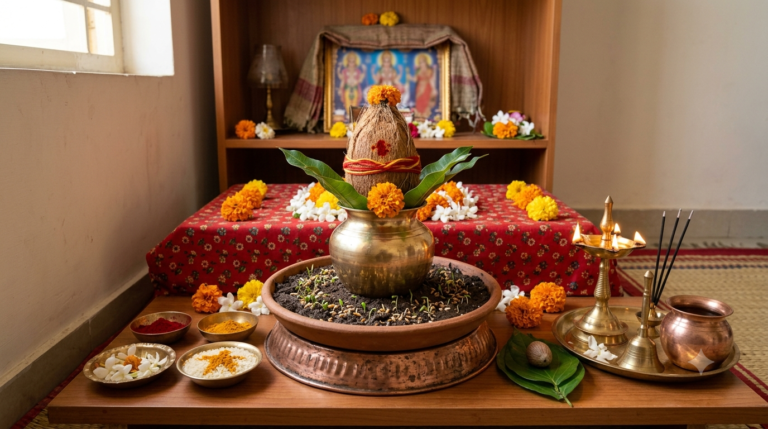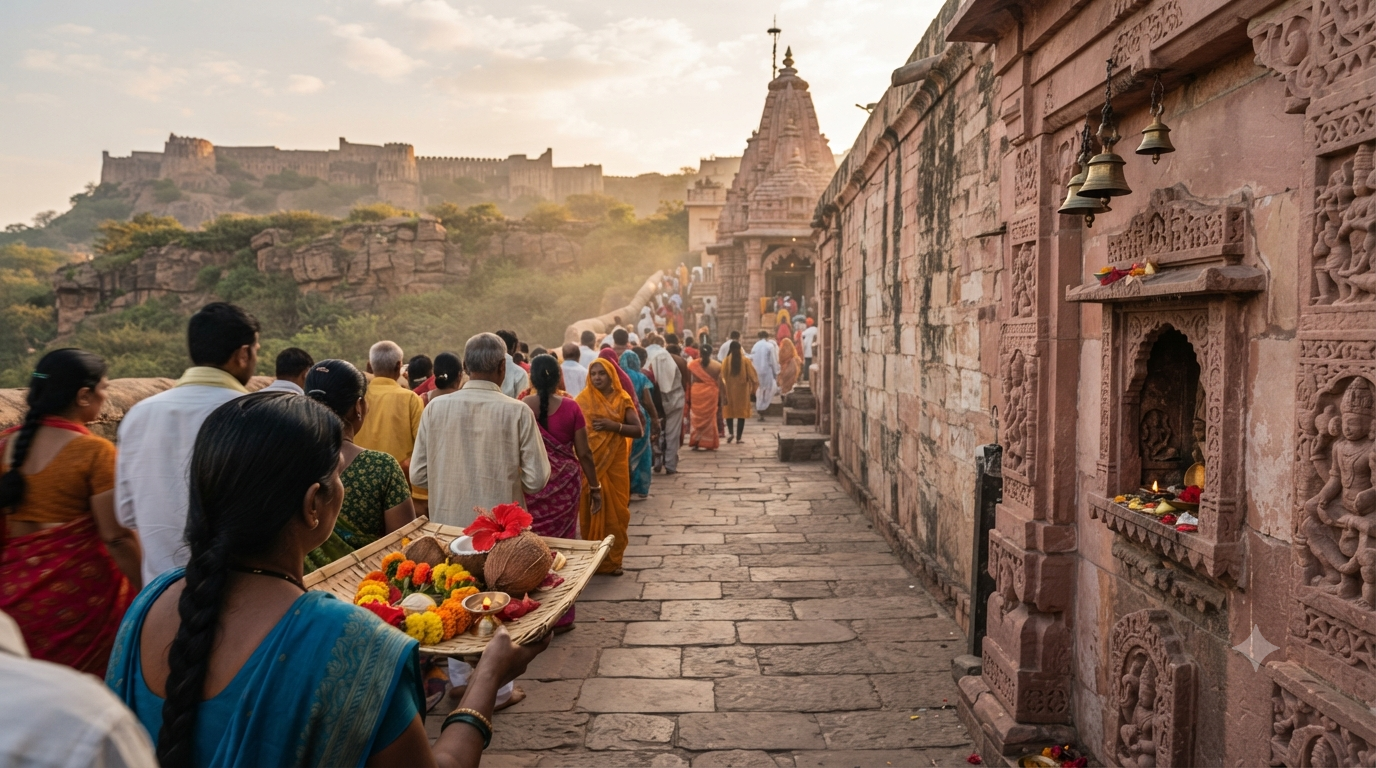
Ganapati temples in North India sit further apart than most listicles admit, and many of those listicles get the geography plainly wrong. Search the phrase today and you mostly get Maharashtra shrines, because writers copy each other instead of checking a map. This guide corrects that, then gives you the shrines that genuinely sit in the north.
For every one of the Ganapati temples in North India below, you get verified darshan windows, aarti times and the busiest weekday. We have also flagged the online claims that do not hold up.
Independent guide notice: Sri Vyasa Pooja works as an independent devotional guide. We have no affiliation with any temple trust, board or government department, and we take no bookings, donations or payments. Timings shift with seasons and festivals, so confirm with the temple before you travel.
Ganapati Temples in North India at a Glance
- Rajasthan holds the two most visited shrines, namely Trinetra Ganesh at Ranthambore Fort and Moti Dungri Ganesh in Jaipur.
- Madhya Pradesh adds three heavyweights, because Indore has Khajrana Ganesh and Bada Ganpati while Ujjain has Chintaman Ganesh.
- Varanasi carries the deepest tradition, since the Kashi Khanda names fifty-six Vinayakas guarding the city.
- Delhi’s best-known Ganesha shrine stands at Connaught Place and opens daily from early morning.
- Entry costs nothing at all of these shrines, so treat any site selling darshan passes as a warning sign.
- Wednesday draws the heaviest crowds, because devotees link Lord Ganesha with Budh, the planet Mercury.
Which Ganapati Temples in North India Are Genuinely Northern?
Only a handful. Rajasthan, Delhi, Uttar Pradesh, Haryana, Punjab, Uttarakhand and Himachal Pradesh make up North India in normal usage. Madhya Pradesh sits in the centre, while Maharashtra sits in the west and Odisha and Assam sit east and northeast.
That matters because almost every published list of Ganapati temples in North India opens with the Ashtavinayak circuit. Those eight shrines cluster around Pune, roughly 1,400 km south of Delhi. Calling them northern misleads anyone planning a real trip.
A second reason explains why the honest list runs short. Across the Gangetic plain, Ganesha usually sits as a guardian inside a larger Shiva or Shakti complex rather than as the presiding deity. So the region holds thousands of shrines, yet few standalone landmarks. That is also why the best Ganapati temples in North India reward planning rather than wandering.
Rajasthan: The Strongest Ganapati Temples in North India
Trinetra Ganesh Temple, Ranthambore Fort
Trinetra Ganesh sits inside Ranthambore Fort in Sawai Madhopur district, roughly 12 km from town. Devotees revere the three-eyed form here as Pratham Ganesh, and the shrine holds Riddhi, Siddhi and the sons Shubh and Labh together. King Hammir Dev Chauhan raised it around 1300 CE.
Priests perform five aartis daily: the dawn Prabhat aarti near 6 AM, Shringar at 9 AM, Bhog at noon, Sandhya around 6 PM in summer and 5:45 PM in winter, then Shayan aarti at 8 PM. Plan your climb around those slots.
The temple charges nothing. Ranthambore Fort itself carries a small Archaeological Survey of India ticket, so check the current amount at the gate. Also budget for a short uphill walk from the fort entrance, since vehicles stop well below the shrine.
One custom makes this shrine unusual. Families across India post wedding cards and wish letters to the deity, and temple staff read them out during worship. If you marry soon, that first card is a tradition worth honouring.
Moti Dungri Ganesh Temple, Jaipur
Moti Dungri stands on a low hill beside Moti Dungri palace in central Jaipur, a short walk from Birla Mandir. The idol shows Ganesha seated with the trunk turned left, and a large Mushak faces him. Locals visit before weddings, exams and new ventures.
Darshan runs from 5:30 AM to 1:30 PM, then again from 4:30 PM to 9 PM. Aarti slots include a pre-dawn Mangal aarti, a late-morning Shringar aarti and an evening aarti around 7 PM. Because the shrine shuts through the afternoon, midday arrivals get turned away.
Wednesday transforms the lane outside into a fair. Traffic barricades go up, hawkers fill the approach, and the queue can stretch for an hour. Visit on a Monday or Thursday morning if you want a quiet darshan instead.
Garh Ganesh and Bohra Ganesh
Jaipur has a second important shrine at Garh Ganesh, above the Nahargarh ridge behind Jal Mahal. Reaching it means climbing roughly 250 steps, so start early and carry water. The bal-swaroop idol here has no trunk visible in the usual profile view.
In Udaipur, Bohra Ganesh draws students before examinations and families before loans or property deals. Timings vary with the season and the temple publishes no fixed public schedule online, so ring ahead through the temple office or arrive in the morning.
Madhya Pradesh: Indore and Ujjain
Khajrana Ganesh Mandir, Indore
Khajrana Ganesh ranks among the busiest wish-fulfilment shrines in central India. The Holkar rulers established it in the eighteenth century after the idol emerged from a well where devotees had hidden it. Silver panels now cover the sanctum doors and outer walls.
Doors open around 5 AM and darshan continues into the late evening, though several sources report an afternoon break between roughly noon and 4 PM. Morning aarti falls near 8 AM and the evening aarti near 8 PM. Confirm locally, because the temple committee adjusts hours during festivals.
A useful correction: many pages date the temple to 1735 and credit Rani Ahilyabai Holkar. She ruled Malwa from 1767, so the 1735 figure cannot square with her reign. Treat the exact year as unsettled while the Holkar association itself stands.
The Ministry of Culture streams the shrine through its national portal, so distant devotees can watch Khajrana Ganesh live darshan without travelling.
Bada Ganpati, Indore
Bada Ganpati sits near Rajwada in the old city, about 4 km from Indore Junction. Pandit Narayan Dadhich founded it in 1875, and the idol rises roughly 25 feet from crown to foot. Incredible India, the national tourism portal, records that height as among the tallest anywhere.
The sculptors used limestone, jaggery, brick dust, sacred soil and river water rather than stone or metal. Because of that fragile mix, priests renew the vermilion chola several times a year. Darshan itself takes fifteen minutes on an ordinary morning.
Chintaman Ganesh Temple, Ujjain
Chintaman Ganesh lies across the Shipra river at Jawasya village, roughly 6 km from Mahakaleshwar. Three swayambhu forms share one sanctum: Chintaman who lifts worries, Icchaman who grants wishes, and Siddhivinayak who bestows accomplishment. That triple form makes the shrine rare.
Darshan generally runs from about 6 AM to noon and again from 5 PM to 10 PM, although some listings quote a continuous 5 AM to 10 PM window. Morning aarti falls between 8 AM and 9 AM. During Chaitra, a fair fills the grounds every Wednesday.
Pair it with Mahakaleshwar in a single Ujjain morning. Pilgrims traditionally seek Ganesha first, so the order works both practically and ritually.
Uttar Pradesh: The Fifty-Six Vinayakas of Kashi
Dhundhiraj Vinayak, Varanasi
The Kashi Khanda of the Skanda Purana describes fifty-six Vinayaka shrines arranged in seven concentric rings around Varanasi. Devotees call the circuit Chhappan Vinayak Yatra. At its centre stands Dhundhiraj Vinayak, close to the Kashi Vishwanath complex.
Tradition holds that a Kashi pilgrimage stays incomplete until you greet Dhundhiraj before Vishwanath. Many visitors walk straight past the shrine, because it occupies a small alcove in a crowded lane. Ask a temple attendant to point it out.
The full circuit takes committed groups two to three days on foot. Several shrines survive only as small wayside images or ghat-step niches, so a local guide helps enormously. No competing North India list covers this yatra, yet it is the densest Ganesha tradition anywhere in the country.
Delhi: Shri Ganesh Mandir, Connaught Place
Delhi’s best-known Ganesha shrine stands on Baba Kharak Singh Marg beside the famous Hanuman Mandir, two minutes from Rajiv Chowk metro. V. Sankar Aiyar founded it in October 1952, and a renovation followed in April 1999. Priests of South Indian origin conduct worship in Dravidian style.
Darshan runs from 5 AM to noon, then from 4 PM to 9:30 PM. The complex also holds Shiva, Shani and Navagraha shrines behind the same wall, so first-time visitors often mistake the two temples for one. Ganesh Chaturthi brings the biggest crowd of the year.
Darshan Timings for Ganapati Temples in North India
Use the timings below as a planning aid rather than a guarantee, because temple committees revise hours without public notice. All five Ganapati temples in North India listed here open daily through the year.
| Temple | City / State | Usual darshan window | Peak day |
|---|---|---|---|
| Trinetra Ganesh | Ranthambore, Rajasthan | Dawn to about 8 PM, five aartis | Wednesday |
| Moti Dungri Ganesh | Jaipur, Rajasthan | 5:30 AM to 1:30 PM, 4:30 PM to 9 PM | Wednesday |
| Khajrana Ganesh | Indore, Madhya Pradesh | About 5 AM to 9 PM, afternoon break reported | Wednesday |
| Chintaman Ganesh | Ujjain, Madhya Pradesh | About 6 AM to noon, 5 PM to 10 PM | Chaitra Wednesdays |
| Shri Ganesh Mandir | Connaught Place, Delhi | 5 AM to noon, 4 PM to 9:30 PM | Ganesh Chaturthi |
Ashtavinayak and Mumbai Belong to West India
Readers still want these shrines, so here they are with the correct label. The Ashtavinayak circuit covers eight self-manifested Ganesha temples around Pune: Moreshwar at Morgaon, Siddhivinayak at Siddhatek, Ballaleshwar at Pali, Varadvinayak at Mahad, Chintamani at Theur, Girijatmaj at Lenyadri, Vighnahar at Ozar and Mahaganapati at Ranjangaon.
Tradition asks pilgrims to begin at Morgaon, visit the other seven in sequence, then return to Morgaon to close the yatra. Skipping that return leaves the circuit unfinished in ritual terms. Most tour operators cover it across two or three days by road.
Mumbai adds Shree Siddhivinayak at Prabhadevi, built in 1801 and now among the busiest temples in the country. Tuesday is its peak day rather than Wednesday. For sevas and queue information, use the temple trust’s own site at siddhivinayak.org. Ganpatipule near Ratnagiri and Dagdusheth Halwai in Pune complete the western favourites.
If your search really meant the peninsula, our separate list of Ganapati temples in South India covers Andhra Pradesh, Telangana, Tamil Nadu, Karnataka and Kerala.
Planning a Circuit of Ganapati Temples in North India
A workable seven-day route starts in Delhi and ends in Varanasi. Take darshan at Connaught Place on day one, then travel to Jaipur for Moti Dungri and Garh Ganesh. Trains cover that leg in under five hours.
From Jaipur, continue to Sawai Madhopur for Trinetra Ganesh on day three. Ranthambore also runs safaris, so book any wildlife slot separately and well ahead. Next comes the overnight run to Ujjain for Chintaman Ganesh and Mahakaleshwar.
Indore lies under two hours from Ujjain by road, so Khajrana and Bada Ganpati fit one easy day. Finish with a flight or train to Varanasi for Dhundhiraj Vinayak. Devotees who want a formal ritual afterwards often arrange a Ganapathi Homam at home.
Best Days to Visit Ganapati Temples in North India
October to March suits the whole route, because Rajasthan and Madhya Pradesh both turn punishing after April. Ganesh Chaturthi falls in Bhadrapada, usually during August or September, and every shrine on this list swells then. Sankashti Chaturthi arrives monthly and brings a smaller evening rush.
Wednesday remains the busiest weekday at Ganapati temples in North India. Angarki Chaturthi, which falls when Sankashti lands on a Tuesday, draws exceptional numbers too. For quiet darshan, aim for the first hour after opening.
What Can Go Wrong at Ganapati Temples in North India
Ganapati temples in North India offer no guaranteed smooth visit, so plan for the common failures. Afternoon closure catches most first-timers, since Moti Dungri, Chintaman Ganesh and the Delhi shrine all shut for hours. If you arrive then, use the gap for a nearby temple and return at the evening opening.
At Ranthambore, fort gate hours and monsoon conditions can cut your window short. Should the climb prove too much, worship at the smaller Ganesha shrine near the fort base instead of forcing the ascent. During Ganesh Chaturthi, expect multi-hour queues and no separate fast lane at most northern shrines.
Lost or restricted items cause the other common problem. Many shrines bar leather, cameras and mobile phones inside the sanctum, and cloakrooms fill early on festival days. Carry as little as possible, then hand what remains to a companion waiting outside.
Fake Booking Portals and Paid Darshan Claims
None of the Ganapati temples in North India covered here sells a general darshan ticket. Entry stays free, queues run first-come, and no official online quota exists for ordinary visits. Any site charging you for a darshan slot at Khajrana, Moti Dungri or Trinetra Ganesh has no authority to do so.
Two further myths deserve correction. Trinetra Ganesh does not stay open around the clock despite several travel pages claiming it, because fort access itself ends in the evening. Bada Ganpati also has no separate seva booking counter, so treat paid packages naming it with suspicion.
When a temple genuinely runs online sevas, the trust says so on its own domain. Mumbai’s Siddhivinayak is the clearest example among Ganesha shrines. For darshan-timing questions elsewhere, our page on Karya Siddhi Vinayaka temple timings follows the same verify-first approach.
Insider Tips for Ganapati Temples in North India
- Reach the gate twenty minutes before opening, since the first darshan of the day moves fastest.
- Carry small notes for the offering tray, because change runs short at busy shrines.
- Offer durva grass and modak where available, as both hold specific significance in Ganesha worship.
- Keep Wednesday for a smaller shrine, then save the famous Ganapati temples in North India for other weekdays.
- Photograph the timing board at the gate, so you have the current schedule rather than a stale web listing.
A word on physical demand. Garh Ganesh needs a stair climb and Trinetra Ganesh needs an uphill walk on uneven stone, while Rajasthan summers regularly pass 42 degrees Celsius. Elderly pilgrims, pregnant women and anyone with heart or knee trouble should consult a doctor first and carry water and medication. Faith practices support devotion; they do not replace medical care.
Before You Go
The honest summary is that the north holds fewer landmark Ganesha temples than Maharashtra, yet the ones it holds carry remarkable depth. Trinetra Ganesh and Moti Dungri anchor Rajasthan, Khajrana and Chintaman anchor Madhya Pradesh, and Kashi’s fifty-six Vinayakas outrank every list for sheer tradition. Start with Jaipur and Ranthambore if you have only a weekend. Verify timings on the day you travel, because published hours drift constantly.
Frequently Asked Questions
Which are the most famous Ganapati temples in North India?
Trinetra Ganesh at Ranthambore Fort and Moti Dungri Ganesh in Jaipur lead the list, followed by Khajrana Ganesh and Bada Ganpati in Indore, Chintaman Ganesh in Ujjain, Dhundhiraj Vinayak in Varanasi and Shri Ganesh Mandir at Connaught Place in Delhi.
Are the Ashtavinayak temples in North India?
No. All eight Ashtavinayak shrines sit in Maharashtra, which is western India, mostly within a few hours of Pune. Lists that place them in the north simply repeat an old error.
Do I need to book darshan online at Ganapati temples in North India?
No. Entry costs nothing and no general online booking exists at the northern shrines listed here. Only a few large temples elsewhere, such as Mumbai’s Siddhivinayak, run their own seva booking through an official trust website.
Which day is best to visit Ganapati temples in North India?
Wednesday holds the strongest ritual link, because devotees associate Ganesha with Budh or Mercury. That also makes it the busiest day. For a calm visit, choose a Monday or Thursday morning soon after opening.
What are the Trinetra Ganesh aarti timings?
Priests perform five aartis daily: Prabhat around 6 AM, Shringar at 9 AM, Bhog at noon, Sandhya near 6 PM in summer and 5:45 PM in winter, and Shayan at 8 PM. Reconfirm at the fort, since sunset timings shift the evening slot.
How many Ganesha temples does Varanasi have?
The Kashi Khanda names fifty-six Vinayaka shrines arranged in seven rings around the city. Devotees know the pilgrimage as Chhappan Vinayak Yatra, and Dhundhiraj Vinayak near Kashi Vishwanath sits at its centre.
Is there an entry fee at Trinetra Ganesh Temple?
The temple charges nothing. Ranthambore Fort, a protected monument, carries a modest entry ticket, so confirm the current amount at the gate before you climb.
Can I visit Khajrana Ganesh online?
Yes, in a limited sense. The Ministry of Culture’s Utsav portal streams live darshan from Khajrana Ganesh Mandir, which helps devotees who cannot travel to Indore.
What should I offer at a Ganesha temple?
Modak, laddu, durva grass, red flowers and coconut count as traditional offerings. Many devotees also tie a vow thread at Chintaman Ganesh in Ujjain, then return to untie it once the wish comes true.