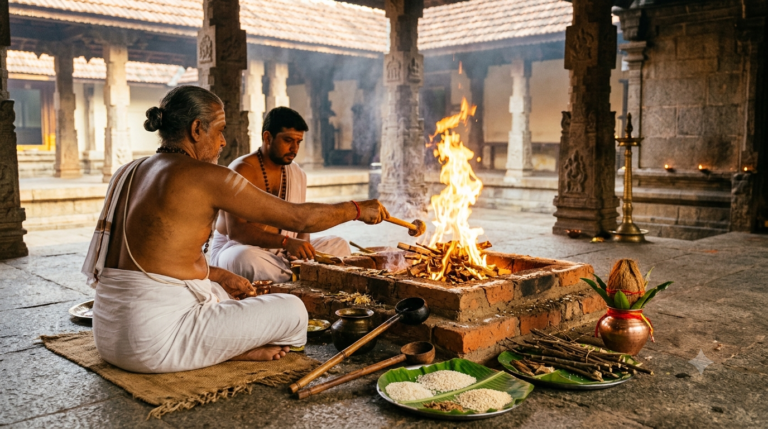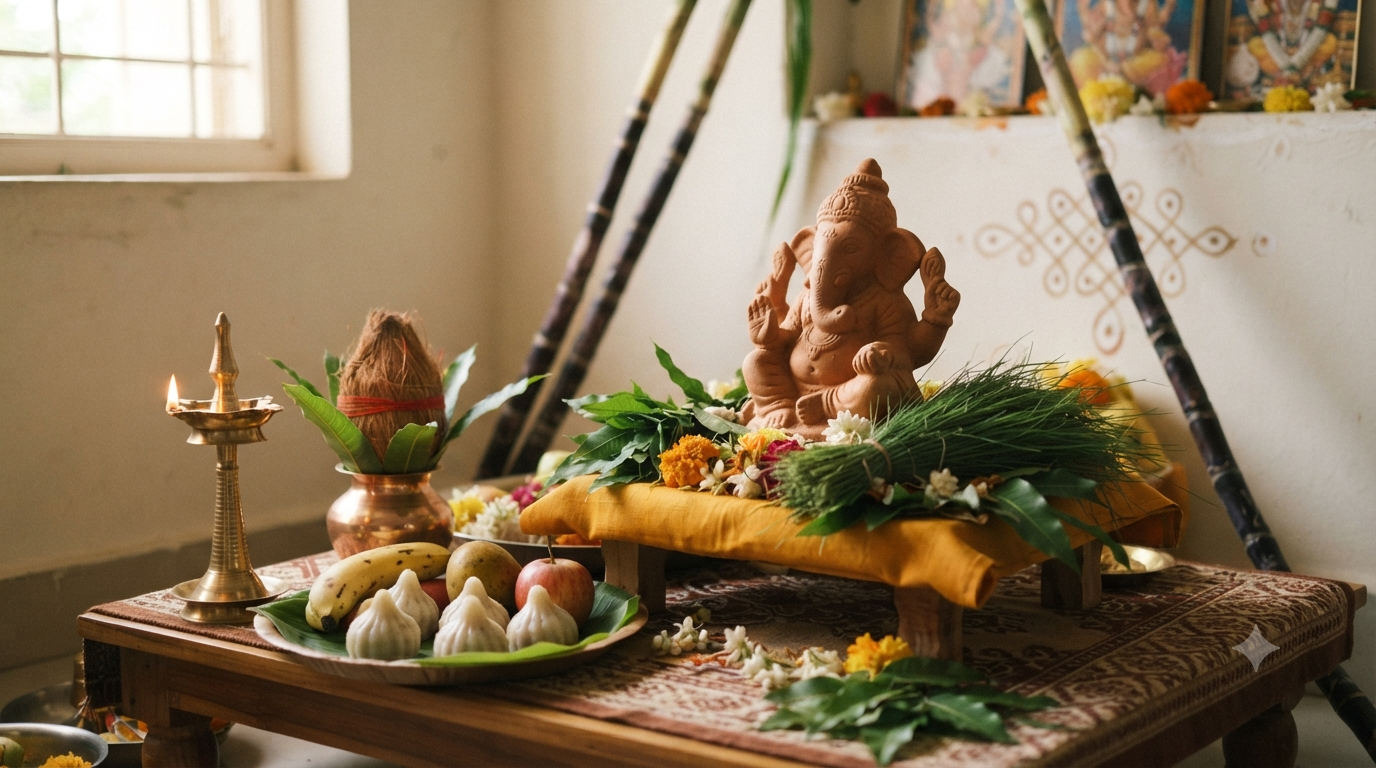
The Vinayaka Chavithi Pooja Vidhanam for 2026 runs on Monday, 14 September, and the whole ritual turns on a midday window most families overlook. Families install Ganesha during madhyahna kala, not at sunrise. Because that one detail decides your timing, everything else in the day falls into place around it.
Below you will find everything the Vinayaka Chavithi Pooja Vidhanam needs. That means verified tithi timings, a samagri list with honest substitutes, the 21 patri, the worship order and the naivedyam. We also correct a moon-timing figure that dozens of Telugu pages still copy from an old year.
Sri Vyasa Pooja is an independent devotional guide. We are not affiliated with any temple, trust, mutt or government body, and we do not accept bookings, donations or payments. Please confirm the muhurat for your own city on an official panchangam before you begin.
Vinayaka Chavithi 2026 at a Glance
- Festival day: Monday, 14 September 2026, on Bhadrapada Shukla Chaturthi
- Chaturthi tithi begins: 7:06 AM on 14 September 2026
- Chaturthi tithi ends: 7:44 AM on 15 September 2026
- Madhyahna pooja window: roughly 11:02 AM to 1:30 PM IST, on the New Delhi reference clock
- Nimajjanam (Ganesh Visarjan): Friday, 25 September 2026, on Anant Chaturdashi
- Vinayaka Chavithi Pooja Vidhanam: shodashopachara, the sixteen ordered offerings
- Signature naivedyam: undrallu and kudumulu, served alongside modakam
When Should You Start the Vinayaka Chavithi Pooja Vidhanam in 2026?
Start it inside the madhyahna window on Monday, 14 September 2026, roughly between 11:02 AM and 1:30 PM. Ganesha is believed to have appeared at midday, so this window carries more weight than sunrise. If you miss it, pradosha kaal in the early evening is the accepted second choice.
The Chaturthi tithi itself opens at 7:06 AM on 14 September and closes at 7:44 AM the next morning. That is why 14 September is the observed day across Andhra Pradesh, Telangana, Karnataka, Maharashtra and Tamil Nadu. The tithi technically touches 15 September, yet the madhyahna rule settles the question.
Those clock times use the New Delhi reference render. Sunrise and sunset shift the window by ten to twenty minutes across South Indian cities. So check your own city on Drik Panchang before Monday morning. A short check the night before saves a rushed sthapana.
Why the 2026 Date Moved So Far
In 2025 the festival fell on 27 August, while in 2026 it arrives on 14 September. That is an eighteen-day jump, and it confuses families who plan travel from memory. Hindu lunisolar months drift against the Gregorian calendar until an extra month resets them, which produces exactly this kind of leap.
So never carry last year’s date forward. Verify each festival date for the specific year, because a single wrong anchor pushes an entire family calendar out of line. The same caution applies to related vrathas that sit in the same week.
Gowri worship comes first, on the day before. If your family keeps it, our guide to the Swarna Gowri Vratha covers the 13 September 2026 timings and the bagina ritual.
Samagri for the Vinayaka Chavithi Pooja Vidhanam
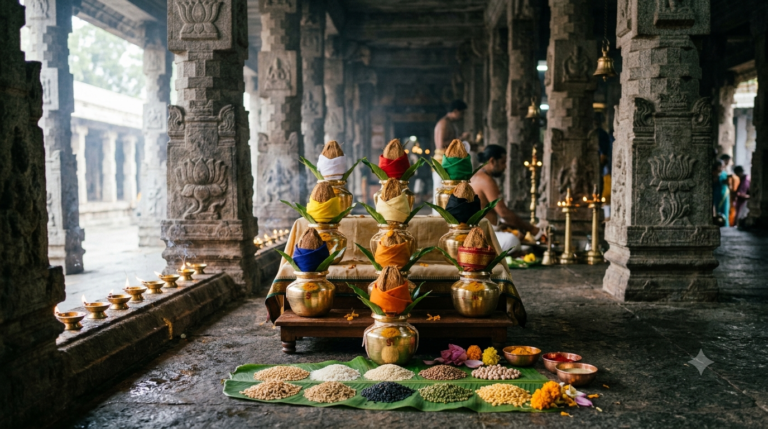
Buy the samagri for the Vinayaka Chavithi Pooja Vidhanam two days early, since patri and fresh flowers vanish from markets by Sunday evening. Nothing on this list is exotic, although a few leaves are seasonal. The table below also names a workable substitute for each hard-to-find item, which most guides leave out.
| Item | Why it is used | If unavailable |
|---|---|---|
| Clay Ganesha idol | Installed as the guest of the household | A permanent silver or brass Ganesha kept at home |
| Garika (durva grass) | Ganesha’s most beloved offering | No true substitute, so source it first |
| 21 patri (leaves) | Ekavimsati patra pooja, one leaf per name | Offer what you find, then complete with tulsi and durva |
| Sugarcane and corn | Harvest symbolism, placed beside the idol | Banana stems or fresh coconut fronds |
| Turmeric, kumkum, akshata | Archana and marking the peetham | Plain rice mixed with turmeric |
| Ghee lamp and camphor | Deeparadhana and harathi | Sesame oil lamp |
| Undrallu and kudumulu | The traditional Telugu naivedyam | Modakam, jaggery and coconut |
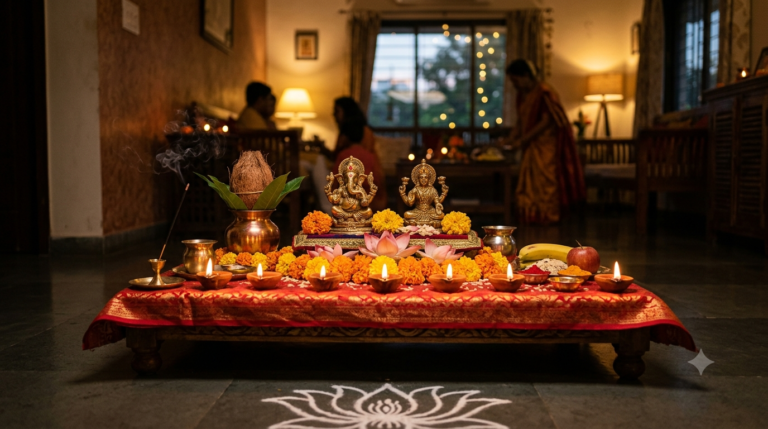
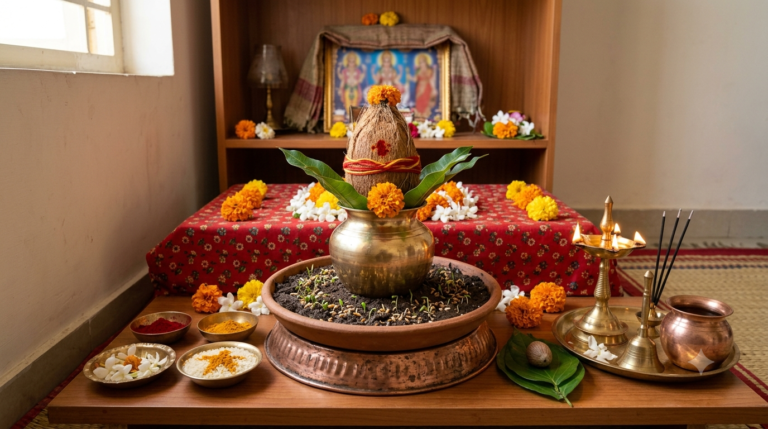
Also keep a wooden peetham, a clean cloth, a kalasham with water, betel leaves, betel nuts, a coconut, and five fruits ready. Because the sequence moves quickly, laying everything out beforehand matters more than the size of the idol.
The 21 Patri in the Vinayaka Chavithi Pooja Vidhanam
The ekavimsati patra pooja offers twenty-one leaves, each with one name of Ganesha. Machi, bruhati, bilva, garika, jaji, maruvaka, devadaru, badari, apamarga, tulasi, mamidi, karaveera, vishnukranta, dadimi, sindhuvara, arjuna, arka, shami, ashvattha, gandaki and durdura are the usual list. Regional lists vary a little, so your family’s paddhati wins over any website.
City households rarely find all twenty-one. Tradition permits completing the count with tulsi and durva while chanting the remaining names, so treat the shortfall as normal rather than a failure. Sincerity outranks a complete leaf tray in every paddhati we have read.
Vinayaka Chavithi Pooja Vidhanam: Step by Step at Home
The Vinayaka Chavithi Pooja Vidhanam follows shodashopachara, the sixteen offerings, in a fixed order. Read each step aloud as you go, because reading keeps the family in sequence without a purohit present. Allow about seventy-five minutes for an unhurried pooja.
- Clean the house early and hang mango-leaf thoranam at the door.
- Bathe, wear fresh clothes, then draw a muggu where the peetham will sit.
- Apply turmeric to the wooden peetham and spread the cloth over it.
- Place the clay idol facing east, with sugarcane and corn on either side.
- Set the kalasham to the right and light the ghee lamp.
- Begin with achamanam, pranayamam and the sankalpam naming your family and the tithi.
- Perform Maha Ganapathi dhyanam, then avahanam to invite Ganesha into the idol.
- Offer asanam, padyam, arghyam and achamaneeyam in that order.
- Bathe the idol with panchamrutham, then with clean water for snanam.
- Offer vastram, yagnopaveetham, gandham, akshata and pushpam.
- Carry out the ashtottara satanamavali or the ekavimsati patra pooja with the leaves.
- Offer dhoopam and deepam, keeping the flame steady.
- Present the naivedyam of undrallu, kudumulu, fruits and coconut.
- Read the Vinayaka Vratha Katha with the Syamantaka story before harathi.
- Perform harathi with camphor, then mantra pushpam and pradakshina namaskaram.
- Tie the vratha thread if your family keeps it, and share prasadam with everyone present.
Keep books, tools or account ledgers before the idol during the pooja. Students place their notebooks there, while shopkeepers place the new khata, and both customs come from the same idea of blessing the year’s work.
Naivedyam: Undrallu, Kudumulu and Modakam
Undrallu means steamed rice-and-lentil dumplings, and they remain the signature Telugu offering. Kudumulu carry a jaggery and coconut filling, while modakam is the Maharashtrian counterpart of the same idea. Many families offer twenty-one pieces, although tradition accepts any count made with care.
Steam the naivedyam fresh on the morning of the pooja. Because the offering goes to the deity first, prepare it before the madhyahna window opens rather than during it.
The Moon Rule, and the Wrong Timing Everyone Copies
Tradition asks devotees to avoid looking at the moon on Chavithi night. The Vratha Katha explains why. Chandra once laughed at Ganesha, so a curse fell on him: anyone seeing the moon that night would face a false accusation. Krishna himself faced the Syamantaka jewel accusation after a glimpse.
Here is the correction that matters. Many Telugu pages still print a fixed avoidance window such as “9:12 AM to 8:53 PM” with no year attached. Some older articles on this network carried it too. That figure belongs to a past year’s panchangam, so treating it as permanent is simply wrong.
Panchangams compute the moon-avoidance window afresh for each year and each city. Check the Chandra Darshan timing for 14 September 2026 on your panchangam, or follow the simpler household rule of not looking skyward after the evening pooja. If you do see the moon, hearing or reading the Syamantaka katha is the traditional remedy.
How Many Days Should the Idol Stay?
Telugu households traditionally keep Ganesha for one and a half days, while public pandals run five, seven, nine or eleven days. Both are valid, because the vow you take at sankalpam sets the duration, not the neighbourhood pandal. Decide before the pooja starts.
The grand nimajjanam falls on Anant Chaturdashi, Friday 25 September 2026. Families immersing earlier should count their chosen day from 14 September. Confirm the tithi for that date as well, because immersion days do not follow simple arithmetic. The same Friday also carries the Anantha Padmanabha Swamy Vratham, which many Telugu families keep alongside the immersion.
Clay or Plaster of Paris: What the Rules Actually Say
The Central Pollution Control Board revised its idol-immersion guidelines in May 2020. Those guidelines call for natural biodegradable material and ban plaster of Paris, thermocol and single-use plastic. The same guidelines rule out chemical dyes and oil paints. You can read the position on the Central Pollution Control Board website.
Enforcement, however, is uneven. States and courts have handled the ban differently over the years, so PoP idols still appear in markets although the guideline stands against them. Buying a clay idol keeps you clearly on the right side without any argument.
Many municipalities also provide artificial immersion tanks. Using one protects local lakes, and it is usually safer than a crowded riverbank.
What If Something Goes Wrong?
No pooja day runs perfectly, yet the Vinayaka Chavithi Pooja Vidhanam has a settled answer for almost every problem. Nothing here requires a purohit, although one helps if you want the full mantra recitation.
- You missed the madhyahna window: perform the sthapana in pradosha kaal that evening instead.
- Patri are missing: complete the count with tulsi and durva while chanting the remaining names.
- The clay idol cracks: a hairline crack is not inauspicious, so continue and immerse as planned.
- No one can read Sanskrit: offer each upachara in Telugu or English with “Om Gam Ganapataye Namaha”.
- No water body nearby: immerse in a large bucket at home, then pour the water at a plant root.
- You saw the moon: read the Syamantaka katha, which tradition treats as the remedy.
There is one thing you genuinely cannot fix. Once the Chaturthi tithi ends, you cannot move the vratham to another day, so plan for the monthly Sankashti Chaturthi vratam instead.
Fasting and Safety Notes
Fasting on Vinayaka Chavithi is optional and lighter than most vrathas. Many families keep a phalahar fast until the midday pooja, after which they take prasadam. Householders running a multi-day sthapana usually eat satvik food rather than fasting at all.
Anyone who is pregnant, diabetic, elderly or on regular medication should not attempt a waterless fast. Please consult a doctor before any strict fast, because a ritual is never a substitute for medical care. Ritual and astrological remedies are matters of faith and tradition, not treatment.
Immersion processions deserve real caution as well. Drownings happen every year at crowded ghats, so never enter deep water, keep children within reach, and prefer a municipal immersion tank.
Mistakes First-Timers Make with the Vinayaka Chavithi Pooja Vidhanam
The commonest error in the Vinayaka Chavithi Pooja Vidhanam is treating sunrise as the pooja hour. Ganesha sthapana belongs to madhyahna, and starting at 6 AM misses the very window the day turns on.
Buying garika on the morning itself is the second trap. Durva sells out before dawn near temples, so pick it up on Saturday or Sunday. Sugarcane goes the same way.
A third mistake is offering tulsi as a main leaf. Tulsi only completes the patri count, since the tradition does not place it at the centre of Ganesha worship. Fourth, families often forget to decide the immersion day before sankalpam, which then causes an argument on day two.
Finally, beware of websites that offer to “book” your pooja or collect payment for online sevas at a temple. Book only through an official temple portal, and treat any private number promising darshan or seva slots as a warning sign.
Before You Begin the Vinayaka Chavithi Pooja Vidhanam
This vratham gives you one clear anchor for 2026: Monday, 14 September, in the midday window. Confirm your city’s madhyahna timing, buy garika and patri two days early, and steam the undrallu before the window opens. Keep the idol in clay, decide the immersion day at sankalpam, and read the katha aloud so the whole family follows.
Do that much and the day will run without stress. Everything else in the Vinayaka Chavithi Pooja Vidhanam, from the leaf count to the dumpling count, is tradition you can adapt to your household.
Vinayaka Chavithi Pooja Vidhanam FAQs
What is the correct date for Vinayaka Chavithi 2026?
Vinayaka Chavithi 2026 falls on Monday, 14 September. The Chaturthi tithi begins at 7:06 AM that day and ends at 7:44 AM on 15 September. Because the madhyahna rule decides the observance, 14 September is the day across Andhra Pradesh, Telangana, Karnataka and Maharashtra.
What time should the Vinayaka Chavithi Pooja Vidhanam be performed?
Perform it in the madhyahna window, which runs roughly from 11:02 AM to 1:30 PM on the New Delhi clock. Your city may differ by ten to twenty minutes, so confirm locally. If you miss it, use pradosha kaal that evening.
Can I do the Vinayaka Chavithi Pooja Vidhanam without a purohit?
Yes, and most Telugu households do exactly that. The procedure is written to be read aloud step by step, so one family member can lead while the rest respond. A purohit only adds the full Sanskrit recitation.
Why should we not look at the moon on Chavithi?
The Vratha Katha says Chandra mocked Ganesha and was cursed, so anyone seeing the moon that night risks a false accusation. Krishna faced the Syamantaka jewel charge for the same reason. Reading or hearing that katha is the accepted remedy.
Are plaster of Paris idols allowed?
The Central Pollution Control Board’s 2020 guidelines ban plaster of Paris, thermocol and single-use plastic in idols meant for immersion. Enforcement varies by state, although the guideline itself is clear. A natural clay idol avoids the problem entirely.
How many days do families keep the idol?
Telugu homes traditionally keep Ganesha for one and a half days, while pandals run five, seven, nine or eleven. Your sankalpam sets the duration, so decide before the pooja begins. The public nimajjanam falls on Friday, 25 September 2026.
What naivedyam should be offered?
Undrallu and kudumulu are the traditional Telugu offerings, usually served with modakam, fruits and a coconut. Many families offer twenty-one pieces. Steam everything fresh on the morning of the pooja rather than the previous night.
What if I cannot find all 21 patri?
Offer the leaves you have, then complete the remaining names with tulsi and durva. Regional patri lists differ anyway, so a shortfall is normal in cities. Your family paddhati takes precedence over any published list.
Is fasting compulsory on Vinayaka Chavithi?
No, fasting is optional and lighter than most vrathas. A phalahar fast until the midday pooja is the common practice. Anyone pregnant, diabetic or elderly should avoid a waterless fast and speak to a doctor first.