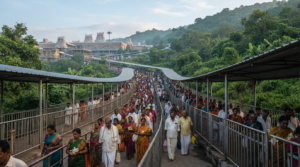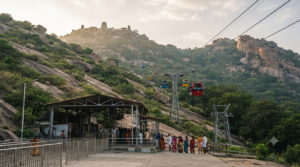
Hariharapura Sharada Peetham is a riverside Advaita centre in Hariharapura, Karnataka, where devotees worship Sri Lakshmi Narasimha, Sri Sharada Parameshwari and other deities within the Sreemath complex. The place is especially interesting because its identity combines sacred tradition, a living Shankaracharya lineage and Vijayanagara-era history. This guide separates those layers clearly, so you can understand the story and plan a visit without treating every traditional account as a dated historical fact.
SriVyasapooja.in is an independent devotional guide. We are not affiliated with Sri Adi Shankaracharya Sharada Lakshmi Narasimha Peetam or its administration. We do not take temple bookings, donations, seva payments or room payments. Use the official Hariharapura website for current schedules and official services.
Hariharapura Sharada Peetham at a Glance
- Full name: Sri Adi Shankaracharya Sharada Lakshmi Narasimha Peetam, Sreemath Hariharapura.
- Location: Hariharapura, Koppa Taluk, Chikkamagaluru district, Karnataka 577120.
- Setting: On the banks of the Tunga River in the Western Ghats region.
- Main worship: Sri Lakshmi Narasimha and Sri Sharada Parameshwari.
- Other sacred associations: Agastya Maharishi, Dakshahara Someshwara and the Hariharapura Shankaracharya tradition.
- Distance: Roughly 10 km from Koppa and about 20 km by road from Sringeri.
- Visitor hours: Public listings currently agree on a 6:00 AM opening but differ on the closing time, showing about 8:30 PM to 9:00 PM. Confirm the day’s schedule on the official website before travel.
The most useful way to understand Hariharapura is not as one more Narasimha temple near Sringeri. It is a layered kshetra where Shaiva, Vaishnava and Sharada traditions meet. That blend explains why pilgrims often spend more time here than a simple darshan stop would suggest.
What Is Hariharapura Sharada Peetham?
Hariharapura Sharada Peetham is a Hindu monastic and temple centre associated with the Advaita tradition. Its own institutional tradition traces the Peetam to Jagadguru Adi Shankaracharya. The Sreemath presents Sri Lakshmi Narasimha and Sri Sharada Parameshwari as the presiding deities of the sacred complex.
The Peetam stands in Hariharapura beside the Tunga River, while the surrounding Malnad hills shape its quiet setting. The complex also functions as a living religious institution rather than only a historic monument, so devotees encounter an active spiritual centre. Devotees therefore visit for darshan, Guru blessings, worship, study and periods of quiet spiritual practice.
This page uses the shorter phrase Hariharapura Sharada Peetham for readability. However, the full institutional name matters because it shows the two main devotional strands together: Sharada, linked with learning and wisdom, and Lakshmi Narasimha, the protective form of Vishnu worshipped with Goddess Lakshmi.
The Story of Hariharapura Sharada Peetham
The Hariharapura story has three layers: Puranic tradition, the Agastya Maharishi tradition and the later Shankaracharya lineage. These layers should not be flattened into one modern historical timeline. Sacred narratives explain why devotees revere the land, while inscription-based accounts help date parts of Hariharapura’s later institutional history.
Daksha Yajna and Dakshahara Someshwara
Hariharapura’s Sthala Purana identifies the place with Dakshashrama and the Daksha Yajna episode. In this tradition, Daksha Prajapati performed a great yajna here, while Lord Shiva later manifested and blessed those assembled. The local Shaiva memory survives in the worship of Dakshahara Someshwara.
This account belongs to sacred tradition rather than modern archaeological dating. That distinction matters because many web pages present Puranic events as if historians had assigned them calendar dates. A more accurate guide preserves the religious meaning without turning belief into an unsupported chronology.
Agastya Maharishi and Sri Lakshmi Narasimha
Another important Hariharapura tradition connects the kshetra with Sage Agastya. The Peetam’s tradition says Agastya performed tapas here and worshipped Sri Lakshmi Narasimha. It also holds that a Lakshmi Narasimha murti and Shalagrama connected with the sage’s worship continued through the spiritual lineage.
For devotees, this makes Hariharapura a Tapo Bhoomi, or land of penance. It also explains why Narasimha worship is central even though Sharada gives the Peetam part of its name. The link between Narasimha devotion and the Guru tradition is one of the site’s most distinctive features.
Adi Shankaracharya and the Sharada Tradition
According to the Hariharapura Peetam’s own tradition, Adi Shankaracharya visited the kshetra during his travels, installed a Sri Chakra and consecrated Sri Sharada Parameshwari. The same lineage narrative connects Sri Krishna Yogeendra with the early Guru parampara. It further says Sri Sureshwaracharya gave him Sannyasa Deeksha and established him in the monastic line.
Because the evidence is not uniform, these claims are best described as the Peetam’s traditional history. They are important to the institution’s identity, but they are not the only historical account in circulation. Keeping that wording makes the article more reliable and avoids presenting a lineage claim as uncontested secular history.
What Historical Records Say About Hariharapura
Meanwhile, historical evidence gives a later and more securely dated picture of Hariharapura. Accounts based on Vijayanagara-period inscriptions describe Hariharapura as an agrahara that developed under royal patronage. Published material connected with the Peetam also cites older gazetteer records that refer to an agrahara established in 1418 during the Vijayanagara period.
There is also a notable difference between institutional histories. The official Sri Sringeri Sharada Peetham website says Hariharapura was an agrahara founded by Harihara II and names Sri Ramachandra Saraswathi as the first Acharya of a mutt established there. The Hariharapura lineage, by contrast, traces its Dharmapeetam directly to Adi Shankaracharya.
Those two traditions should not be silently blended. The safest evergreen wording is simple: Hariharapura has firm Vijayanagara-era historical associations, while the Peetam’s own sacred lineage reaches back to Adi Shankaracharya. Readers who want the neighbouring institution’s account can compare the Sringeri Sharada Peetham history page.
What to See at Hariharapura Sharada Peetham
A visit works best when you allow time for the full sacred complex rather than walking straight to one shrine. The central experience combines Narasimha worship, Sharada worship, the Guru tradition and the Tunga riverbank. Depending on the day’s programme, access to some areas may vary.
Sri Lakshmi Narasimha
Sri Lakshmi Narasimha is one of the principal deities of the Peetam. Narasimha represents Vishnu’s protective form, while Lakshmi brings the presence of grace and auspiciousness into the worship. Devotees often approach this shrine for courage, protection and spiritual steadiness as matters of faith.
If Narasimha worship is your main interest, you may also find our guide to the Lakshmi Narasimha Homam useful. It explains the ritual background without turning traditional benefits into guaranteed outcomes.
Sri Sharada Parameshwari
Sri Sharada Parameshwari represents knowledge, learning and refined understanding. Hariharapura tradition connects her worship here with Adi Shankaracharya and the installation of a Sri Chakra. That association makes the shrine especially meaningful to students, teachers and devotees of the Shankaracharya tradition.
Do not confuse this Peetam with the much larger Dakshinamnaya Sri Sharada Peetham at Sringeri. The two are geographically close but institutionally distinct. Our Sringeri Sharada Peetham significance guide explains the Sringeri institution separately.
Dakshahara Someshwara and the Wider Kshetra
Hariharapura’s sacred geography extends beyond the two main deities. The Dakshahara Someshwara tradition links the place to the Daksha Yajna narrative, while other shrines within and around the complex reinforce its mixed Shaiva, Vaishnava and Shakta character.
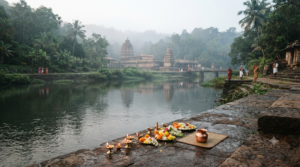
The Tunga River is also part of the experience, while its setting gives the Peetam much of its atmosphere. Hariharapura tradition describes the local river flow as spiritually significant. Visitors should still treat the river with normal monsoon caution, because water levels and currents can change quickly in the Western Ghats.
Hariharapura Sharada Peetham Timings
Hariharapura Sharada Peetham is commonly listed as opening at 6:00 AM every day. Current public listings differ on closing time, with one showing 8:30 PM and another showing 9:00 PM. Because the official website does not expose a simple static timetable in searchable text, treat 6:00 AM to about 8:30-9:00 PM as planning guidance, not a guaranteed darshan window.
| Planning point | Guidance |
|---|---|
| Opening | Commonly listed from 6:00 AM |
| Closing | Public listings vary between about 8:30 PM and 9:00 PM |
| Best practical slot | Morning, before the day becomes busy |
| Festival days | Expect programme-based changes and larger crowds |
| Final check | Use the official Hariharapura website before travel |
Do not build a tight road itinerary around a third-party closing time. Temple routines, Guru programmes and festival observances can change the day’s flow. If you are travelling specifically for a seva or a particular darshan, confirm it through the Peetam’s official channel first.
How to Plan Your Darshan
- Arrive in the morning if possible. The weather is usually milder, and you have more time if a programme changes access.
- Begin with the main shrines. Spend time at Sri Lakshmi Narasimha and Sri Sharada Parameshwari rather than rushing between them.
- Visit the associated sacred points. Include Dakshahara Someshwara and other accessible shrines within the Hariharapura kshetra.
- Allow quiet time by the Tunga. The river setting is part of Hariharapura’s identity, although monsoon safety comes first.
- Check official notices before paying for anything. Use only the Peetam’s own website for current sevas, accommodation or donations.
Darshan is not a ticketed outcome that an independent website can guarantee. Festival crowds, special pujas or Guru programmes may change access. If your preferred time does not work, the practical fallback is to wait for the next public darshan period or return later after confirming with the official administration.
How to Reach Hariharapura
Hariharapura lies in Koppa Taluk of Chikkamagaluru district. The village sits roughly 10 km from Koppa and about 20 km by road from Sringeri. That makes it easy to combine with a Sringeri pilgrimage, but it is better to keep a flexible half-day rather than squeeze both places into a hurried timetable.
Since Hariharapura lies in the Malnad interior, road travel is the normal approach. Buses and private vehicles connect the Koppa-Sringeri belt, while services from larger Karnataka cities also reach the region. For long-distance rail or air travel, many visitors route through coastal or larger inland transport hubs and continue by road.
Do not rely on one online bus timetable for local connections, especially during monsoon months. Hill-road schedules can shift with weather and road conditions. Check a current transport source on the day before committing to a tight onward connection.
Best Time to Visit Hariharapura
The cooler, drier months are generally easier for a relaxed visit because Hariharapura lies in the rain-heavy Malnad region. Monsoon transforms the landscape into deep green, but it also brings heavy rain, slippery surfaces and stronger river flow. Carry rain protection if you visit during that season.
Festival days bring a stronger devotional atmosphere, while ordinary weekdays are usually easier to plan. They suit visitors who want quiet darshan and time to absorb the Peetam’s setting. If your purpose is a specific religious programme, plan around the official calendar instead of choosing only by weather.
What Most Guides Get Wrong About Hariharapura Sharada Peetham
- They treat sacred tradition as proven chronology. The Adi Shankaracharya foundation story belongs to the Peetam’s lineage tradition and should be presented that way.
- They ignore the historical disagreement. Sringeri’s own institutional history gives a Vijayanagara-era account of the Hariharapura mutt, so readers deserve to know both versions.
- They publish one exact closing time forever. Current listings already differ between 8:30 PM and 9:00 PM, so a fixed evergreen claim would age badly.
- They confuse Hariharapura with Sringeri. Both are associated with Sharada and Advaita traditions, but they are separate institutions.
- They copy old seva fees and phone numbers. Those details change and can create booking risk, so use the official portal instead.
This is where an evergreen article earns trust. The goal is not to make every detail sound certain. It is to tell readers which facts are stable, which claims belong to tradition and which practical details must be checked before travel.
Hariharapura Sharada Peetham and Sringeri: Are They the Same?
No. Hariharapura Sharada Peetham and the Dakshinamnaya Sri Sharada Peetham at Sringeri are separate institutions. They sit relatively close to each other, and both preserve Shankaracharya-linked traditions, which explains the frequent confusion.
Sringeri is the widely known Dakshinamnaya Amnaya Peetham and has its own Guru lineage, temple complex and institutional history. Hariharapura has its own Dharmapeetam identity centred on Sri Sharada Parameshwari and Sri Lakshmi Narasimha. Treating one as a branch name for the other is inaccurate.
The distinction is especially important when checking timings, sevas or accommodation, because each institution publishes its own information. A schedule published for Sringeri does not automatically apply to Hariharapura. Always match the official institution to the place you actually intend to visit.
Before You Go
Hariharapura rewards visitors who come for more than a quick photo stop, since its meaning becomes clearer across the whole complex. Its value lies in the combination of Narasimha devotion, Sharada worship, the Guru tradition, the Tunga river setting and layers of sacred and recorded history. Give the place enough time to make those connections.
For an evergreen plan, remember three rules. Treat the Adi Shankaracharya story as institutional tradition, distinguish Hariharapura from Sringeri and confirm the day’s timings through the official Hariharapura website. Those three checks prevent most of the errors repeated on older travel pages.
Frequently Asked Questions
Where is Hariharapura Sharada Peetham located?
Hariharapura Sharada Peetham is in Hariharapura village, Koppa Taluk, Chikkamagaluru district, Karnataka. It stands on the banks of the Tunga River, roughly 10 km from Koppa and about 20 km by road from Sringeri.
What are the Hariharapura Sharada Peetham timings?
Public sources commonly show a 6:00 AM opening. However, current listings differ on closing time, showing about 8:30 PM or 9:00 PM. Confirm the exact day’s schedule on the official Hariharapura website, especially before a festival or special programme.
Who are the main deities at Hariharapura?
Sri Lakshmi Narasimha and Sri Sharada Parameshwari are the principal deities associated with the Peetam. The wider sacred complex also carries important Shaiva and Guru-lineage associations, including Dakshahara Someshwara.
Did Adi Shankaracharya establish the Hariharapura Peetam?
The Hariharapura Peetam’s own tradition says Adi Shankaracharya established the Dharmapeetam, installed a Sri Chakra and consecrated Sri Sharada Parameshwari. A separate Sringeri institutional account gives a Vijayanagara-era history for a mutt at Hariharapura, so the direct-foundation claim is best presented as lineage tradition.
Is Hariharapura Sharada Peetham the same as Sringeri Sharada Peetham?
No. They are separate religious institutions with different lineages and administrations. They are geographically close and both use Sharada and Shankaracharya traditions, which is why visitors sometimes confuse them.
What is the story of Sage Agastya at Hariharapura?
Hariharapura tradition says Sage Agastya performed penance here and worshipped Sri Lakshmi Narasimha. The lineage also connects a Lakshmi Narasimha murti and Shalagrama with his worship. This is part of the sacred tradition of the kshetra.
Can I visit Hariharapura and Sringeri on the same trip?
Yes. Hariharapura is about 20 km by road from Sringeri, so the two can fit into one pilgrimage route. Still, avoid an overly tight schedule because temple programmes, rain and local road travel can add time.
Can I book sevas or rooms through SriVyasapooja.in?
No. SriVyasapooja.in is an independent information guide and does not accept temple bookings, donations, seva payments or accommodation payments. Use only the official Hariharapura website for current services and transaction details.