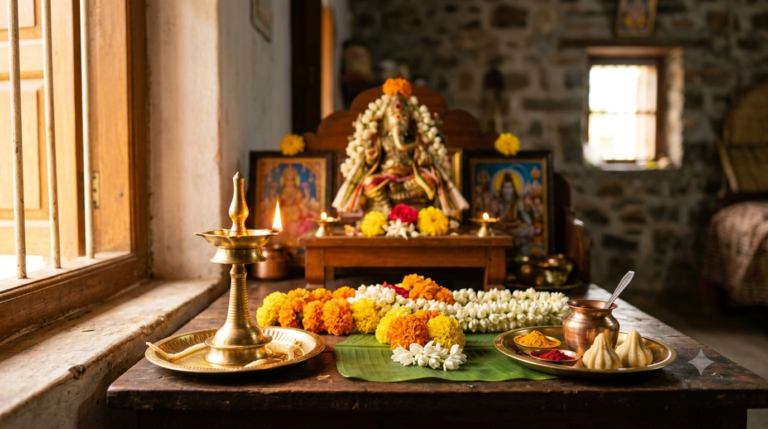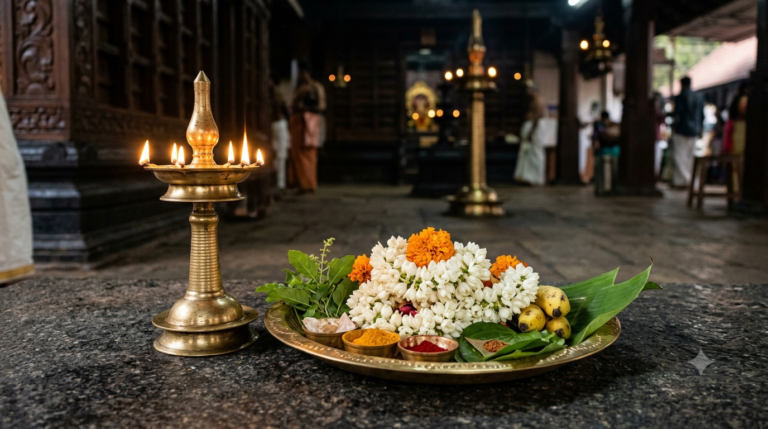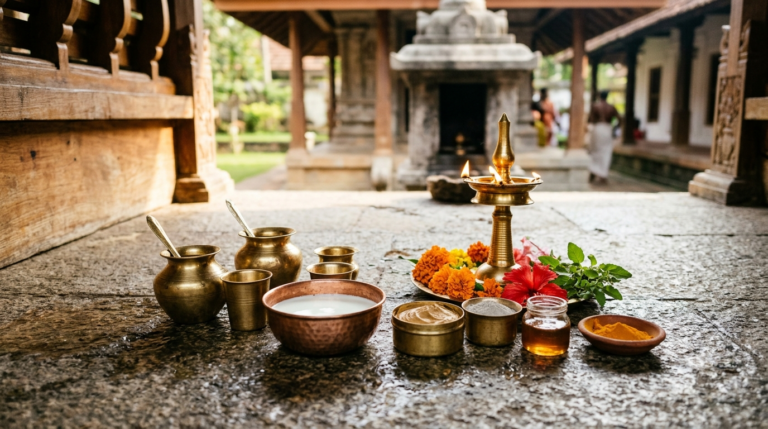
Masa Sivarathri falls on the Chaturdashi tithi of Krishna Paksha in every lunar month, so it is the most frequently observed Shiva vratam in the Hindu year. Most calendars online still recycle old dates and vague timings. This guide gives verified dates from September 2026 to December 2027, the Telugu and North Indian month names side by side, and the Nishita Kala window that decides when the pooja should actually begin.
Sri Vyasa Pooja is an independent devotional guide. We are not a temple or a mutt, we do not perform poojas or homams for anyone, and we do not accept bookings, donations or payments. Confirm every tithi with your family purohit or your regional panchangam before you begin a vratam.
Masa Sivarathri at a Glance
- When: Krishna Paksha Chaturdashi, the night before Amavasya, every month.
- Pooja time: Nishita Kala, a window of roughly 45 to 55 minutes around true midnight.
- Deity: Lord Shiva, worshipped as the Linga.
- Core offering: Abhishekam with panchamrita and water, followed by bilva leaves.
- Mantra: Om Namah Shivaya, the Panchakshari mantra.
- Fasting: Optional in intensity, broken the next morning after a bath.
- Annual count: Twelve in a normal year, thirteen when an adhika masa is inserted.
What Masa Sivarathri Actually Means
The word simply breaks into two parts. Masa means month and Sivarathri means the night of Shiva. Because the Chaturdashi of the waning fortnight returns once every lunar month, a Sivarathri returns with it.
One of those twelve nights is far bigger than the rest. In the Telugu, Kannada and Marathi amanta calendar, the Masa Sivarathri that falls in Magha masam is celebrated as Maha Sivarathri. North Indian purnimanta calendars call the very same night Phalguna Krishna Chaturdashi.
The confusion is only a naming habit, not a disagreement about the day. Drik Panchang states plainly that both schools observe every Sivarathri, including Maha Sivarathri, on the same date. So a Telugu devotee and a Delhi devotee fast on the same night while calling the month by different names.
Masa Sivarathri Dates From September 2026 to December 2027
Every date below was cross-checked against two independent panchangam sources for Indian local time. The Telugu column uses amanta reckoning, which is what most Andhra and Telangana families follow.
| Date | Day | Telugu masam | North Indian name |
|---|---|---|---|
| 9 Sep 2026 | Wednesday | Sravana bahula | Bhadrapada |
| 8 Oct 2026 | Thursday | Bhadrapada bahula | Ashwina |
| 7 Nov 2026 | Saturday | Aswayuja bahula | Kartika |
| 7 Dec 2026 | Monday | Kartika bahula | Margashirsha |
| 5 Jan 2027 | Tuesday | Margasira bahula | Pausha |
| 4 Feb 2027 | Thursday | Pushya bahula | Magha |
| 6 Mar 2027 | Saturday | Magha bahula (Maha Sivarathri) | Phalguna |
| 5 Apr 2027 | Monday | Phalguna bahula | Chaitra |
| 4 May 2027 | Tuesday | Chaitra bahula | Vaishakha |
| 3 Jun 2027 | Thursday | Vaisakha bahula | Jyeshtha |
| 2 Jul 2027 | Friday | Jyeshtha bahula | Ashadha |
| 31 Jul 2027 | Saturday | Ashadha bahula (Sawan Sivarathri) | Shravana |
| 30 Aug 2027 | Monday | Sravana bahula | Bhadrapada |
| 28 Sep 2027 | Tuesday | Bhadrapada bahula | Ashwina |
| 27 Oct 2027 | Wednesday | Aswayuja bahula | Kartika |
| 26 Nov 2027 | Friday | Kartika bahula | Margashirsha |
| 25 Dec 2027 | Saturday | Margasira bahula | Pausha |
Maha Sivarathri 2027 therefore falls on Saturday, 6 March 2027. Three Masa Sivarathri nights in this window land on a Tuesday, and tradition treats a Tuesday Sivarathri as especially fruitful.
Why 2026 Carried an Extra Sivarathri
This is the detail almost every monthly Sivarathri page misses. The Hindu lunar year runs about eleven days shorter than the solar year, so an extra month is inserted roughly every three years.
In 2026 that extra month was Adhika Jyeshtha, which ran from 17 May to 15 June 2026. Because an entire lunar month was added, an additional Chaturdashi arrived with it. The Adhika Masa Sivarathri fell on Saturday, 13 June 2026.
This is exactly why you should never carry last year’s Sivarathri list forward. After an adhika masa, every following tithi shifts by close to a full lunar month, and copied calendars silently go wrong for the rest of the year.
Nishita Kala: The Real Masa Sivarathri Pooja Time
Nishita Kala is the sacred midnight window, and it is the single most useful fact on this page. It lasts about two ghatis, which works out to roughly 45 to 55 minutes. The window is centred on true midnight, the exact midpoint between sunset and the next sunrise.
True midnight is not 12:00 on your phone clock. It moves with longitude, so the Masa Sivarathri pooja time is different in Kakinada, Hyderabad, Chennai and Delhi on the very same night.
Take 9 September 2026 as a worked example. Drik Panchang lists Nishita Kala as roughly 11:55 PM to 12:41 AM for New Delhi, but only 11:11 PM to 11:57 PM for Kolkata. That is a gap of about forty-five minutes between two Indian cities on one night.
How to Find Your Own City Window
Open a panchangam that accepts a city, set your town rather than a default metro, and read the Nishita Kala row for that date. If you cannot get a city-specific figure, begin the abhishekam a little before local midnight and continue through it. Since the window is short, having the samagri arranged in advance matters more than the exact minute.
Masa Sivarathri Pooja Vidhanam Step by Step
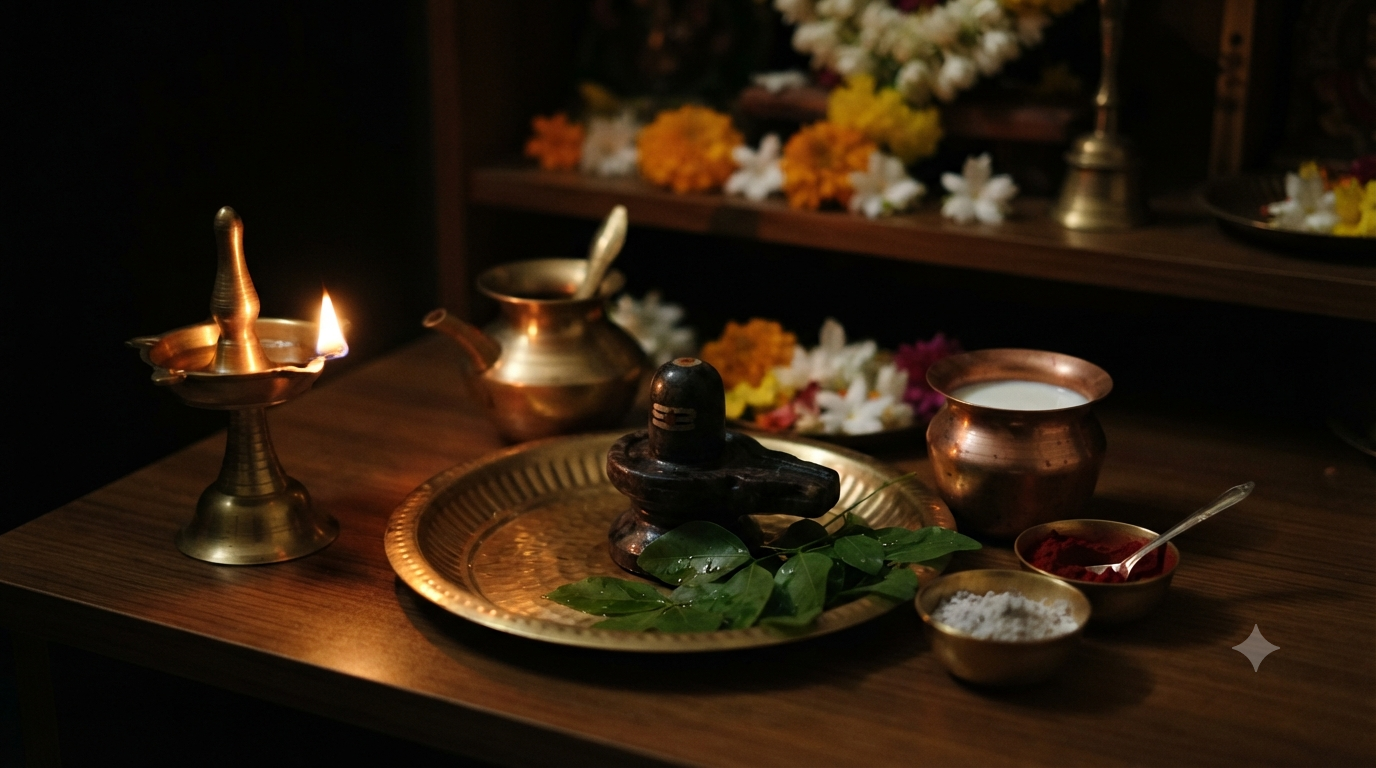
Samagri to Keep Ready
- Bilva (maredu) leaves, ideally in stalks of three leaves.
- Panchamrita: milk, curd, ghee, honey and sugar.
- Clean water, and Ganga jal if your family keeps it.
- Vibhuti, kumkuma, sandal paste and akshata.
- A ghee lamp, agarbatti, camphor and a bell.
- Fruits and a simple naivedyam, plus tulasi-free flowers such as jilledu or mandara.
Keep everything on a plate beside the pooja place before the window opens, because the Nishita Kala is genuinely brief.
The Sequence on the Night
- Morning: bathe early, clean the pooja room and light a lamp.
- Sankalpam: take the vow aloud, naming your gotra, the tithi and your intention.
- Second bath: bathe again in the evening before the night worship.
- Abhishekam: pour water first, then panchamrita one item at a time, then water again while chanting Om Namah Shivaya.
- Alankaram: apply vibhuti and chandanam, then offer bilva leaves with the smooth side down.
- Archana: recite the Shiva Ashtottara Shatanamavali or the Panchakshari mantra 108 times.
- Naivedyam and harati: offer fruits, show camphor harati and ring the bell.
- Jagarana: stay awake with bhajans or the Shiva Purana if your health allows it.
- Parana: bathe the next morning and break the fast, ideally before the Chaturdashi tithi ends.
Households that want the elaborate form follow the sixteen-step Shodashopachara order, from Dhyana and Avahana through Arghya and Achamaniya. Drik Panchang publishes that full Shivaratri Shodashopachara vidhi with the mantras if you want the complete text.
Masa Sivarathri Vratam: Fasting Rules and Safety
The vratam scales to what you can honestly manage. Strict observers keep a nirjala fast without food or water, while many families take only fruits and milk. Others eat one sattvic meal and simply avoid grains, onion and garlic.
None of these choices is a lesser vratam. Scriptural sources emphasise sankalpam and steadiness far more than severity, so choose the level you can hold without strain.
A word of caution matters here. If you live with diabetes, low blood pressure, kidney disease or an ulcer, or if you are pregnant, elderly or recovering from illness, a waterless overnight fast is not a small thing. Never postpone prescribed medication for a vratam, and speak to your doctor before attempting a nirjala fast or an all-night vigil.
The Significance Behind the Masa Sivarathri Vratam
Puranic tradition holds that Lord Shiva appeared as the Jyotirlinga at midnight on Maha Sivarathri, which is why the Linga rather than an image receives worship. The Shiva Purana further describes abhishekam with six dravyas, accompanied by Sri Rudram and Chamakam, as especially dear to him.
Devotees traditionally begin the monthly Masa Sivarathri vratam on Maha Sivarathri and continue it for a full year. Unmarried women observe it seeking a good marriage, while married women observe it for harmony at home.
These are matters of faith and Vedic tradition rather than verified outcomes, and this guide presents them that way. Elders also advise against starting major new ventures on a Sivarathri day, since the night is meant for inward practice rather than worldly beginnings. If you keep other Shiva observances, our guide to Karthika Somavaram vratham pairs naturally with this one.
Five Things Most Masa Sivarathri Guides Get Wrong
- Stale date lists. Many pages still show calendars from three or four years ago because nobody refreshed them after an adhika masa year.
- A single all-India timing. Nishita Kala is computed from local sunset and sunrise, so one printed time cannot serve every city.
- Treating Magha and Phalguna as a dispute. The month name differs by calendar school while the night itself is identical.
- Four-prahara worship every month. Dividing the night into four praharas is the Maha Sivarathri practice; the monthly vratam normally uses one Nishita Kala pooja.
- Tulasi on the Linga. Tulasi is not offered to Shiva in most traditions, whereas bilva leaves are the classical offering.
What If You Miss a Masa Sivarathri?
Nothing is lost, and no expiatory ritual is required. The vratam is a voluntary observance, so a missed month does not invalidate the ones you kept.
If illness, travel or night duty makes the midnight pooja impossible, several practical fallbacks exist. You can worship during the Pradosham window at dusk on the previous Trayodashi, which is itself sacred to Shiva. You can also visit a Shiva temple during the day, since many temples such as Draksharamam keep extended hours on Sivarathri.
Simplest of all, chant the Panchakshari mantra and offer water and bilva leaves at home whenever you can that day. Resume the full vratam from the next month without anxiety.
Before You Begin the Vratam
Three things decide whether a Masa Sivarathri observance goes smoothly. First, confirm the date on a panchangam set to your own city rather than a shared image on WhatsApp. Second, note your local Nishita Kala window and lay out the samagri beforehand. Third, pick a fasting level that matches your health honestly.
The upcoming observance is Wednesday, 9 September 2026, and Maha Sivarathri arrives on Saturday, 6 March 2027. For the full annual list you can also cross-check the Masik Shivaratri dates page at Drik Panchang. If you are new to structured home worship, our walkthrough of Panchayatana pooja vidhanam explains the upacharas in more detail.
Masa Sivarathri: Frequently Asked Questions
Is Masa Sivarathri the same as Maha Sivarathri?
No. Masa Sivarathri occurs every lunar month on Krishna Paksha Chaturdashi, so there are twelve or thirteen in a year. Maha Sivarathri is the single greatest of them, falling in Magha masam by Telugu reckoning. Maha Sivarathri 2027 is on Saturday, 6 March 2027.
What is the correct Masa Sivarathri pooja time?
Nishita Kala, the roughly 45 to 55 minute window around true local midnight, is the traditional time. It shifts by city because it depends on sunset and sunrise. Check a panchangam set to your own town rather than using a single national timing.
How many Masa Sivarathri days come in a year?
Twelve in an ordinary lunar year. When an adhika masa is inserted, a thirteenth appears. The year 2026 carried Adhika Jyeshtha from 17 May to 15 June, which added a Sivarathri on 13 June 2026.
Can I observe the vratam without a strict fast?
Yes. Phalahara with fruits and milk, or a single sattvic meal, is widely accepted practice. Intention and consistency carry more weight than severity, and anyone with a medical condition should choose the gentler form.
Which leaves and flowers should be offered?
Bilva leaves are the classical offering, ideally in stalks of three. Jilledu, mandara and other traditional flowers are also used. Tulasi is generally avoided on the Shiva Linga.
Can women observe the Masa Sivarathri vratam?
Yes, and traditionally many do. Unmarried women keep it seeking a suitable marriage, while married women keep it for household harmony. Family custom on days of ritual rest still applies.
Why do some calendars show Magha and others Phalguna?
Because the amanta calendar ends a month at Amavasya while the purnimanta calendar ends it at Purnima. The same Krishna Chaturdashi therefore carries two different month names. As records of the festival note, the observance date itself does not change.
Should I start new work on a Sivarathri day?
Traditional advice discourages launching major ventures on that day, because the night is reserved for fasting, vigil and inner practice. Many families simply defer such beginnings to the following morning. Treat this as custom rather than a rule.