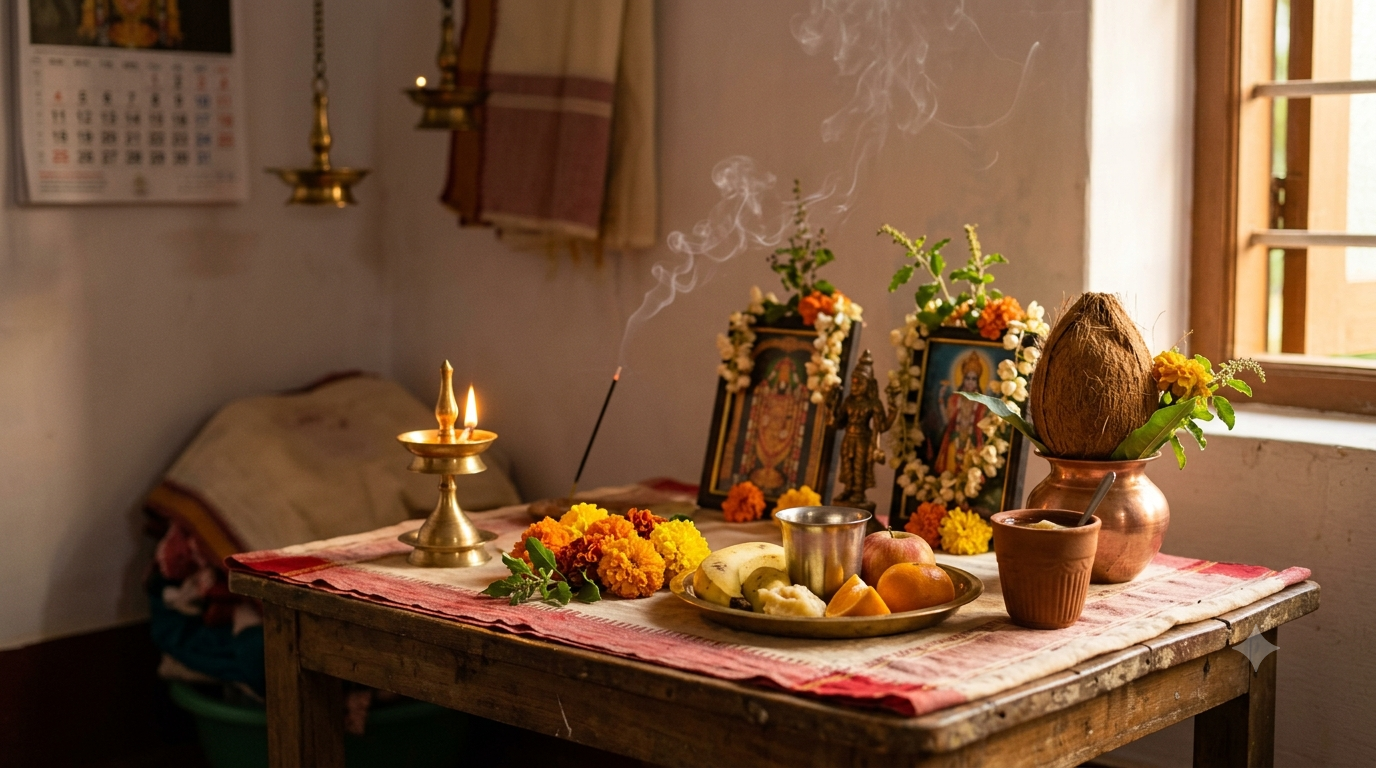
Celebrating Narasimha Jayanti at home needs no priest, no booking, and no big spend. A simple lamp, a few flowers, and honest devotion are enough. This day marks the appearance of Lord Narasimha, the fierce half-lion, half-man avatar of Lord Vishnu who came to protect his young devotee Prahlada.
Many families worship him for courage and protection from fear, and the good news is that you can do the whole ritual yourself. This guide walks you through the vidhi, the fasting rules, the offerings, and the exact evening timing, so you never have to second-guess a single step.
Sri Vyasa Pooja is an independent devotional guide. We are not affiliated with any temple or trust, and we do not accept bookings, poojas, or payments. For temple sevas or online poojas, please use the official temple portal.
Narasimha Jayanti at Home: Quick Facts
- Festival: Narasimha Jayanti, also called Narasimha Chaturdashi, marks Lord Narasimha’s appearance.
- Tithi: Vaishakha Shukla Chaturdashi, the 14th day of the bright fortnight of Vaishakha (April to May).
- 2026 date: Thursday, 30 April 2026. Next in 2027: Tuesday, 18 May 2027.
- Best time: evening (Sandhya or Sayana Kala), since the Lord appeared at twilight.
- Fasting: nirjala, phalahara, or ekabhukta, chosen by your health and capacity.
Why Devotees Worship Lord Narasimha
Lord Narasimha is the fourth avatar of Lord Vishnu, and his story is really a story about faith winning against fear. The demon king Hiranyakashipu held a boon that made him almost impossible to kill. Because of that boon, he grew arrogant and forbade everyone from worshipping Vishnu.
His own son Prahlada refused to stop, though, so the king tried again and again to harm him. When Hiranyakashipu struck a pillar and demanded proof that Vishnu was everywhere, Lord Narasimha burst out of it. He killed the demon at twilight, on a threshold, with his claws, so every clause of the boon was cleverly undone.
That is why this avatar feels so comforting to devotees. It shows that divine help arrives in the gap between all the categories we expect, exactly when hope looks lost. So people invoke Narasimha to remove fear, negativity, and unseen obstacles from their lives.
When Is Narasimha Jayanti and Why Evening Matters
Narasimha Jayanti falls on Vaishakha Shukla Chaturdashi, which lands in April or May every year. Since it follows the lunar calendar, the English date shifts each year, so you should always check the current tithi rather than copy last year’s date. In 2026 it fell on Thursday, 30 April, while in 2027 it returns on Tuesday, 18 May.
The main worship happens in the evening, during Sandhya Kala or Sayana Kala, because Lord Narasimha appeared at dusk. Devotees usually take the sankalp (vow) around Madhyahna, the midday period, and then perform the puja before sunset. The exact muhurat changes by city, so confirm your local Sandhya timing on a trusted panchang such as Drik Panchang before you begin.
What You Need for Narasimha Jayanti at Home
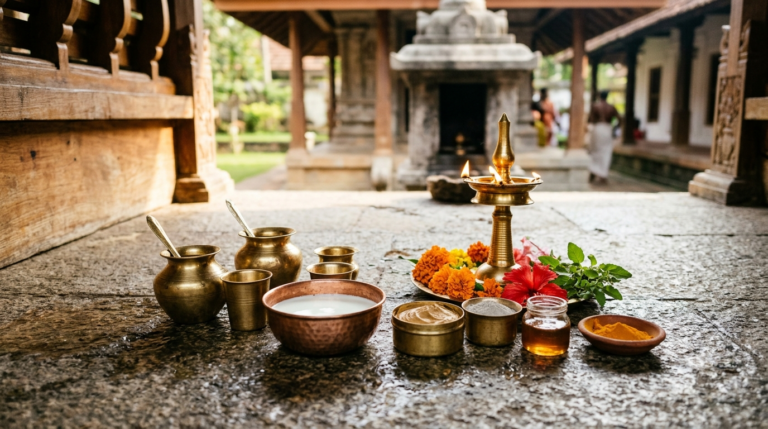
You do not need an elaborate setup for Narasimha Jayanti at home. A clean altar, a picture or idol, and a few natural offerings will do. Gather these items the evening before, so the morning stays calm.
| Category | Items |
|---|---|
| Deity | Photo or idol of Lord Narasimha, or Lakshmi Narasimha together |
| Lamp and incense | Ghee diya, cotton wicks, agarbatti, camphor for aarti |
| Offerings | Yellow flowers, tulsi leaves, sandalwood paste, kumkum, akshata (rice) |
| Naivedyam | Fruits, jaggery, coconut, panakam, kesari or any sattvic sweet |
| Abhishekam | Panchamrit (milk, curd, ghee, honey, sugar) if you have a metal idol |
Yellow flowers are considered especially dear to Lord Narasimha, so use them if you can. Tulsi is offered to every form of Vishnu, and it belongs on your altar too.
How to Celebrate Narasimha Jayanti at Home Step by Step
Here is a simple, complete sequence for your Narasimha Jayanti at home. It balances tradition with what a busy household can actually manage on a working day.
- Bathe and clean: wake early, bathe, and wipe down the pooja space. A clean space sets a calm, reverent mood.
- Set the altar: place the deity facing east or north on a fresh cloth. Light the ghee lamp and the incense.
- Take sankalp: around midday, sit quietly and resolve to observe the vrat with devotion. State your intention simply.
- Offer abhishekam: if you have a metal idol, bathe it with panchamrit, then with clean water. Wipe it dry gently.
- Decorate and offer: apply sandalwood and kumkum, then offer yellow flowers, tulsi, fruits, and the sweet naivedyam.
- Chant the mantras: recite “Om Namo Bhagavate Narasimhaya” and the Narasimha Kavacham if you know it. A rudraksha mala helps you count.
- Do the evening aarti: before sunset, wave the camphor flame and sing the aarti. This is the peak of the worship.
- Pray and circumambulate: offer your prayers, then do pradakshina, the respectful walk around the altar.
After the aarti, distribute the prasadam to everyone at home. Sharing the offering is itself a blessing, so do not skip it.
Fasting Rules for Narasimha Jayanti at Home
Fasting is central to Narasimha Jayanti at home, yet it is meant to lift you, not harm you. The rules resemble Ekadashi fasting, so grains, beans, and cereals are usually avoided for the day. You can pick the level that suits your body.
- Nirjala vrat: no food and no water until the evening puja. This is the strictest form.
- Phalahara: a partial fast on fruits, milk, and water, while grains stay off the plate.
- Ekabhukta: a single sattvic meal before sunset, with onion and garlic avoided.
The fast traditionally begins at sunrise and continues through the night. Parana, the breaking of the fast, is done the next morning after the Chaturdashi tithi ends. If the tithi ends late, follow your local panchang for the correct parana window.
A quick health note: dharma always values wellbeing over austerity. So if you are pregnant, elderly, diabetic, on medication, or unwell, please choose phalahara or a light sattvic meal instead of a waterless fast. Children should never attempt nirjala. When in doubt, ask your doctor first, and let japa and kirtana carry your devotion instead.
The Cooling Offerings Most Guides Miss
Here is a lovely detail many home guides skip. After Lord Narasimha killed Hiranyakashipu, his fierce form still blazed with heat, so devotees traditionally offer cooling things to soothe him. This custom is especially strong in South India, where the festival lands in peak summer.
Offer panakam, a jaggery-and-water drink flavoured with cardamom and dry ginger. Add neer mor, the lightly spiced buttermilk, along with slices of watermelon or tender coconut. Sandalwood paste on the deity carries the same cooling intention. These simple offerings turn the puja into an act of tender care, not just ritual.
Mantras and Stotras to Chant
Chanting is the heart of the day, because sound carries devotion when words fall short. Even a few sincere repetitions matter more than a rushed hundred. Keep the rhythm slow and steady.
- Moola mantra: “Om Namo Bhagavate Narasimhaya” or the shorter “Om Narasimhaya Namah”.
- Narasimha Kavacham: a protective hymn chanted for courage and safety at home.
- Lakshmi Narasimha Karavalamba Stotram: a moving prayer attributed to Adi Shankara.
- Vishnu Sahasranama: the thousand names of Vishnu, recited by many Vaishnava families.
If you want the full procedure with the Lakshmi Narasimha Stotram, our Narasimha pooja vidhanam guide lays it out in detail. Keep it open while you worship, so you never lose your place.
Common Mistakes and Myths to Avoid
Several myths circulate online, and they cause needless worry. Clearing them up makes your worship simpler and more confident.
“Only a nirjala fast counts.” This is false. Phalahara and ekabhukta are fully valid, so your intention matters more than the severity.
“The date is fixed.” It is not, because the lunar date moves; 2026 and 2027 sit almost three weeks apart. Always check the current tithi.
“You must pay to book a puja online.” You do not, since home worship needs no priest and no fee. Route any temple seva only through the official temple portal, and never share money or personal details with unofficial “booking” sites.
What If You Cannot Do the Full Puja
Life gets busy, so a full ritual is not always possible. That is completely fine, because Lord Narasimha responds to sincerity, not scale. A short, honest prayer still reaches him.
If you have no idol, a printed photo or even a mental image works. If you miss the exact evening muhurat, offer the lamp and mantra whenever you can that day.
If you cannot fast, eat lightly and sattvic, then spend a few minutes in japa. If you are travelling, a pocket idol and quiet chanting are enough. There is no failure here, only devotion in whatever form your day allows.
Nearby Narasimha Kshetras Worth Knowing
If you wish to visit a temple in the evening, several famous Narasimha shrines celebrate this day grandly. Ahobilam in Andhra Pradesh is the foremost, home to the Nava Narasimha (nine forms). Simhachalam near Visakhapatnam and Yadadri in Telangana also hold special abhishekams and processions.
These centres draw large crowds on Jayanti day, so carry water and go early if you plan to attend. A temple visit pairs beautifully with a simple home puja, though neither one replaces the other.
Before You Begin
Narasimha Jayanti rewards heart over show, so keep your worship calm, clean, and sincere. Set the altar, light the lamp, fast within your capacity, and chant the Lord’s name in the evening. Involve your family, tell the children the story of Prahlada, and share the prasadam afterwards.
For the exact tithi and Sandhya muhurat in your city, always check a trusted panchang close to the day. Do that, and your Narasimha Jayanti at home worship will feel both correct and deeply peaceful. If you love Vishnu vratams, you may also enjoy our Anantha Padmanabha Swamy Vratham guide.
Frequently Asked Questions
Can I celebrate Narasimha Jayanti at home without a priest?
Yes, you can easily celebrate Narasimha Jayanti at home without a priest. Light a diya, offer flowers and fruits, chant “Om Namo Bhagavate Narasimhaya”, and do the evening aarti. Sincere devotion completes the worship on its own.
What is the best time for the puja?
The evening is best, during Sandhya or Sayana Kala, because Lord Narasimha appeared at twilight. Devotees take sankalp around midday and perform the main puja before sunset. Confirm the exact muhurat for your city on a trusted panchang.
When is Narasimha Jayanti in 2027?
Narasimha Jayanti in 2027 falls on Tuesday, 18 May 2027. It marks Vaishakha Shukla Chaturdashi, the 14th day of the bright fortnight of Vaishakha. The exact tithi timing varies slightly by location.
What should I offer to Lord Narasimha?
Offer yellow flowers, tulsi, sandalwood, and fruits, along with a sweet like kesari or jaggery. Cooling items such as panakam, buttermilk, and watermelon are traditional, since they soothe his fierce form. Keep every offering sattvic.
Is fasting compulsory on Narasimha Jayanti?
Fasting is encouraged but not forced, and you should match it to your health. Nirjala, phalahara, and ekabhukta are all valid options. Pregnant, elderly, or unwell devotees should choose a light fast and consult a doctor.
What is the difference between Narasimha Jayanti and Narasimha Chaturdashi?
They are the same festival, not two different days. Narasimha Chaturdashi is simply another name, because it falls on the Chaturdashi tithi. Both mark the appearance of Lord Narasimha.
Why do people offer panakam on this day?
Panakam, a cooling jaggery drink, is offered because Lord Narasimha’s fierce form radiated great heat after the battle. Devotees offer cooling foods to soothe him, especially in the summer months. It is a gesture of loving care.
Can I worship Lakshmi Narasimha instead of the fierce form?
Yes, many families prefer the Lakshmi Narasimha form for home puja. This peaceful form, with Goddess Lakshmi beside the Lord, feels calm and benevolent. It is believed to remove fear and bring harmony to the home.
Which direction should I face during the puja?
Sit facing east or north while you worship, and place the deity so it faces you. These directions are considered auspicious for most home pujas. If your space does not allow it, do not worry, because sincere devotion matters far more than the exact direction.
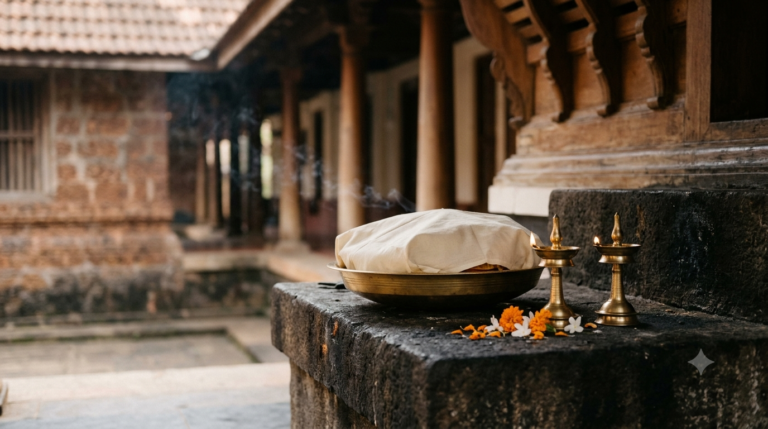
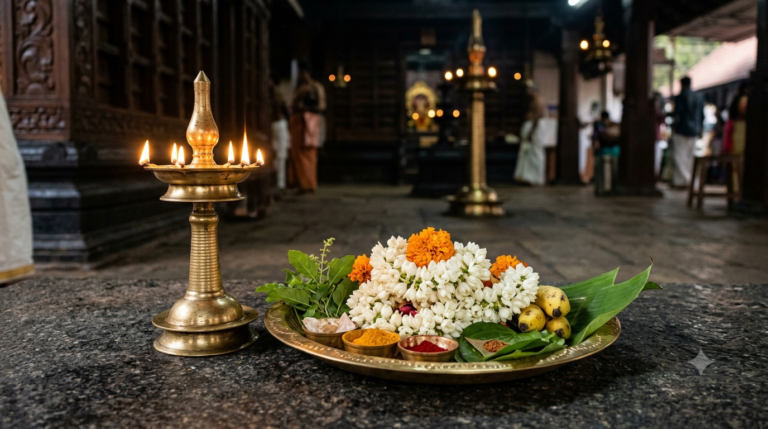

Lord Narasimha Bless You.
Hello, Thanks for your feedbaxk.