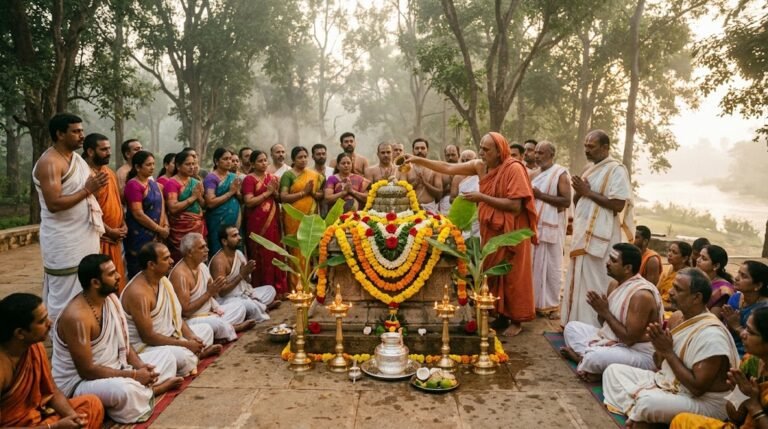
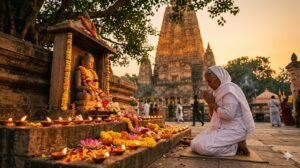
Parasurama Jayanthi 2026 date falls on Sunday, April 19. Discover the shubh muhurat, Pradosh Kaal timings, puja vidhi, mantras and complete ritual guide.
The Parasurama Jayanthi 2026 date falls on Sunday, April 19, 2026, coinciding with the highly auspicious Akshaya Tritiya. This rare alignment happens only a few times each decade, and 2026 delivers one of the most spiritually charged versions of this double festival that devotees will witness this decade. Most online sources give you just the date and move on — this guide covers everything else: the exact muhurat windows, Pradosh Kaal timings, step-by-step puja vidhi, authentic mantras, and insider details about which temples host the biggest celebrations.
Quick Summary: Parasurama Jayanthi 2026 at a Glance
- Date: Sunday, April 19, 2026
- Tithi: Vaishakha Shukla Paksha Tritiya
- Tritiya Tithi Begins: 10:49 AM on April 19, 2026
- Tritiya Tithi Ends: 07:27 AM on April 20, 2026
- Morning Puja Muhurat: 07:29 AM to 12:20 PM
- Pradosh Kaal Muhurat (Most Auspicious): 06:49 PM to 10:57 PM
- Coincides With: Akshaya Tritiya 2026
- Deity Worshipped: Bhagwan Parasurama, the 6th avatar of Lord Vishnu
When Is Parasurama Jayanthi 2026 Date Exactly?
The Parasurama Jayanthi 2026 date is Sunday, April 19, 2026. This festival marks the birth anniversary of Bhagwan Parasurama, the sixth incarnation of Lord Vishnu. Hindus observe it every year on the third day (Tritiya) of Shukla Paksha in the Vaishakha month.
Notably, the day is considered extra powerful in 2026 because it falls on the same date as Akshaya Tritiya. Both festivals share the identical Tithi — Vaishakha Shukla Paksha Tritiya — and this overlap multiplies the spiritual merit of any charity, worship, or ritual performed on this day.
However, you may see some confusion online about whether the festival falls on April 19 or April 20. Here is the clear answer: since the Tritiya Tithi prevails during Pradosh Kaal (evening twilight) on April 19, that is the correct day for Parasurama Jayanthi observance. This timing matters because Bhagwan Parasurama was born during Pradosh Kaal according to Hindu scriptures.
Why the Parasurama Jayanthi 2026 Date Matters Spiritually
Furthermore, 2026 brings a rare planetary alignment that boosts the significance of this festival. The Sun is exalted in Aries and the Moon is exalted in Taurus on this day — an astrological combination called the Abuja Muhurat. In this window, no pandit consultation is needed because the entire day is naturally sacred.
Additionally, this is the only day in the Hindu calendar when both a major avatar’s birth and an eternal-merit day overlap. Therefore, prayers offered now carry what scriptures call akshaya phala — fruit that never diminishes.
Tritiya Tithi & Shubh Muhurat Timings
Timing matters more than most devotees realize on this festival. Specifically, Parasurama Jayanthi rituals must be performed while the Tritiya Tithi is active. Here are the precise timings for New Delhi/IST — adjust by a few minutes for your local sunrise.
| Ritual Window | Start Time | End Time |
|---|---|---|
| Tritiya Tithi Begins | April 19, 10:49 AM | — |
| Tritiya Tithi Ends | — | April 20, 07:27 AM |
| Morning Puja Muhurat | 07:29 AM | 12:20 PM |
| Gold Buying Muhurat | 10:49 AM | 12:20 PM |
| Afternoon Auspicious Window | 01:58 PM | 03:35 PM |
| Pradosh Kaal (Peak Time) | 06:49 PM | 10:57 PM |
Which Timing Is Best for Parasurama Puja?
For Bhagwan Parasurama specifically, the Pradosh Kaal evening window is most sacred. Because Parasurama was born during this twilight period, worship done between 06:49 PM and 10:57 PM is believed to directly connect you to his divine energy.
Meanwhile, morning rituals between 07:29 AM and 12:20 PM work best for Akshaya Tritiya purposes — gold purchases, starting new ventures, and Lakshmi puja. Most families perform both. They do morning puja for prosperity and evening puja for the warrior-sage’s blessings.
Who Was Bhagwan Parasurama?
Bhagwan Parasurama is the sixth of the Dashavatara — the ten incarnations of Lord Vishnu. Born to Sage Jamadagni and Mata Renuka, he broke the usual mould of a Vishnu avatar. He was a Brahmin by birth but fought as a Kshatriya, carrying the divine axe (parshu) gifted by Lord Shiva himself.
Furthermore, he is one of the seven Chiranjivis — immortal beings still believed to walk the earth. According to the Mahendra Parvata tradition, he resides today at Mahendragiri in Odisha. Unlike Rama or Krishna, Parasurama is not worshipped in daily temple prayers because he is considered still alive.
His name comes from two Sanskrit words — Parashu (axe) and Rama (his original name). Lord Shiva gave him the axe after rigorous penance, and from that day forward he became Parasurama — Rama with the axe.
The Mission of the Sixth Avatar
Hindu scriptures describe a time when Kshatriya kings became tyrannical. They oppressed sages, stole cattle, and ignored their dharmic duties. Consequently, Lord Vishnu incarnated as Parasurama to restore balance. He defeated corrupt rulers 21 times — a number symbolizing his total commitment to destroying adharma.
Even so, his story is not simply about violence. It teaches that strength must serve dharma, not ego. After his mission, he retreated to penance and became a guru to legendary figures like Bhishma, Dronacharya, and Karna.
Significance of Parasurama Jayanthi 2026
This festival holds layered significance beyond just birth celebration. In particular, 2026 carries three converging spiritual currents that devotees should understand.
First, the day marks the start of Satya Yuga according to the Bhavishya Purana. Therefore, any spiritual practice begun today is believed to set the tone for an entire yuga of positive karma.
Second, it is the birth day of the Akshaya Patra — the mystical vessel Lord Krishna gave the Pandavas during their exile. As a result, food donations today are believed to return as inexhaustible abundance.
Third, Mother Ganga is said to have descended to earth on this very Tithi. Hence, holy bathing carries special merit on April 19, 2026.
Why 2026 Is Especially Auspicious
Astrologically speaking, 2026 brings exalted positions for both Sun and Moon. Specifically, the Sun sits in Aries (its exalted sign) and the Moon in Taurus (its exalted sign) simultaneously. Such alignments are rare — the last similar combination occurred in 2020, and the next will not repeat until 2030.
Additionally, the Tritiya Tithi fully covers the Pradosh Kaal window on April 19, which astrologers call a “complete Tithi” — considered superior to years when the Tithi is partial during evening hours.
Parasurama Jayanthi Puja Vidhi: Step-by-Step
Performing the puja correctly matters more than doing it elaborately. Below is the traditional sequence followed in most devotee households.
- Wake up during Brahma Muhurta (roughly 4:30 AM to 5:30 AM) and take a bath, ideally with a few drops of Gangajal added to the water.
- Wear clean, preferably yellow or saffron clothes — colours associated with Lord Vishnu and his incarnations.
- Clean your puja space and sprinkle Ganga water to purify the area.
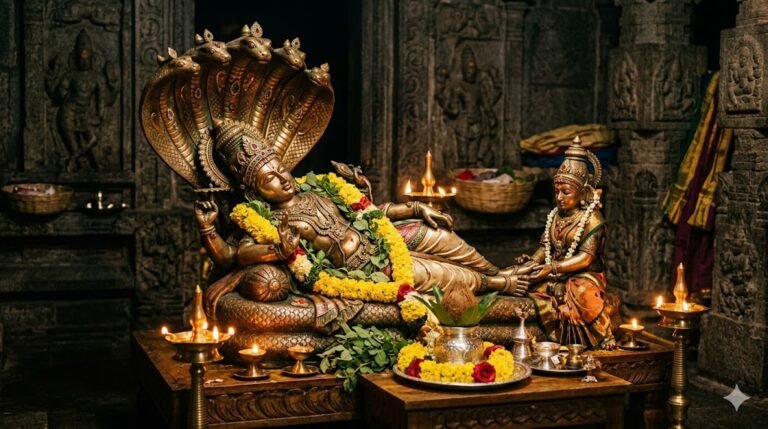
- Place a picture or idol of Bhagwan Parasurama, along with Lord Vishnu.
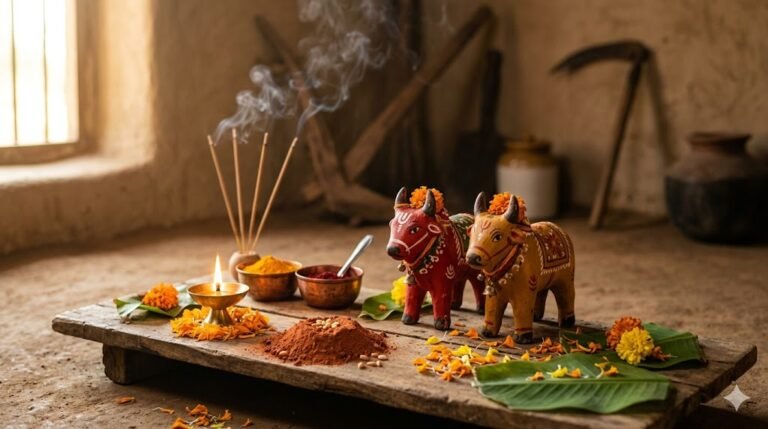
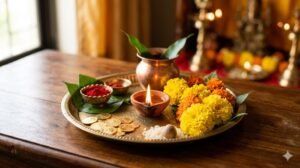
- Light a ghee lamp (diya) and incense sticks (agarbatti).
- Offer yellow flowers, sandalwood paste, tulsi leaves, and sweets — especially kheer or laddu.
- Chant the Parasurama mantras (listed in the next section) at least 108 times using a rudraksha mala.
- Recite the Vishnu Sahasranama if time permits — it multiplies the puja’s power.
- Perform aarti and distribute prasad to family members.
- Donate food, clothes, or money to those in need — this is essential on this day.
Fasting Rules for Parasurama Jayanthi
Fasting on this day is recommended but not mandatory. For most devotees, two options work well.
The Phalahar fast allows fruits, milk, and water throughout the day. Therefore, this is the gentler option for beginners, children, and elderly devotees.
Meanwhile, the Nirjala fast requires no food or water until the evening puja is complete. Consequently, this demands physical preparation and is traditionally observed only by serious devotees in good health.
Break your fast after the Pradosh Kaal puja with light sattvic food — fruits, milk, and a small portion of kheer is ideal.
Powerful Parasurama Mantras to Chant
Mantras carry specific vibrations believed to activate Bhagwan Parasurama’s blessings. Below are the three most powerful mantras traditionally chanted on this day.
Basic Mantra:
ॐ परशुरामाय नमः
Om Parashuramaya Namah
Gayatri Mantra of Parasurama:
ॐ जमदग्न्याय विद्महे महावीराय धीमहि। तन्नः परशुरामः प्रचोदयात्॥
Om Jamadagnaya Vidmahe Mahaviraya Dhimahi, Tanno Parashurama Prachodayat.
Beej Mantra:
ॐ रां रामाय नमः
Om Raam Ramaya Namah
Chant each mantra 108 times, ideally during Pradosh Kaal. For maximum benefit, light a ghee lamp before you begin and keep the flame burning until you finish.
What to Donate on Parasurama Jayanthi 2026
Charity (daan) carries enormous weight on this day because of the Akshaya Tritiya overlap. Any donation made on April 19, 2026 is believed to return as akshaya phala — imperishable merit.
Certain items carry special significance:
- Food grains — wheat, rice, and barley (sabut or cooked as meals for the needy)
- Clothes — especially to priests, widows, and the underprivileged
- Water pots (ghada) filled with water — symbolic of quenching summer thirst
- Summer essentials — hand fans, umbrellas, sattu packets, buttermilk
- Gold or silver — even a small coin counts toward auspicious wealth-building
- Cow ghee, sugar, and milk — traditional offerings linked to Lord Vishnu
- Tulsi plants — sacred to Vishnu worship
Notably, Hindu texts emphasize that the intent matters more than the amount. Moreover, a sincere small donation carries equal merit to a large grudging one.
Famous Parasurama Temples to Visit
Although Parasurama is not worshipped daily like other deities, several temples dedicated to him host grand celebrations on this day. Here are the most important pilgrimage sites in India.
Parashuram Temple, Pajaka (Karnataka)
Located near Udupi, Pajaka is considered one of the most sacred Parasurama sites in South India. The temple stands on the mountain where Parasurama is said to have performed penance. Consequently, it draws thousands of devotees during the Jayanthi week.
Parashuram Kund (Arunachal Pradesh)
This sacred kund lies near the Lohit River in Arunachal Pradesh. According to legend, Parasurama washed away the sin of killing his mother here. Therefore, devotees take a holy dip on Parasurama Jayanthi believing it cleanses accumulated sins.
Mahendragiri (Odisha)
The second-highest peak in Odisha’s Eastern Ghats, Mahendragiri is believed to be Parasurama’s current abode. Pilgrims trek to the summit on Jayanthi day seeking the immortal sage’s blessings.
Parashurama Temple, Shoorparaka (Maharashtra)
Located near the Konkan coast, this temple is central to the legend that Parasurama created the Konkan region by pushing back the sea with his axe. Furthermore, coastal Konkani communities celebrate him as their regional protector.
Regional Celebrations Across India
Parasurama Jayanthi sees different celebration styles depending on the region. In Maharashtra, Brahmin communities organize shobha yatras (processions) carrying Parasurama’s idol through streets. Meanwhile, Himachal Pradesh and Haryana observe it as a public holiday.
In Kerala, the festival holds special meaning because legend says Parasurama created the land of Kerala itself by throwing his axe into the sea. Consequently, coastal Kerala temples host elaborate poojas and cultural programs.
On the other hand, Konkani Brahmins observe the day with Vedic recitations and community feasts. North Indian Brahmin associations also often host satsangs featuring readings from the Parashurama Gita.
Common Mistakes to Avoid on Parasurama Jayanthi
Several avoidable errors weaken the spiritual benefit of this day. Watch out for these common slip-ups:
- Eating non-vegetarian food — strictly avoided even by those not fasting
- Consuming alcohol or tobacco — breaks the sanctity of the Tithi
- Arguing or using harsh language — Parasurama represents controlled strength, not unchecked anger
- Skipping the evening puja — Pradosh Kaal is the true birth time, morning puja alone is incomplete
- Buying gold without intention — purchases should be preceded by a quick Lakshmi prayer
- Lending money — traditionally considered inauspicious on Akshaya Tritiya
- Cutting nails or hair — avoided on most Hindu festivals, including this one
Parasurama Jayanthi vs Akshaya Tritiya: Are They the Same?
This confuses many devotees every year. Here is the clear distinction: the two festivals share the same date but have different spiritual focuses.
| Aspect | Parasurama Jayanthi | Akshaya Tritiya |
|---|---|---|
| Primary Focus | Birth of Bhagwan Parasurama | Eternal prosperity and new beginnings |
| Main Deity | Parasurama, 6th Vishnu avatar | Lord Vishnu, Goddess Lakshmi |
| Peak Puja Time | Pradosh Kaal (evening) | Morning Muhurat (10:49 AM–12:20 PM) |
| Key Practice | Chanting Parasurama mantras | Buying gold, charity, new ventures |
| Regional Emphasis | Konkan, Kerala, Maharashtra, North India | Pan-India (especially North & West) |
In practice, most Hindu families celebrate both together on the same day. You can do morning Akshaya Tritiya rituals and evening Parasurama puja without any conflict.
Final Thoughts
Parasurama Jayanthi 2026 on April 19 offers a rare convergence of exalted planetary energies, Akshaya Tritiya’s eternal merit, and Pradosh Kaal’s sacred timing. For devotees seeking blessings of courage, discipline, and spiritual strength, this is arguably the most powerful day in the entire 2026 Hindu calendar. Whether you perform an elaborate puja or a simple mantra chant with a lit ghee lamp, the spiritual harvest on this day never diminishes. Plan your rituals around the Pradosh Kaal window between 06:49 PM and 10:57 PM for maximum benefit, and remember — sincerity matters more than scale.
Frequently Asked Questions
What is the exact Parasurama Jayanthi 2026 date?
Parasurama Jayanthi 2026 date is Sunday, April 19, 2026. The Tritiya Tithi begins at 10:49 AM on April 19 and ends at 07:27 AM on April 20. The festival coincides with Akshaya Tritiya this year.
At what time should I perform Parasurama puja on April 19, 2026?
The most auspicious time is Pradosh Kaal between 06:49 PM and 10:57 PM because Bhagwan Parasurama was born during this evening twilight period. Morning puja between 07:29 AM and 12:20 PM is also acceptable but evening worship carries greater spiritual weight.
Is Parasurama Jayanthi the same as Akshaya Tritiya?
They fall on the same date but are separate festivals. Akshaya Tritiya celebrates eternal prosperity and honours Lord Vishnu and Goddess Lakshmi, while Parasurama Jayanthi marks the birth of the sixth Vishnu avatar. Most families observe both together on April 19, 2026.
Why is Bhagwan Parasurama not worshipped daily like Rama or Krishna?
Parasurama is one of the seven Chiranjivis — immortal beings still believed to be living on earth. Hindu tradition does not offer daily worship to living personalities. Therefore, he is honoured mainly on his Jayanthi and at specific temples dedicated to him.
Can women fast and perform Parasurama Jayanthi puja?
Yes, women can fully observe the fast and perform all rituals. There are no gender restrictions on this festival. Phalahar fast (fruits and milk) is recommended over Nirjala fast for first-time observers.
What should I donate on Parasurama Jayanthi 2026?
Food grains, summer essentials like water pots and sattu, clothes, and gold (even small coins) are highly recommended. Because this day coincides with Akshaya Tritiya, every donation is believed to return as imperishable merit. Intent matters more than the amount.
Is Parasurama Jayanthi a public holiday in India?
It is a public holiday in some states including Himachal Pradesh, Haryana, and parts of Maharashtra, but not a national holiday. Brahmin communities across India observe it as a mandatory religious day regardless of state holiday status.
You May Also Like
- Akshaya Tritiya 2026: Date, Muhurat, Gold Buying Tips & Puja Vidhi
- Hanuman Jayanti 2026: Date, Shubh Muhurat and Complete Ritual Guide
- Narasimha Jayanti 2026: Birth of Lord Vishnu’s 4th Avatar Explained
- Vaishakha Month 2026: Festivals, Vrats and Spiritual Significance