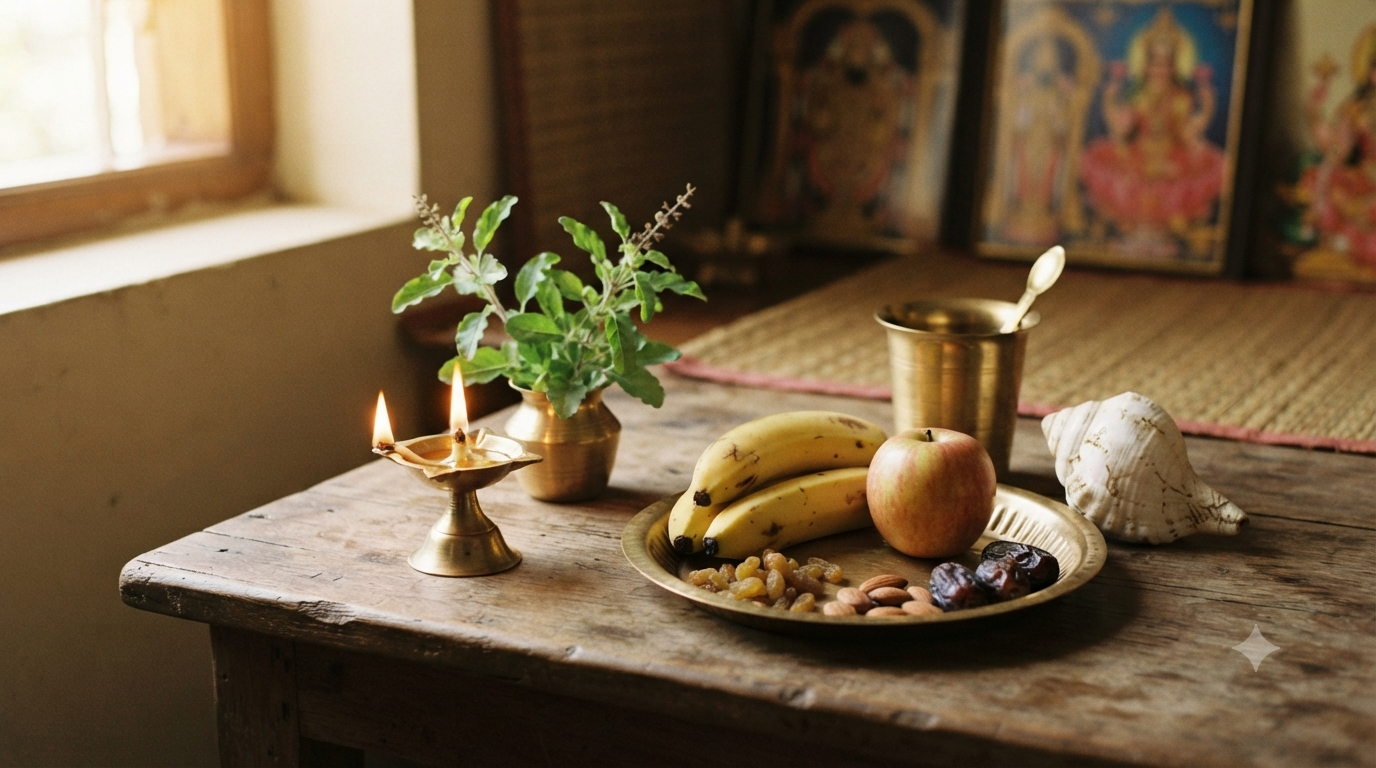
The Significance Ekadashi Vratam holds for a devotee of Lord Vishnu reaches far beyond skipping a single meal. It is one of Hinduism’s oldest fasting vows, kept on the eleventh day of every lunar fortnight. Twice each month, millions of people slow down, turn inward, and remember Narayana.
Yet most guides only list what to eat and what to avoid. This one goes deeper, because it explains why the tradition chose this day, what the scriptures actually promise, and how to fast without harming your health.
Sri Vyasa Pooja is an independent devotional guide. We are not affiliated with any temple, mutt, or religious trust, and we accept no bookings or donations. For any seva or darshan, please use each temple’s official portal.
Significance Ekadashi Vratam: Key Takeaways
- Ekadashi is the eleventh lunar day of each fortnight, so it comes twice a month and honours Lord Vishnu.
- There are usually 24 Ekadashis in a year, though a leap month (Adhik Maas) can raise the count to 26.
- The fast asks you to give up grains, beans, and lentils, while fruits, milk, and nuts remain fine to eat.
- Nirjala Ekadashi is the strictest, and devotees call it the “King of Ekadashis” because one observance equals all others.
- Tradition frames the benefits as spiritual, so nobody should treat the fast as a medical cure.
What Is Ekadashi? The Eleventh Day Explained
Ekadashi simply means “the eleventh.” The word joins eka (one) and dasha (ten), which together point to the eleventh day. Each lunar month splits into two halves. One is the waxing fortnight, or Shukla Paksha, and the other is the waning fortnight, or Krishna Paksha.
The eleventh day of each half is Ekadashi. Because there are two fortnights every month, devotees observe the vow twice a month. Many teachers also read a deeper meaning into the number. They connect the “eleven” to the eleven senses, which include five organs of perception, five organs of action, and the mind.
On this day a devotee tries to still those eleven senses. So the fast is not only about the stomach. It is a full day of restraint, prayer, and remembrance directed toward Lord Vishnu.
The Scriptural Significance Ekadashi Vratam Draws From the Puranas
The Significance Ekadashi Vratam draws mostly from the Puranas, not from a single verse. The Padma Purana, Skanda Purana, Bhavishya Purana, and Brahma Vaivarta Purana all describe the vow and its rewards. Each text ties the fast to the mercy of Vishnu and the washing away of past sins.
One popular account explains the very origin of the day. It tells of a fierce demon named Mura who troubled the gods. A divine feminine power emerged from Lord Vishnu and destroyed the demon.
Pleased, Vishnu named her Ekadashi and blessed anyone who honoured her with a fast. This is one reason devotees often call Vishnu by the name Murari, the enemy of Mura. Kings and sages kept the vow too. The Bhagavata Purana celebrates the devotee-king Ambarisha for his steady Ekadashi and Dwadashi observance, so devotees see the practice as ancient rather than invented.
Spiritual Significance Ekadashi Vratam Holds for Devotees
The spiritual Significance Ekadashi Vratam holds is best understood as a monthly reset. When you step back from food, you also step back from restlessness. The mind grows quieter, and attention turns from the plate to the prayer.
Tradition promises several rewards, and it frames every one of them as a matter of faith. Devotees believe the fast purifies the mind, loosens material attachment, and brings the soul closer to Vishnu. Many also believe it clears sins gathered across lifetimes and points the seeker toward moksha, or liberation.
These are devotional claims, not guaranteed outcomes. Still, the discipline itself has clear value. A day of simple food, honest speech, and steady chanting builds patience, and that patience often lasts well beyond the fast.
How Often Does Ekadashi Come, and How Many Are There?
Ekadashi comes twice every lunar month, once in each fortnight. A standard year therefore carries 24 Ekadashis. When an extra lunar month called Adhik Maas appears, roughly once every three years, the total rises to 26. Each one has its own name, its own story, and its own focus, so they are never treated as interchangeable.
How to Observe the Vratam: Fasting Rules and Foods
The rules are simple, though they demand sincerity. Devotees begin with an early bath and a short sankalpa, which is a spoken vow of intent. The day then passes in prayer, scripture reading, and the chanting of Vishnu’s names.
Food is where beginners get confused. On Ekadashi you avoid all grains and pulses, so no rice, wheat, dal, or beans. You also set aside onion, garlic, and common table salt. Instead, devotees take fruits, milk, nuts, and a few fasting-friendly items, and many use rock salt in place of ordinary salt.
| Foods usually taken | Foods usually avoided |
|---|---|
| Fruits and fresh fruit juice | Rice, wheat, and other grains |
| Milk, curd, and dairy | Dal, beans, and lentils |
| Nuts and dry fruits | Onion and garlic |
| Potato and a few root vegetables | Ordinary table salt |
| Water and rock salt (sendha namak) | Any non-vegetarian food |
The strictness varies by person and tradition. Some keep a full fast, while others take a light phalahar, or fruit-based diet. Because faith values intention over strain, tradition also respects a gentler fast kept with devotion.
Breaking the Fast: Why Parana Timing Matters
Parana is the act of breaking the fast, and its timing carries real weight. Devotees break the fast on Dwadashi, the twelfth day, after sunrise. Tradition asks them to break it within the first few hours after sunrise, and always inside the Dwadashi period.
You should not break the fast during the early portion of Dwadashi known as Hari Vasara. Many devotees first offer water and a tulsi leaf, then take prasad from the morning worship. Since a heavy meal after a long fast can upset the body, it helps to start gently and eat slowly.
The Health Significance Ekadashi Vratam Offers, and Who Should Be Careful
The health Significance Ekadashi Vratam offers is real but modest, and it must never be oversold. A monthly break from heavy grains gives the digestive system rest. Lighter eating, more water, and a calmer routine can leave many people feeling refreshed.
However, fasting is not safe for everyone, so caution matters. Pregnant women, young children, the very elderly, and people with diabetes or other medical conditions should avoid a strict or waterless fast. Tradition itself makes room for them, because it accepts sincere intention in place of physical hardship.
Health comes before ritual technicality. If you feel dizzy or weak, drink water at once and end the fast. A fast is never a medical treatment or a substitute for professional care.
If you take regular medication, keep taking it and speak with your doctor before any long fast. When you observe the vow sensibly, it supports wellbeing, so there is no need to push your body to a dangerous point.
Nirjala, Vaikuntha, and the Most Powerful Ekadashis
Although every Ekadashi matters, a few stand out for their weight in tradition. Nirjala Ekadashi, observed without even water, earns the title “King of Ekadashis.” Scripture says its single, sincere observance grants the merit of all the others, which is why even casual devotees try to keep it.
Other Ekadashis anchor the calendar. The table below gathers the ones devotees ask about most.
| Ekadashi | When it falls | Known for |
|---|---|---|
| Nirjala Ekadashi | Jyeshtha (May–June) | The strictest, waterless fast; said to equal all others |
| Vaikuntha / Mokshada Ekadashi | Margashirsha (Dec) | Strongly linked to liberation; grand observance at Srirangam |
| Devshayani Ekadashi | Ashadha (Jun–Jul) | Marks Vishnu’s cosmic sleep and the start of Chaturmasya |
| Prabodhini Ekadashi | Kartika (Oct–Nov) | Vishnu awakens; auspicious weddings resume |
| Putrada Ekadashi | Pausha and Shravana | Observed by couples praying for children |
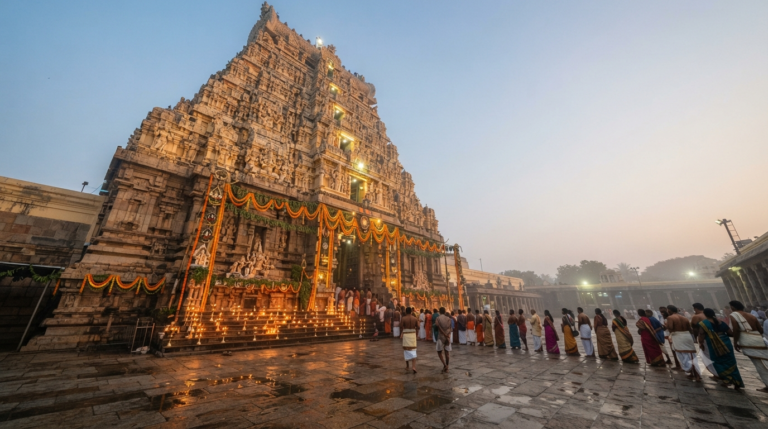
Vaikuntha Ekadashi draws especially large crowds. At Tirumala, devotees line up to pass through the Vaikuntha Dwaram, so it helps to plan the trip early with our guide to Tirupati darshan timings and counters.
Dates shift every year because they follow the moon, not the calendar. For your city’s exact tithi and parana window, always check a reliable panchang such as Drik Panchang’s Ekadashi guide.
Significance Ekadashi Vratam Carries Beyond Ritual: Everyday Lessons
The Significance Ekadashi Vratam carries is not locked inside temple walls. The vow trains ordinary habits that help long after Dwadashi. Restraint at the table teaches restraint in speech, spending, and temper.
Tradition asks devotees to avoid harsh words, gossip, and deceit on this day. So the fast becomes a practice of honesty, not only hunger. Over months, that rhythm can steady the mind and soften anger, which is a benefit anyone can notice regardless of belief.
For a related Vishnu-centred vow observed at home, many readers also keep the Sri Satya Narayana Vratam, which shares the same spirit of simplicity and devotion.
Mistakes That Dilute the Significance Ekadashi Vratam Offers
A few common slips weaken the vow, and most are easy to avoid. First, people fast the body but not the senses, so they gossip and lose temper all day. The fast means little without that inner restraint.
Second, some break the fast at the wrong time and miss the Dwadashi window. Third, beginners often attempt a harsh waterless fast with no preparation, which can be risky. Fourth, a few treat the fast as a diet plan rather than devotion, which misses the point entirely.
Start small, keep hydrated unless you are certain a stricter fast suits you, and grow the practice slowly. A gentle vow kept for years teaches more than one dramatic fast that leaves you unwell. For a broader Vaishnava reference on the observance, the Hare Krishna Ekadashi calendar explains the tradition in helpful detail.
Final Thoughts
Ekadashi is less a rule and more an invitation. Twice a month it offers a pause, a lighter body, and a quieter mind turned toward Vishnu. Keep it with sincerity rather than strain, honour the food and timing rules, and never risk your health for a technicality. Observed this way, the vow rewards patience, devotion, and steady faith over time.
Frequently Asked Questions
What is the significance of Ekadashi Vratam in simple words?
The significance of Ekadashi Vratam is spiritual purification through fasting and devotion to Lord Vishnu. Kept on the eleventh lunar day, it aims to calm the mind, reduce material attachment, and clear past sins. Tradition treats these as matters of faith rather than guaranteed results.
How many Ekadashis are there in a year?
A standard year has 24 Ekadashis, two in each lunar month. In years with an extra lunar month, called Adhik Maas, the number rises to 26. Each Ekadashi carries its own name and story.
Can I drink water during Ekadashi fasting?
Yes, most observances allow water and even encourage it. Only the special Nirjala Ekadashi drops water entirely, and it suits only healthy adults. If you feel unwell at any point, drink water immediately.
Which foods are avoided on Ekadashi?
Devotees avoid all grains and pulses, including rice, wheat, dal, and beans. They also set aside onion, garlic, and ordinary table salt. Fruits, milk, nuts, and rock salt work well instead.
Why is Nirjala Ekadashi considered the most important?
Nirjala Ekadashi drops both food and water, which makes it the strictest of all. Scripture says one sincere observance grants the merit of every Ekadashi in the year. Because of its difficulty, it does not suit pregnant women, children, the elderly, or the sick.
When should I break the Ekadashi fast?
Break the fast on Dwadashi, the twelfth day, after sunrise and within the prescribed window. Avoid breaking it during the early Hari Vasara portion of Dwadashi. Many devotees begin with water and a tulsi leaf before taking prasad.
Is Ekadashi fasting safe for everyone?
No, a strict fast does not suit everyone. Pregnant women, young children, the elderly, and people with conditions such as diabetes should avoid harsh fasting. Tradition accepts sincere intention and simple worship in place of a difficult fast.
Do I have to be a Vaishnava to observe Ekadashi?
No, anyone may observe Ekadashi with devotion. Devotees of Vishnu treat the vow as especially important, yet it stays open to all. Start gently and let the practice grow with your comfort and health.