The Narasimha Sahasranamam is a devotional hymn of one thousand names that praises Lord Narasimha, the lion-faced avatar of Vishnu. Devotees chant it for courage, protection from fear, and inner strength. This guide explains what the hymn means, why it matters, and how and when to chant it. It also shows where to find the authentic Telugu text, because we point you to trusted sources rather than hosting a file ourselves.
A quick note on independence: Sri Vyasa Pooja is an independent devotional guide. We are not affiliated with any temple, matha, or trust, and we do not take bookings, donations, or payments through this page. We also do not host the full text as a download, so we route you to established, trustworthy sources instead.
Narasimha Sahasranamam at a Glance
| Detail | Summary |
|---|---|
| Deity | Lord Narasimha (Nrisimha), the lion-man avatar of Vishnu |
| What it is | A sahasranama: a hymn of 1,000 names, often recited as Lakshmi-Narasimha |
| Traditional sources | Puranic literature, including the Brahmanda Purana and Narasimha-related texts |
| Best occasions | Narasimha Jayanti, Saturdays, Ekadashi tithis, Vishnu festivals |
| Reputed benefits | Courage, protection, freedom from fear, peace of mind (devotional belief) |
| Languages | Sanskrit original, with Telugu transliteration and translation widely available |
What Is the Narasimha Sahasranamam?
A sahasranama is a Hindu hymn of one thousand names, and each name captures a quality, deed, or form of the deity. The Narasimha Sahasranamam does this for Lord Narasimha, the half-lion, half-man avatar of Vishnu. Because many names point straight to his nature, the hymn reads like a portrait drawn in sound.
Some names are famous on their own. Ugra means the fierce one, while Mahavishnu means the great Vishnu. Prahlada-varada honors the Lord who blessed the boy-devotee Prahlada. Since each name works as a small meditation, the whole hymn becomes a slow act of remembrance.
The story behind the fierce avatar
The form carries one of the most loved origin stories in Vaishnava tradition. The demon king Hiranyakashipu had won a boon, so he could not be killed by man or beast, indoors or outdoors, by day or by night, on the ground or in the sky, or by any weapon.
He grew tyrannical and tormented his own son Prahlada, a steadfast devotee of Vishnu. When the king struck a pillar and mocked whether God was inside it, Vishnu appeared as Narasimha. At twilight, on the palace threshold, the Lord placed the demon on his lap and ended him with his claws.
Every condition of the boon was honored, yet the devotee was saved. Because of that rescue, this hymn is remembered above all as a song of protection and restored dharma.
The 1,000 Names and What They Mean
The thousand names are not random praise. Instead, each one describes a form, weapon, virtue, or deed of the Lord. Read together, they map his full personality, from terrifying strength to tender care for devotees.
A few examples show the range. Simharaja means king among lions, while Vajra-damshtra points to teeth as hard as a thunderbolt. Mrityu-mrityu calls him the death of death itself. Because the names move from fierce to gentle, the hymn balances awe with comfort.
Traditionally, a sahasranama also carries a phala-shruti, the closing verses that describe the fruits of recitation. Many editions of the Narasimha Sahasranamam open with a short story frame and end with this phala-shruti. So the text is far more than a bare list of names.
108 names or 1,000 names?
Newcomers often confuse the Narasimha Sahasranamam with the shorter Narasimha Ashtottara Shatanamavali, the hymn of 108 names. Both are used in worship, yet they serve slightly different needs. The 108-name version is short and easy to finish in one sitting, so it suits a busy daily practice.
The full thousand-name hymn is longer and more elaborate. Because of that length, many devotees reserve it for Narasimha Jayanti, special vows, or a formal archana at a temple. If you are only starting out, the 108 names make a gentle on-ramp before you take up the complete Sahasranamam.
Forms of Narasimha the Hymn Praises
Narasimha is worshipped in many forms, and the Narasimha Sahasranamam touches several of them. Tradition often groups the main images into five iconographic forms. Each one reveals a different mood of the same Lord.
- Ugra Narasimha — the fierce form that destroys the demon.
- Lakshmi Narasimha — the calm form with Goddess Lakshmi seated on his lap.
- Yoga Narasimha — the meditating form, seated in deep stillness.
- Jvala Narasimha — the blazing, flame-maned form.
- Gandaberunda Narasimha — a rare, immense form linked with a two-headed motif.
These forms are not rivals. Rather, they are moods of one deity, so a devotee can approach him as protector, as pacified grace, or as the ideal of meditation.
The nine Narasimhas of Ahobilam
For Telugu devotees especially, Ahobilam is the heart of Narasimha worship. This hill shrine sits in the Nallamala forests of the Eastern Ghats, in the Kurnool district of Andhra Pradesh. It is called Nava Narasimha Kshetram because nine self-manifested forms are worshipped across nine shrines.
The nine are Jwala, Ahobila, Malola, Kroda, Karanja, Bhargava, Yogananda, Kshatravata, and Pavana Narasimha. Devotees believe this is the very spot where the Lord burst from the pillar. Because it is also one of the 108 Divya Desams, it draws pilgrims from across South India.
Significance and Benefits of the Narasimha Sahasranamam
In devotional understanding, Narasimha is the protector who arrives when a sincere devotee is in danger. So the Narasimha Sahasranamam is most often turned to for courage and freedom from fear. Devotees recite it seeking protection, inner strength, and a settled, peaceful mind.
These are traditional, faith-based benefits rather than guaranteed outcomes. The deeper value many devotees describe is simpler. Repeating the Lord’s thousand names slowly, with attention, becomes a steady meditation that calms the heart.
It helps to keep expectations honest. Reciting sincerely and regularly matters far more than chasing a particular result. Because the practice itself steadies the mind, the benefit often shows up as quiet calm rather than drama.
How and When to Chant the Narasimha Sahasranamam
You can chant the Narasimha Sahasranamam on any day. Still, it is especially honored on Narasimha Jayanti, on Saturdays, on Ekadashi tithis, and during Vishnu festivals. Early morning, during the Brahma muhurta window of roughly 4 to 6 AM, is a favored time.
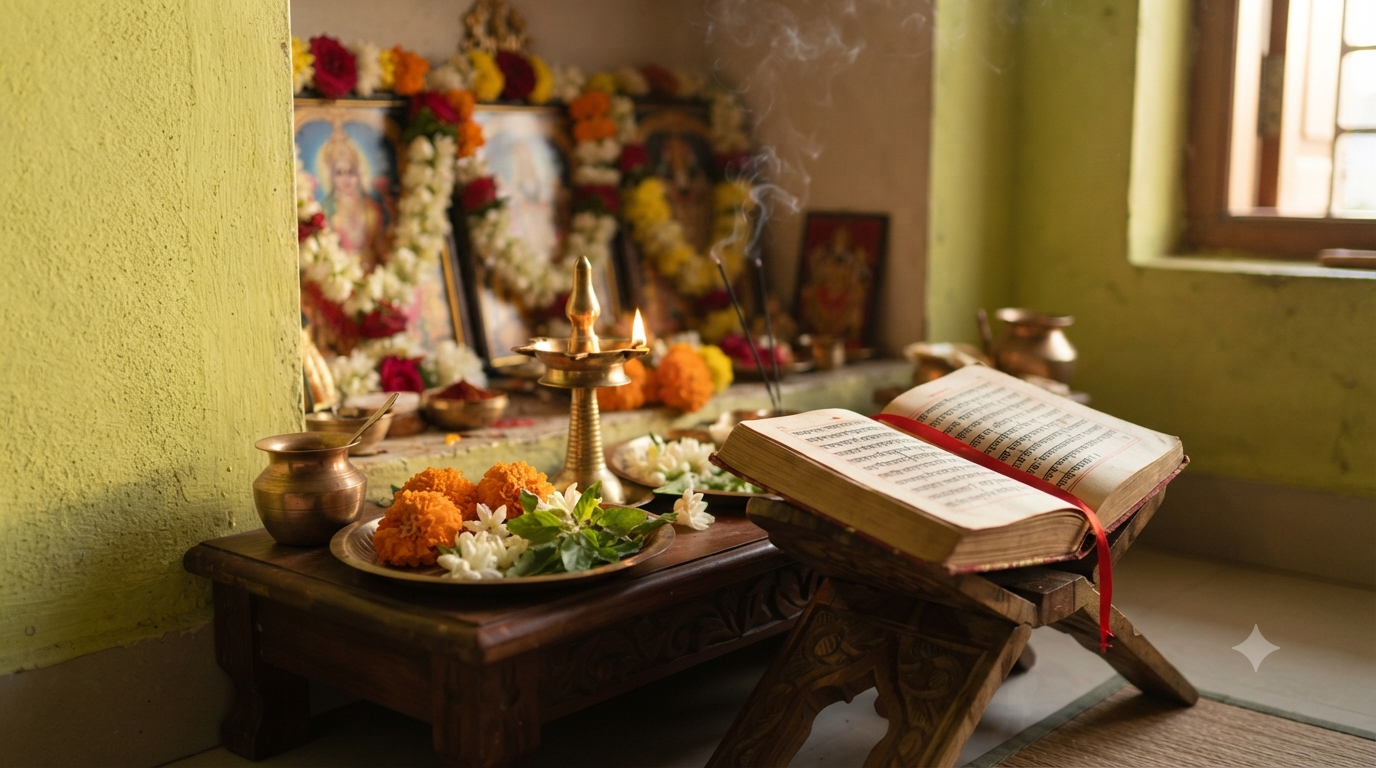
A simple, respectful approach works well. First, sit cleanly before an image of Lord Narasimha, ideally facing east. Then settle your mind before you begin the names.
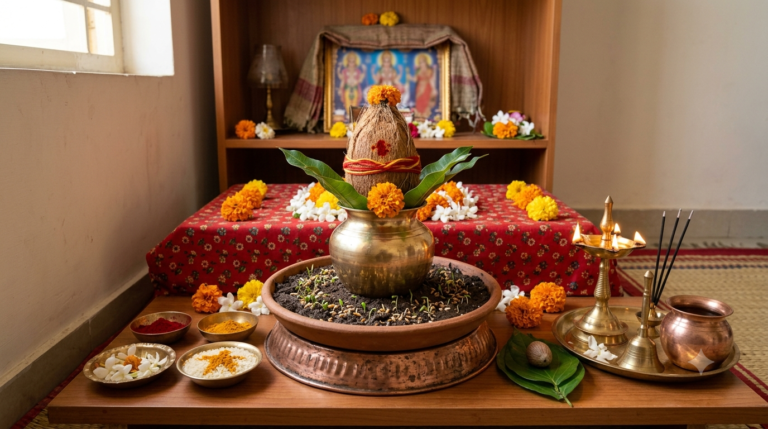
- Offer what you can, whether a lamp, flowers, or tulasi leaves.
- Begin with a short dhyana (meditation) verse to focus the mind.
- Recite the names slowly and clearly, reading along if you are still learning.
- Close with gratitude and a prayer for protection and peace.
A well-known meditation verse is traditionally chanted before Narasimha worship:
Ugram viram maha-vishnum jvalantam sarvato-mukham;
Nrisimham bhishanam bhadram mrityur-mrityum namamy aham.
“I bow to Narasimha, fierce and heroic, the great Vishnu, blazing and facing all directions; terrifying yet auspicious, the very death of death.” (Narasimha dhyana shloka)
Narasimha Sahasranamam vs Lakshmi Narasimha Sahasranamam
Many devotees ask how the Narasimha Sahasranamam relates to the Lakshmi Narasimha Sahasranamam. In practice they sit very close together. Both praise the same Lord through one thousand names, and their name-lists overlap heavily.
The difference is one of mood and emphasis. The Lakshmi Narasimha version honors the Lord together with Goddess Lakshmi, who pacifies his wrath after the battle. So it leans toward grace, prosperity, and household peace, while a fierce Narasimha hymn leans toward protection and courage.
If your goal is calm and auspiciousness, the Lakshmi-centered form suits you well. You might also read our guide to the Vishnu Sahasranamam, since Narasimha is an avatar of Vishnu and the two hymns share the same devotional root. For a Lakshmi-focused practice, our Diwali Lakshmi Pooja guide covers a closely related devotion.
Where to Find the Authentic Narasimha Sahasranamam Text
To be honest and clear, we do not host or distribute a PDF of the full Narasimha Sahasranamam, and we do not reproduce a complete translation here. The text runs to a thousand names. So the responsible thing is to point you toward trusted, established sources rather than an unverified file.
- Devotional publishers and temple bookstores — printed sahasranama books, often with Sanskrit, Telugu script, and meaning, are the most reliable.
- Established stotra apps and sites — resources such as Stotra Nidhi and Vignanam publish Telugu lyrics of the Narasimha and Lakshmi-Narasimha names.
- Reference and namavali pages — the Drik Panchang namavali lists the thousand names for study and cross-checking.
- Temple and matha publications — many Vishnu and Narasimha temples recommend authoritative editions.
When you choose a source, prefer one that names the tradition or Purana it draws from. A good edition presents the Sanskrit alongside the Telugu, so you can chant correctly and with confidence. For background on the deity himself, the encyclopedic entry on Narasimha is a solid starting point.
What Beginners Often Get Wrong
A few simple habits make the practice smoother from the very start. Do not rush the recitation. Reading all thousand names at speed, only to finish, defeats the calm the hymn is meant to bring.
Mind your pronunciation too, since a clear and unhurried delivery matters far more than covering ground quickly. Avoid unverified files as well. Many random PDFs online carry typing errors that quietly change a name’s meaning, so an edition with the Sanskrit shown beside the Telugu is the safer choice.
Keep the intention gentle. The Narasimha Sahasranamam is a devotion, not a performance. Because a steady habit beats a single marathon, chanting a little each week will take you further than one exhausting session that never repeats.
Final Thoughts
The Narasimha Sahasranamam is, at heart, a thousand ways to remember one protective Lord. You do not need Sanskrit mastery or a perfect setup to begin. Sit quietly, chant with attention, and let the names steady you.
For most devotees, the best next step is simple. Pick an authentic edition from a trusted publisher or stotra app, learn a few names at a time, and build a regular habit. Sincerity, more than any technique, is what the tradition rewards.
Frequently Asked Questions
Is the Narasimha Sahasranamam the same as the Lakshmi Narasimha Sahasranamam?
They are very closely related. Both praise the same Lord through one thousand names, and the lists overlap heavily. The Lakshmi Narasimha version simply honors the Lord together with Goddess Lakshmi, so it leans toward grace and auspiciousness.
Do you provide a Telugu PDF download of the full text?
No. We offer guidance on what the hymn is and where to find an authentic Telugu version, but we do not host a PDF of the complete text. Instead, we recommend established stotra apps, devotional publishers, and temple bookstores.
When is the best time to chant the Narasimha Sahasranamam?
It can be chanted on any day. Still, it is especially honored on Narasimha Jayanti, Saturdays, Ekadashi tithis, and Vishnu festivals. The Brahma muhurta window, roughly 4 to 6 AM, is a favored time, though sincerity matters more than a perfect slot.
Do I need initiation or Sanskrit knowledge to chant it?
For simple devotional recitation, no special initiation is required. You can read along with a Telugu transliteration as you learn. If you wish to follow a strict ritual procedure, it is best to learn directly from a knowledgeable elder, priest, or guru.
How many names does the hymn actually contain?
As the term sahasranama suggests, it contains one thousand names. Some editions count slightly more or fewer because of how the verses are split. The intent stays the same, since the goal is to praise the Lord through a full thousand names.
Which Purana is the hymn traced to?
Different editions trace it to Puranic literature, and versions linked to the Brahmanda Purana and Narasimha-related texts are widely chanted. Because more than one recension exists, a good edition will clearly name the source it follows.
Can beginners chant the Narasimha Sahasranamam at home?
Yes. Beginners can chant at home with a picture of the Lord, a lamp, and an authentic text to read along. Start slowly, focus on clear pronunciation, and build the habit gradually rather than rushing the full thousand names at once.