Lakshmi Narasimha Homam is a Vedic fire ritual that invokes Lord Narasimha and Goddess Lakshmi together, and devotees turn to it when they want protection from negative forces alongside steady prosperity. The ceremony pairs the fierce, protective man-lion form of Lord Vishnu with the goddess of wealth, so it speaks to two needs at once. Because so much online information about this ritual carries wrong dates, invented fees, and fake booking links, this guide sticks to what tradition and authoritative sources actually say.
Sri Vyasa Pooja is an independent devotional guide. We are not affiliated with, endorsed by, or the official website of any temple, mutt, or trust, and we take no bookings, donations, or payments. For any ritual booking, please use the official temple or mutt portal linked below.
Lakshmi Narasimha Homam at a Glance
- Deities invoked: Lord Narasimha (fourth avatar of Vishnu) and Goddess Lakshmi.
- Main purpose: protection from enemies and negativity, plus wealth and stability.
- Best time of day: evening, near sunset, because Lord Narasimha appeared at dusk.
- Most auspicious day: Narasimha Jayanti (Vaishakha Shukla Chaturdashi), along with Saturdays, Fridays, and Ekadashi.
- Typical duration: around two to three hours, depending on the japa count.
- Where: at home with a qualified priest, or at a recognised Narasimha temple.
What Is Lakshmi Narasimha Homam?
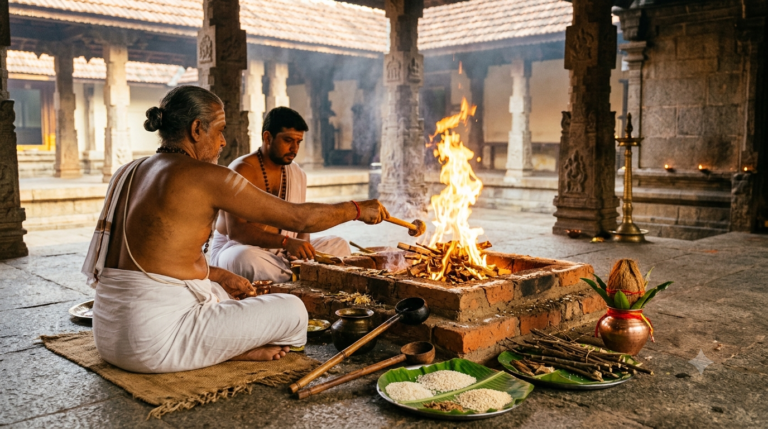
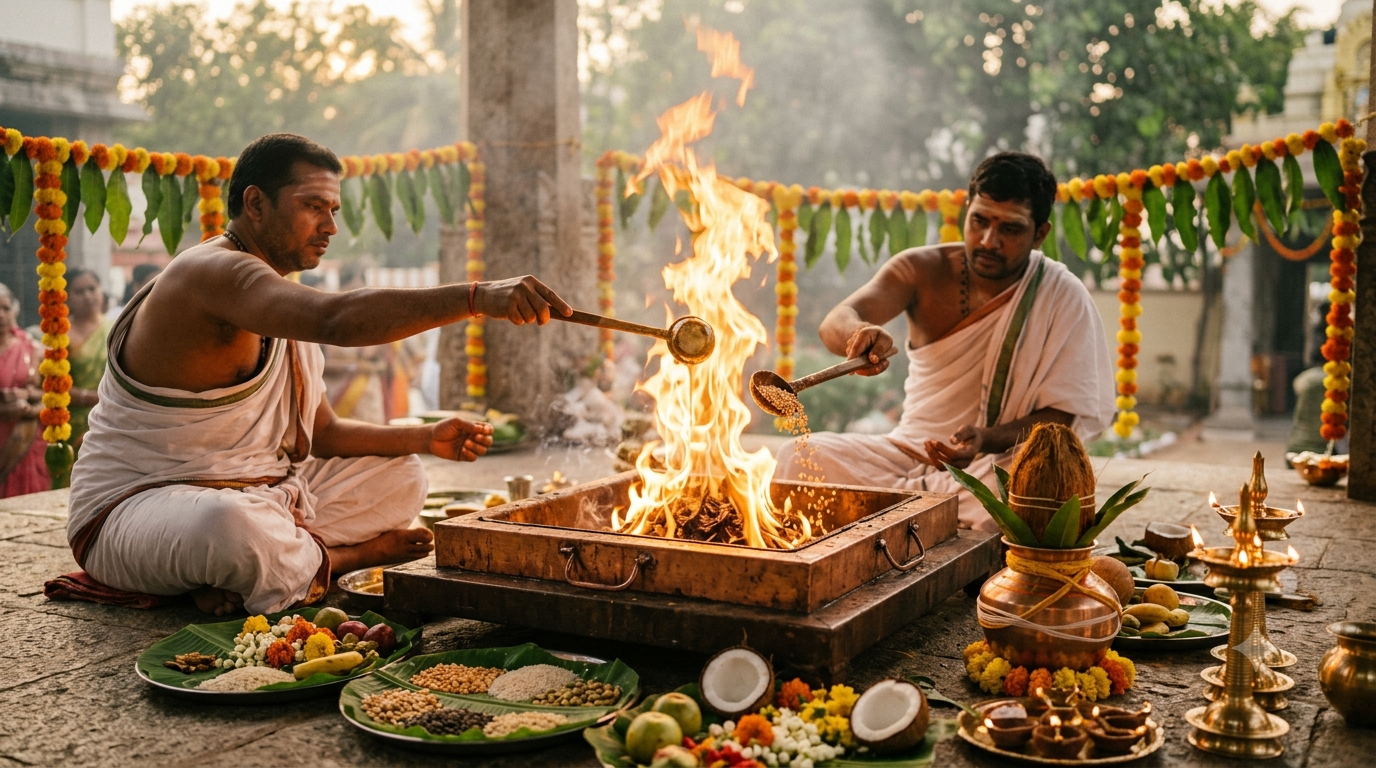
Lakshmi Narasimha Homam is a sacred homa in which priests offer ghee, grains, and herbs into a consecrated fire while chanting Narasimha mantras. The ritual invokes Lord Narasimha for protection and strength, and Goddess Lakshmi for wealth and abundance. Together, devotees believe the two energies shield a household while opening paths to prosperity.
The word homam simply means a fire offering, one of the oldest forms of Vedic worship. Fire, or Agni, acts as the messenger that carries each offering to the deity. Since one qualified priest leads the chanting, the ritual is usually performed under expert guidance rather than alone.
The Significance of Lakshmi Narasimha Homam
The significance of Lakshmi Narasimha Homam flows straight from the story of Lord Narasimha. When the demon king Hiranyakashipu tormented his own son Prahlada for worshipping Vishnu, the Lord burst from a stone pillar in a half-man, half-lion form. He appeared at twilight, neither day nor night, and destroyed the demon while sparing the devotee.
That legend gives the homam its core meaning. Narasimha represents divine protection that arrives exactly when a devotee feels cornered. Because Goddess Lakshmi sits beside him in this worship, the ritual also carries the promise of wealth and inner steadiness. Devotees therefore see it as a remedy for fear and financial strain at the same time.
Faith traditions link the ritual to relief from debts, court troubles, and unseen obstacles. These are matters of belief and Vedic custom rather than guaranteed outcomes, and this guide frames them that way throughout.
Why Devotees Perform Lakshmi Narasimha Homam
Most people who arrange a Lakshmi Narasimha Homam are seeking one of a few clear blessings. The reasons overlap, yet each has its own emphasis, so it helps to see them separately.
Protection from negativity and enemies
Devotees believe the vibrations of the homam create a shield around the home and family. People often perform it during long spells of struggle, sudden setbacks, or conflict with hostile parties. Since devotees worship Narasimha as the destroyer of evil, this protective angle stays the most common reason of all.
Wealth, debt relief, and stability
Goddess Lakshmi governs wealth, so the ritual is closely tied to financial recovery. Families facing heavy debt or business losses turn to it to invite abundance and courage. Although faith does not replace sound money decisions, many devotees perform it to steady a difficult phase.
Relief from legal and family troubles
When a household faces litigation or prolonged disputes, families perform the homam to seek fairness and peace. The prayer asks for the strength to face the situation with clarity rather than fear.
Health and well-being
Some devotees also perform the homam praying for good health and freedom from persistent worry. This is a devotional practice, not a medical treatment. A homam should never replace a doctor’s care, and anyone with a health condition must continue proper medical advice while observing the ritual as a matter of faith.
Best Day and Time to Perform the Homam
Timing matters a great deal for this ritual, because Lord Narasimha appeared at a very specific cosmic moment. Priests almost always schedule the homam for the evening, close to sunset, to honour that dusk appearance. The most powerful day of the year is Narasimha Jayanti, which falls on Chaturdashi of the Shukla Paksha in the Vaishakha month.
In 2026, most panchangs place Narasimha Jayanti on Thursday, 30 April, with the evening Sayana Kala the recommended window for worship. Dates shift slightly by region and lunar calculation, so confirm the exact tithi and muhurat on a current panchang before you fix a date. You can cross-check it on the Drik Panchang Narasimha Jayanti page.
Beyond the Jayanti, Saturdays, Fridays, and Ekadashi also work well. Akshaya Tritiya and Dhanteras are also popular, since both days carry strong associations with Lakshmi and prosperity. Where a person’s birth star allows, priests match the date to the individual’s Janma Nakshatra, yoga, and tithi.
Lakshmi Narasimha Homam Procedure Step by Step
The full Lakshmi Narasimha Homam procedure follows a fixed Vedic sequence, though the exact japa count varies with the sponsor’s intent. A qualified priest brings the required samagri and guides the family through each stage. Here is how a typical ceremony unfolds.
- Preparation: the family wakes early during Brahma Muhurtham, takes a head bath, and cleans the pooja area. They decorate the space with thoranam (mango-leaf strings) and flowers.
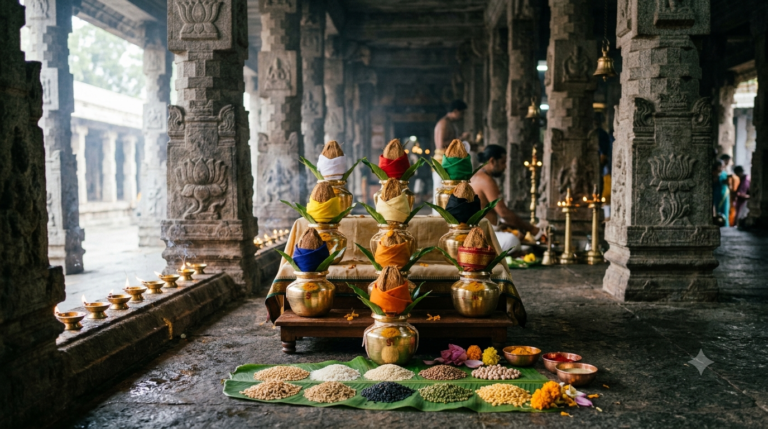
- Kalasha setup: the priest prepares a kalasham filled with water and places a coconut on top, invoking divine presence.
- Ganapati puja: worship of Lord Ganesha comes first, clearing obstacles before the main rites begin.
- Sankalpa: the sponsor states the intention and the names of those seeking blessings.
- Shodashopachara: a sixteen-step honouring of Lord Narasimha with flowers, incense, lamp, and offerings.
- Agni invocation: the priest kindles the sacred fire with mantras and performs the Ganapati homam first.
- Main homam: priests chant the Narasimha moola mantra and offer ahutis into the fire while invoking Lakshmi Narasimha.
- Sri Suktam: priests recite hymns to Goddess Lakshmi to draw prosperity into the offering.
- Purna Ahuti: the final full offering completes the homam.
- Harati and prasadam: the ceremony closes with aarti, and everyone present shares the prasadam.
Because the chanting must follow correct syllables and rhythm, an experienced priest trained in Vedic tradition should lead the ritual. Rushed or incorrect chanting is exactly what the tradition warns against.
The Narasimha Mantra Used in the Homam
The central mantra during the homam is the well-known Narasimha invocation. It reads: Om Ugram Veeram Maha-Vishnum Jvalantam Sarvato Mukham, Nrisimham Bhishanam Bhadram Mrityu-Mrityum Namamyaham. The verse salutes the fierce yet auspicious Lord as the very death of death.
Priests often add the Narasimha Gayatri as well: Om Nrisimhaya Vidmahe Vajranakhaya Dhimahi Tanno Nrisimhah Prachodayat. Devotees who cannot attend can still chant these lines with devotion, because tradition values sincere repetition as much as scale.
What Lakshmi Narasimha Homam Costs — and the Booking Myth
Here is the correction that most aggregator pages get wrong. There is no single official “price” for a Lakshmi Narasimha Homam performed at home, and any site quoting one fixed rate as the standard is misleading you. Costs depend on the number of priests, the japa count, the samagri, and the venue, so quoted figures range widely from a few thousand rupees to tens of thousands.
Many websites also pose as booking portals and ask for advance online payment. Treat these with caution. You arrange a genuine temple ritual through the official temple or mutt, and you arrange a home homam directly with a verified local priest whom you can meet. We do not accept bookings or payments on this page, and we never publish private agent numbers.
For temple-based homams at the major Narasimha shrines, confirm the seva and any fee through the official channel, such as the Sri Ahobila Mutt, which administers the Nava Narasimha temples of Ahobilam. When a fee is not published online, ask at the temple counter rather than trusting a third-party quote.
Where to Perform Lakshmi Narasimha Homam
You can perform the homam at home, yet many devotees prefer a recognised Narasimha kshetra for its concentrated energy. Andhra Pradesh and Telangana hold a famous cluster known as the Nava Narasimha Kshetras. The table below lists these nine sacred sites.
| Narasimha Kshetra | Location (District) |
|---|---|
| Ahobilam | Kurnool / Nandyal, AP |
| Penchalakona | Nellore, AP |
| Kadiri | Anantapur, AP |
| Simhachalam | Visakhapatnam, AP |
| Antarvedi | East Godavari, AP |
| Mangalagiri | Guntur, AP |
| Vedadri | Krishna, AP |
| Yadadri (Yadagirigutta) | Bhuvanagiri, Telangana |
| Dharmapuri | Jagtial, Telangana |
Devotees consider Ahobilam the very site where Lord Narasimha appeared, so it holds special weight for this worship. Coastal Antarvedi Lakshmi Narasimha Swamy Temple sits where the Godavari meets the sea, while the hilltop Simhachalam Varaha Lakshmi Narasimha Temple is famous for its sandalwood-covered idol. If you want to plan a wider pilgrimage, our guide to famous Narasimha temples covers shrines beyond the south too.
What Most Guides Get Wrong
A little hard-won practical knowledge saves a lot of confusion, so keep these points in mind.
- Verify the priest, not a website. A trustworthy priest leads the homam in person, someone you can actually meet or reach, not a faceless portal.
- Do not chase a “fixed cost”. Since prices genuinely vary, treat any single advertised rate as marketing, and confirm details before you commit.
- Schedule for the evening. Because the deity appeared at dusk, an evening slot follows tradition more closely than a morning one.
- Match the intent. Tell the priest whether you seek protection, debt relief, or peace, so the sankalpa and japa count fit your purpose.
- Keep faith and facts separate. The homam is a spiritual practice, so continue medical, legal, or financial advice from qualified professionals alongside it.
Before You Arrange the Homam
Lakshmi Narasimha Homam remains one of the most cherished Vaishnava rituals because it answers two deep needs, protection and prosperity, in a single ceremony. Fix an auspicious evening, engage a genuinely qualified priest, and verify any temple seva through official channels only. Treat the ritual as a source of devotion and courage, and keep professional guidance in place for the practical side of life. Done with sincerity, it is a meaningful act of faith rather than a transaction.
Frequently Asked Questions
What is the main benefit of Lakshmi Narasimha Homam?
Devotees perform the homam mainly for protection from enemies and negativity, combined with wealth and stability. Devotees believe Lord Narasimha guards the family while Goddess Lakshmi brings prosperity. These are matters of faith rather than guaranteed results.
When is the best day to perform Lakshmi Narasimha Homam?
Narasimha Jayanti, on Vaishakha Shukla Chaturdashi, is the most auspicious day, and in 2026 it falls around Thursday, 30 April. Saturdays, Fridays, Ekadashi, Akshaya Tritiya, and Dhanteras are also considered beneficial. Confirm the exact tithi on a current panchang.
What time of day should the homam be done?
Priests usually schedule the homam for the evening near sunset. This honours the belief that Lord Narasimha emerged from the pillar at twilight, neither day nor night.
How long does the ritual take?
A typical Lakshmi Narasimha Homam runs about two to three hours. The exact length depends on the japa count and the scale chosen by the sponsor.
Can the homam be performed at home?
Yes, a qualified priest can perform it at home and bring the required samagri. Many devotees still prefer a recognised Narasimha temple for the atmosphere and continuity of temple worship.
How much does Lakshmi Narasimha Homam cost?
There is no single official price, because cost depends on the priests, japa count, samagri, and venue. Quoted figures vary widely, so confirm directly with a verified priest or the official temple. Be wary of websites demanding advance online payment.
Which temple is best for this homam?
Devotees regard Ahobilam in Andhra Pradesh as the origin site of Lord Narasimha, which gives it special significance. Simhachalam, Antarvedi, and Yadadri are other renowned Narasimha kshetras where devotees seek these blessings.
Is the homam a cure for diseases?
No. The homam is a devotional and traditional practice, not a medical remedy. Anyone with a health condition should follow proper medical treatment and treat the ritual purely as an act of faith.