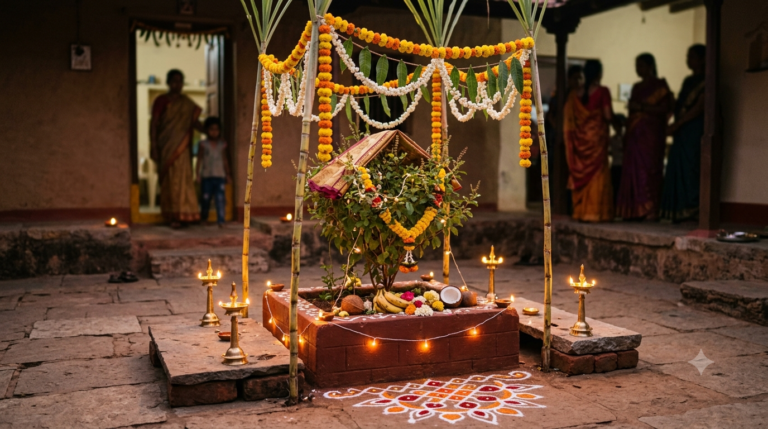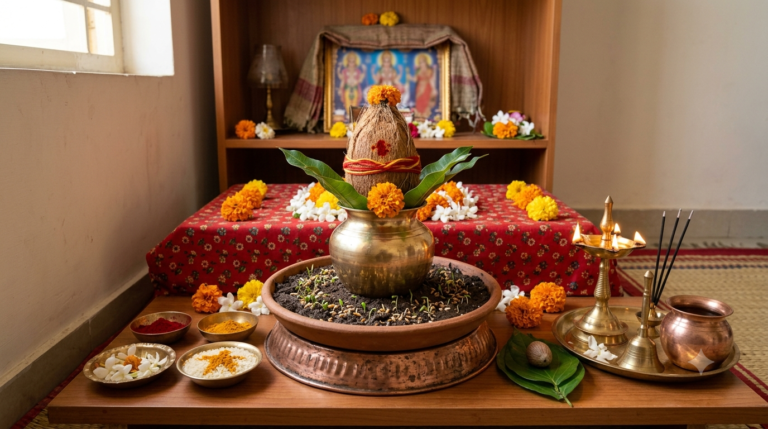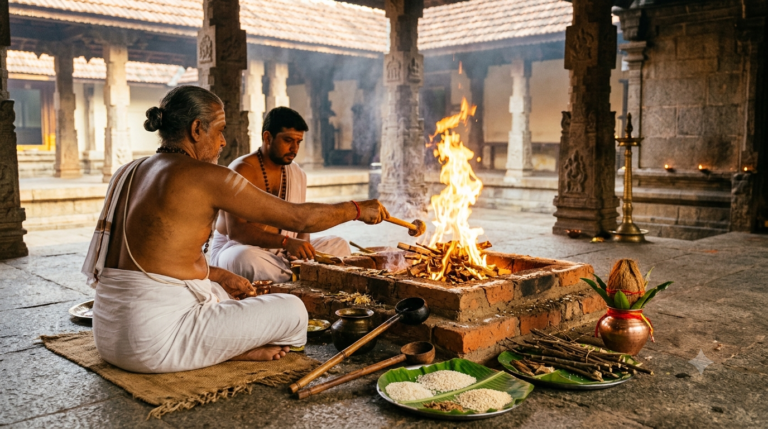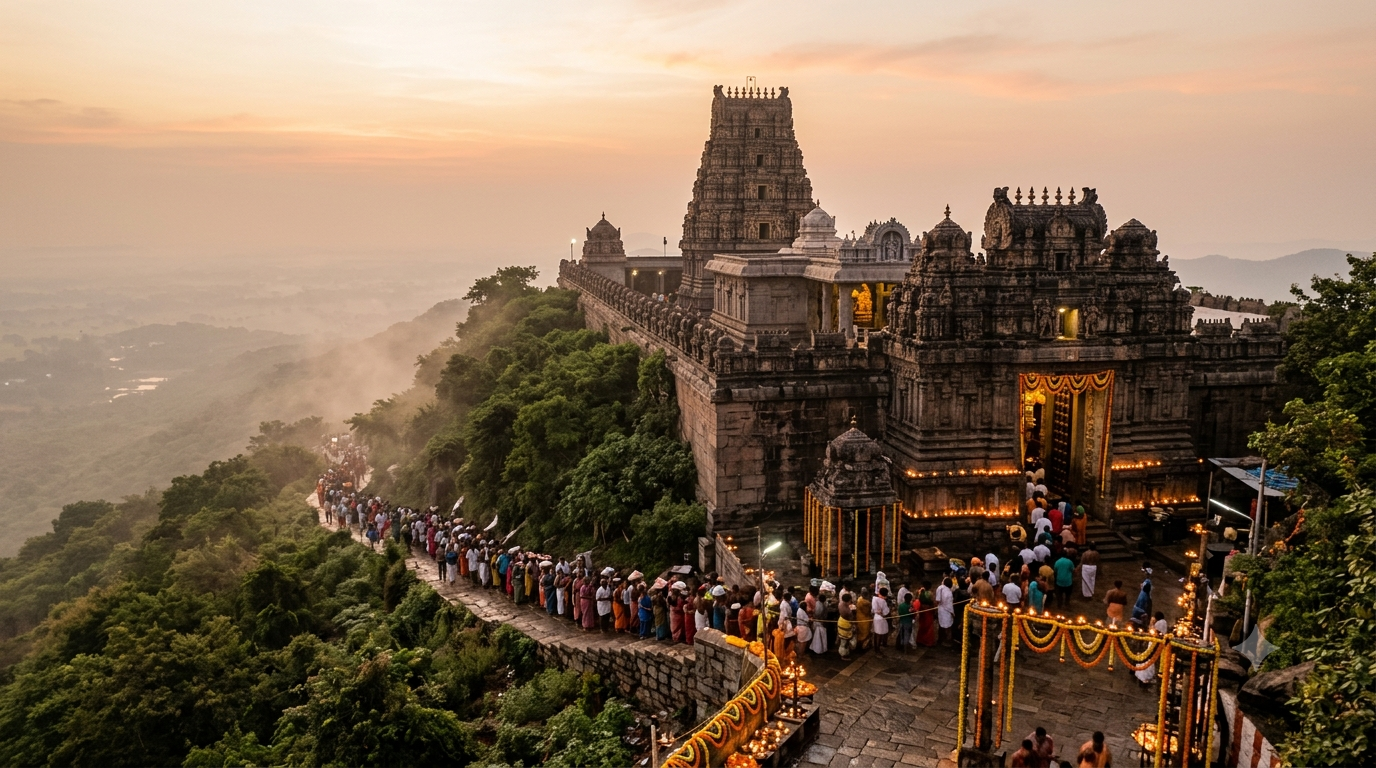
The Simhachalam Chandanotsavam is the one day each year when Lord Varaha Lakshmi Narasimha Swamy sheds his sandalwood armour and shows devotees his true form. For the other 364 days, a thick coat of fragrant chandanam hides the deity completely. So the idol looks more like a smooth stone linga than a carved image.
On Akshaya Tritiya, priests peel that paste away before dawn, and lakhs of pilgrims climb the Simhachalam hill near Visakhapatnam for a glimpse many wait years to see. This guide covers the timing, rituals, tickets, travel, and safety details you actually need, all checked against official sources.
Sri Vyasa Pooja is an independent pilgrim guide. We are not the official Simhachalam Devasthanam and hold no affiliation with it. We accept no bookings, sevas, or donations. For darshan tickets and official notices, use the temple’s official portal linked below.
Simhachalam Chandanotsavam at a Glance
- What it is: the yearly removal of sandalwood paste to reveal the deity’s original form, called Nijaroopa Darshanam.
- When: Akshaya Tritiya (Vaishakha Shukla Tritiya), which falls in April or May.
- Where: Sri Varaha Lakshmi Narasimha Swamy Temple, Simhachalam hill, Visakhapatnam, Andhra Pradesh.
- How long: the true form stays visible for about 12 hours only, then priests reapply the paste.
- Crowd: several lakh devotees, so expect long queues and an early start.
- Booking: only through the official Andhra Pradesh temples portal, never a private agent.
What Is Simhachalam Chandanotsavam?
Simhachalam Chandanotsavam, also called Chandana Yatra, is the annual sandalwood festival where priests remove the paste covering the moola virat so devotees can see the deity’s original carved form. Because this happens only on Akshaya Tritiya, devotees treat the darshan as rare and deeply auspicious. Priests call it Nijaroopa Darshanam, meaning a sight of the Lord’s true shape.
The hidden idol shows Vishnu in a combined Varaha and Narasimha form. It stands in a tribhanga posture, with a boar’s head, a human torso, and a lion’s tail. Sridevi and Bhudevi sit on either side of the deity.
So the Simhachalam Chandanotsavam is not just a ritual; it offers the only chance all year to view this unusual iconography. You can read more about the shrine’s roots in our Simhachalam temple history guide.
When Is Simhachalam Chandanotsavam Celebrated Each Year?
Simhachalam Chandanotsavam falls on Akshaya Tritiya, the third day of the bright half of the Vaishakha month. So the English date shifts every year between late April and mid-May. In 2025 the temple observed it on 30 April, while in 2026 it fell around 19–20 April. The next Akshaya Tritiya lands on 9 May 2027, according to Drik Panchang.
Because the Devasthanam fixes the exact darshan day and ticket window a few weeks ahead, always confirm the current schedule on the official portal before you travel. Temple authorities usually announce the date, the ticket rates, and the traffic plan through a public notice. Since the tithi can straddle two calendar days, the temple sometimes holds the public Nijaroopa Darshanam on whichever day the tithi rules at sunrise.
Why the Deity Stays Hidden in Sandalwood
According to the temple’s sthala purana, King Pururava discovered the buried image and heard a divine voice, the akaasavani. That voice told him to cover the idol with sandalwood paste and reveal its true form only once a year, on the third day of Vaishakha. Devotees believe the paste also cools the fierce energy of Narasimha, who had just destroyed the demon Hiranyakashipu.
The temple applies chandanam to the moola virat on four days across the year. These are Akshaya Tritiya and the full-moon days of the Vaishakha, Jyeshtha, and Ashadha months. Each time, priests smear on roughly 43.5 kilograms of sandalwood paste, or four manugulu. So by the following Simhachalam Chandanotsavam, the deity carries a very thick, hardened coat again.
Simhachalam Chandanotsavam Rituals, Hour by Hour
The Simhachalam Chandanotsavam rituals begin in the small hours, well before sunrise. Because the crowd is enormous, the temple opens the darshan window very early and keeps it running through the day. Here is the broad rhythm devotees can expect, though exact times shift with each year’s notice.
- Around 4:00 AM: priests carefully lift the year-old sandalwood coat off the deity.
- By about 6:00 AM: the abhishekam and morning poojas finish, and public darshan starts.
- Through the day: devotees file past for Nijaroopa Darshanam across roughly a 12-hour window.
- Evening: priests perform Chandanabhishekam and Sahasrakalasabhishekam, then apply fresh paste.
In the evening, priests serve all three daily food offerings together, namely Balabhoga, Rajabhoga, and the night naivedyam. This makes up for the poojas that the darshan rush interrupts during the day.
Darshan Timings and Ticket Prices
On a normal day the temple stays open from roughly 7:00 AM to 9:00 PM, with an afternoon break in between. Rituals such as Suprabhatam start earlier, so opening hours can vary. General darshan, called Sarva Darshan, stays free, while paid Special Darshan cuts the queue for a small fee. On Simhachalam Chandanotsavam day, timings extend and the temple sells special Nijaroopa Darshanam tickets in a separate window.
Prices change often, so treat the figures below as indicative and confirm the current rates on the official portal before you pay.
| Darshan type | Indicative fee | Notes |
|---|---|---|
| Sarva (general) darshan | Free | No booking needed; longest queue |
| Special darshan | Around ₹100 | Shorter queue on regular days |
| Chandanotsavam special tickets | Roughly ₹300–₹1,000 | Sold only in the festival window |
In 2026, for instance, the Devasthanam released special Simhachalam Chandanotsavam tickets in the days just before the festival. Since demand runs huge, these sell out quickly, so plan ahead and watch the official notices.
How to Book Simhachalam Chandanotsavam Tickets Safely
Book only through the Andhra Pradesh government’s official temple portal, because fake sites often copy the temple’s name to grab money and personal data. The genuine route is the AP Endowments system, where Simhachalam appears as Sri Varaha Lakshmi Narasimha Swamy Temple. A real government portal never demands an upfront “processing fee” to a private account. You can find the official listing on the Simhachalam Devasthanam page and the wider AP Temples portal.
To book, register on the official portal with your mobile number, verify the OTP, and select the temple. Then choose your darshan type, date, and slot, add pilgrim details, and pay only on the secure government page.
The state also runs an official Mana Mitra WhatsApp service for some bookings. Avoid any agent, broker, or social-media seller who promises guaranteed festival-day passes, since these cause most booking fraud. For a step-by-step walkthrough, see our Simhachalam darshan booking guide.
One correction worth noting: Tirumala Tirupati Devasthanams does not manage Simhachalam, so a “TTD” booking link points to the wrong place for this temple. Simhachalam runs under its own Devasthanam within the Andhra Pradesh Endowments Department.
How to Reach Simhachalam Temple
Simhachalam sits about 300 metres up a hill on the northwestern edge of Visakhapatnam, so the journey ends with a short climb by road or steps. Visakhapatnam International Airport lies roughly 14 kilometres away, while the main railway station sits about 16–18 kilometres from the shrine. From either point, taxis, autos, and city buses reach the hill base easily.
On ordinary days you can drive up the hill or take an APSRTC bus to the temple. However, on Simhachalam Chandanotsavam day the temple usually reserves the hill road for APSRTC shuttle buses only, and police stop private vehicles at the base. Because traffic turns heavy, reach the shuttle points early and follow police and volunteer instructions.
Health and Safety Tips for the Festival Rush
Simhachalam Chandanotsavam happens in peak summer, when Visakhapatnam turns hot and humid, and the queues can stretch for hours. So carry water, wear light cotton clothes, and keep a cap or umbrella handy. Because the darshan starts before dawn, many devotees stand in line through the night, which tires older pilgrims.
Elderly visitors, pregnant women, young children, and anyone with heart, mobility, or blood-pressure concerns should weigh the crowd and heat carefully before joining. If you take regular medication, pack it with a snack and an ID. When in doubt, consult a doctor before a long wait or a strenuous climb, and never treat the darshan as a substitute for medical care.
Dress Code, Photography and Temple Etiquette
The shrine expects modest, traditional attire, so choose clothing that covers the shoulders and knees. Men often wear a dhoti or trousers with a shirt, while women prefer sarees or salwar suits. Avoid shorts, sleeveless tops, and beachwear at the temple.
The temple does not allow photography inside the inner sanctum, and guards usually restrict phones near the deity. So keep valuables minimal, follow the signage, and respect the queue discipline that volunteers work hard to maintain. A calm, patient approach makes the rare darshan far more peaceful.
Where to Stay and What to See Nearby
The Devasthanam runs some choultries and cottages near the temple, and Visakhapatnam city offers everything from budget lodges to sea-facing hotels. Room rates swing widely by season and demand, so expect roughly ₹800 for a simple lodge up to several thousand rupees for a good hotel. Book accommodation through the official Devasthanam desk or a recognised hotel, not through an unverified listing.
Since you already stand in Vizag, pair your visit with the city’s well-loved spots. Kailasagiri hill park, Rushikonda beach, the RK Beach promenade, and the INS Kursura submarine museum all sit close by. For a longer trip, the Araku Valley and Borra Caves make a scenic day out from Visakhapatnam. If you love Narasimha kshetras, our roundup of famous Narasimha Swamy temples maps more shrines to visit.
What First-Time Visitors Often Get Wrong
Many first-timers assume the deity looks the same all year, then feel surprised that most days show only the sandalwood-coated form. If seeing the true idol matters to you, plan specifically around Simhachalam Chandanotsavam, because that single day alone reveals it. For a quieter temple experience, though, the cool October-to-March months feel far more comfortable.
Another common mistake is arriving late on festival day and expecting a quick darshan. Because lakhs turn up together, even ticket holders wait a long time, so treat the day as a full commitment. Keep expectations realistic, carry patience, and the Simhachalam Chandanotsavam becomes a moving experience rather than a stressful one.
Before You Go
The Simhachalam Chandanotsavam rewards planning more than luck. Confirm the exact date and ticket window on the official portal, book only through government channels, and prepare for heat, crowds, and an early start. If the rare Nijaroopa Darshanam is your goal, aim for the festival day itself; if you simply want a calm visit, choose the winter months instead. Either way, treat every price and timing here as a starting point, and verify the latest details before you set out.
Frequently Asked Questions
When is Simhachalam Chandanotsavam celebrated?
Simhachalam Chandanotsavam is celebrated on Akshaya Tritiya, in the Vaishakha month, so it falls in April or May each year. The exact English date changes with the Hindu lunar calendar. Always confirm the specific day on the official temple portal.
What is Nijaroopa Darshanam at Simhachalam?
Nijaroopa Darshanam is the sight of the deity’s true form after priests remove the sandalwood paste. It stays visible for only about 12 hours, once a year, during Simhachalam Chandanotsavam. This is why the day draws such large crowds.
Do I need a ticket for Simhachalam Chandanotsavam darshan?
General Sarva Darshan stays free and needs no booking, though the queue runs long. The temple also sells limited special Nijaroopa Darshanam tickets during the Simhachalam Chandanotsavam window. Book these only on the official Andhra Pradesh temples portal.
Can I Drive Up the Hill on Simhachalam Chandanotsavam Day?
Usually no. On Simhachalam Chandanotsavam day the temple reserves the hill road for APSRTC shuttle buses, and police stop private vehicles at the base. Reach the shuttle point early and follow the official traffic plan.
How much sandalwood covers the deity?
Priests apply about 43.5 kilograms of sandalwood paste, described as four manugulu, each time. This happens on four days a year, including Akshaya Tritiya. By the next festival, the coat grows thick and hard.
What are the general darshan timings at Simhachalam?
On most days the temple stays open from around 7:00 AM to 9:00 PM, with an afternoon break. Ritual timings can shift, and festival days run longer. Check the official portal for the current schedule.
Is Simhachalam temple managed by TTD?
No. Simhachalam has its own Devasthanam under the Andhra Pradesh Endowments Department, separate from Tirumala Tirupati Devasthanams. So book darshan through the AP temples portal, not a TTD link.
What is the best time to visit apart from the festival?
The months from October to March bring pleasant weather and lighter crowds. This suits travellers who want a calm darshan and some sightseeing around Vizag. The summer festival period feels spiritually special but very crowded and hot.