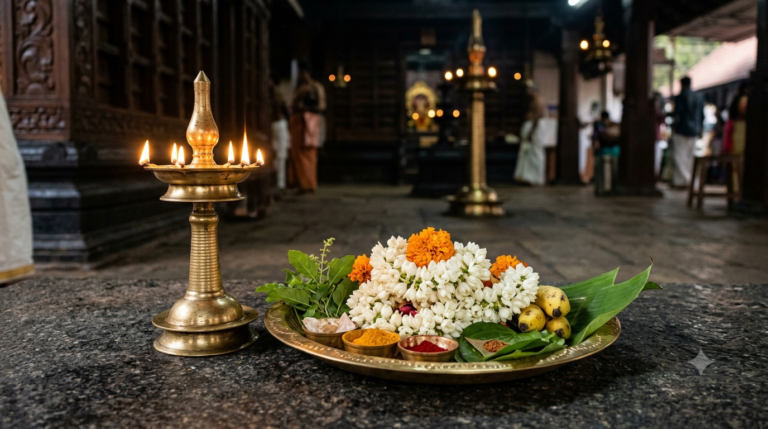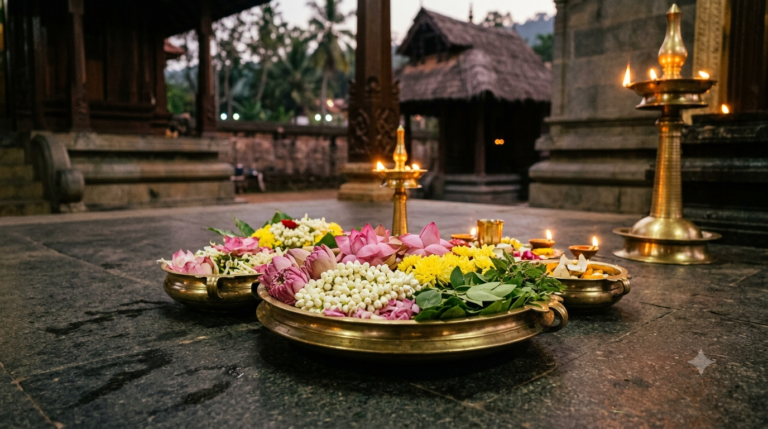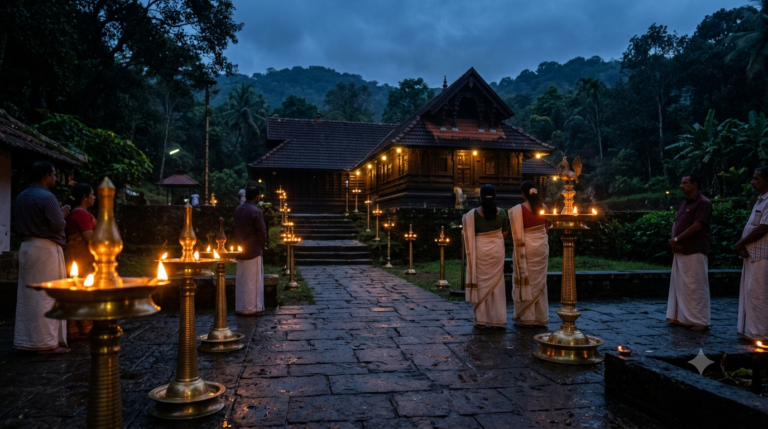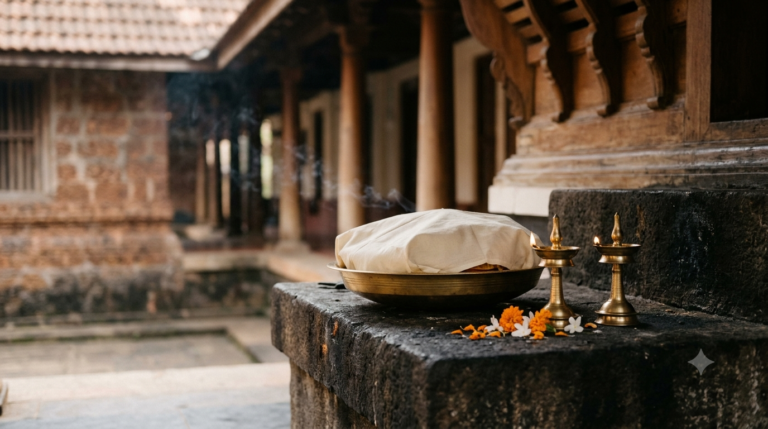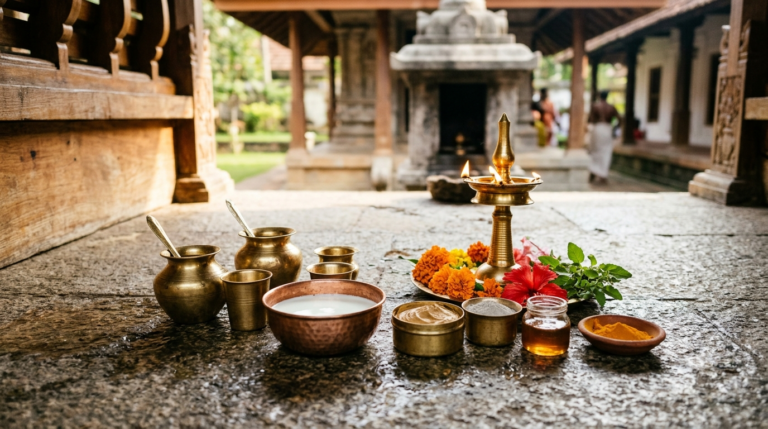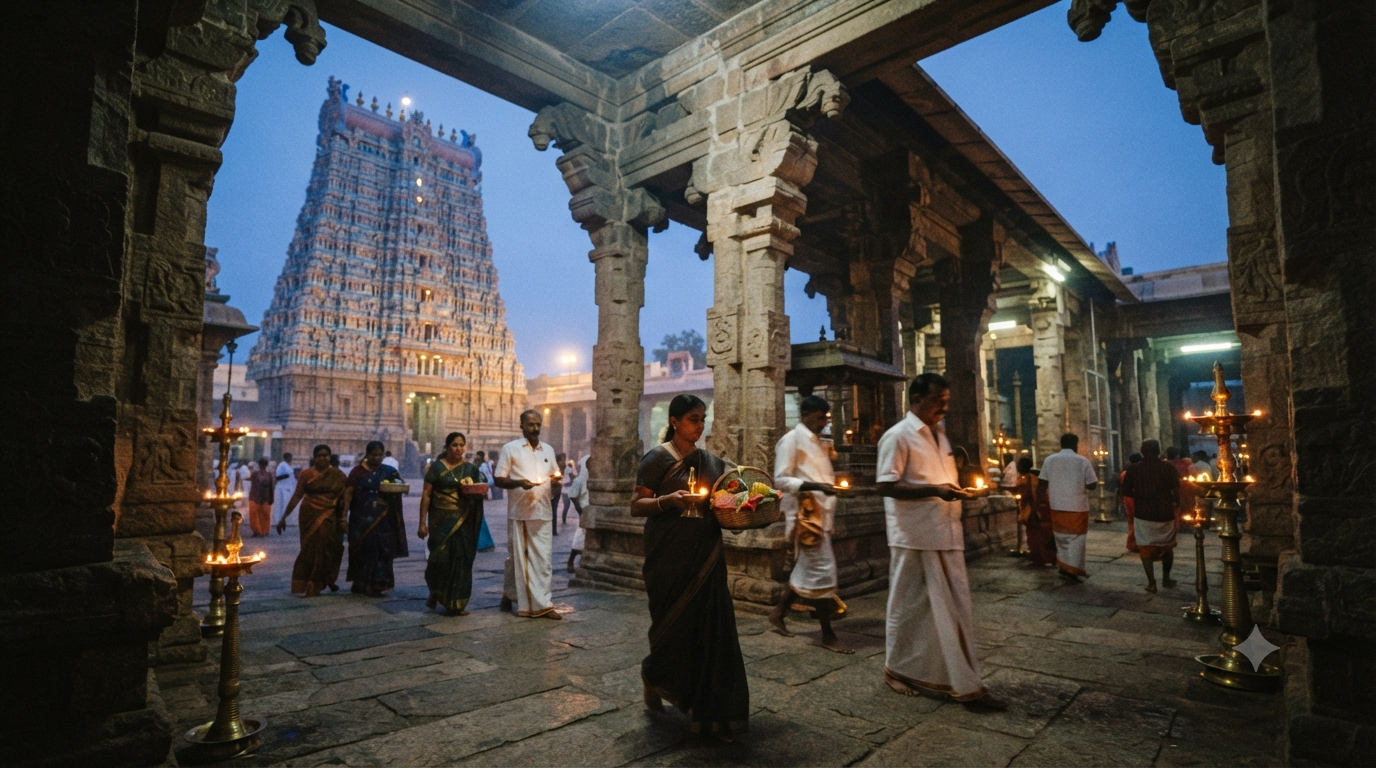
Meenakshi Temple pooja timings follow a six-ritual daily cycle, while general darshan runs in two long sessions. The official Tamil Nadu HR&CE schedule lists worship from 5:30 AM through 10:00 PM. Knowing the ritual windows matters because each part of the day has a different devotional atmosphere.
Sri Vyasa Pooja is an independent temple guide. We are not affiliated with Arulmigu Meenakshi Sundaraswarar Temple or the Tamil Nadu HR&CE Department. We do not accept bookings, donations, tickets, or payments; use the official temple channels for every transaction.
Meenakshi Temple pooja timings at a glance
The temple normally opens from 5:00 AM to 12:30 PM, then closes until 4:00 PM. Evening darshan continues from 4:00 PM to 10:00 PM. The official Tamil Nadu HR&CE pooja page also warns that daily worship times can change during festivals.
| Pooja | Official time | Place in the daily cycle |
|---|---|---|
| Thiruvanandal Pooja (Mahasodasi) | 5:30 AM–5:45 AM | Dawn worship |
| Vilaa Pooja (Paalai) | 6:30 AM–7:15 AM | Early-morning worship |
| Kalasandhi Pooja (Gowri) | 10:30 AM–11:20 AM | Late-morning worship |
| Maalai Pooja (Panchadasi) | 4:30 PM–5:15 PM | Evening worship after reopening |
| Ardhajama Pooja (Madhangi) | 7:30 PM–8:15 PM | Night worship |
| Palliyarai Pooja (Sodasi) | 9:30 PM–10:00 PM | Final night worship |
These Meenakshi Temple pooja timings are the normal published hours, not a promise for every festival day. If your trip depends on one specific pooja, check the HR&CE page again before you travel. A major celebration can alter access, queues, or the exact sequence.
Why Meenakshi Temple pooja timings matter for daily worship
The daily poojas give the temple day a clear sacred rhythm, from dawn opening to the final night service. Devotees do not simply enter a monument and leave. Instead, worship unfolds through repeated periods of prayer, offering, darshan, and ceremonial transition.
The official Meenakshi Temple pooja timings name six poojas and also give traditional forms in brackets. However, the HR&CE page does not publish a detailed ritual script for each one. So this guide explains their place in the day without inventing steps that the temple itself has not documented.
That distinction matters because many websites merge old schedules, local descriptions, and unofficial ritual claims. The safest planning rule is simple: trust the official clock times first. Then treat deeper ritual interpretations as matters of temple tradition rather than fixed visitor instructions.
What the Meenakshi Temple pooja timings mean
Thiruvanandal Pooja: 5:30 AM to 5:45 AM
Thiruvanandal is the first listed pooja after the temple opens. It belongs to the quietest part of the morning, so many devotees value this period for an early start. The official schedule associates this pooja with Mahasodasi.
Arrive before 5:30 AM if this ritual is your main reason for visiting. Security checks and walking through the complex take time. Since the temple opens at 5:00 AM, that short buffer helps you avoid reaching the inner areas after the pooja begins.
Vilaa Pooja: 6:30 AM to 7:15 AM
Vilaa Pooja follows the dawn service and sits within the early-morning darshan period. The HR&CE schedule identifies the associated form as Paalai. This is a practical window for pilgrims who want morning worship without arriving before sunrise.
The temple will already have been open for more than an hour, so footfall can rise. Even so, the morning often remains easier to plan than midday. Families can complete darshan and still have time for breakfast or other Madurai visits.
Kalasandhi Pooja: 10:30 AM to 11:20 AM
Kalasandhi is the main late-morning pooja in the published schedule. The official listing gives Gowri as its associated form. This period comes close to the 12:30 PM midday closure, so late arrivals have less room for delays.
If you reach the area near noon, do not assume the temple stays open all afternoon. Public visiting pauses from 12:30 PM until 4:00 PM. Therefore, it is wiser to enter well before the closing window instead of rushing the final minutes.
Maalai Pooja: 4:30 PM to 5:15 PM
Maalai Pooja begins soon after the temple reopens at 4:00 PM. The official schedule associates it with Panchadasi. This makes the first evening hour useful for visitors who missed the morning session or want a second darshan.
Because the gates reopen only thirty minutes before this pooja, arrive near 4:00 PM. That gives you time to enter and orient yourself. Evening heat also begins to ease, which can make the surrounding streets more comfortable for many travellers.
Ardhajama Pooja: 7:30 PM to 8:15 PM
Ardhajama Pooja takes place during the later evening session. The HR&CE list links it with Madhangi. By this time, the temple atmosphere feels different from the morning because lamps, evening worship, and night crowds shape the experience.
This slot suits pilgrims who want a night visit without waiting until the final service. However, evenings can become busy on Fridays, holidays, and festival periods. Build extra time into your plan when Madurai is already crowded.
Palliyarai Pooja: 9:30 PM to 10:00 PM
Palliyarai Pooja is the final listed service of the day, associated with Sodasi on the official schedule. Traditional descriptions connect the Palliyarai ceremony with the close of the divine couple’s daily worship cycle. It is therefore one of the most distinctive times to experience the temple at night.
Do not arrive at 9:30 PM and expect easy access. The temple itself closes at 10:00 PM, so security or crowd controls may affect movement. If Palliyarai matters to you, reach the complex earlier and confirm the day’s arrangements locally.
Why Meenakshi and Sundareswarar are worshipped together
Arulmigu Meenakshi Sundaraswarar Temple centres on Goddess Meenakshi and Lord Sundareswarar, a form of Shiva. Their paired worship is central to the temple’s identity. The Government of India’s Incredible India guide also highlights the temple’s two principal shrines and the tradition of their divine union.
The marriage of Meenakshi and Sundareswarar shapes the famous Chithirai celebrations. It also explains why the temple feels different from a shrine focused on one deity alone. Devotees move through a sacred complex where the goddess and Shiva both anchor daily worship.
The temple’s importance extends beyond ritual. Its gopurams, mandapams, sculptures, and Golden Lotus Tank make it a major work of Dravidian architecture. The official HR&CE history page also places the shrine within the Tamil Shaiva sacred tradition and the legends of Shiva’s divine acts in Madurai.
How to plan around Meenakshi Temple pooja timings
The best pooja time depends on what you want from the visit. Choose the dawn window for a quieter start, the early morning for easier family planning, or the night cycle for the temple’s closing atmosphere. Avoid building a schedule that crosses the 12:30 PM to 4:00 PM closure.
| Your priority | Useful arrival window | Why |
|---|---|---|
| Early devotional visit | 5:00 AM–5:20 AM | Allows time before Thiruvanandal |
| Comfortable morning visit | 6:00 AM–9:30 AM | Good buffer before late-morning closure |
| Evening pooja | 4:00 PM–4:20 PM | Positions you for Maalai Pooja |
| Night worship | 7:00 PM onward | Covers Ardhajama and later atmosphere |
| Palliyarai focus | Before 9:00 PM | Reduces risk of arriving too late |
If you have only two hours, pick one worship window rather than racing through several. You can also pair the visit with our Meenakshi Temple annadhanam guide when planning food or donation questions. For a wider Tamil Nadu pilgrimage, see our Shiva temples in Tamil Nadu overview.
Do Meenakshi Temple pooja timings require a ticket?
The Meenakshi Temple pooja timings and the special entrance system are separate. The current HR&CE service list shows special entrance charges of ₹50 for one shrine and ₹100 for both shrines. These amounts can change, so confirm them on the official temple page before paying.
A special entrance ticket should not be treated as a booked pooja or guaranteed ritual position. It relates to entry access, while the six daily poojas follow the temple’s worship schedule. Never pay an unofficial agent who promises guaranteed access to a specific ritual.
For broader pilgrimage planning around Madurai, the city’s Murugan circuit is also important. Our Arupadai Veedu route guide explains how Thiruparankundram and Pazhamudircholai fit into a Madurai-based itinerary.
What can change the normal Meenakshi Temple pooja timings?
Festival days, major temple ceremonies, crowd controls, and administrative arrangements can change normal access. The official HR&CE page states that daily pooja timings may vary during festivals. Therefore, a saved screenshot from months ago should never be your only source.
Chithirai is especially important because it celebrates the divine marriage of Meenakshi and Sundareswarar. Other major festival periods can also draw heavy crowds. When your trip falls on a major observance, recheck the official portal close to your visit.
The biggest planning mistake is assuming that “temple open” always means every shrine or ritual is immediately accessible. Queue flow, security, and ceremonial movement can change inside the complex. So arrive with a time buffer, especially for the first and last poojas.
Misinformation to avoid before your visit
Several older pages still show a 4:00 AM or 4:30 AM opening. The current official HR&CE schedule lists 5:00 AM as the normal opening time. It also lists the evening closing time as 10:00 PM, not 9:30 PM.
Another common error is treating unofficial ritual lists as if they were the current temple schedule. Some pages split one morning period into extra pooja names or use older time blocks. For planning, use the official Meenakshi Temple pooja timings shown above.
Finally, do not confuse an online mention of a pooja with official booking availability. This page does not sell ritual access, and neither should an independent guide. Use only the HR&CE portal or authorised temple counters for current services.
Practical tips for using Meenakshi Temple pooja timings
- Check the official HR&CE page again on the morning of a festival visit, because special schedules can change.
- Reach 20 to 30 minutes before the pooja you want, since security and walking time can delay you.
- Avoid arriving just before 12:30 PM, because the temple closes for the afternoon break.
- Dress modestly and follow current security instructions at the entrance.
- Keep extra time on Fridays, public holidays, and major festival days because queues can grow quickly.
- Do not hand cash to unofficial agents for “guaranteed” pooja access or priority darshan.
Madurai’s central temple area can be busy, so use the Meenakshi Temple pooja timings to keep your plan simple. One well-timed pooja and unhurried darshan are often more meaningful than trying to cover every ritual. If you need a specific seva, confirm its current availability through the temple administration.
Before you go
The Meenakshi Temple pooja timings make most sense when you see them as one full daily cycle. Worship begins after dawn opening, pauses with the afternoon closure, then builds again through evening and night. The final Palliyarai service closes that rhythm near 10:00 PM.
Use the official HR&CE schedule as your planning anchor, because festival days can differ. Arrive early for the pooja that matters most to you. Above all, treat ritual meaning with respect while keeping practical expectations realistic.
Frequently asked questions
What are the official Meenakshi Temple pooja timings?
The official schedule lists six daily poojas: 5:30–5:45 AM, 6:30–7:15 AM, 10:30–11:20 AM, 4:30–5:15 PM, 7:30–8:15 PM, and 9:30–10:00 PM. Festival days can change this schedule, so recheck the HR&CE portal before travel.
What time does Meenakshi Temple open and close?
The temple normally opens from 5:00 AM to 12:30 PM and again from 4:00 PM to 10:00 PM. It remains closed to general visitors from 12:30 PM until 4:00 PM.
Which pooja is the first pooja of the day?
Thiruvanandal Pooja is the first pooja listed by the temple administration. It runs from 5:30 AM to 5:45 AM, shortly after the temple opens for the morning session.
Which pooja is the last pooja at Meenakshi Temple?
Palliyarai Pooja is the final listed worship of the day. The official schedule gives its time as 9:30 PM to 10:00 PM, which leads into the temple’s nightly close.
Is the temple open between 1:00 PM and 3:00 PM?
No. The official schedule shows an afternoon closure from 12:30 PM to 4:00 PM. Plan lunch, rest, or nearby sightseeing during that break instead of waiting at the entrance.
Do pooja timings change during festivals?
Yes. The official HR&CE page specifically notes that daily pooja timings may change on festival days. Check the temple portal close to your travel date, especially during major celebrations.
Can I book a pooja through Sri Vyasa Pooja?
No. Sri Vyasa Pooja is an independent information guide and does not take bookings, donations, or payments. Use the official HR&CE portal or authorised temple counters for current services.
Which time is best for a first visit?
Early morning is usually the easiest window to plan because you avoid the midday closure and have more time inside. If you specifically want the final ritual cycle, arrive before 9:00 PM and confirm the day’s arrangements locally.