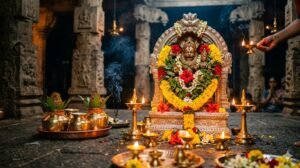
The Vedavyasa Jayanti date timings for 2026 fall on Wednesday, 29 July 2026, coinciding with Ashadha Purnima — the sacred full moon day when Sage Veda Vyasa, the compiler of the four Vedas and author of the Mahabharata, is traditionally believed to have been born. However, many devotees remain confused about whether this is the same as Guru Purnima, what the exact muhurat timings are, and how the ritual differs in regional traditions. This guide settles every question in one place.
Notably, Vedavyasa Jayanti is also known as Vyasa Purnima and Guru Purnima. Therefore, the day carries triple significance — honouring the Adi Guru, the compiler of Vedic knowledge, and all spiritual teachers across Sanatan Dharma.
Quick Summary: Vedavyasa Jayanti 2026 at a Glance
- Date: Wednesday, 29 July 2026
- Tithi: Ashadha Shukla Purnima
- Purnima Tithi Begins: 06:18 PM on 28 July 2026
- Purnima Tithi Ends: 08:05 PM on 29 July 2026
- Puja Muhurat: Sunrise to sunset on 29 July 2026 (entire day auspicious)
- Also Known As: Guru Purnima, Vyasa Purnima
- Secondary regional date (Kerala tradition): Vaishakha Shukla Chaturdashi — 30 April 2026
Vedavyasa Jayanti Date Timings 2026: The Exact Panchang
Additionally, for devotees planning fasting and temple visits, knowing the precise tithi window matters. The Purnima tithi does not follow a fixed 24-hour clock. Instead, it begins the previous evening and continues until the following evening.
Therefore, many households perform the Sankalpa (intention ritual) on the morning of 29 July 2026. Traditionally, Vyasa Puja is completed before sunset on the Purnima day itself.
Detailed Panchang Table
| Event | Date & Time (IST) |
|---|---|
| Vedavyasa Jayanti (Main) | Wednesday, 29 July 2026 |
| Purnima Tithi Begins | 28 July 2026, 06:18 PM |
| Purnima Tithi Ends | 29 July 2026, 08:05 PM |
| Snan & Daan Muhurat | Before sunrise on 29 July |
| Vyasa Puja Muhurat | Sunrise to sunset, 29 July |
| Kerala Tradition Date | 30 April 2026 (Vaishakha Shukla Chaturdashi) |
Moreover, the South Indian Amanta calendar and the North Indian Purnimanta calendar both agree on 29 July as the main observance. For precise sunrise times at your location, refer to the Drik Panchang Guru Purnima page.
Who Was Maharishi Veda Vyasa?
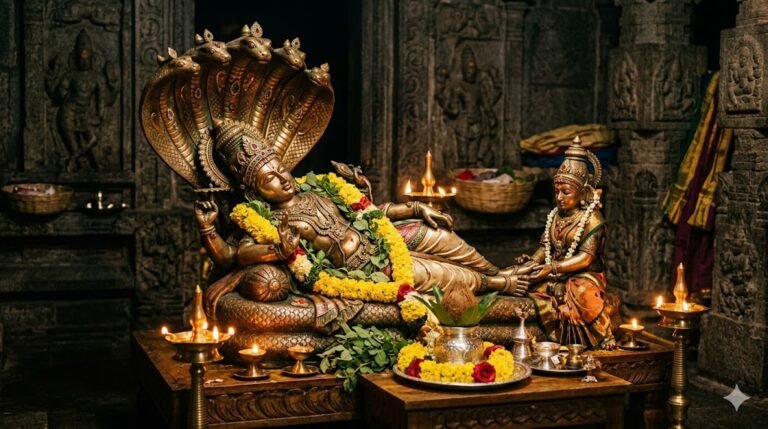
Veda Vyasa, whose birth name was Krishna Dvaipayana, is one of the most towering figures in Sanatan Dharma. Furthermore, he is considered an amsha (partial incarnation) of Bhagavan Vishnu himself. His contributions to Hindu literature are unmatched in scope and depth.
Specifically, Vyasa divided the single Veda into four parts — Rig, Yajur, Sama, and Atharva. Consequently, he came to be known as “Veda Vyasa” — the one who classified the Vedas. This division allowed Vedic knowledge to be preserved and taught systematically.
Major Literary Contributions
Besides compiling the Vedas, Vyasa authored the Mahabharata, a monumental epic of 100,000 verses. In addition, he composed the 18 Mahapuranas and the Brahma Sutras. The Mahabharata alone contains the Bhagavad Gita — arguably the most studied spiritual text worldwide.
Interestingly, Sage Vyasa is also a character within his own epic. Indeed, he is the grandfather of both the Pandavas and Kauravas, making him one of the few figures who both wrote and lived the story he narrates.
Why Vedavyasa Jayanti Falls on Guru Purnima
For instance, a common question among devotees is why this day is celebrated as both Vedavyasa Jayanti and Guru Purnima. The answer lies in Vyasa’s status as the Adi Guru — the first teacher of Sanatan Dharma.
Meanwhile, ancient scriptures state that Vyasa first taught his son Shuka Deva the Bhagavata Purana on this day. Hence, the tradition of honouring one’s guru on Ashadha Purnima began with Vyasa himself.
The Triple Significance
Clearly, this day holds three interconnected meanings. First, it marks Vyasa’s birth anniversary. Second, it celebrates his role as the Adi Guru. Third, it honours all gurus — spiritual, academic, and familial — who dispel ignorance.
As a result, Guru Purnima is observed not just by Hindus but also by Buddhists (who commemorate Buddha’s first sermon at Sarnath) and Jains (who mark Mahavira’s first disciple). Across all three traditions, the guru-shishya bond is celebrated.
Vedavyasa Jayanti Puja Vidhi: Step-by-Step Rituals
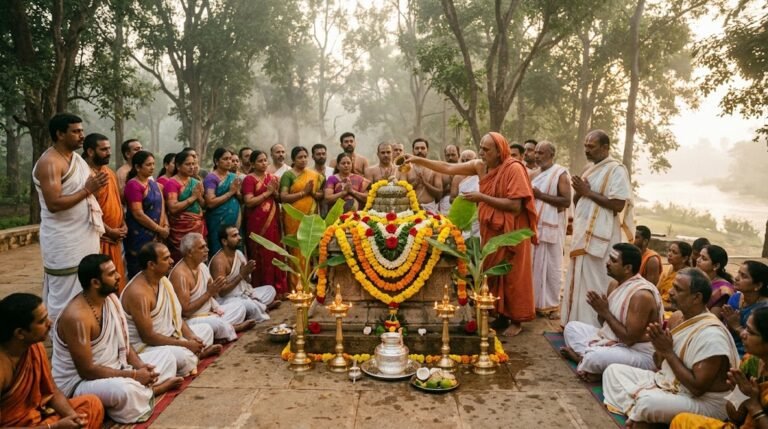
Performing the Vyasa Puja at home is simple but demands sincerity. Furthermore, the rituals focus on reverence for Vyasa and one’s personal guru rather than elaborate offerings.
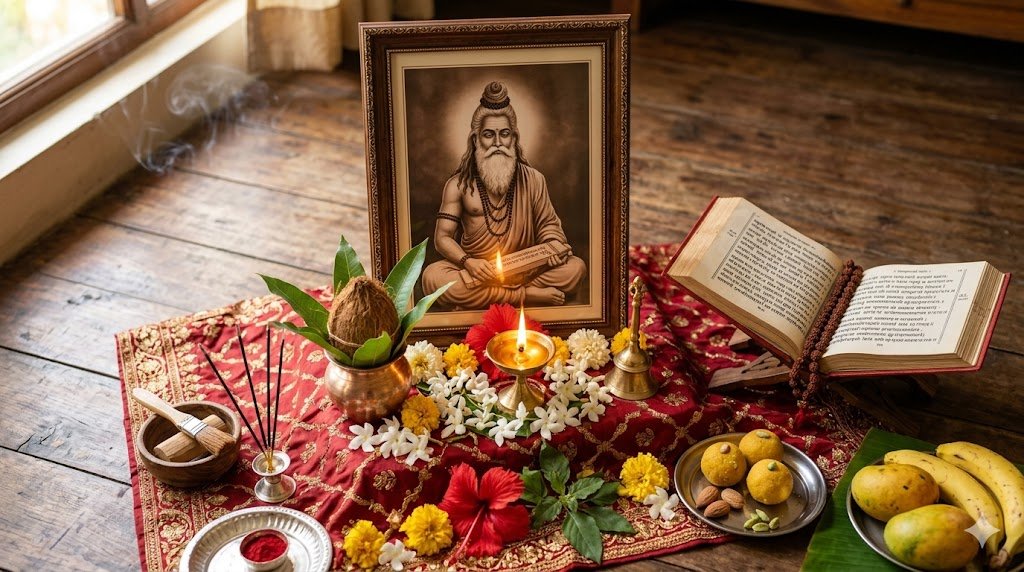
- Wake before sunrise — Take a holy bath, preferably adding a few drops of Ganga Jal to the bath water.
- Wear clean white or yellow clothes — These colours symbolise purity and knowledge.
- Clean the puja altar — Place a photo or idol of Sage Veda Vyasa. Alternatively, place a photo of your personal guru.
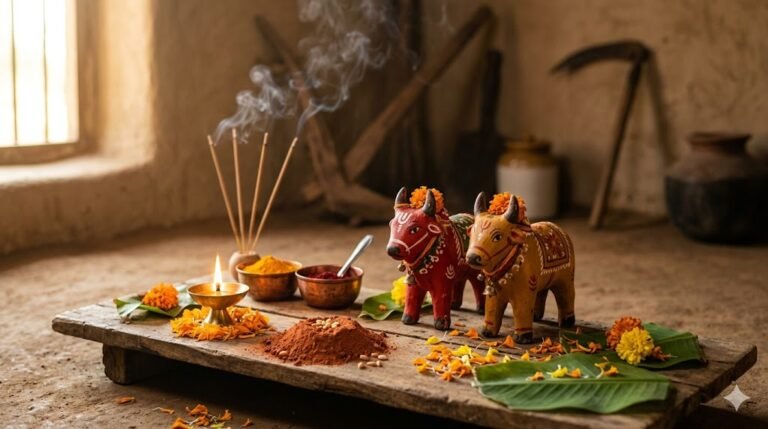
- Light a diya and incense — Use ghee for the lamp. Cotton wicks are preferred.
- Offer flowers, fruits, and sweets — White flowers and yellow laddus are traditional.
- Chant the Vyasa mantra — Recite “Om Namo Bhagavate Vyasaya” 108 times.
- Read scripture — Spend at least 30 minutes reading the Bhagavad Gita, a Purana, or any text compiled by Vyasa.
- Offer Guru Dakshina — If your guru is living, touch their feet and offer a gift. If not, donate food or money to a deserving teacher or student.
- Observe a partial fast — Many devotees eat only fruits and milk until the evening puja concludes.
- Meditate at dusk — Spend 15–30 minutes in silent meditation as the Purnima tithi closes.
What to Avoid on Vedavyasa Jayanti
Equally important is knowing what to avoid on this sacred day. Because the day is dedicated to purity of thought and speech, certain behaviours can dilute its spiritual benefit.
- Avoid non-vegetarian food, alcohol, and tobacco entirely
- Do not speak ill of teachers, parents, or elders
- Refrain from arguments, gossip, and harsh words
- Avoid cutting hair, nails, or shaving
- Do not start major financial transactions if your family tradition discourages it on Purnima
- Avoid anger and impatience — the day demands calm devotion
Regional Variations in Vedavyasa Jayanti Date Timings
Surprisingly, Vedavyasa Jayanti is observed on different dates in different regions. Some Kerala traditions mark it on Vaishakha Shukla Chaturdashi — the same day as Narasimha Jayanti. In 2026, this date falls on 30 April.
Meanwhile, most of North India, Maharashtra, Andhra Pradesh, Telangana, Karnataka, and Tamil Nadu follow the mainstream observance on Ashadha Purnima — 29 July 2026. This difference arises because the Puranas describe Vyasa appearing on multiple occasions to spread Dharma.
Region-Wise Observance Dates in 2026
| Region | Tradition | Date in 2026 |
|---|---|---|
| North India, Central India | Ashadha Purnima | 29 July 2026 |
| Andhra Pradesh, Telangana | Ashadha Purnima | 29 July 2026 |
| Karnataka, Tamil Nadu | Ashadha Purnima | 29 July 2026 |
| Parts of Kerala | Vaishakha Shukla Chaturdashi | 30 April 2026 |
| Maharashtra, Gujarat | Ashadha Purnima | 29 July 2026 |
Major Temples and Ashrams Celebrating Vedavyasa Jayanti
Throughout India, several temples and ashrams organise special Vyasa Puja on this day. Moreover, these celebrations often include all-day recitations, abhisheka, and mass annadanam.
Notable Celebration Centres
- Vyas Gufa, Mana Village (Uttarakhand) — The cave where Vyasa is believed to have dictated the Mahabharata to Ganesha. Located near Badrinath at an altitude of 3,200 metres.
- Vyasa Ashram, Naimisharanya (Uttar Pradesh) — The traditional site of Puranic discourses. Special recitations are held.
- Shankara Maths across India — All four Amnaya peetams (Sringeri, Dwaraka, Puri, Jyotirmath) conduct Vyasa Puja and Chaturmasya Sankalpa.
- ISKCON Temples Worldwide — Major Vyasa Puja celebrations with kirtan and scripture readings.
- Sringeri Sharada Peetham (Karnataka) — The Jagadguru initiates the Chaturmasya Vrata on this day.
Above all, if you can visit any of these centres, the experience is transformative. Otherwise, a simple home puja is equally effective when performed with devotion.
Vedavyasa Jayanti and the Chaturmasya Vrata
An often-overlooked aspect of this day is its connection to Chaturmasya — the four sacred months when ascetics halt their travels. Consequently, Vyasa Purnima marks the beginning of Chaturmasya for many sanyasis.
During these four months (Ashadha to Kartika Purnima), sadhus remain in one place. Meanwhile, they engage in intensive scriptural study, teaching, and austerities. For householders, this is the season for hearing discourses and deepening spiritual practice.
The Deeper Spiritual Meaning
Beyond the rituals, Vedavyasa Jayanti carries a profound philosophical message. For example, the word “guru” in Sanskrit literally means “dispeller of darkness.” Therefore, the day is less about the external ceremony and more about internal transformation.
Notably, Vyasa himself taught that even after composing all the Vedas, Puranas, and epics, he felt incomplete until he wrote the Bhagavata Purana — a text purely focused on devotion. This reminds every seeker that knowledge without devotion remains hollow.
What Modern Devotees Can Take Away
Above all, Vedavyasa Jayanti is a reminder that lineage matters. Without Vyasa’s painstaking compilation, the Vedas might have been lost to oral decline. Hence, every mantra chanted today is, in some sense, a gift from this one sage.
For instance, reading even one chapter of the Bhagavad Gita on this day connects the devotee directly to Vyasa’s living tradition. Similarly, supporting a genuine teacher — financially or through service — is a modern form of Guru Dakshina.
Planning Your Vedavyasa Jayanti 2026 Observance
With the main date falling mid-week on a Wednesday, many working devotees may wonder how to observe the day. Fortunately, the Purnima tithi extends until 08:05 PM on 29 July. Therefore, evening puja after work remains fully valid.
Specifically, the ideal approach combines a brief morning ritual with an evening meditation. Moreover, listening to a Gita discourse online, visiting a local temple during lunch break, or donating a book to a school are all valid ways to honour the day.
Checklist for Working Devotees
- Wake 30 minutes earlier for bath and brief puja
- Read 10–15 Gita verses with morning tea
- Observe a fruit-only lunch if possible
- Visit a nearby temple after office hours
- Donate to a student or teacher fund
- Complete evening puja before 8:00 PM
- Spend 15 minutes in silent meditation before sleep
The Bottom Line
Vedavyasa Jayanti on 29 July 2026 is far more than a calendar entry — it is a once-a-year opportunity to reconnect with the source of all Sanatan Dharma literature. Naturally, the ideal observance combines the Vyasa Puja at home with scripture reading and an act of gratitude toward a living teacher.
Moreover, if you can plan a visit to any of the Shankara maths, Naimisharanya, or Vyas Gufa, the spiritual merit multiplies. However, even a simple home ritual performed with sincerity honours the Adi Guru fully. Mark the date, prepare the puja altar by 28 July evening, and let the Purnima of Ashadha dissolve the ignorance that separates you from divine wisdom.
Frequently Asked Questions
What are the exact Vedavyasa Jayanti date timings in 2026?
Vedavyasa Jayanti falls on Wednesday, 29 July 2026. The Purnima tithi begins at 06:18 PM on 28 July 2026 and ends at 08:05 PM on 29 July 2026. Puja can be performed any time between sunrise and sunset on 29 July.
Is Vedavyasa Jayanti the same as Guru Purnima?
Yes, both terms refer to the same day. Guru Purnima honours all gurus, with Sage Veda Vyasa as the Adi Guru at the centre. Buddhists and Jains also observe the day for their own founders, making it a pan-Dharmic festival.
Can I perform Vyasa Puja if I don’t have a personal guru?
Absolutely. You can worship Sage Veda Vyasa directly using his photo or idol. The tradition recognises that scripture itself — particularly the Gita and Bhagavata — serves as guru for sincere seekers without a formal initiating teacher.
What should I offer during Vyasa Puja?
Traditional offerings include white flowers, yellow laddus, fresh fruits, betel leaves, and a ghee diya. In addition, offering a book or writing materials symbolises respect for knowledge. Avoid red flowers and non-vegetarian items completely.
Why do some regions celebrate Vedavyasa Jayanti on a different date?
Parts of Kerala observe Vedavyasa Jayanti on Vaishakha Shukla Chaturdashi (30 April 2026), based on the Puranic belief that Vyasa appeared on multiple occasions. However, the mainstream pan-Indian observance remains Ashadha Purnima — 29 July 2026.
Is fasting mandatory on Vedavyasa Jayanti?
Fasting is recommended but not mandatory. Most devotees observe a partial fast with fruits, milk, and water until the evening puja concludes. Those with health issues can simply avoid non-vegetarian food and alcohol.
What is the best mantra to chant on this day?
The simplest and most powerful mantra is “Om Namo Bhagavate Vyasaya.” Chant it 108 times using a tulsi or rudraksha mala. Additionally, the Guru Stotram (“Gurur Brahma Gurur Vishnu”) is traditionally recited on this day.
You May Also Like
- Guru Purnima 2026: Complete Puja Vidhi and Muhurat Guide
- Narasimha Jayanti 2026: Date, Vrata Rules and Temple Celebrations
- Chaturmasya Vrata Explained: The Four Sacred Months of Sanatan Dharma
- How to Perform Vyasa Puja at Home: Step-by-Step Ritual Guide