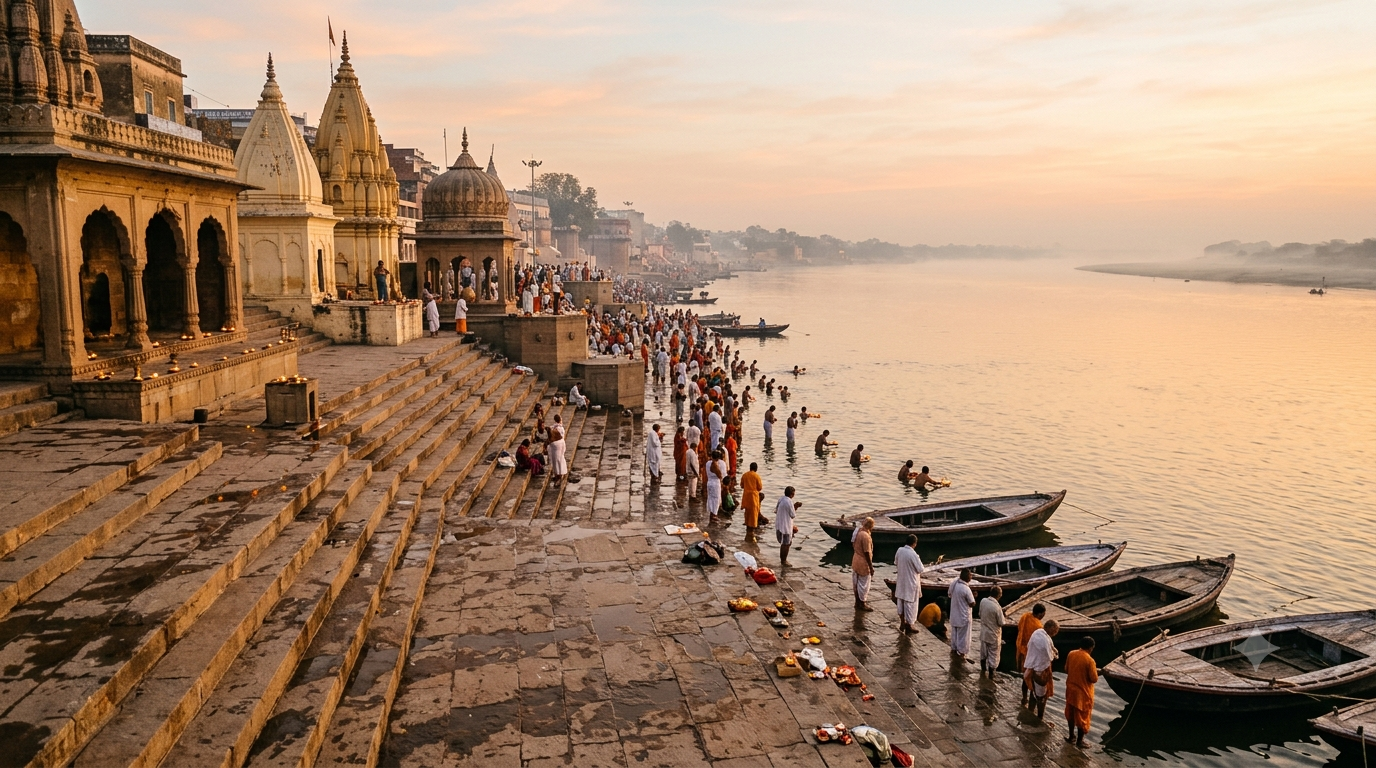
Yamuna Pushkaram 2026 runs from 2 June to 13 June, the first such window since 2014. The next one will not arrive until roughly 2038. So if you have waited to perform the snan, the tarpan, or pinda pradan for your ancestors, this is the moment.
Many pages quietly repeat the wrong dates, while others claim the festival happens only at the river’s source. This guide corrects those errors, maps the ghats city by city, and gives you the dawn timings that actually decide your day.
Yamuna Pushkaram 2026 at a Glance
Here are the essentials before you plan anything. Because crowds and heat both peak together in early June, timing matters more than most guides admit.
- Dates: 2 June to 13 June 2026 (12-day Adi Pushkaram window).
- Trigger: Jupiter (Guru/Brihaspati) enters Cancer, known as Karka Rashi.
- Holiest days: Day 1 (2 June), the middle day, and Day 12 (13 June).
- Best snan time: Brahma Muhurat, roughly 4:00 to 7:00 AM.
- Top ghats: Vishram Ghat (Mathura), Keshi Ghat (Vrindavan), Triveni Sangam (Prayagraj).
- Cost: no entry fee; you pay only for travel, stay, and any priest you engage.
When Is Yamuna Pushkaram 2026? Dates and Snan Timings
Yamuna Pushkaram 2026 takes place from 2 June to 13 June 2026. This 12-day stretch is the Adi Pushkaram, the opening window that begins the instant Jupiter enters Cancer. Every dawn across these days carries merit. Yet the punya is graded, so the first day, the last day, and the middle day rank highest.
The single holiest dip falls on Day 1, 2 June, ideally at dawn. The closing day, 13 June, carries almost equal weight and usually feels calmer than the opening rush.
Why the 2026 dates shifted from 2014
Plenty of readers assume the dates match the last cycle. They do not. The previous Yamuna Pushkaram ran from 19 to 30 June 2014, so the 2026 window opens 17 days earlier. This is not a contradiction.
Each Pushkaram begins the moment Jupiter formally enters the new zodiac sign, and that exact transit moment moves by days or weeks every 12 years. Because the river–zodiac mapping is fixed while Jupiter’s timing drifts, only the calendar dates change each cycle. You can cross-check the daily muhurat on a panchang source such as Drik Panchang nearer the date.
Brahma Muhurat snan timings for Yamuna Pushkaram 2026
The most powerful bathing hour is Brahma Muhurat, roughly 4:30 to 6:00 AM. The wider auspicious window runs from about 4:00 to 7:00 AM at every ghat. After 8:00 AM the major ghats grow so crowded that reaching the water becomes hard. So early arrival is not a tip; it is the plan.
| Day | Date | Significance | Best snan window |
|---|---|---|---|
| Day 1 | 2 June | Adi Pushkaram, holiest | 4:30–6:00 AM |
| Days 2–11 | 3–12 June | Daily punya, calmer | 4:00–7:00 AM |
| Middle day | ~7–8 June | Madhya, highly prized | 4:00–7:00 AM |
| Day 12 | 13 June | Closing day, very auspicious | 4:30–6:00 AM |
If you can travel only once, pick Day 1 or Day 12 and reach the ghat before 4:00 AM.
Why Yamuna Pushkaram Happens Once in 12 Years
Pushkaram honours one of India’s twelve sacred rivers, and each river takes its turn once in about 12 years. The cycle follows Jupiter, which orbits the zodiac roughly every 12 years and rests in each sign for about a year. When Jupiter enters the sign tied to a river, the festival begins there. The broader Pushkaram river cycle assigns each of the twelve rivers its own sign.
The Yamuna sits in the fourth position of this rotation, linked to Karka Rashi, the Cancer sign. The cycle opens with the Ganga in Aries, then the Narmada in Taurus, the Saraswati in Gemini, and then the Yamuna in Cancer. You can see the same logic in the Ganga Pushkaram and its bathing ghats, which followed when Jupiter sat in Aries.
The tradition rests on the Pushkara legend. A devotee earned a boon to enter whichever river Jupiter’s current sign governs, charging its water with the power to wash away sin. Devotees also revere the Yamuna as a living goddess, Yami, daughter of the sun god Surya and twin sister of Yama, the lord of death. Scriptures say one who bathes in her loses the fear of death, which is why ancestral rites here carry such weight.
Best Ghats for Yamuna Pushkaram 2026
The Yamuna flows past several holy towns, so you have real choice. Mathura and Prayagraj draw the largest crowds, while Agra, Bateshwar, and the Delhi region stay comparatively manageable. Choose by what you want most: Krishna devotion, a sangam dip, or fewer people.
| Ghat / location | City | Best known for | Crowd level |
|---|---|---|---|
| Vishram Ghat | Mathura | Main ritual centre, evening Yamuna Aarti | Very high |
| Keshi Ghat | Vrindavan | Krishna leela site, aarti | High |
| Triveni Sangam | Prayagraj | Ganga-Yamuna-Saraswati confluence | Very high |
| Kailash / Balkeshwar | Agra | Pair with a Taj Mahal visit | Moderate |
| Bateshwar | Near Agra | Riverside temple row, quieter | Low–moderate |
| Kalindi Kunj, Nigambodh | Delhi NCR | Easy access for local devotees | Moderate |
| Yamunotri | Uttarakhand | The river’s source, scenic trek | Seasonal |
Vishram Ghat, Mathura
Vishram Ghat is the heart of Yamuna worship in Mathura. Tradition says Lord Krishna rested here after defeating the tyrant Kansa, so the spot carries deep meaning. The evening Yamuna Aarti, around 6:30 PM in summer, is the ghat’s signature moment. Expect dense crowds between 5:00 and 8:00 AM on the holiest days.
Keshi Ghat and Cheer Ghat, Vrindavan
Keshi Ghat anchors Vrindavan’s riverfront, and its aarti rivals Mathura’s for beauty. Pilgrims often pair the snan here with darshan at Banke Bihari and Prem Mandir. Because Vrindavan is compact, you can combine a dawn dip with two or three temple visits before the heat builds.
Triveni Sangam, Prayagraj
The Sangam marks where the Ganga, the Yamuna, and the mythical Saraswati meet. A dip at this confluence during Pushkaram is considered exceptionally potent. Since this site also hosts the Kumbh, the infrastructure for mass bathing is strong, although peak-day crowds remain enormous.
Agra, Bateshwar, and Delhi NCR ghats
Agra’s Kailash and Balkeshwar ghats let you combine the snan with a Taj Mahal visit. Bateshwar, downstream of Agra, offers a long row of riverside temples and far thinner crowds. For people in the capital, Kalindi Kunj, Wazirabad, and Nigambodh Ghat give accessible options, though you should check water quality before stepping in.
Yamunotri — the source, but not the only place
Some guides insist the Pushkaram is observed only at Yamunotri, the river’s Himalayan source. That is misleading. While a trek to Yamunotri from Janki Chatti is spiritually rewarding, the snan is valid and widely performed all along the river. So you do not need to reach the source to earn the merit of Yamuna Pushkaram 2026.
Rituals to Perform During Yamuna Pushkaram 2026
The rituals of Yamuna Pushkaram 2026 blend personal purification with service to ancestors. Most pilgrims combine a holy dip with offerings, charity, and prayer. You can do as much or as little as your time and faith allow, since intention carries as much weight as the act.
- Pushkara Snan: the holy dip, ideally at dawn, while chanting the Yamuna Ashtakam or a simple prayer.
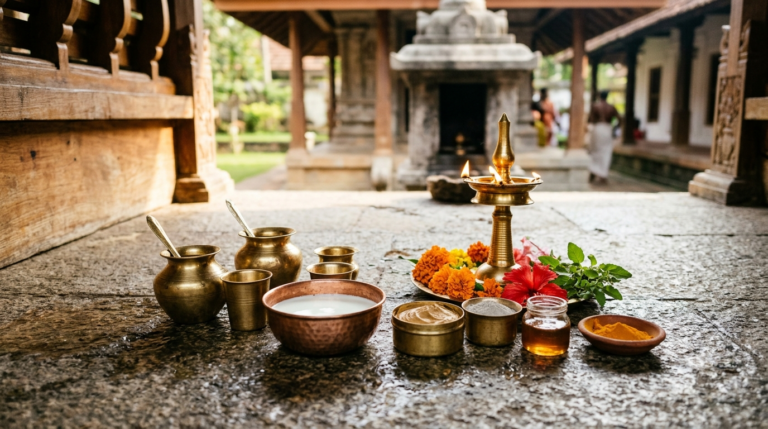
- Tarpanam: offering water mixed with sesame (til) to honour and satisfy departed forefathers.
- Pinda Pradan: placing pinda, rice balls with sesame and honey, for ancestors seeking moksha.
- Daan: charity to priests, the poor, or pilgrims, which the tradition links to lasting punya.
- Deep Daan: floating lamps on the river at dusk as an act of gratitude.
If your focus is ancestral peace, the tarpan and pinda rituals are central. Our guide to pitru tharpanam procedure and cost explains how families usually engage a priest and what to expect. Always confirm a priest’s standing locally before paying, because festival crowds attract opportunists.
What Most Guides Get Wrong
This is the section most pages skip, yet it protects your trip. Three errors circulate widely, so address them before you book.
First, the dates. Several sites still hedge that the dates are “yet to be confirmed,” but the window is firmly 2 June to 13 June 2026, set by Jupiter’s transit into Cancer. Second, the location myth. As noted above, the snan is not limited to Yamunotri; every major Yamuna ghat qualifies.
Third, online “booking” traps. The Pushkaram has no entry fee, and no official body sells a “Pushkaram pass.” So treat any website or caller demanding advance payment for a guaranteed ghat slot with suspicion. Engage priests in person, and route hotel and transport bookings through recognised channels only.
One more caution matters for health. Long stretches of the Yamuna near Delhi and Agra carry heavy pollution. Therefore avoid drinking the water, skip soap or shampoo in the river, and rinse afterwards with clean water if you can.
What Pilgrims Often Overlook
Early June in the plains is punishing. Daytime temperatures across Mathura, Agra, and Prayagraj routinely cross 40°C, so heat is the real risk, not the ritual. Check the India Meteorological Department forecast before you travel. These practical points come from how seasoned pilgrims actually move through Pushkaram days.
- Reach the ghat before 4:00 AM on 2 June and 13 June, because the crowd swells fast after 5:30 AM.
- Carry water, oral rehydration salts, and a cap, since dehydration sends more pilgrims to first-aid tents than anything else.
- Avoid bringing a private car into ghat zones, as authorities close roads and traffic jams are severe.
- Keep valuables minimal, because dense crowds invite pickpockets.
- Travel with elderly family in the calmer middle days rather than the two peak days.
- Book your stay one to two months ahead, since rooms near major ghats fill and rates climb sharply.
Before You Set Out
Yamuna Pushkaram 2026 is a rare 12-year window, and it rewards planning over impulse. Lock your ghat and your day first, then your stay, then your priest if you need one.
If maximum merit is the goal, choose 2 June or 13 June and arrive before dawn. If a calmer experience matters more, the middle days at Bateshwar or Agra serve you better. Faith brings you to the river; preparation makes the visit count.
Yamuna Pushkaram 2026: Frequently Asked Questions
What are the exact Yamuna Pushkaram 2026 dates?
Yamuna Pushkaram 2026 runs from 2 June to 13 June 2026. This 12-day Adi Pushkaram window begins when Jupiter enters Cancer (Karka Rashi). Day 1 and Day 12 carry the highest merit.
What is the best time for the Pushkara snan?
The best time is Brahma Muhurat, roughly 4:30 to 6:00 AM, with the wider window running about 4:00 to 7:00 AM. Early mornings are also far less crowded. After 8:00 AM the main ghats become very congested.
Which ghat is best for Yamuna Pushkaram?
Vishram Ghat in Mathura and Keshi Ghat in Vrindavan are the most revered, especially for Krishna devotees. Triveni Sangam in Prayagraj suits those wanting a confluence dip. Bateshwar and Agra offer quieter options.
What is Nadi Pinda Pradan?
Nadi Pinda Pradan is an ancestral rite performed at the riverbank. Families offer pinda, rice balls mixed with sesame and honey, in the name of departed ancestors. The aim is to help their souls attain moksha.
Is there an entry fee for Yamuna Pushkaram?
No, there is no entry fee for the Pushkaram itself. You pay only for travel, accommodation, and any priest you choose to engage. Be wary of anyone selling a paid “Pushkaram booking” online.
When was the last Yamuna Pushkaram and when is the next?
The last Yamuna Pushkaram fell on 19–30 June 2014. The next after 2026 will come only around 2038, since the festival returns once every 12 years with Jupiter’s cycle.
Can I drink the Yamuna water during the snan?
No, avoid drinking the water, particularly near Delhi and Agra where pollution is high. Take your dip, avoid soap in the river, and rinse with clean water afterward. The ritual purifies spiritually regardless.
Is Yamuna Pushkaram only for Hindus?
The festival is rooted in Hindu and Vedic tradition, yet anyone respectful is welcome to witness the rituals and atmosphere. Visitors should dress modestly and avoid disturbing those performing ceremonies.