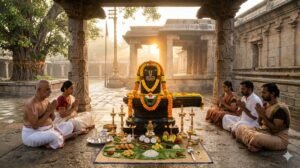
Gayatri Jayanti 2026 is on Thursday, June 25. Discover exact tithi timings, shubh muhurat, Gayatri Mantra benefits, puja vidhi, and the legend of Veda Mata.
Gayatri Jayanti 2026 falls on Thursday, June 25, marking the appearance day of Goddess Gayatri — the Veda Mata or Mother of the Vedas. This sacred day, observed on Jyeshtha Shukla Ekadashi, draws millions of devotees who believe that chanting the Gayatri Mantra on this single day yields the merit of months of regular practice. For South Indian families, brahmin households, and anyone seeking divine wisdom, knowing the exact muhurat and puja procedure transforms a routine fast into a transformative spiritual experience.
Quick Summary: Gayatri Jayanti 2026 at a Glance
Before going deeper, here are the essential facts every devotee should note. Notably, these timings follow the standard panchang calculations for North and Central India.
- Date (North India): Thursday, June 25, 2026
- Date (South India / Shravana Purnima): Friday, August 28, 2026
- Ekadashi Tithi Begins: June 24, 2026 at 6:12 PM
- Ekadashi Tithi Ends: June 25, 2026 at 8:09 PM
- Brahma Muhurat: 4:03 AM to 4:43 AM (June 25, Delhi)
- Abhijit Muhurat: 11:55 AM to 12:51 PM (June 25, Delhi)
- Hindu Month: Jyeshtha Shukla Paksha
- Presiding Deity: Goddess Gayatri (Veda Mata)
- Coincides With: Nirjala Ekadashi 2026
What Is Gayatri Jayanti 2026?
Gayatri Jayanti 2026 commemorates the divine manifestation of Goddess Gayatri, the personified form of the Gayatri Mantra. According to scriptures, Sage Vishwamitra first revealed this 24-syllable mantra to humanity on this day. Consequently, the festival celebrates both the goddess and the mantra she embodies.
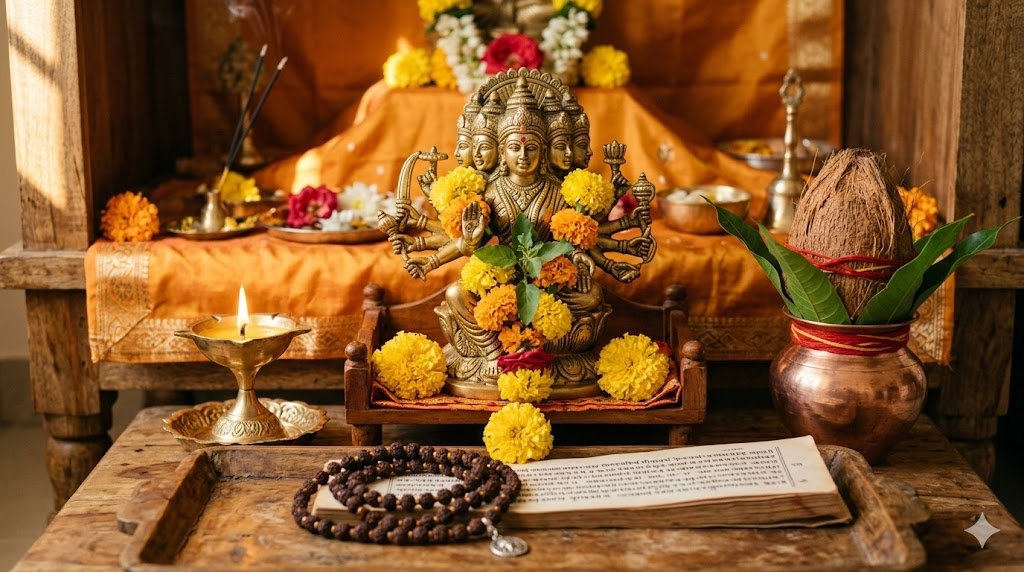
Goddess Gayatri is often depicted with five heads representing the four Vedas and the Almighty, along with ten arms holding sacred weapons and symbols. She is regarded as the consort of Lord Brahma and the combined embodiment of Saraswati, Lakshmi, and Parvati. Furthermore, devotees worship her as Adi Shakti — the primordial energy of the universe.
Why It Matters in 2026
Specifically, June 25, 2026 is a Thursday, traditionally considered auspicious for goddess worship. Moreover, Gayatri Jayanti this year coincides with Nirjala Ekadashi, creating a rare convergence where mantra japa and Vishnu vrat merge. As a result, the spiritual potency of the day multiplies for those who observe both.
Gayatri Jayanti 2026 Date and Tithi Timings
The festival is observed on the eleventh day of the bright fortnight in Jyeshtha month. However, two different traditions exist regarding the date, which often confuses devotees.
North India vs South India: Two Observance Dates
In North and Central India, Gayatri Jayanti is observed on Jyeshtha Shukla Ekadashi — June 25, 2026. However, in South India, particularly Tamil Nadu, Karnataka, Andhra Pradesh, and Telangana, the festival is celebrated on Shravana Purnima, which falls on August 28, 2026. The South Indian observance also coincides with Avani Avittam and Upakarma rituals.
Detailed Tithi and Muhurat Window
| Event | Date | Time (IST) |
|---|---|---|
| Ekadashi Tithi Begins | June 24, 2026 (Wed) | 6:12 PM |
| Brahma Muhurat | June 25, 2026 (Thu) | 4:03 AM – 4:43 AM |
| Pratah Sandhya (Morning) | June 25, 2026 (Thu) | 4:43 AM – 5:23 AM |
| Abhijit Muhurat | June 25, 2026 (Thu) | 11:55 AM – 12:51 PM |
| Sayam Sandhya (Evening) | June 25, 2026 (Thu) | 7:08 PM – 7:48 PM |
| Ekadashi Tithi Ends | June 25, 2026 (Thu) | 8:09 PM |
Shubh Muhurat for Gayatri Mantra Japa Across Indian Cities
Sunrise and sandhya timings vary across India, which directly affects the optimal japa windows. Below is a city-wise reference for the morning sandhya muhurat on June 25, 2026.
| City | Brahma Muhurat Begins | Sunrise |
|---|---|---|
| New Delhi | 4:03 AM | 5:25 AM |
| Mumbai | 4:39 AM | 6:01 AM |
| Kolkata | 3:33 AM | 4:55 AM |
| Chennai | 4:21 AM | 5:43 AM |
| Bengaluru | 4:33 AM | 5:55 AM |
| Hyderabad | 4:20 AM | 5:42 AM |
| Ahmedabad | 4:25 AM | 5:55 AM |
However, devotees should verify exact timings with their local panchang. For precise location-based timings, refer to the Drik Panchang Gayatri Jayanti page.
The Sacred Gayatri Mantra
The Gayatri Mantra is the most revered hymn in Vedic literature. It first appears in the Rig Veda (Mandala 3.62.10) and was revealed to Sage Vishwamitra. The mantra contains 24 syllables, each representing a fundamental tattva of the universe.
The Mantra in Sanskrit
ॐ भूर्भुवः स्वः
तत्सवितुर्वरेण्यं
भर्गो देवस्य धीमहि
धियो यो नः प्रचोदयात् ॥
English Transliteration
Om Bhur Bhuvah Swaha
Tat Savitur Varenyam
Bhargo Devasya Dhimahi
Dhiyo Yo Nah Prachodayat
Meaning
The mantra translates to: “We meditate on the glory of the Creator who has created the universe; who is worthy of worship; who is the embodiment of knowledge and light; who is the remover of all sin and ignorance; may He enlighten our intellect.”
Step-by-Step Puja Vidhi for Gayatri Jayanti 2026
The puja procedure follows traditions documented in the Devi Bhagavatam and Markandeya Purana. Following each step in sequence amplifies the spiritual benefit significantly.
Pre-Dawn Preparation
- Wake up before 4:00 AM during Brahma Muhurat
- Take a bath in cold water if possible — flowing water is preferred
- Wear clean white, yellow, or saffron clothes
- Clean the puja area thoroughly with cow dung paste or Ganga jal
- Set up an east-facing puja altar
Setting Up the Altar
- Place a clean red or yellow cloth on the altar
- Position a photo or idol of Goddess Gayatri at the center
- Light a brass diya with pure cow ghee
- Keep a copper kalash filled with water and topped with mango leaves and a coconut
- Arrange yellow flowers, marigolds, and tulsi leaves
- Prepare panchamrit (milk, curd, ghee, honey, sugar)
Performing the Puja
- Begin with Ganesh Vandana to remove obstacles
- Take Sankalp (vow) stating your name, gotra, and intention
- Invoke Goddess Gayatri with the dhyana mantra
- Offer flowers, kumkum, haldi, and akshata to the deity
- Light incense and offer aarti
- Chant the Gayatri Mantra 108 times using a Rudraksha or Tulsi mala
- Perform Gayatri Havan if possible — offer ghee, samagri, and dry fruits to the sacred fire
- Offer naivedya — fruits, sweets, and panchamrit
- Conclude with Gayatri Aarti and pranam
Significance of Chanting Gayatri Mantra 108 Times
The number 108 holds profound significance in Vedic tradition. According to Ayurveda, the human body has 108 marma points or vital energy centers. Furthermore, chanting the mantra exactly 108 times helps align these centers with cosmic energy.
The Three Sandhyas (Optimal Chanting Times)
Traditionally, the Gayatri Mantra is chanted three times daily at the sandhi points — the junctions between day and night phases. On Gayatri Jayanti, devotees chant 108 times at each of these three windows.
| Sandhya | Time Window | Spiritual Benefit |
|---|---|---|
| Pratah Sandhya (Dawn) | Before sunrise | Wisdom and clarity for the day |
| Madhyana Sandhya (Noon) | 11:55 AM – 12:51 PM | Strength and protection |
| Sayam Sandhya (Dusk) | Just after sunset | Peace and karmic cleansing |
The Birth Story of Goddess Gayatri
The legend of Goddess Gayatri appears in multiple Puranas, with slight variations. The most widely accepted version comes from the Padma Purana and Skanda Purana.
Lord Brahma once needed to perform a sacred yajna that required his consort Saraswati’s presence. However, Saraswati was delayed. To complete the ritual at the auspicious muhurat, Brahma asked Indra to find a suitable bride. Indra discovered a milkmaid whom Brahma purified by passing her through a cow (gaya). She was named Gayatri and married Brahma to complete the yajna.
According to another tradition, Goddess Adi Shakti manifested as Gayatri to vanquish the demon Vetrasura. She appeared with five heads and ten arms, each carrying a divine weapon. Therefore, Gayatri Jayanti also commemorates the goddess’s victory over ignorance and evil.
Spiritual Benefits of Observing Gayatri Jayanti
Scriptures and devotees alike attest to the transformative effects of sincere observance. Specifically, the Atharvaveda states that Maa Gayatri grants four boons — long life, vital energy, fame, and wealth.
Documented Benefits
- Removal of past karmic burdens (paap nivaran)
- Sharpening of intellect and memory
- Protection from negative energies and evil eye
- Mental peace and emotional discipline
- Spiritual progress toward moksha
- Success in education and competitive examinations
- Healing of chronic ailments through mantra vibration
Scientific Perspective on Mantra Chanting
Interestingly, modern neuroscience has begun studying the effects of repetitive mantra chanting. Research from institutions like AIIMS Delhi suggests that rhythmic chanting activates the parasympathetic nervous system, lowers cortisol levels, and improves heart rate variability. Although traditional benefits are primarily spiritual, the physiological effects align with claims in the Yoga Sutras.
Vrat (Fasting) Rules for Gayatri Jayanti
Many devotees observe a fast on Gayatri Jayanti to enhance spiritual focus. The vrat rules are flexible and accommodate different capacities.
Types of Vrat
- Strict (Nirjala): No food or water for 24 hours — same as Nirjala Ekadashi
- Phalahari: Only fruits, milk, and water permitted
- Ekahara: Single satvik meal after sunset
- Sankalpa Vrat: Symbolic fast with mental dedication only
Foods to Avoid
Regardless of fasting type, devotees must avoid grains, lentils, rice, onion, garlic, non-vegetarian food, and tamasic items. Furthermore, salt should be replaced with rock salt (sendha namak). Alcohol and caffeine are strictly prohibited throughout the day.
Important Donations and Charity
Daan (charity) on Gayatri Jayanti carries exceptional merit because the goddess herself represents knowledge and abundance. Specifically, scriptures recommend donations connected to learning and nourishment.
| Donation Item | Symbolic Meaning | Recipient |
|---|---|---|
| Books and stationery | Spreading knowledge | Students, schools |
| Food (annadan) | Nourishment of body | Brahmins, needy |
| Yellow clothes | Color of Gayatri | Brahmin priest |
| Cow ghee and milk | Pure offerings | Temple, gaushala |
| Ghee diyas | Symbol of light | Local temple |
| Rudraksha mala | Aid for japa | Spiritual seekers |
Common Mistakes Devotees Should Avoid
From observing how families celebrate this festival, certain errors recur frequently. Avoiding them ensures the full spiritual benefit reaches the devotee.
Incorrect Mantra Pronunciation
The Gayatri Mantra contains specific Sanskrit syllables whose vibrations create the spiritual effect. Mispronouncing words like “Bhargo” as “Bhargav” or “Prachodayat” as “Prachodyaat” significantly reduces potency. Therefore, listen to authentic recordings or learn from a qualified guru before chanting.
Chanting Without a Mala
Counting on fingers is considered improper for sacred mantras. A Rudraksha mala (108 beads) or Tulsi mala is essential. Furthermore, the mala should be kept in a clean cloth pouch and never touched with unwashed hands.
Skipping the Sankalp
Many devotees jump straight to chanting without taking the formal Sankalp. However, the Sankalp directs the spiritual energy toward a specific intention. Skipping it scatters the merit accumulated during japa.
Eating Before Morning Puja
Even if you are not observing a strict vrat, eating before the morning Gayatri puja is discouraged. The body should be in a clean, fasted state for the highest spiritual reception.
Where to Celebrate Gayatri Jayanti 2026
While home worship is fully sufficient, certain temples organize elaborate Gayatri Yajnas and havans. Notably, the following destinations attract thousands of devotees on this day.
- Gayatri Shaktipeeth, Shantikunj, Haridwar: Headquarters of Gayatri Pariwar — massive yajna with thousands of devotees
- Gayatri Mandir, Pushkar: One of the few temples dedicated solely to Gayatri
- Brahma Temple, Pushkar: Where Brahma married Gayatri
- Sri Gayatri Devi Temple, Vijayawada: Major South Indian Gayatri shrine
- Shringeri Sharada Peetham, Karnataka: Special Gayatri havan during Shravana Purnima
- Kamakshi Amman Temple, Kanchipuram: Combined Gayatri and Tripurasundari worship
For an authentic experience, the All World Gayatri Pariwar conducts coordinated yajnas across India. Their Shantikunj headquarters in Haridwar is the largest single celebration globally.
Practical Tips for First-Time Observers
Anyone celebrating Gayatri Jayanti 2026 for the first time will benefit from these field-tested suggestions. Veteran devotees recommend them universally.
Start Preparation Three Days Earlier
Begin reducing tamasic food from June 22 onwards. Additionally, start chanting the Gayatri Mantra 11 times daily to build familiarity with pronunciation. By June 25, your tongue will flow through the syllables effortlessly.
Use a Quality Rudraksha Mala
Invest in a properly energized 5-mukhi Rudraksha mala from a trusted source. Authentic malas typically cost between ₹500 to ₹2,500 depending on bead size and origin (Nepal beads are considered superior). However, even a simple Tulsi mala works for sincere devotees.
Combine With Surya Namaskar
Since Goddess Gayatri is closely associated with Lord Surya, performing 12 rounds of Surya Namaskar after the morning chanting amplifies the effect. Specifically, do this between 5:30 AM and 7:00 AM facing east.
Maintain Silence Between Chants
After completing 108 chants, sit silently for at least 5 minutes. This allows the mantra vibration to settle into deeper consciousness. Speaking immediately disperses the accumulated energy.
Final Thoughts
Gayatri Jayanti 2026 on June 25 offers a rare opportunity to connect with the most powerful mantra in Vedic literature. Whether you observe the strict version with full puja vidhi or simply chant 108 times before sunrise, the goddess responds to sincerity above ritual perfection. Plan your morning to be free of distractions, prepare your puja samagri the night before, and approach the day as a sacred dialogue rather than a checklist. The Gayatri Mantra, scriptures promise, illuminates the intellect of those who chant it with devotion — and Jayanti day amplifies that promise many times over.
Frequently Asked Questions
What is the exact date of Gayatri Jayanti 2026?
Gayatri Jayanti 2026 falls on Thursday, June 25, 2026, in North and Central India, observed on Jyeshtha Shukla Ekadashi. South Indian devotees celebrate it on Friday, August 28, 2026, during Shravana Purnima. Both dates are scripturally valid based on regional tradition.
What is the best time to chant the Gayatri Mantra on Jayanti day?
Brahma Muhurat (4:03 AM to 4:43 AM in Delhi) is the most powerful time. Additionally, the three sandhyas — dawn, noon, and dusk — are traditional windows for 108 chants each. The Abhijit Muhurat from 11:55 AM to 12:51 PM is also highly auspicious.
Can women chant the Gayatri Mantra?
Yes, modern Hindu scholars and most major sampradayas confirm that women can chant the Gayatri Mantra without restriction. Although older traditions debated this, contemporary spiritual leaders including those of Gayatri Pariwar actively encourage women to chant. The mantra is universal and gender-neutral.
Why does Gayatri Jayanti have two dates?
The dual observance reflects regional traditions. North India follows the Jyeshtha Shukla Ekadashi date based on the legend of Sage Vishwamitra revealing the mantra. South India follows Shravana Purnima, when the goddess is believed to have manifested. Both dates are sanctioned by different Puranas.
What should I donate on Gayatri Jayanti 2026?
Books, stationery, and educational materials are most recommended because Gayatri represents knowledge. Other appropriate donations include yellow clothes, cow ghee, milk, food (annadan), and Rudraksha malas. Donations to schools, libraries, and Vedic pathshalas carry exceptional merit.
Is fasting mandatory on Gayatri Jayanti?
No, fasting is not strictly mandatory but highly recommended. Devotees can choose between strict nirjala vrat, phalahari fast (fruits and milk), or a single satvik meal after sunset. Even without fasting, sincere mantra japa and puja yield spiritual benefits.
Can I perform Gayatri Yajna at home?
Yes, a simple home havan is fully acceptable. You will need a small havan kund, samagri (havan ingredients), cow ghee, dry fruits, and a Sankalpa. However, beginners should book a qualified Vedic pandit for the first time to learn proper procedure. Online platforms now offer pandit booking starting from ₹2,500 to ₹15,000 depending on scale.
You May Also Like
- Nirjala Ekadashi 2026: Vrat Date, Parana Time & Complete Guide
- Akshaya Tritiya 2026: Date, Muhurat & Auspicious Activities
- Ganga Dussehra 2026: Date, Significance & Holy Bath Timings
- Sanskrit Diwas 2026: Date, History & Celebration Guide