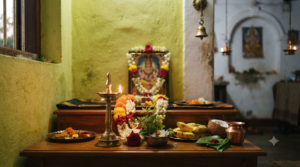
Lakshmi Ashtottaram Telugu is the 108-name namavali of Goddess Lakshmi, recited as a sequence of salutations ending in “namah.” It also gives the full Telugu text, explains important textual variants, and shows a simple way to use the namavali during home puja without turning traditional devotional beliefs into guaranteed material claims.
The chant-ready list below follows the Telugu sequence published by Vedic Tithi, beginning with Prakrityai, Vikrityai, and Vidyayai. However, other respected editions preserve alternate readings at several points. Therefore, a family or guru-taught version may not match every line here.

Independence note: Sri Vyasa Pooja is an independent devotional guide. We are not affiliated with any temple, mutt, or trust, and we do not accept bookings, donations, or payments.
Lakshmi Ashtottaram Telugu at a Glance
- What it is: 108 sacred names of Sri Lakshmi used for namavali archana.
- Language: Sanskrit names presented here in Telugu script.
- Common use: Friday Lakshmi puja, Varalakshmi Vratam, Diwali Lakshmi puja, and personal daily worship.
- How to offer: Recite one name at a time. Offer a flower, kumkum, or akshata if your household tradition uses them.
- Important note: Different recensions contain variant names and grammatical forms; follow one trusted text consistently during archana.
For a longer Lakshmi hymn, see our Lakshmi Hrudayam Stotram guide. If you are preparing the annual vrata, our Varalakshmi Vratam pooja vidhanam explains the wider ritual sequence.
What Is Sri Lakshmi Ashtottara Shatanamavali?
Sri Lakshmi Ashtottara Shatanamavali is a devotional list of 108 epithets of Goddess Lakshmi. Each name also highlights a quality, form, relationship, or auspicious aspect of the goddess. Meanwhile, the repeated “Om … namah” turns the list into archana rather than ordinary reading.
The sequence begins with Prakriti, Vikriti, and Vidya. Then it moves through names linked with the lotus, compassion, radiance, prosperity, Vishnu, and universal motherhood. Therefore, the text is broader than a simple “wealth prayer”. In addition, it presents Lakshmi through themes of nourishment, wisdom, grace, purity, and well-being.
Established reference editions agree on the overall Prakrityai–Vikrityai framework, although individual readings differ. For example, Vedic Tithi uses Kamakshyai, Kshirodhasambhavayai, and Anugrahapradayai in its Telugu sequence. Stotra Nidhi prints Kshamayai and Kshirodhasambhavayai while noting alternate readings, and Sanskrit Documents preserves Krodhasambhava in the related stotram text. Therefore, use one trusted recension consistently instead of mixing lines from several editions.
Lakshmi Ashtottaram Telugu: Full 108 Names
The following Lakshmi Ashtottaram Telugu list is arranged for easy chanting. Then read each line as one complete salutation, and keep a steady pace rather than rushing to finish all 108 names.
Names 1–27: Prakriti to Kanta
- ఓం ప్రకృత్యై నమః
- ఓం వికృత్యై నమః
- ఓం విద్యాయై నమః
- ఓం సర్వభూతహితప్రదాయై నమః
- ఓం శ్రద్ధాయై నమః
- ఓం విభూత్యై నమః
- ఓం సురభ్యై నమః
- ఓం పరమాత్మికాయై నమః
- ఓం వాచే నమః
- ఓం పద్మాలయాయై నమః
- ఓం పద్మాయై నమః
- ఓం శుచయే నమః
- ఓం స్వాహాయై నమః
- ఓం స్వధాయై నమః
- ఓం సుధాయై నమః
- ఓం ధన్యాయై నమః
- ఓం హిరణ్మయ్యై నమః
- ఓం లక్ష్మ్యై నమః
- ఓం నిత్యపుష్టాయై నమః
- ఓం విభావర్యై నమః
- ఓం అదిత్యై నమః
- ఓం దిత్యై నమః
- ఓం దీపాయై నమః
- ఓం వసుధాయై నమః
- ఓం వసుధారిణ్యై నమః
- ఓం కమలాయై నమః
- ఓం కాంతాయై నమః.
Names 28–54: Kamakshi to Suprasanna
- ఓం కామాక్ష్యై నమః
- ఓం క్షీరోదసంభవాయై నమః
- ఓం అనుగ్రహప్రదాయై నమః
- ఓం బుద్ధయే నమః
- ఓం అనఘాయై నమః
- ఓం హరివల్లభాయై నమః
- ఓం అశోకాయై నమః
- ఓం అమృతాయై నమః
- ఓం దీప్తాయై నమః
- ఓం లోకశోకవినాశిన్యై నమః
- ఓం ధర్మనిలయాయై నమః
- ఓం కరుణాయై నమః
- ఓం లోకమాత్రే నమః
- ఓం పద్మప్రియాయై నమః
- ఓం పద్మహస్తాయై నమః
- ఓం పద్మాక్ష్యై నమః
- ఓం పద్మసుందర్యై నమః
- ఓం పద్మోద్భవాయై నమః
- ఓం పద్మముఖ్యై నమః
- ఓం పద్మనాభప్రియాయై నమః
- ఓం రమాయై నమః
- ఓం పద్మమాలాధరాయై నమః
- ఓం దేవ్యై నమః
- ఓం పద్మిన్యై నమః
- ఓం పద్మగంధిన్యై నమః
- ఓం పుణ్యగంధాయై నమః
- ఓం సుప్రసన్నాయై నమః.
Names 55–81: Prasadabhimukhi to Vasundhara
- ఓం ప్రసాదాభిముఖ్యై నమః
- ఓం ప్రభాయై నమః
- ఓం చంద్రవదనాయై నమః
- ఓం చంద్రాయై నమః
- ఓం చంద్రసహోదర్యై నమః
- ఓం చతుర్భుజాయై నమః
- ఓం చంద్రరూపాయై నమః
- ఓం ఇందిరాయై నమః
- ఓం ఇందుశీతలాయై నమః
- ఓం ఆహ్లాదజనన్యై నమః
- ఓం పుష్ట్యై నమః
- ఓం శివాయై నమః
- ఓం శివకర్యై నమః
- ఓం సత్యాయై నమః
- ఓం విమలాయై నమః
- ఓం విశ్వజనన్యై నమః
- ఓం తుష్ట్యై నమః
- ఓం దారిద్ర్యనాశిన్యై నమః
- ఓం ప్రీతిపుష్కరిణ్యై నమః
- ఓం శాంతాయై నమః
- ఓం శుక్లమాల్యాంబరాయై నమః
- ఓం శ్రియై నమః
- ఓం భాస్కర్యై నమః
- ఓం బిల్వనిలయాయై నమః
- ఓం వరారోహాయై నమః
- ఓం యశస్విన్యై నమః
- ఓం వసుంధరాయై నమః.
Names 82–108: Udaranga to Bhuvaneshwari
- ఓం ఉదారాంగాయై నమః
- ఓం హరిణ్యై నమః
- ఓం హేమమాలిన్యై నమః
- ఓం ధనధాన్యకర్యై నమః
- ఓం సిద్ధయే నమః
- ఓం స్త్రైణసౌమ్యాయై నమః
- ఓం శుభప్రదాయై నమః
- ఓం నృపవేశ్మగతానందాయై నమః
- ఓం వరలక్ష్మ్యై నమః
- ఓం వసుప్రదాయై నమః
- ఓం శుభాయై నమః
- ఓం హిరణ్యప్రాకారాయై నమః
- ఓం సముద్రతనయాయై నమః
- ఓం జయాయై నమః
- ఓం మంగళాదేవ్యై నమః
- ఓం విష్ణువక్షస్స్థలస్థితాయై నమః
- ఓం విష్ణుపత్న్యై నమః
- ఓం ప్రసన్నాక్ష్యై నమః
- ఓం నారాయణసమాశ్రితాయై నమః
- ఓం దారిద్ర్యధ్వంసిన్యై నమః
- ఓం దేవ్యై నమః
- ఓం సర్వోపద్రవవారిణ్యై నమః
- ఓం నవదుర్గాయై నమః
- ఓం మహాకాల్యై నమః
- ఓం బ్రహ్మావిష్ణుశివాత్మికాయై నమః
- ఓం త్రికాలజ్ఞానసంపన్నాయై నమః
- ఓం భువనేశ్వర్యై నమః.
For comparison and text checking, readers can consult the Drik Panchang Lakshmi namavali and the Vedic Tithi Telugu recension. These references are useful because a few printed and digital versions preserve different readings.
Lakshmi Ashtottaram Telugu: Textual Variants to Know
Lakshmi Ashtottaram Telugu appears in more than one published recension, so a difference in one line does not automatically make a family book or temple text incorrect. The most visible differences occur around the sequence after Kamala and Kanta, but smaller grammatical variants appear elsewhere too.
Vedic Tithi prints Kamakshyai followed by Kshirodhasambhavayai. Stotra Nidhi instead prints Kshamayai and Kshirodhasambhavayai, while placing Kamakshyai and Krodhasambhavayai in brackets as alternate readings. Sanskrit Documents gives the related stotram line with Kamakshi and Krodhasambhava, then notes an alternate reading that includes Kshirodasambhava. As a result, these sources show why two respected books may not match word for word.
Another example is Anugrahapradayai versus Anugrahaparayai. In addition, forms such as Pushtyai, Tushtyai, Satyai or Satyayai, and Sarvopadravavarinyai or a related variant can differ by edition. For practical worship, choose one reliable text and chant that recension from beginning to end.
How to Chant Lakshmi Ashtottaram Telugu at Home
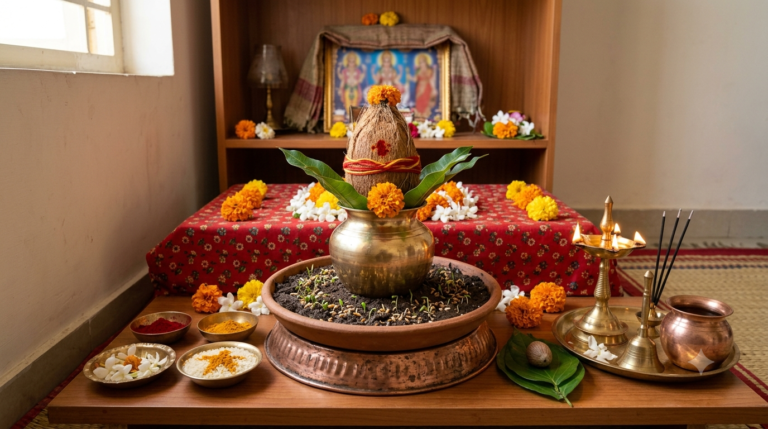
You can also chant Lakshmi Ashtottaram Telugu as a simple namavali even without performing an elaborate vrata. First, clean the puja space. Then light a lamp if that is part of your household practice. After that, offer a short prayer to Goddess Lakshmi before reciting the 108 names with attention.
- Wash your hands and sit in a clean, quiet place.
- Place a Lakshmi image, yantra, or your regular household deity arrangement before you.
- Light a lamp and make a simple sankalpa in your own words.
- Begin the namavali slowly from “Om Prakrityai Namah.”
- Offer one flower, a little kumkum, or akshata with each name if convenient.
- After the 108th name, offer a short personal prayer and complete harati if you normally do so.
- Distribute naivedyam as prasadam after the worship.
The outcome of worship, however, is not guaranteed by the number of offerings or by perfect speed. If you cannot arrange 108 flowers, recite the names with folded hands. Above all, devotional attention matters more than turning the practice into a checklist.
Do you need to pronounce every Sanskrit sound perfectly?
Although clear pronunciation is worth learning, beginners should not abandon the practice out of fear of minor mistakes. When possible, listen to a trusted teacher or priest and keep the words steady rather than racing through unfamiliar compounds.
Telugu script makes the text easier for Telugu readers, although the underlying names are Sanskrit. Therefore, a Telugu spelling is a script representation of a Sanskrit form, not a translation into everyday Telugu.
When Is the Best Time to Recite Lakshmi Ashtottaram?
Friday is widely associated with Lakshmi worship, so many families recite the namavali on Friday mornings or evenings. It is also commonly included during Varalakshmi Vratam and Diwali Lakshmi puja. In addition, some devotees use it during regular daily worship.
There is, however, no need to claim that one clock time works for every household. Family custom, vrata rules, and local tradition can differ. If you are performing a formal vrata, follow the sequence taught in that tradition. For example, this is especially useful for a detailed sankalpa, kalasha worship, or priest-led procedure.
For the wider festival ritual, see our Diwali Lakshmi Pooja guide. That page covers the festival-specific worship order, while this page stays focused on the 108-name archana.
What Do the 108 Names of Lakshmi Mean?
Reading Lakshmi Ashtottaram Telugu as a sequence also reveals a clear movement in theme. First, the names move from cosmic qualities toward household auspiciousness and Vishnu-centred devotion.
Overall, the sequence forms a compact map of Lakshmi’s devotional symbolism. Some names emphasize purity and radiance, others describe the lotus, and several connect Lakshmi directly with Vishnu. For example, names such as Karuna, Shanti, and Shubhaprada highlight compassion, peace, and auspiciousness rather than money alone.
Meanwhile, other names refer to nourishment and prosperity. Dhanadhanyakari invokes wealth and grain, Vasuprada means giver of wealth or resources, while Nityapushta points toward continuing nourishment and fullness. Therefore, devotees traditionally pray through these names for a stable and auspicious household. Yet that belief should not be treated as a promise of financial gain.
The repeated lotus imagery is especially important. Padma, Padmalaya, Padmahasta, Padmakshi, Padmasundari, and Padmamala-dhara connect Lakshmi with purity, beauty, and auspicious emergence. Likewise, Harivallabha, Padmanabhapriya, Vishnupatni, and Vishnuvakshassthalasthita place her within the Vaishnava devotional framework.
Benefits of Lakshmi Ashtottaram in Devotional Tradition
Traditional practice associates Lakshmi worship with prosperity, nourishment, peace, auspiciousness, and household well-being. In fact, the namavali itself contains names that express these themes. Therefore, devotees often use the recitation as a focused prayer for grace and steadiness.
These are, however, religious beliefs rather than financial guarantees. Chanting a devotional text does not replace budgeting, work, professional advice, or other practical steps. Instead, the practice gives devotees a structured form of prayer, reflection, and archana. In particular, it keeps attention centred on Lakshmi’s attributes.
The repetition can also make worship easier to follow because each name creates a natural rhythm. Some households use one offering per name, while others simply recite with folded hands. Therefore, both approaches can remain devotional when they follow family custom respectfully.
Common Mistakes When Reading Lakshmi Ashtottaram Telugu
- Treating every online version as identical: documented recensional variants exist, especially around names 28 and 29.
- Mixing two recensions during one archana: choose one trusted sequence and stay consistent.
- Rushing the 108 names: a slower, attentive recitation is easier to pronounce and follow.
- Turning devotional claims into guarantees: prosperity language belongs to faith and tradition, not assured financial outcomes.
- Confusing namavali with stotram: a namavali is a sequence of names for salutation or archana, while a stotram is normally composed in verses.
- Assuming Friday is compulsory: Friday is common for Lakshmi worship, but the namavali can also be part of other pujas.
Lakshmi Ashtottaram, Sri Suktam, and Lakshmi Hrudayam
Lakshmi Ashtottaram, Sri Suktam, and Lakshmi Hrudayam are not interchangeable texts. The ashtottaram is a 108-name archana format. Sri Suktam is a Vedic hymn, while Lakshmi Hrudayam is a longer stotra tradition with its own context.
For a short home archana, the 108-name list is often the easiest format because each line works as a separate offering. A longer stotra suits devotees who want continuous verse recitation, while festival worship may combine several texts according to family practice.
This distinction also prevents a common search mistake. Someone looking for “Lakshmi 108 names Telugu” usually wants the namavali itself, not a PDF of an unrelated Lakshmi hymn. As a result, keeping those text types separate makes the page more useful and reduces confusion.
Before You Begin
Lakshmi Ashtottaram Telugu is best approached as a devotional name-archana, not as a shortcut to a promised result. Therefore, use one trusted recension, chant at a comfortable pace, and follow your family tradition where it differs from a general online text.
If your household already uses a printed book or priest-taught version, keep that sequence. Lakshmi Ashtottaram Telugu should support an existing family practice rather than replace it without reason. Overall, the Telugu list above is a clear reference for the commonly circulated 108 names. It also explains why a few lines may differ elsewhere.
Frequently Asked Questions
What is Lakshmi Ashtottaram Telugu?
Lakshmi Ashtottaram Telugu is the 108-name Sri Lakshmi namavali written in Telugu script. Meanwhile, the names themselves are Sanskrit devotional epithets, and each is recited with “Om” and “Namah” during archana or personal prayer.
How many names are in Sri Lakshmi Ashtottara Shatanamavali?
There are 108 names in an ashtottara shatanamavali. In general, the commonly used Lakshmi sequence begins with Prakrityai, Vikrityai, and Vidyayai, then continues through names describing Lakshmi’s qualities, forms, and relationship with Vishnu.
Can I chant Lakshmi Ashtottaram every day?
Yes, many devotees include it in regular home worship. Friday is especially popular for Lakshmi devotion, but daily recitation is also used in some households, so family custom can guide the frequency.
Can Lakshmi Ashtottaram be recited without flowers?
Yes. For instance, flowers, kumkum, or akshata may accompany each name during archana. However, a devotee can also recite with folded hands when offerings are unavailable.
Why do some Lakshmi Ashtottaram versions have different names?
Different recensions can, however, preserve small textual variants. Documented examples include Kamakshyai/Kshamayai and Kshirodasambhavayai/Krodhasambhavayai, so a difference in one or two names does not automatically make a traditional version invalid.
Is Lakshmi Ashtottaram the same as Sri Suktam?
No. Lakshmi Ashtottaram is a 108-name namavali used for salutations and archana, while Sri Suktam is a Vedic hymn. Although they may appear in the same puja, they are distinct texts.
Is chanting Lakshmi Ashtottaram guaranteed to bring money?
No financial result can be guaranteed. In devotional tradition, Lakshmi worship is associated with prosperity, nourishment, and auspiciousness. These remain, however, matters of faith and prayer rather than assured financial outcomes.
Can beginners read the namavali in Telugu script?
Yes. For Telugu readers, the script can make the Sanskrit names easier to follow. Since pronunciation still matters, beginners can learn gradually from a trusted teacher, priest, or reliable recitation. Meanwhile, the written list can serve as a guide.