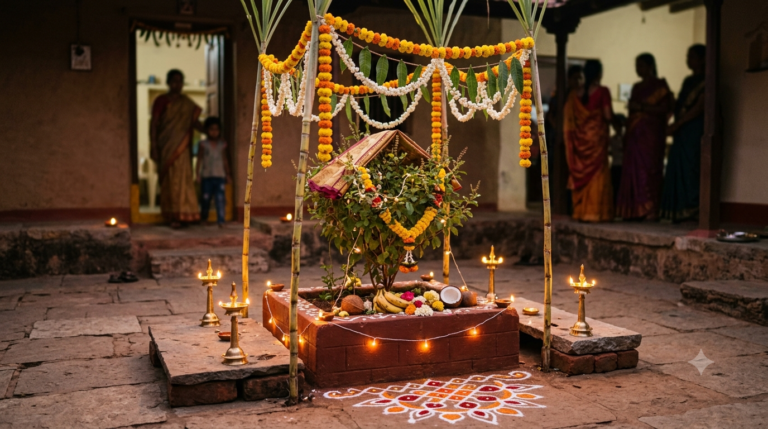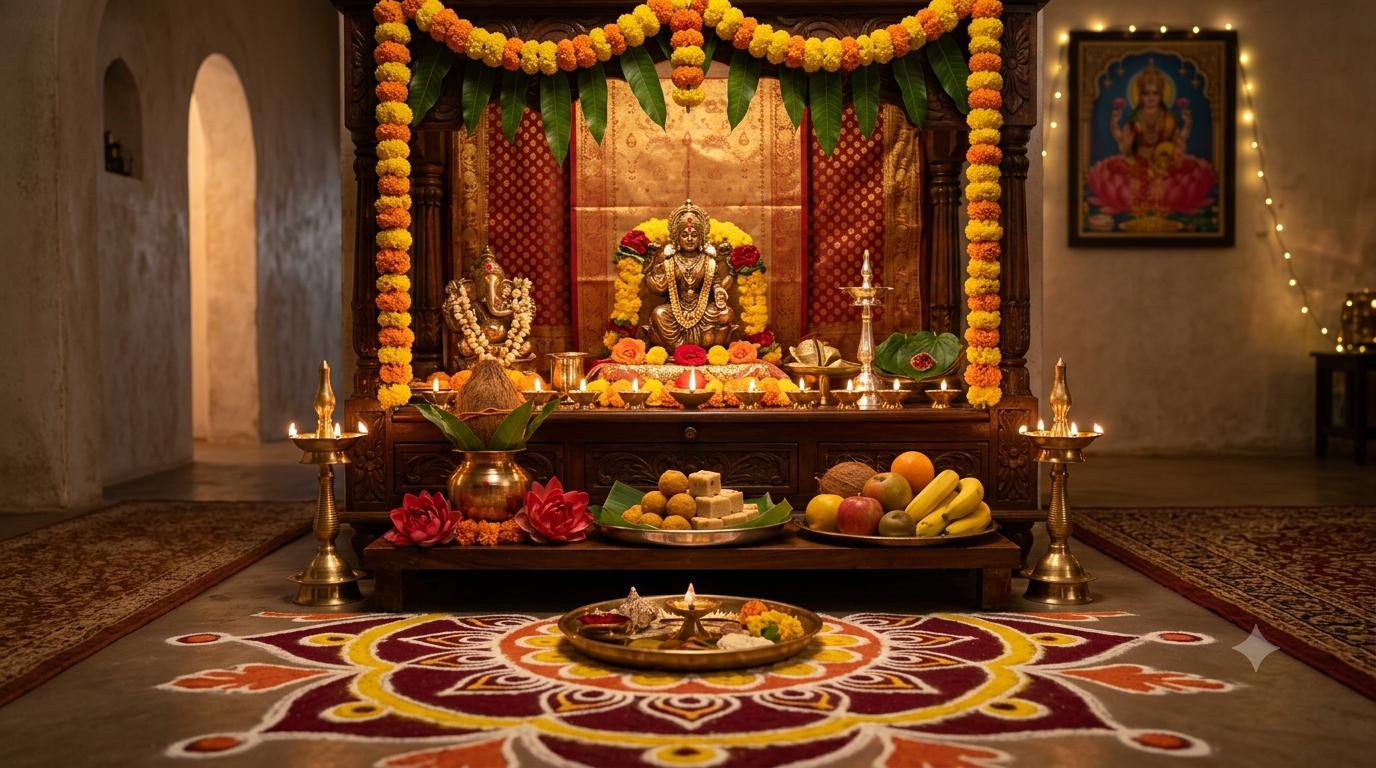
Diwali Lakshmi pooja 2026 is dated Sunday, 8 November by Telangana’s official calendar and Drik Panchang’s Lakshmi Puja guidance for Hyderabad. However, Sri Raghavendra Swamy Matha (SRS Matha) lists Deepavali Amavasya on Monday, 9 November. The date is therefore not universal across calendars and religious traditions. Check the panchang followed by your family before planning worship.
SriVyasaPooja.in is an independent devotional guide and is not affiliated with any temple, trust, panchang publisher, or government body. We do not accept pooja bookings, donations, or payments.
The surrounding dates need equal care. Dhanteras falls on 6 November in the cited Pradosh-based calendar, while Telangana lists Naraka Chaturdashi and Deepavali on 8 November. SRS Matha lists Naraka Chaturdashi on 8 November, Deepavali Amavasya on 9 November and Balipadya on 10 November. Other observances, including Govardhan Puja, also depend on local tradition.
Diwali Lakshmi Pooja 2026 at a Glance
Use this comparison before arranging the altar. The published festival dates differ by authority, while the exact puja clock-time also depends on your city.
- Telangana and Drik Panchang: Sunday, 8 November 2026 for Deepavali or Lakshmi Puja in the cited guidance.
- SRS Matha calendar: Monday, 9 November 2026 for Deepavali Amavasya.
- Amavasya tithi: Drik Panchang lists roughly 11:27 AM on 8 November through 12:31 PM on 9 November for Hyderabad. The tithi crosses two civil dates.
- Muhurat: use the Pradosh-period Lakshmi Puja window for your own city rather than one India-wide time.
- Telugu month name: Deepavali falls in Ashwayuja under the Amanta system used in Andhra Pradesh and Telangana.
- North Indian month name: many Purnimanta calendars call the same lunar phase Kartika Amavasya.
- Home worship: families commonly worship Ganesha and Lakshmi with lamps, flowers, naivedyam, and aarti according to family tradition.
Diwali Lakshmi Pooja 2026 Date and Local Muhurat
Under Drik Panchang’s Hyderabad guidance, families observing Diwali Lakshmi pooja 2026 perform evening worship on Sunday, 8 November. Its Amavasya tithi spans approximately 11:27 AM on 8 November to 12:31 PM on 9 November. Yet SRS Matha’s official festival list names Monday, 9 November as Deepavali Amavasya. These entries should be attributed to their sources, not collapsed into a single nationwide date.
There is no single nationwide Lakshmi Puja muhurat because sunset and lagna timings change with location. For example, Drik Panchang gives Hyderabad a Lakshmi Puja window of 6:07 PM to 8:08 PM, while Mumbai is 6:27 PM to 8:27 PM. Chennai is listed at 6:06 PM to 8:09 PM, so copying one city’s time across India is inaccurate.
Before the pooja, open a city-specific Lakshmi Puja panchang and change the location to your town. Then follow the timing shown for your chosen tradition. If your family follows a local purohit or a specific printed panchangam, use that tradition consistently rather than mixing systems.
Why this page does not publish one all-India muhurat
A national clock-time looks convenient, but it can be wrong by many minutes across India. Muhurta calculations use local sunset and other location-sensitive factors, so a Delhi value should not be copied into Hyderabad, Chennai, or Mumbai. Therefore, this guide gives the source-attributed dates and the method for finding the right local window.
Government holiday calendars can confirm a civil festival date, but they are not substitutes for a ritual panchang. The Telangana State 2026 calendar lists Deepavali on 8 November. In contrast, the official SRS Matha panchanga festival list specifies Deepavali Amavasya on 9 November. Devotees following SRS Matha should use their own Matha panchanga and guidance for observance, rather than adopting a Drik muhurat automatically.
Diwali 2026 Festival Calendar: Why Dates Differ
The surrounding dates are where older Diwali pages often go wrong. The table below separates source-specific dates from observances that can change by location or calendar rule.
| Festival | 2026 date | Important note |
|---|---|---|
| Dhanteras / Dhantrayodashi | Friday, 6 November | Pradosh worship is on the 6th in the cited calendar; local clock-time varies. |
| Naraka Chaturdashi | Sunday, 8 November for the cited Telugu observance | Pre-dawn Abhyanga Snanam is tied to local Chaturdashi timing. |
| Lakshmi Puja / Deepavali | 8 November (Telangana / Drik); Deepavali Amavasya 9 November (SRS Matha) | Follow the calendar and observance rule used by your tradition. |
| Govardhan Puja / Annakut | 9 or 10 November by location/tradition | Do not force one nationwide date; check the local Pratipada rule. |
| Bhai Dooj / Yama Dwitiya | Wednesday, 11 November in the cited panchang | Aparahna timing changes by city. |
Dhanteras on 6 November is supported by the Trayodashi evening rule, while the cited Bhai Dooj guidance gives 11 November. The unusual part is Govardhan Puja. Drik Panchang places it on 10 November for New Delhi, yet its Pune calculation places Govardhan Puja on 9 November, so the old one-date table was too rigid.
For a dedicated preparation list, see our Dhanteras pooja procedure. It explains the 6 November observance separately without mixing its muhurat into the Lakshmi Puja night.
Diwali Lakshmi Pooja 2026: Telugu vs North Indian Month Names
The search phrase Diwali Lakshmi pooja 2026 covers observances whose published civil dates are not always identical. One difference concerns month names: many North Indian Purnimanta calendars describe the tithi as Kartika Amavasya, while Telugu Amanta reckoning places the same lunar phase in Ashwayuja. Separately, the SRS Matha festival list puts Deepavali Amavasya on 9 November rather than 8 November.
Month naming and the choice of civil observance date are two distinct questions. The Purnimanta and Amanta systems name lunar months differently. Meanwhile, an institution’s festival list may apply its own observance convention. Drik Panchang’s day view can show Kartika under Purnimanta reckoning and Ashwina under Amanta reckoning on the same civil day.
When does Telugu Karthika Masam begin in 2026?
For Telugu devotees, Karthika Masam begins after the Deepavali Amavasya cycle rather than before it. Our refreshed Karthika Masam 2026 guide explains why the practical Telugu month begins on 10 November. The Telugu daily panchang for Tirupati also shows Karthikamu Shukla Padyami on 10 November. That distinction prevents the common error of calling the 8 November Lakshmi Puja night a Telugu Karthika Amavasya.
Use “Kartika Amavasya” when describing the relevant North Indian Purnimanta month convention. Use “Ashwayuja Amavasya” for Telugu Amanta naming. For a mixed audience, name the source alongside the date: Telangana and Drik select 8 November for their cited observances, whereas SRS Matha lists Deepavali Amavasya on 9 November.
Deepavali in Andhra Pradesh and Telangana
In Telugu households, Naraka Chaturdashi is a major part of Deepavali morning. Drik Panchang lists the Abhyanga Snanam observance on Sunday, 8 November for Andhra Pradesh locations such as Tanuku and Gudivada. Telangana’s state calendar also places Naraka Chaturdashi and Deepavali on 8 November.
Families commonly rise before sunrise, take an oil bath, wear fresh clothes, and light lamps according to household custom. The evening may then include Lakshmi worship, especially in homes that combine Telugu and wider pan-Indian Diwali practices. However, not every Telugu family follows the same Lakshmi-Ganesha ritual sequence, so family sampradaya should come first.
Why some calendars can still show 7 November
Chaturdashi begins during 7 November and continues into the morning of 8 November. Some civil calendars, community calendars, or alternate rule sets can therefore attach a Naraka Chaturdashi label to 7 November. For the pre-dawn Telugu Abhyanga Snanam rule, location-based panchangs such as Drik place the observance on 8 November in Andhra Pradesh.
This is why a date grid should not be copied without its rule. First identify the ritual, then check the tithi at the required time of day. That approach is more reliable than assuming every festival in the five-day sequence moves forward one Gregorian day.
How to Perform Diwali Lakshmi Pooja at Home
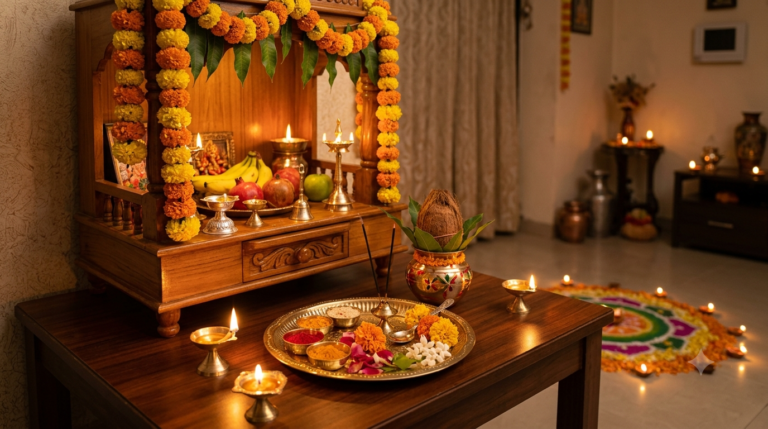
A home Lakshmi pooja can stay simple because sincerity and family tradition matter more than a long checklist. Prepare the space before the local muhurat begins, then keep the sequence calm and safe. If your household uses a priest or a family paddhati, follow that order instead.
- Clean the pooja space. Finish household cleaning early, then place a clean cloth on a stable altar or chowki.
- Arrange the deities. Place Lakshmi and Ganesha images or idols according to your family custom, then set a kalash if you use one.
- Light the lamp safely. Keep diyas on a heat-safe surface, away from curtains, children, pets, and loose clothing.
- Begin with your usual invocation. Many families worship Ganesha before Lakshmi, while regional paddhatis can differ.
- Offer simple upacharas. Flowers, kumkum, turmeric, akshata, incense, lamp, fruit, and sweets are common household offerings.
- Recite prayers or names. Use the Lakshmi stotra, ashtottara, mantra, or family prayer that you already follow.
- Offer naivedyam and perform aarti. Close the pooja with gratitude, then distribute prasadam to the family.
If you want a fuller Ganesha home-worship sequence, our Vinayaka Chavithi pooja vidhanam explains the basic upacharas in more detail. Do not force every Ganesh Chaturthi step into Diwali, though, because household Diwali paddhatis are often shorter.
Diwali Lakshmi Pooja 2026 Samagri List
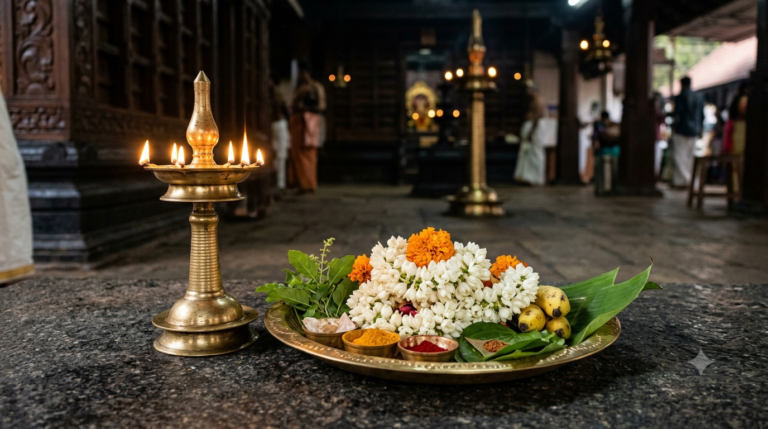
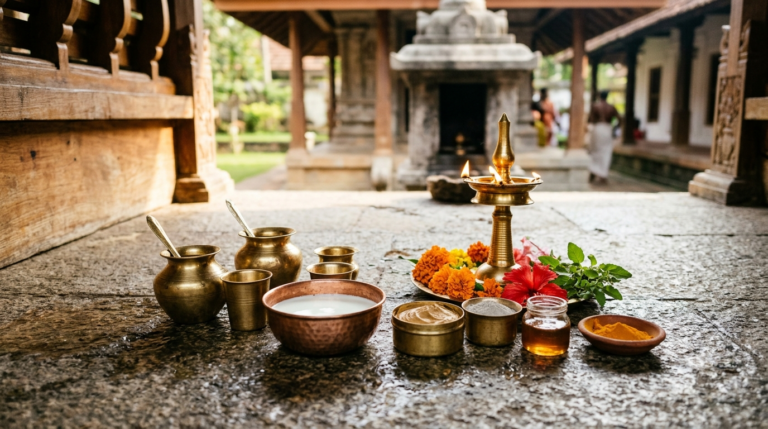
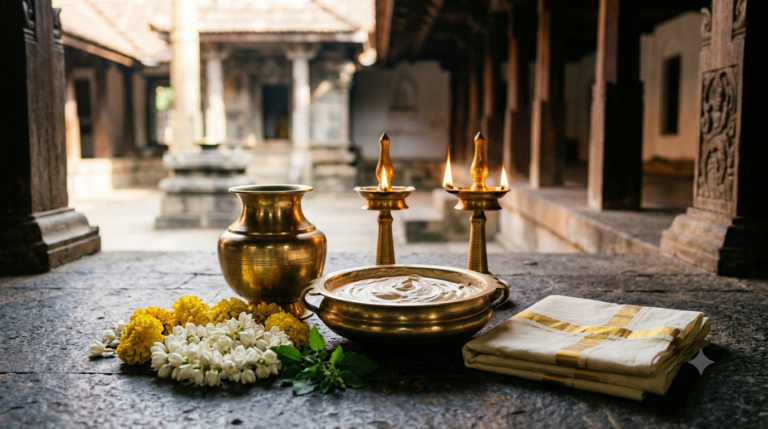
For Diwali Lakshmi pooja 2026, gather the essentials before the worship period chosen by your tradition. You can adapt the list because not every home uses all items.
- Images or idols of Goddess Lakshmi and Lord Ganesha.
- A clean altar cloth and stable chowki or table.
- Ghee or oil diyas, cotton wicks, and a safe lighting source.
- Fresh flowers such as lotus or marigold when available.
- Kumkum, turmeric, sandalwood paste, and akshata.
- Incense and camphor if your household uses them safely.
- A kalash, water, coconut, and leaves if included in your paddhati.
- Fruit, sweets, dry fruits, or another family naivedyam.
- Coins, account books, or business ledgers only where family tradition includes them.
A shortage of one decorative item does not invalidate a home pooja. Keep the worship practical and avoid last-minute unsafe substitutions. Most importantly, do not leave open flames unattended overnight merely because an online guide says a lamp “must” burn until morning.
Common Diwali 2026 Calendar Mistakes to Avoid
The biggest error is treating one regional calendar as a national calendar. A date may be correct for a ritual in one city yet differ from another observance with a different tithi rule. Therefore, always match the calendar to the ritual, location, and family tradition.
- Claiming every tradition observes Deepavali on 8 November. SRS Matha explicitly lists Deepavali Amavasya on 9 November.
- Calling 8 November “Kartika Amavasya” for every Indian tradition. Telugu Amanta month naming differs from Purnimanta naming.
- Publishing one India-wide Lakshmi Puja time. Hyderabad, Chennai, Mumbai, and Delhi do not share the same local Pradosh window.
- Listing Govardhan Puja on one date for all cities. Location-based calculations can place it on 9 or 10 November.
- Putting Bhai Dooj on 10 November. The cited panchang sources place the 2026 observance on 11 November.
- Using a government holiday list as a muhurat source. Holiday calendars mark civil closures, not detailed ritual windows.
What if two panchangams disagree?
First confirm that both panchangams are set to the same city. Next, check whether they use Amanta, Purnimanta, or a regional calendar and whether the festival depends on sunrise, sunset, Pradosh, or another rule. If your family consistently follows one panchang or purohit, use that tradition for the final religious decision.
Safety Notes for Lamps, Fireworks, and Fasting
Diwali worship should not create avoidable health or fire risks. Keep diyas on stable surfaces, supervise children around lamps and fireworks, and keep a suitable fire extinguisher nearby. Cotton clothing is generally safer around flames than loose synthetic fabric.
Fasting is optional in many households, so do not treat it as a test of devotion. If you are pregnant, elderly, diabetic, taking medicines, or managing another medical condition, ask your doctor before fasting. A lighter family observance is better than risking dehydration or low blood sugar.
Before You Begin Diwali Lakshmi Pooja 2026
Plan Diwali Lakshmi pooja 2026 by identifying your calendar first. Telangana’s holiday list and Drik’s Hyderabad Lakshmi Puja guidance use 8 November, while the SRS Matha festival calendar records Deepavali Amavasya on 9 November. The city-specific muhurat and Amanta/Purnimanta month names are separate questions. Both deserve clear source labels.
Check your city on a reliable panchang before worship, then prepare the altar and samagri early. If you also observe Kedara Gowri Vratam, our Kedara Gowri Vratam guide</a covers the associated observance separately. Keep each ritual’s rule distinct instead of merging every Diwali custom into one generic checklist.
Diwali Lakshmi Pooja 2026: Frequently Asked Questions
What date is Diwali Lakshmi pooja 2026?
Telangana’s official calendar and Drik Panchang’s Hyderabad guidance place Diwali Lakshmi pooja 2026 on Sunday, 8 November. However, SRS Matha’s official calendar lists Deepavali Amavasya on Monday, 9 November. Follow the date and worship instructions of your own panchang tradition.
Why does SRS Matha list Deepavali Amavasya on 9 November?
SRS Matha’s official Sri Parabhava Samvatsara festival list specifies Deepavali Amavasya on Monday, 9 November, after Naraka Chaturdashi on Sunday, 8 November. Telangana’s holiday calendar and Drik Panchang’s Hyderabad Lakshmi Puja page instead use 8 November for their named observances. The sources do not give one common date, so follow the authority relevant to your tradition.
Is Diwali 2026 Kartika Amavasya or Ashwayuja Amavasya?
Both month labels appear because Purnimanta and Amanta systems name lunar months differently. North Indian Purnimanta calendars commonly use Kartika, while Telugu Amanta calendars use Ashwayuja for this lunar phase. This distinction does not settle the separate 8-versus-9 November observance difference shown by Telangana, Drik and SRS Matha.
What is the Lakshmi Puja muhurat for all of India?
There is no single correct nationwide clock-time. The Lakshmi Puja window changes with your city because Pradosh and lagna timings depend on local astronomical conditions. Use a location-based panchang, then follow your family’s established tradition.
When is Naraka Chaturdashi in Andhra Pradesh and Telangana in 2026?
For Telugu pre-dawn observance, location-based panchangs place Naraka Chaturdashi on Sunday, 8 November 2026. Chaturdashi begins on 7 November and continues into the morning of the 8th, which explains why some calendars show a different civil label.
When is Dhanteras in 2026?
The cited Pradosh-based panchang places Dhanteras on Friday, 6 November 2026. The worship is linked to Trayodashi and Pradosh, so the exact evening muhurat depends on your city. Check a location-based panchang instead of copying another city’s time.
When is Govardhan Puja after Diwali 2026?
Govardhan Puja can fall on 9 or 10 November 2026 depending on location and the rule followed. Drik Panchang, for example, places New Delhi on 10 November while Pune can resolve to 9 November. Confirm your local calendar before planning Annakut.
When is Bhai Dooj in 2026?
The cited panchang guidance places Bhai Dooj on Wednesday, 11 November 2026. The tilak or Aparahna time still varies by city, so use a local panchang if you want the traditional timing. Do not assume the same date and time apply to every tradition.
Does Telugu Karthika Masam start on Deepavali day?
No. In the Telugu Amanta calendar, Deepavali falls in Ashwayuja, and Karthika begins after that Amavasya cycle. For 2026, the cited Tirupati Telugu panchang shows Karthikamu Shukla Padyami on 10 November, not on the 8 November Lakshmi Puja night.
Can I perform Lakshmi Pooja at home without a priest?
Yes, many families perform a simple home Lakshmi pooja without a priest. Use the prayers and sequence your family knows, keep offerings simple, and focus on safe lamp use. If a formal sankalpa or detailed paddhati matters to you, consult your family purohit.