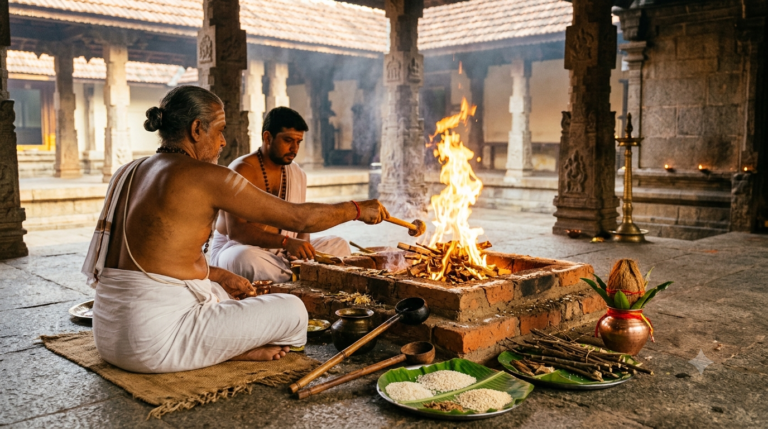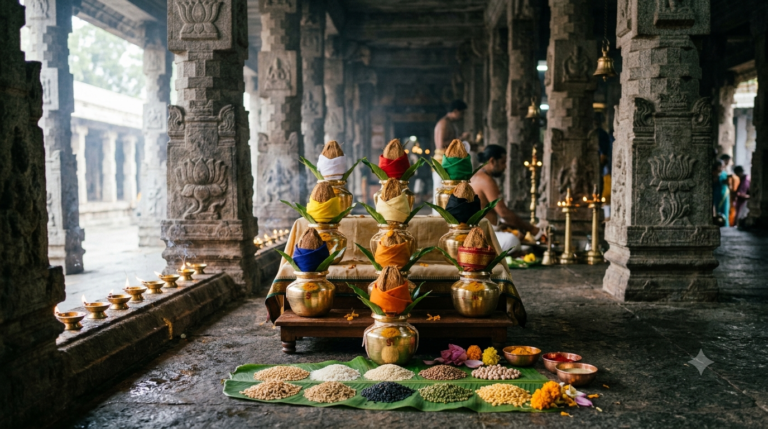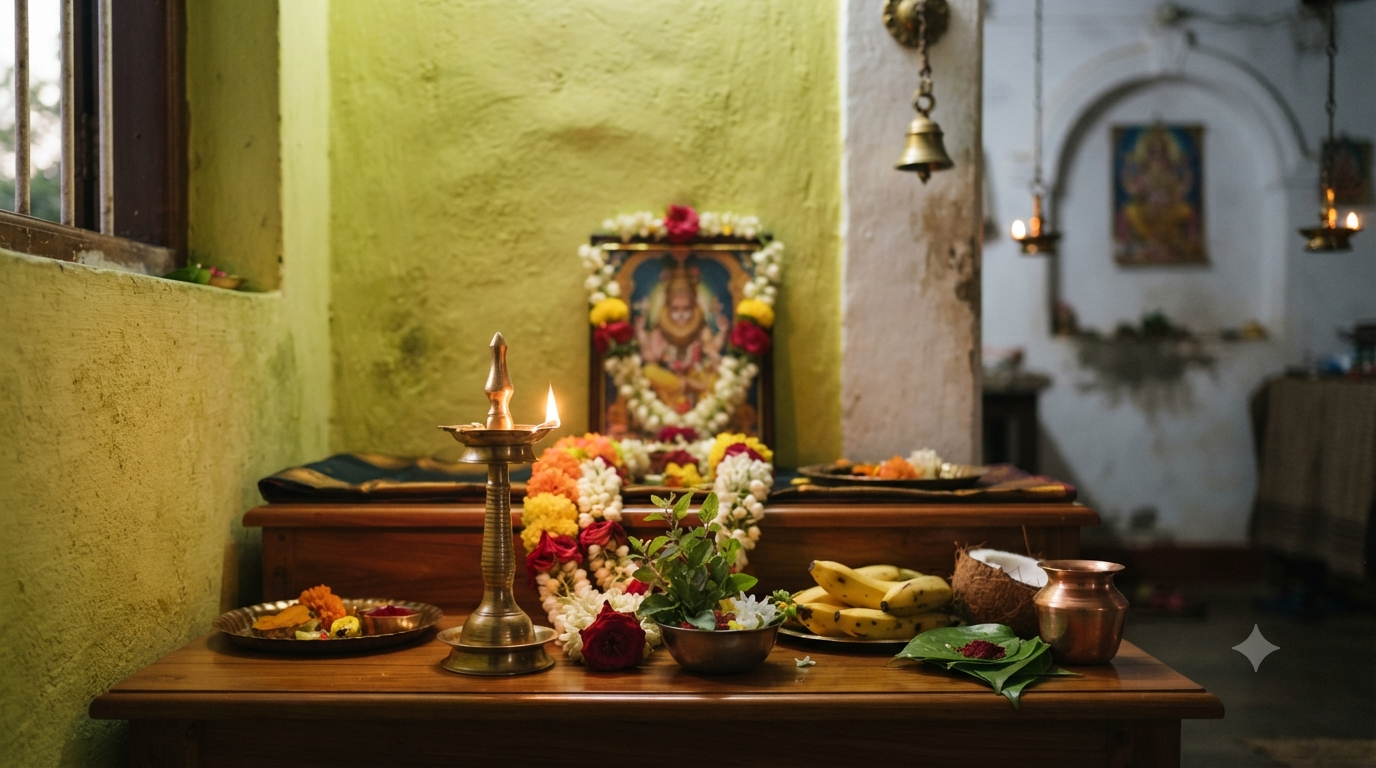
Narasimha Jayanti Home Puja can be observed with a simple, sincere puja centred on Lord Narasimha, the half-man, half-lion form of Lord Vishnu. The festival remembers his appearance to protect Prahlada and defeat Hiranyakashipu. For a traditional vrata, the key details are the Vaishakha Shukla Chaturdashi tithi, the evening worship window, and the next-day parana.
Sri Vyasa Pooja is an independent devotional guide. We are not affiliated with any temple or trust, and we do not accept bookings, poojas, donations, or payments. For temple sevas or official arrangements, use the relevant temple or government portal only.
Narasimha Jayanti Home Puja: Quick Facts
- Festival: Narasimha Jayanti, also called Narasimha Chaturdashi, marks the appearance of Lord Narasimha.
- Tithi: Vaishakha Shukla Chaturdashi, the 14th lunar day of the bright fortnight of Vaishakha.
- Next date: Tuesday, 18 May 2027 for the India-based festival calendar. Local puja timings vary by city.
- Main worship: evening, during Sayana Kala or the local sunset-linked worship period while Chaturdashi prevails.
- Traditional vrata: one meal on the previous day, grain-free fasting on Jayanti, evening worship, then parana on the next day at the prescribed time.
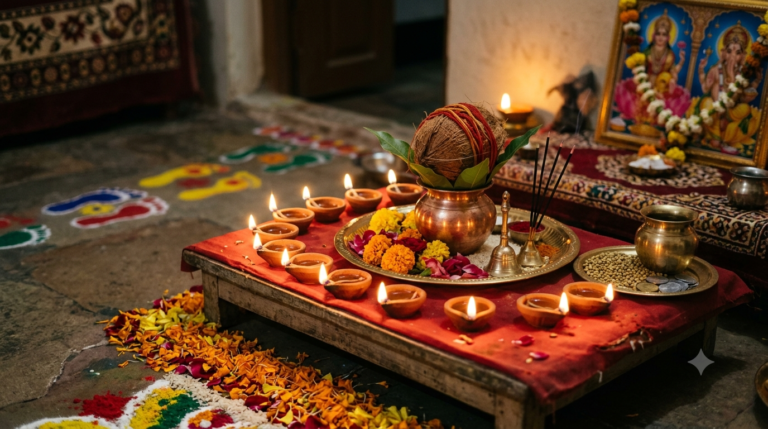
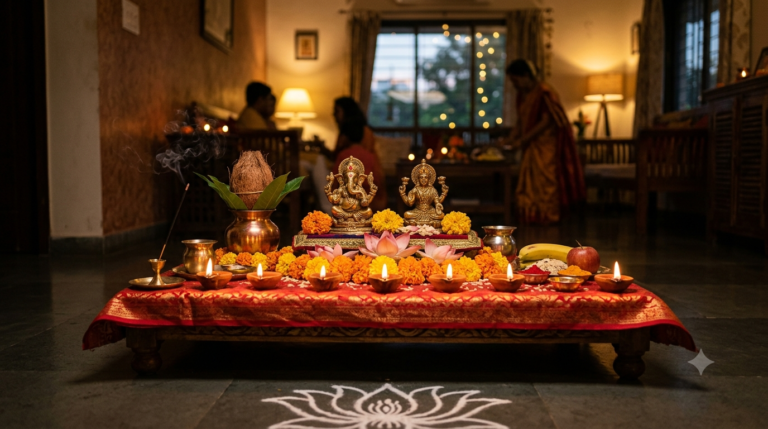
- Home worship: a lamp, flowers, tulsi, fruit, simple naivedyam, mantra japa, and the Prahlada-Narasimha story are enough for a modest household observance.
For Narasimha Jayanti Home Puja, two independent panchang references currently place the 2027 festival on 18 May. Drik Panchang also notes that sankalpa, Sayana Kala puja, and parana timings are location-specific, so choose your city before using any clock time. Check the current Drik Panchang Narasimha Jayanti page and cross-check the date on the Indian Panchang 2027 festival calendar.
Why Narasimha Jayanti Is Significant
The central meaning of Narasimha Jayanti is protection of dharma when ordinary solutions seem impossible. In the Bhagavata Purana account, Prahlada remains devoted to Vishnu despite repeated threats from his father, Hiranyakashipu. When the king challenges Prahlada and points to a pillar, the Lord appears in the unprecedented form of Narasimha.
The form itself answers the conditions of Hiranyakashipu’s boon. Narasimha is neither man nor ordinary beast, and the killing happens at the threshold during evening twilight. The Lord places Hiranyakashipu on his lap and uses his nails rather than a conventional weapon. The Srimad-Bhagavatam, Canto 7, Chapter 8 preserves this narrative in detail.
For devotees, that story gives the festival its emotional force. Narasimha represents courage, refuge, and the protection of sincere devotion. This is why Narasimha Jayanti Home Puja is often centred on courage and refuge. Claims about removing fear, negativity, or obstacles should be understood as matters of faith and tradition, not guaranteed outcomes.
When to Perform Narasimha Jayanti Home Puja
Narasimha Jayanti falls on Vaishakha Shukla Chaturdashi, so its Gregorian date changes every year. For 2027, the India-based observance falls on Tuesday, 18 May. However, the exact Sayana Kala, Madhyahna sankalpa window, tithi ending time, and parana time change with location.
The traditional sequence gives special weight to the evening because Narasimha’s appearance is associated with the transition between day and night. Drik Panchang advises taking the vrata sankalpa during Madhyahna and performing the main worship during Sayana Kala before sunset. Therefore, do not copy a clock time from another city or from a previous year.
Practical rule: use the festival date as a national planning reference, but use your own city’s panchang for the actual puja and parana clock times.
What You Need for Narasimha Jayanti Home Puja
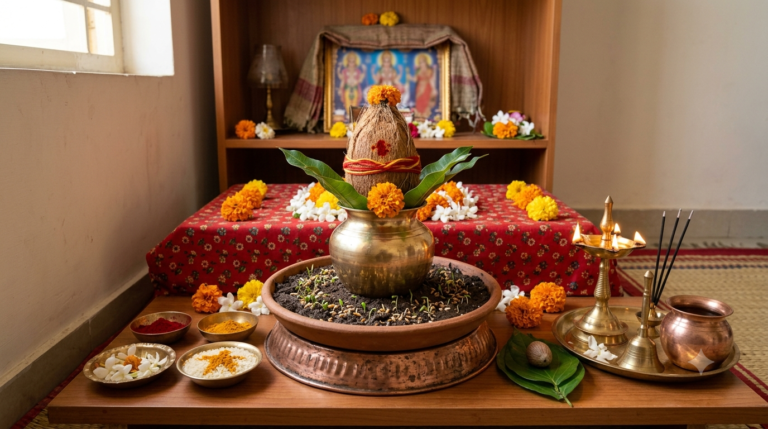
For Narasimha Jayanti Home Puja, a simple household observance does not need an elaborate shopping list. Prepare the altar before the evening worship so you are not searching for items during the vrata. If your family follows a particular sampradaya, give that inherited procedure priority over a generic internet checklist.
| Category | Simple home option | Important note |
|---|---|---|
| Deity | Photo or suitable murti of Narasimha or Lakshmi Narasimha | Use what your family normally worships |
| Lamp | Ghee or oil diya with cotton wick | Keep it on a stable, fire-safe surface |
| Offerings | Fresh flowers, tulsi, sandalwood, akshata | Local family custom may differ |
| Naivedyam | Fruit, jaggery, coconut, or a simple sattvic sweet | Avoid tasting before offering |
| Chanting | Narasimha mantra, stotra, or Vishnu nama japa | Clear, attentive recitation matters more than a forced count |
| Abhishekam | Only for a murti made and maintained for ritual bathing | Do not pour liquids on framed pictures, painted icons, wood, or unsuitable materials |
Tulsi is a natural choice in Vishnu worship, while fresh flowers and a simple sattvic offering keep the ritual manageable. Some South Indian families also offer panakam, but this is a regional devotional custom rather than a universal requirement.
How to Observe Narasimha Jayanti Home Puja Step by Step
This sequence is suitable for a modest household observance. It is not a substitute for a temple agama procedure or a priest-led formal vrata. Keep the steps simple, and follow your family tradition if it differs.
- Clean the worship space. Bathe, wear clean clothes, and prepare the altar before the main worship period.
- Set the deity and lamp. Place the photo or murti securely, then light the diya and incense if you use it.
- Take sankalpa. State your intention to observe Narasimha Jayanti with devotion. If you are following a formal vrata, use the local Madhyahna timing and the wording taught in your tradition.
- Begin with dhyana. Sit quietly and remember Lord Narasimha and Prahlada. A short Vishnu or Narasimha invocation is sufficient for a simple home puja.
- Offer water, flowers, tulsi, and sandalwood. Keep the offerings clean and modest. Do not add ritual substances simply because an online checklist mentions them.
Evening Worship and Closing Steps
- Perform abhishekam only when appropriate. If you have a metal or stone murti intended for bathing, follow the care normally used in your home. Otherwise, skip abhishekam and offer flowers instead.
- Chant or read. Recite “Om Namo Bhagavate Narasimhaya,” another mantra taught in your lineage, or read the Prahlada-Narasimha episode from the Bhagavata Purana.
- Offer naivedyam and aarti. Complete the main worship during the local evening period, then offer the lamp with attention and prayer.
- Close with namaskara. Offer your final prayer. If you are keeping the formal vrata, continue it until the correct next-day parana time.
For related chanting, the site’s Narasimha Sahasranamam guide explains the thousand-name hymn and its devotional use. Families planning a priest-led fire ritual should treat that as a different observance and can read the separate Lakshmi Narasimha Homam guide.
Fasting Rules for Narasimha Jayanti Home Puja
The traditional Narasimha Jayanti vrata is closer to Ekadashi discipline than to a casual “fast until evening.” Established panchang guidance says devotees take one meal on the day before Jayanti, avoid grains and cereals during the festival fast, worship in the evening, and perform parana the next day at the prescribed time. That sequence is more precise than many simplified online summaries.
A strict vrata may involve a full fast, while some households permit fruit, milk, or other light foods according to health, lineage, and local custom. Do not present a partial fast as identical to the strict vrata. Instead, treat it as a practical adaptation when a full fast is unsuitable.
Health note: a waterless fast can be unsafe for some people. Pregnant devotees, children, older adults, people with diabetes, anyone taking medicines, and anyone with a medical condition should avoid extreme fasting unless a qualified clinician says it is safe. Devotion can continue through japa, reading, and a simple sattvic diet.
When Should the Fast Be Broken?
Parana is normally done on the next day, not immediately after the evening aarti. The precise rule depends on when Chaturdashi ends and how long it continues after sunrise. Because that calculation is location-sensitive, check the parana window for your city rather than using a generic time copied from social media.
Mantras and Readings for Narasimha Jayanti Home Puja
During Narasimha Jayanti Home Puja, there is no need to chase a dramatic mantra count if that makes the worship rushed. Clear pronunciation, attention, and a steady pace are more useful than forcing 108 repetitions without focus. Use the mantra or stotra your family already knows whenever possible.
- Simple nama mantra: “Om Narasimhaya Namah.”
- Common invocation: “Om Namo Bhagavate Narasimhaya.”
- Narasimha Kavacham: recited by many devotees as a protective hymn.
- Lakshmi Narasimha Karavalamba Stotram: a popular devotional stotra in the Lakshmi Narasimha tradition.
- Vishnu Sahasranama: suitable for families that already include it in regular Vishnu worship.
- Bhagavata Purana, Canto 7: reading the Prahlada narrative gives the day scriptural context beyond ritual steps.
If Sanskrit pronunciation is difficult, read the meaning in a language you understand. A careful reading of the story can be more meaningful than hurried recitation of a text you cannot follow.
Cooling Offerings: Tradition, Not a Universal Rule
Panakam, buttermilk, tender coconut, and sandalwood often appear in South Indian Narasimha worship. Many devotees understand these as cooling offerings connected with the deity’s fierce form and with the hot Vaishakha season. However, this custom should be framed as regional devotional practice rather than a compulsory rule stated in the core Prahlada narrative.
If panakam belongs to your family tradition, offer a clean preparation of jaggery water with the spices your household normally uses. Otherwise, fruit or a simple sattvic sweet is sufficient. The important distinction is between a meaningful local custom and a rule every devotee must follow.
Common Mistakes and Myths to Avoid
- Using last year’s date or city timing. Narasimha Jayanti follows a lunar tithi, so the English date and puja clock times change.
- Breaking a formal vrata immediately after aarti. Traditional parana is next day at the prescribed time.
- Calling every partial fast the strict vrata. Health-friendly adaptations are valuable, but they are not identical to the stricter observance.
- Pouring abhishekam liquids over any image. Only bathe a murti suitable for ritual washing.
- Believing payment is required for home worship. A simple home puja needs no online booking or private payment.
- Treating regional offerings as compulsory. Panakam and other cooling foods are meaningful customs, not universal prerequisites.
- Turning faith claims into guarantees. Protection, courage, and removal of obstacles belong to devotional belief, not promised outcomes.
What If You Cannot Complete Narasimha Jayanti Home Puja?
A full ritual is not guaranteed to fit every household’s schedule, health, or level of training. If you cannot perform the complete vrata, keep the observance honest rather than pretending a shortened version is the same formal procedure. Light a lamp, offer a flower or fruit, chant the Lord’s name, and read the Prahlada story.
If you miss the formal Sayana Kala window, you can still pray and chant that day. However, do not label a later convenience-time puja as the exact prescribed muhurat. Similarly, if fasting is unsafe, use a health-appropriate diet and keep the devotional part of the observance.
If you want a temple observance instead, use the temple’s own official information. For example, pilgrims considering Simhachalam can verify temple information through the Sri Varaha Lakshmi Narasimha Swamy Devasthanam website. Do not pay an unofficial site merely because it uses temple imagery or a religious name.
Before You Begin
Narasimha Jayanti Home Puja works best when the ritual stays accurate, modest, and focused. Check the correct tithi and local evening window, prepare your altar early, and choose a fasting level that is safe for your health. If your family has an established vrata method, follow that tradition over a generic online sequence.
For 2027, plan around Tuesday, 18 May, but confirm the city-specific puja and parana timing closer to the festival. Most importantly, keep the core story in view: Prahlada’s steadfast devotion and Narasimha’s protection are the reason the day is observed at all.
Frequently Asked Questions
Can I Perform Narasimha Jayanti Home Puja Without a Priest?
Yes. A simple household observance can include a lamp, flowers, tulsi, fruit, mantra japa, aarti, and reading the Prahlada story. A priest is useful when your family wants a formal vrata, detailed Sanskrit sankalpa, homam, or lineage-specific procedure.
When Is Narasimha Jayanti in 2027?
Narasimha Jayanti falls on Tuesday, 18 May 2027 in India-based festival calendars checked for this refresh. The observance is Vaishakha Shukla Chaturdashi. Exact Sayana Kala, sankalpa, tithi-end, and parana timings vary by location, so use a city-specific panchang.
What Is the Best Time for Narasimha Jayanti Puja?
The main traditional worship is in the evening, during Sayana Kala before sunset while Chaturdashi prevails. The exact clock time changes by city. Therefore, use your local panchang rather than a nationwide time copied from another website.
Is Fasting Compulsory on Narasimha Jayanti?
Fasting is a traditional part of the vrata, but health comes first. Strict observance usually follows Ekadashi-like discipline, while people who cannot safely fast may use fruit, milk, or a light sattvic diet according to family custom and medical advice.
When Should I Break the Narasimha Jayanti Fast?
Traditional parana is done on the next day at the appropriate time, not automatically after the evening aarti. The exact window depends on when Chaturdashi ends. Check the parana rule and clock time for your own city.
What Should I Offer to Lord Narasimha at Home?
Fresh flowers, tulsi, fruit, sandalwood, and a simple sattvic naivedyam are enough for a modest home puja. Some South Indian families also offer panakam or other cooling foods. Those additions are regional customs rather than universal requirements.
Can I Perform Abhishekam to a Narasimha Photo?
No. Do not pour milk, water, or panchamrit over a framed photo or an image not made for ritual bathing. If your murti is suitable for abhishekam and your household normally performs it, follow the correct care for that material.
What Is the Difference Between Narasimha Jayanti and Narasimha Chaturdashi?
They refer to the same observance. “Narasimha Chaturdashi” highlights the Vaishakha Shukla Chaturdashi tithi on which the festival falls. “Narasimha Jayanti” highlights the appearance of Lord Narasimha.
Is Panakam Compulsory for Narasimha Jayanti?
No. Panakam is a valued offering in many South Indian households, especially during hot-season Vishnu and Narasimha worship. It is not a universal condition for a valid home puja, so a simple fruit or sattvic sweet offering is also appropriate.