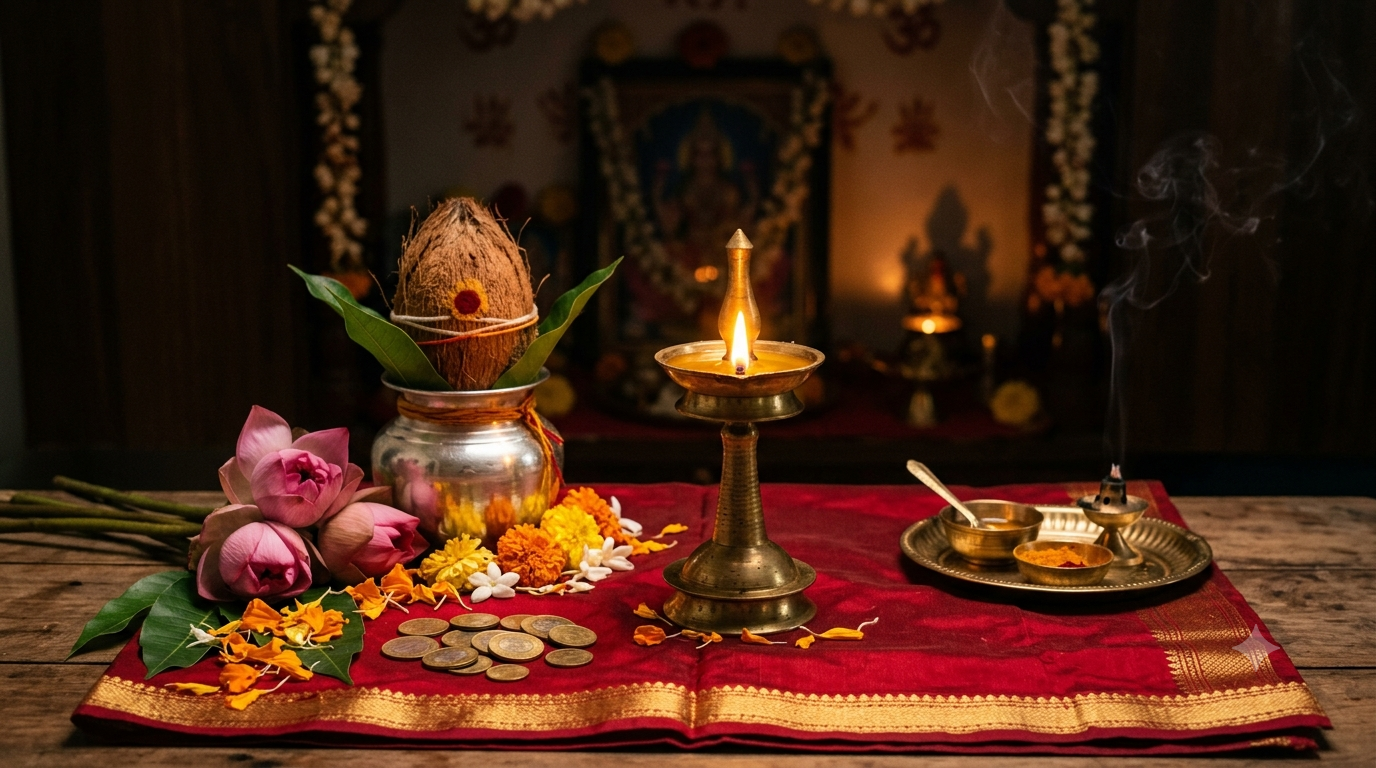
The Lakshmi Hrudayam Stotram is one of the most powerful prosperity hymns in the Vaishnava tradition. Yet most people chant only half of it. Search online, and you will find dozens of “Lakshmi Hrudayam PDF” pages. They hand you the goddess’s verses in isolation.
Here is the correction almost every guide skips. The scripture itself says these verses bear no fruit when recited without their companion Narayana Hrudayam. So chanting them alone quietly breaks the very first rule. This guide explains what the hymn is, where it comes from, why it must travel as a pair, and how to begin correctly.
Sri Vyasa Pooja is an independent devotional guide. We are not affiliated with any temple, mutt, or trust. We do not sell books, take bookings, or accept payments. Where we mention a text or seva, we point you to a reputable published source or the temple’s official channel.
Lakshmi Hrudayam Stotram at a Glance
- What it is: a Sanskrit hymn to Goddess Mahalakshmi, paired with the Narayana Hrudayam.
- Source: the Atharva Rahasya, the secret portion of the Atharva Veda.
- Attributed sage (rishi): Bhargava, while the meter is Anushtup.
- Length: the Lakshmi Hrudayam runs to 108 verses, whereas the Narayana Hrudayam has 37.
- Best day: Friday (Bhargava vasara), traditionally at night.
- Golden rule: never recite it alone, so always sandwich it between the Narayana Hrudayam.
What Is the Lakshmi Hrudayam Stotram?
The Lakshmi Hrudayam Stotram is a devotional hymn to Goddess Mahalakshmi. She is the deity of wealth, fortune, and abundance. Because the word hrudayam means “heart,” the title reads as “the heart of Lakshmi.” Devotees chant it to seek her grace. Tradition treats it as a direct, intimate appeal to the goddess.
It never travels alone, though. This hymn forms one half of a larger prayer, the Sri Lakshmi Narayana Hrudayam. The other half praises Lord Narayana. Together, the two make a single, unified worship of the divine couple.
Where the Lakshmi Hrudayam Stotram Comes From
Both hymns come from the Atharva Rahasya, literally “the secret Atharva.” This is a hidden section linked to the Atharva Veda. Since the text warns against sharing it carelessly, it stayed a closely guarded prayer for centuries. That secrecy is written into the verses themselves.
The tradition attributes the hymn to the sage Bhargava. It follows the Anushtup meter. According to Hindu scholarly sources, the Narayana Hrudayam has 37 verses, while the Lakshmi Hrudayam is longer at 108. Because 108 is auspicious across Hindu practice, the count is rarely a coincidence.
The two hearts, one prayer
So why pair a hymn to Lakshmi with a hymn to Narayana? The tradition sees the two as inseparable. Narayana is the sustaining Lord, while Lakshmi is his power in creation.
When you chant them as one prayer, you express that oneness. The pairing is theological, not merely stylistic.
Why You Should Never Chant the Lakshmi Hrudayam Alone
This is the most important, and most ignored, instruction in the whole practice. The correct method is a “sandwich” recitation.
First chant the Narayana Hrudayam. Then chant the Lakshmi Hrudayam. Then chant the Narayana Hrudayam once more. Tradition calls this combined form the sankalita, or unified, recitation.
The scripture is blunt about the reason. It warns that reciting the Lakshmi Hrudayam without the Narayana Hrudayam turns the whole effort fruitless. The goddess herself grows displeased. So the pairing is not optional decoration, because it is the core rule.
Yet countless websites still publish the Lakshmi Hrudayam as a standalone “quick wealth mantra.” A devotee who follows those pages chants sincerely for weeks. All the while, he unknowingly breaks the text’s first condition. If you take one thing from this guide, take this. The two hymns always move together.
Significance of the Lakshmi Hrudayam Stotram
The deeper significance of the Lakshmi Hrudayam Stotram lies in what “wealth” really means here. The goddess grants aishwarya, and aishwarya reaches far beyond money. It covers health, prosperity, courage, success, and inner steadiness. So the hymn becomes a prayer for a complete, flourishing life, not a cash windfall.
The hymn also carries a philosophical weight. It presents Lakshmi as the indwelling energy of Narayana.
She is the active grace through which the formless divine touches daily life. When you chant it, tradition holds that you align with that flow of grace. You are never merely bargaining for a favour.
Friday matters especially, because it is Bhargava vasara, the day linked to the goddess. Many families light a lamp and sit before an image of Mahalakshmi. They chant on Friday evenings as a settled weekly rhythm. If you already keep a Diwali Lakshmi Pooja at home, this hymn extends the same devotion through the year.
Benefits of the Lakshmi Hrudayam Stotram, as Tradition Holds
Traditional texts list generous rewards for sincere recitation. Still, these are matters of faith and Vedic tradition, not guaranteed financial outcomes. So treat them as devotional belief rather than a promise. The table below summarises what the tradition associates with the practice.
| Aspect | What tradition associates with it |
|---|---|
| Material life | Relief from poverty, plus growth of grain, gold, and household prosperity |
| Inner life | Courage, steadiness of mind, and freedom from anxiety |
| Family | Well-being of the household and continuity of good fortune |
| Protection | A guarded home where the sacred books are kept and honoured |
Faith aside, a word of grounded honesty helps here. This is a devotional practice, not financial advice.
So chanting cannot replace sensible planning, savings, or honest work. Even so, devotees across generations have found calm and focus in the discipline. That steadiness is itself a real benefit.
How to Chant the Lakshmi Hrudayam Stotram
The practice has a clear structure, so following it matters more than speed. Here is the traditional sequence that a devotee follows.
- Prepare: bathe first, sit facing east or north, and light a lamp before an image of Mahalakshmi.
- Perform the opening rites: the text begins with nyasa (placing mantras on the body) and a dhyana (a visualisation of the goddess).
- Recite in order: Narayana Hrudayam first, then the Lakshmi Hrudayam, then the Narayana Hrudayam again.
- Chant with attention: keep the pronunciation careful, because the hymn depends on sound and intent, not haste.
- Close with gratitude: finally, offer thanks and a simple prayer for the well-being of all.
The goddess’s seed sound is Shreem. Many practitioners feel the hymn resonate most when the mind is quiet. So start slow, and let familiarity build over the weeks.
The role of a guru and the question of eligibility
Classical practice insists that you learn a powerful stotram like this from a guru. A teacher corrects pronunciation and, in the traditional view, “empowers” the recitation.
Where a teacher is genuinely unavailable, elders often advise a humble start. Begin at a temple, and pray for guidance first. The point is respect for the text, not exclusion.
How many times, and how long?
The verses describe a purascharana, an intensive round of 5,000 recitations. This establishes the practice formally.
Some verses mention chanting on five successive Friday nights. Others suggest once, twice, or thrice daily with devotion. Do not fixate on the arithmetic, though, because consistency and sincerity outrank a raw count.
A Simple Friday Practice at Home
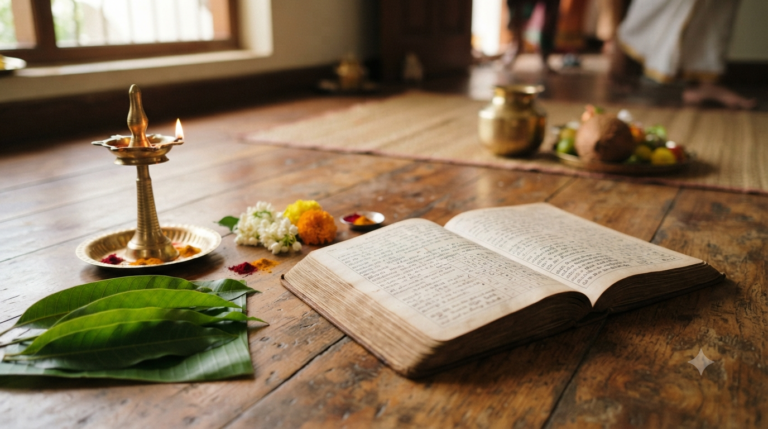
You do not need an elaborate setup to begin. A clean corner, a lamp, and a fixed time are enough. Pick a Friday evening and keep it steady each week. Sit calmly, and settle the mind before you start.
Play a trusted recording softly if you are still learning the words. Follow the correct order every single time. Close with a moment of silence and gratitude. Over a few weeks, the rhythm becomes second nature, and the practice starts to feel like home.
The “Secret” Instruction, Explained Simply
Older sources repeat that you should keep this hymn “secret” and never teach it carelessly. That can sound off-putting today, so the intent is worth understanding. The instruction protects the practice from becoming a cheap wealth trick. It asks the devotee to approach with seriousness and a proper foundation.
In practice, this simply means learning it well and chanting it respectfully. It also means never reducing a profound prayer to a viral “money mantra.” Understood that way, the secrecy is really a call to sincerity.
Lakshmi Hrudayam vs Other Lakshmi Prayers
Devotees new to Lakshmi worship often confuse several popular prayers. A quick comparison clears the fog, so you can choose what fits your practice.
- Lakshmi Hrudayam: the paired, esoteric hymn from the Atharva Rahasya, always recited with the Narayana Hrudayam.
- Kanakadhara Stotram: Adi Shankaracharya’s shorter, hugely popular hymn for prosperity, and easy for daily use.
- Sri Suktam: a Vedic hymn to Lakshmi, central to formal abhishekam and homa rituals.
- Mahalakshmi Ashtakam: an eight-verse praise, simple and widely chanted on Fridays and at Diwali.
If you want a gentle daily start, then the Kanakadhara Stotram or the Ashtakam suits beginners well. The Lakshmi Hrudayam asks for a deeper commitment. It rewards patience and proper method. Many devotees also pair such hymns with festival worship, such as an annual Ayudha Puja, to keep the goddess central through the year.
Common Mistakes to Avoid
A few recurring errors trip up sincere devotees, yet each one is easy to fix.
- Chanting the Lakshmi Hrudayam alone — since the text calls this fruitless, always pair it with the Narayana Hrudayam.
- Rushing the verses to “finish faster,” when attention matters far more than speed.
- Treating it as a guaranteed money spell, although it remains a devotional prayer, not a transaction.
- Ignoring pronunciation — because sound carries the hymn, learn from a guru or a careful recording.
Before You Begin
The Lakshmi Hrudayam Stotram is a profound, time-honoured prayer. It rewards devotees who approach it whole rather than in fragments. Remember the essentials. Recite it with the Narayana Hrudayam, and keep Friday as your anchor day.
Learn the pronunciation properly, and hold the benefits as tradition rather than a promise. For the full Sanskrit verses, use a reputable edition or an established stotra library rather than a random download. Begin steadily, and let the practice deepen over time.
Frequently Asked Questions
Can I chant the Lakshmi Hrudayam Stotram alone?
No. The scripture states plainly that the Lakshmi Hrudayam recited without the Narayana Hrudayam stays fruitless. So always chant it as a pair: Narayana Hrudayam, then Lakshmi Hrudayam, then Narayana Hrudayam again.
Which day is best for chanting?
Friday, known as Bhargava vasara, is traditionally the goddess’s day. Many devotees chant on Friday nights, while some maintain a daily practice too.
How many times should it be recited?
Tradition describes a purascharana of 5,000 recitations to establish the practice formally. In daily life, though, sincere and consistent chanting matters far more than an exact number.
Where does the Lakshmi Hrudayam Stotram come from?
It comes from the Atharva Rahasya, the secret portion linked to the Atharva Veda. The tradition attributes it to the sage Bhargava, and it follows the Anushtup meter.
Do I need a guru to learn it?
Classical practice strongly recommends learning it from a guru who can teach correct pronunciation. If a teacher is unavailable, then begin humbly, use a careful recording, and pray for guidance first.
Is the Lakshmi Hrudayam the same as the Kanakadhara Stotram?
No. The Kanakadhara Stotram is a separate, shorter prosperity hymn by Adi Shankaracharya. The Lakshmi Hrudayam is a longer, paired hymn from the Atharva Rahasya with its own strict method.
Will chanting it make me wealthy?
Tradition associates it with prosperity, courage, and well-being, yet these are matters of faith, not guaranteed outcomes. Treat it as devotion, and never as a replacement for practical financial planning.
Can women chant the Lakshmi Hrudayam Stotram?
Yes. The tradition sets no gender bar on devotion to Mahalakshmi. Both men and women recite this hymn, so learn the pronunciation carefully and chant with a settled mind.
Can I listen to it instead of chanting myself?
Yes, listening with devotion is valued when you cannot chant yourself. Even so, the tradition still expects the correct paired order. So choose a trusted recording that keeps the Narayana Hrudayam around the Lakshmi Hrudayam.




Thanks for the approach.