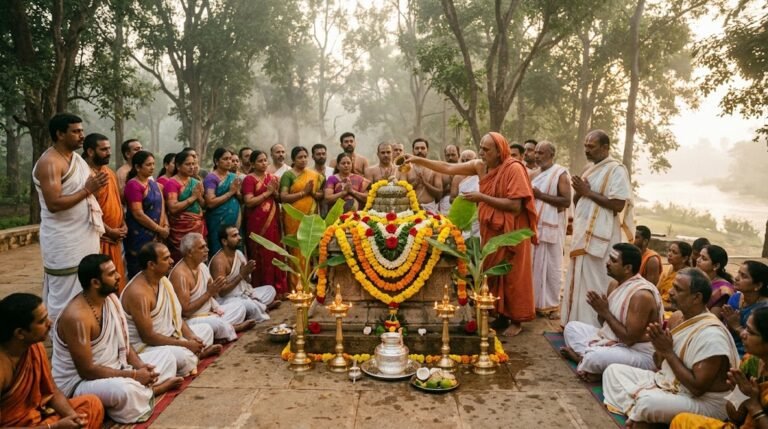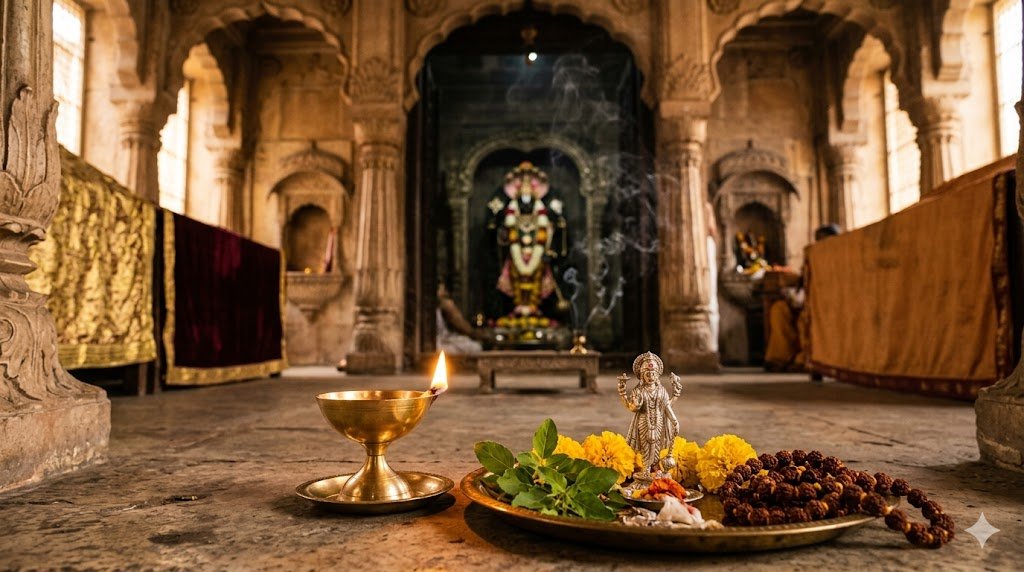
Find the full list of Ekadashi 2026 dates, tithi timings, paran windows and fasting rules for all 24 vrats observed by Lord Vishnu devotees across India.
The complete list of Ekadashi 2026 covers 24 sacred fasting days dedicated to Lord Vishnu, and getting the dates right matters more than most devotees realise. Miss the tithi by a few hours and your vrat shifts to the wrong day. Break the fast outside the paran window and the spiritual merit reduces. This guide pins down every Ekadashi in 2026 with exact tithi timings as per the Drik Panchang for India Standard Time, so you can plan your fasts, temple visits, and pujas with zero confusion.
Notably, 2026 carries an Adhik Maas (extra lunar month) between May and June, which gives devotees two bonus Ekadashis — Padmini Ekadashi and Parama Ekadashi. Adhik Maas comes roughly once every three years. Therefore, 2026 becomes a spiritually richer year than usual for Vishnu bhakts.
Quick Summary: List of Ekadashi 2026 at a Glance
Before we dive into the month-wise breakdown, here is a snapshot of what the full list of Ekadashi 2026 includes:
- Total Ekadashis in 2026: 24 (including 2 Adhik Maas Ekadashis)
- Most significant: Nirjala Ekadashi (25 June), Devshayani Ekadashi (25 July), Vaikuntha Ekadashi (20 December)
- Adhik Maas Ekadashis: Padmini (26 May) and Parama (11 June)
- Tradition split: Smarta devotees and Vaishnavas (ISKCON) sometimes observe on different days
- Paran rule: Break the fast after sunrise on Dwadashi, within the stated paran window
- Region: All timings below are for New Delhi, IST. Minor variations apply for other Indian cities.
Why the List of Ekadashi 2026 Matters for Devotees
Ekadashi falls on the 11th tithi of both the waxing (Shukla Paksha) and waning (Krishna Paksha) phases of the moon. Consequently, every Hindu lunar month contains two Ekadashis — one bright half, one dark half. Scientists have found that the moon’s gravitational pull on this lunar day affects body fluids and digestion, which is one reason the tradition prescribes a grain-free fast.
Moreover, each of the 24 Ekadashis carries its own Vrat Katha, its own presiding deity form, and its own spiritual reward. For example, Nirjala Ekadashi gives the merit of all 24 Ekadashis combined if observed correctly. Similarly, Vaikuntha Ekadashi is believed to open the gates of Vaikuntham. Devotees at Tirumala, Srirangam, and Guruvayur see record crowds on these specific days.
Complete List of Ekadashi 2026 — Month by Month
Below is the verified, date-wise list of Ekadashi 2026 based on Drik Panchang for New Delhi, India. All tithi start and end times are in IST. Each entry shows the Ekadashi name, weekday, paksha, and precise tithi window.
January 2026 Ekadashi Dates
The year opens with two Krishna and Shukla Paksha Ekadashis during the sacred Magha month. Additionally, both fall on weekdays, making early morning pujas manageable for working devotees.
| Ekadashi | Date | Paksha | Tithi Window (IST) |
|---|---|---|---|
| Saphala Ekadashi (from Dec 2025 carried over) | — | — | Observed in late Dec 2025 |
| Shattila Ekadashi | 14 January 2026 (Wed) | Krishna | Begins 15:18, Jan 13 – Ends 17:53, Jan 14 |
| Jaya Ekadashi (formerly Putrada) | 28 January 2026 (Wed) | Shukla | Begins 16:35, Jan 28 – Ends 13:56, Jan 29 |
February 2026 Ekadashi Dates
February brings Vijaya Ekadashi and Amalaki Ekadashi — both carrying deep spiritual significance. Also, Amalaki marks the ritual worship of the sacred amla (Indian gooseberry) tree.
| Ekadashi | Date | Paksha | Tithi Window (IST) |
|---|---|---|---|
| Vijaya Ekadashi | 13 February 2026 (Fri) | Krishna | Begins 12:22, Feb 12 – Ends 14:25, Feb 13 |
| Amalaki Ekadashi | 27 February 2026 (Fri) | Shukla | Begins 00:33, Feb 27 – Ends 22:32, Feb 27 |
March 2026 Ekadashi Dates
March includes Papmochani Ekadashi, which literally means “remover of sins.” For instance, this vrat is traditionally observed before Chaitra Navratri begins, giving spiritual purification to devotees.
| Ekadashi | Date | Paksha | Tithi Window (IST) |
|---|---|---|---|
| Papmochani Ekadashi | 15 March 2026 (Sun) | Krishna | Begins 09:10, Mar 14 – Ends 10:16, Mar 15 |
| Kamada Ekadashi | 29 March 2026 (Sun) | Shukla | Begins 09:45, Mar 28 – Ends 08:46, Mar 29 |
April 2026 Ekadashi Dates
Interestingly, both Ekadashis in April 2026 fall on Mondays. Consequently, devotees who observe Somvar vrats for Lord Shiva get a rare double-blessing combo — Vishnu and Shiva fasts on the same day.
| Ekadashi | Date | Paksha | Tithi Window (IST) |
|---|---|---|---|
| Varuthini Ekadashi | 13 April 2026 (Mon) | Krishna | Begins 02:16, Apr 13 – Ends 02:08, Apr 14 |
| Mohini Ekadashi | 27 April 2026 (Mon) | Shukla | Begins 19:06, Apr 26 – Ends 19:15, Apr 27 |
May 2026 Ekadashi Dates (Adhik Maas Begins)
May 2026 becomes special because the Adhik Jyeshtha Maas begins mid-month. Therefore, devotees get Apara Ekadashi in the regular Jyeshtha month, followed by the rare Padmini Ekadashi of the extra lunar month. Adhik Maas Ekadashis are considered extremely powerful for spiritual progress.
| Ekadashi | Date | Paksha | Tithi Window (IST) |
|---|---|---|---|
| Apara Ekadashi | 12 May 2026 (Tue) | Krishna | Begins 15:52, May 12 – Ends 14:29, May 13 |
| Padmini Ekadashi (Adhik Maas) | 27 May 2026 (Wed) | Shukla | Begins 06:10, May 26 – Ends 07:21, May 27 |
June 2026 Ekadashi Dates
June holds the second Adhik Maas Ekadashi — Parama Ekadashi — followed by the most rigorous of all, Nirjala Ekadashi. Notably, observing Nirjala Ekadashi without water is said to grant the cumulative merit of all 24 Ekadashis.
| Ekadashi | Date | Paksha | Tithi Window (IST) |
|---|---|---|---|
| Parama Ekadashi (Adhik Maas) | 11 June 2026 (Thu) | Krishna | Begins 01:57, Jun 11 – Ends 23:36, Jun 11 |
| Nirjala Ekadashi | 25 June 2026 (Thu) | Shukla | Begins 19:12, Jun 24 – Ends 21:09, Jun 25 |
July 2026 Ekadashi Dates
July brings Devshayani Ekadashi — the day Lord Vishnu enters his four-month yogic sleep (Chaturmasa). Hence, auspicious ceremonies like weddings and griha pravesh are paused from this day until Prabodhini Ekadashi in November.
| Ekadashi | Date | Paksha | Tithi Window (IST) |
|---|---|---|---|
| Yogini Ekadashi | 11 July 2026 (Sat) | Krishna | Begins 09:16, Jul 10 – Ends 06:22, Jul 11 |
| Devshayani Ekadashi | 25 July 2026 (Sat) | Shukla | Begins 10:12, Jul 24 – Ends 12:34, Jul 25 |
August 2026 Ekadashi Dates
August falls entirely within Chaturmasa. Furthermore, Kamika Ekadashi is believed to wash away sins committed unknowingly, while Shravana Putrada Ekadashi is observed by couples seeking children.
| Ekadashi | Date | Paksha | Tithi Window (IST) |
|---|---|---|---|
| Kamika Ekadashi | 9 August 2026 (Sun) | Krishna | Begins 14:59, Aug 08 – Ends 12:04, Aug 09 |
| Shravana Putrada Ekadashi | 24 August 2026 (Mon) | Shukla | Begins 03:00, Aug 23 – Ends 05:18, Aug 24 |
September 2026 Ekadashi Dates
September hosts Parsva Ekadashi, also called Parivartini Ekadashi. On this day, Lord Vishnu is believed to change sides during his yogic slumber. Temples across India perform special abhisheka and seva on Parsva Ekadashi.
| Ekadashi | Date | Paksha | Tithi Window (IST) |
|---|---|---|---|
| Aja Ekadashi | 7 September 2026 (Mon) | Krishna | Begins 20:29, Sep 06 – Ends 18:03, Sep 07 |
| Parsva (Parivartini) Ekadashi | 22 September 2026 (Tue) | Shukla | Begins 21:00, Sep 21 – Ends 22:43, Sep 22 |
October 2026 Ekadashi Dates
October’s Papankusha Ekadashi is said to grant protection from Yama’s punishment for wrongdoings. Meanwhile, Indira Ekadashi is traditionally observed to seek salvation for departed ancestors during the Pitru Paksha season.
| Ekadashi | Date | Paksha | Tithi Window (IST) |
|---|---|---|---|
| Indira Ekadashi | 7 October 2026 (Wed) | Krishna | Begins 03:07, Oct 06 – Ends 01:34, Oct 07 |
| Papankusha Ekadashi | 21 October 2026 (Wed) | Shukla | Begins 15:11, Oct 20 – Ends 15:47, Oct 21 |
November 2026 Ekadashi Dates
November marks the end of Chaturmasa with Devutthana (Prabodhini) Ekadashi. Lord Vishnu awakens from yogic sleep on this day, and auspicious muhurats resume. Also, Tulsi Vivah ceremonies begin across Vaishnava households and temples.
| Ekadashi | Date | Paksha | Tithi Window (IST) |
|---|---|---|---|
| Rama Ekadashi | 5 November 2026 (Thu) | Krishna | Begins 11:03, Nov 04 – Ends 10:35, Nov 05 |
| Devutthana (Prabodhini) Ekadashi | 20 November 2026 (Fri) | Shukla | Begins 07:15, Nov 19 – Ends 06:31, Nov 20 |
December 2026 Ekadashi Dates
December carries the most anticipated Ekadashi of the South Indian calendar — Vaikuntha Ekadashi (also called Mukkoti Ekadashi). Devotees throng Tirumala, Srirangam, and Guruvayur to pass through the symbolic Vaikuntha Dwaram on this day.
| Ekadashi | Date | Paksha | Tithi Window (IST) |
|---|---|---|---|
| Utpanna Ekadashi | 4 December 2026 (Fri) | Krishna | Begins 23:03, Dec 03 – Ends 23:44, Dec 04 |
| Mokshada / Vaikuntha Ekadashi | 19 December 2026 (Sat) | Shukla | Begins 22:09, Dec 19 – Ends 20:14, Dec 20 |
Ekadashi Vrat Rules: What to Do and What to Avoid
Observing Ekadashi is not merely about skipping food. Specifically, the vrat has a layered structure covering the night before, the fasting day itself, and the paran (fast-breaking) ritual the next morning. Follow these rules to complete the vrat correctly.
Dashami Day Preparation (Night Before)
On Dashami, devotees eat only one sattvic meal during the afternoon. Avoid onion, garlic, and tamasic foods. Besides, sleep early and maintain celibacy. Moreover, no food should remain in the stomach by sunrise on Ekadashi.
On the Ekadashi Day
Wake before sunrise. Bathe, wear fresh clothes, and visit a Vishnu temple if possible. Chant Vishnu Sahasranama or Narayana mantras throughout the day. Furthermore, devotees can choose one of four fasting levels based on body strength:
- Nirjala vrat: No food, no water (most rigorous)
- Jalahara vrat: Water only
- Phalahara vrat: Fruits, milk, nuts permitted
- Ekbhukta vrat: One sattvic meal with no grains or lentils
Foods to Avoid on Ekadashi
Grains and cereals are strictly prohibited — this includes rice, wheat, dal, semolina, and anything made from them. Additionally, avoid honey, brinjal, urad dal, meat, eggs, alcohol, and salt (especially regular table salt). Instead, devotees use rock salt or sendha namak.
Paran — Breaking the Fast
Break the fast on Dwadashi tithi after sunrise, within the paran window published by Drik Panchang for your city. Never break the fast during Hari Vasara (the first quarter of Dwadashi). Also, offer the first meal to a Brahmin or a poor person before eating. The paran meal should be sattvic — typically kheer, fruits, and simple grains.
Smarta vs Vaishnava Ekadashi: Why Some Dates Differ
A common confusion among devotees is that ISKCON temples sometimes observe Ekadashi a day after local panchangs. The reason is a technical one. Smartas observe Ekadashi based on the tithi present at sunrise, while Vaishnavas follow stricter rules that push the fast to the next day if Dashami touches the Ekadashi sunrise window.
For example, if the Ekadashi tithi begins only late at night, Smarta tradition accepts the full next day as Ekadashi. However, Vaishnavas may defer to the following day to ensure the tithi is completely pure. Therefore, if you follow ISKCON, cross-check with the ISKCON Vaishnava Calendar.
Most Important Ekadashis in the List of Ekadashi 2026
Not every Ekadashi carries the same weight. Specifically, four Ekadashis in 2026 stand out for their mythological, spiritual, and pan-India significance.
Nirjala Ekadashi — 25 June 2026
Nirjala means “without water.” Devotees observing this fast take neither food nor water from sunrise on Ekadashi to sunrise on Dwadashi. According to the Mahabharata, Bhima observed this vrat to compensate for his inability to fast on all other Ekadashis. Hence, Nirjala alone gives the merit of all 24 Ekadashis.
Devshayani Ekadashi — 25 July 2026
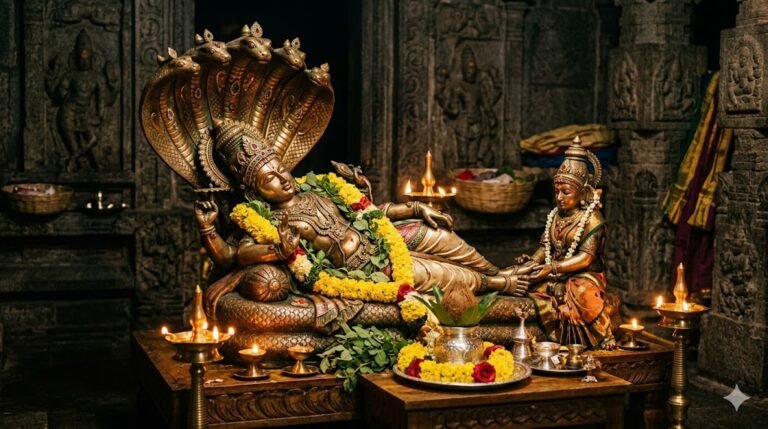
On Devshayani, Lord Vishnu reclines into his four-month Yoga Nidra on Shesha Naga. As a result, no weddings, housewarmings, or major samskaras are conducted during Chaturmasa (the following four months). Temples at Pandharpur and other Vishnu shrines see special abhisheka ceremonies.
Prabodhini / Devutthana Ekadashi — 20 November 2026
Prabodhini Ekadashi marks Vishnu’s awakening from cosmic sleep. Consequently, Chaturmasa ends, auspicious muhurats resume, and the Tulsi Vivah (marriage of Tulsi to Shaligram) is performed in Vaishnava homes. This Ekadashi is also called Dev Uthani in North India.
Vaikuntha Ekadashi — 20 December 2026
Vaikuntha Ekadashi is the most celebrated in South India. The Vaikuntha Dwaram (Northern Gate) is opened in Vishnu temples, and devotees walk through it believing it grants moksha. At Tirumala Tirupati Devasthanams, lakhs of pilgrims participate in the Mukkoti seva. Similarly, Srirangam and Guruvayur conduct special celebrations.
How to Book Temple Sevas on Ekadashi Days
For major Ekadashis, temple sevas get booked out weeks in advance. Therefore, planning ahead is essential. Here are the steps to secure your booking.
- Check the temple’s official portal: TTD, Srirangam, Guruvayur, and Pandharpur temples accept online seva bookings. Notably, TTD opens Vaikuntha Ekadashi darshan quotas 2–3 months ahead.
- Book early morning slots: Early darshan slots fill first because they align with the tithi’s prime hours.
- Arrange accommodation parallel: Ekadashi day crowds spike; rooms at TTD and Tirumala are scarce within a 30 km radius.
- Carry ID proof: Most temples require Aadhaar or passport for seva entry.
- Follow dress code: Men wear dhoti/pancha, women wear saree/salwar. Western wear is not permitted for seva.
Pro Tips for Observing Ekadashi Successfully
Seasoned devotees know that Ekadashi is as much about mental discipline as physical fasting. Moreover, the right preparation makes the 24-hour fast far easier. Here are practical tips from those who have observed Ekadashi for years.
- Hydrate heavily on Dashami: Drink plenty of water and eat watermelon, cucumber, or coconut water so your body enters the fast hydrated.
- Keep the mind occupied: Chant, read Vishnu Sahasranama, or listen to the Ekadashi Vrat Katha. Idle minds turn to food cravings.
- Avoid heavy physical work: Plan your Ekadashi day with minimal physical exertion. Working-from-home is ideal if possible.
- Use sendha namak only: Regular iodised salt is considered impure for vrat food. Stock rock salt in advance.
- Don’t skip paran: Breaking the fast correctly is as important as the fast itself. Set an alarm for the paran window.
Common Mistakes Devotees Make on Ekadashi
Even experienced devotees slip up. Certainly, these errors can weaken the vrat’s spiritual benefit.
- Consuming grains accidentally: Packaged snacks, namkeens, and biscuits often contain wheat or rice flour. Read labels carefully.
- Breaking fast during Hari Vasara: Hari Vasara is the first quarter of Dwadashi tithi. Breaking fast here nullifies the vrat’s merit.
- Ignoring paran time: Breaking fast before sunrise or after Dwadashi ends is considered improper.
- Mixing Ekadashi and Pradosh foods: When Ekadashi and Pradosh fall close, some devotees accidentally mix restrictions.
- Following the wrong tradition’s date: Pick Smarta or Vaishnava and stick with it. Switching creates ritual confusion.
Temple Crowd Forecast for Key 2026 Ekadashis
Based on past patterns, expect the following crowd levels at major Vishnu temples during peak Ekadashis. Planning your travel around these forecasts helps avoid long queues.
| Ekadashi | Key Temples | Expected Crowd | Best Visit Window |
|---|---|---|---|
| Nirjala (25 Jun) | Dwarka, Pandharpur | Very High | 3:30 AM – 6:00 AM |
| Devshayani (25 Jul) | Pandharpur, Tirumala | Very High | 4:00 AM – 7:00 AM |
| Prabodhini (20 Nov) | Pandharpur, Brindavan | High | 5:00 AM – 8:00 AM |
| Vaikuntha (20 Dec) | Tirumala, Srirangam, Guruvayur | Extremely High | Pre-booked seva only |
The Bottom Line
The complete list of Ekadashi 2026 offers devotees 24 opportunities to deepen their connection with Lord Vishnu. Specifically, plan around the four peak Ekadashis — Nirjala, Devshayani, Prabodhini, and Vaikuntha — and book temple sevas at least 60 days in advance. For those new to vrat observance, begin with the Phalahara method and gradually move toward Jalahara or Nirjala. Furthermore, always confirm tithi timings on Drik Panchang for your specific city, as timings shift slightly by geography. Save this list, mark your calendar, and let the divine rhythm of Ekadashi shape your year.
Frequently Asked Questions
How many Ekadashis are there in 2026?
There are 24 Ekadashis in the list of Ekadashi 2026, including two extra Ekadashis (Padmini and Parama) due to the Adhik Maas that occurs between Jyeshtha Krishna and Jyeshtha Shukla months. A normal year has 24 Ekadashis, while Adhik Maas years like 2026 do not add beyond this count because the count already incorporates both pakshas of the extra month.
Which is the most powerful Ekadashi in 2026?
Nirjala Ekadashi on 25 June 2026 is considered the most powerful because devotees observe it without food or water for 24 hours. According to the Mahabharata, observing Nirjala Ekadashi alone grants the combined spiritual merit of all 24 Ekadashis in the year.
What is the paran time for Ekadashi vrat?
Paran time is the specific window on Dwadashi morning during which devotees break their Ekadashi fast. Typically it falls between sunrise and the end of Dwadashi tithi or before Hari Vasara ends. Always check Drik Panchang for exact paran timings for your city.
Can I drink water during Ekadashi fast?
Yes, in most Ekadashi fasts you may drink water, milk, and consume fruits and nuts. However, Nirjala Ekadashi specifically prohibits even water intake. Your chosen fasting level — Nirjala, Jalahara, or Phalahara — should be decided on Dashami day and followed strictly.
Why do ISKCON Ekadashi dates differ from regular Panchang?
ISKCON follows the Vaishnava tradition which applies stricter tithi purity rules, whereas most regional panchangs follow the Smarta tradition based on sunrise tithi. Consequently, ISKCON Ekadashi sometimes falls a day after the Smarta date. Both traditions are spiritually valid; devotees should follow their family or guru lineage.
What is the significance of Vaikuntha Ekadashi on 20 December 2026?
Vaikuntha Ekadashi is believed to open the celestial gates of Vaikuntham (Vishnu’s abode). Devotees who observe this fast and pass through the Vaikuntha Dwaram at major Vishnu temples like Tirumala, Srirangam, and Guruvayur are believed to attain liberation from the cycle of birth and death.
Can pregnant women or sick people observe Ekadashi?
Traditional texts advise pregnant women, nursing mothers, young children, the elderly, and the sick to observe a modified Phalahara fast with fruits, milk, and water. Nirjala fasting is strictly not recommended for these groups. The spiritual merit remains valid when fasting is adapted for health reasons.
You May Also Like
- Vaikuntha Ekadashi 2026: Complete Guide to Tirumala Mukkoti Darshan
- Nirjala Ekadashi Vrat Katha and Step-by-Step Puja Vidhi
- Devshayani Ekadashi: Why Chaturmasa Pauses All Auspicious Ceremonies
- Ekadashi Vrat Food Recipes: What to Eat and What to Avoid