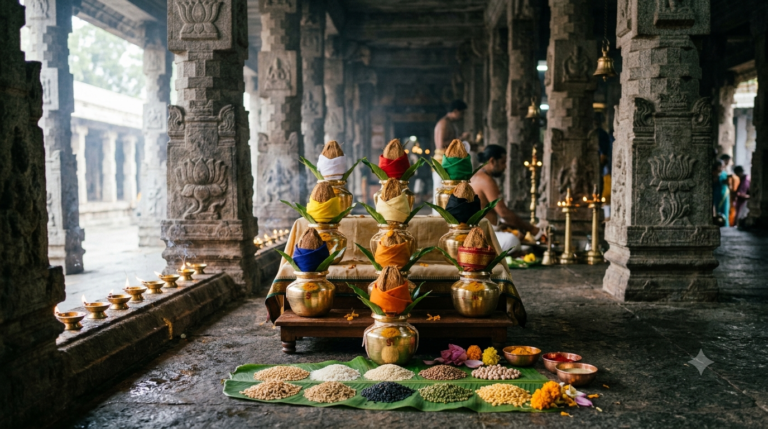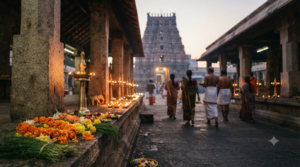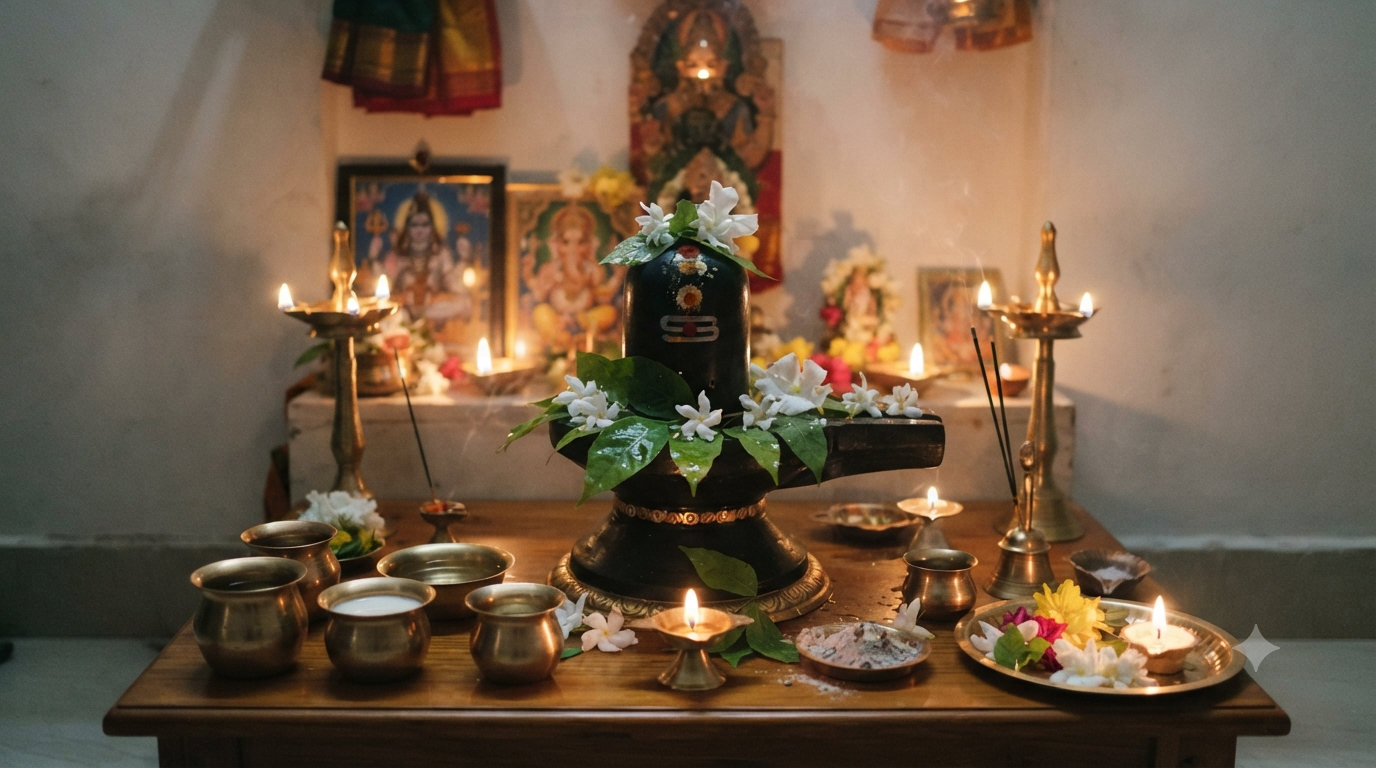
Masa Sivaratri Pooja Vidhanam is a practical monthly Shiva worship guide for Krishna Paksha Chaturdashi, the fourteenth tithi of the waning moon. The next observance after 29 August 2026 falls on Wednesday, 9 September 2026. This guide gives the verified date list through December 2027, explains Nishita Kala, and shows a simple home pooja method.
Independence note: Sri Vyasa Pooja is an independent devotional guide. We are not a temple, mutt, trust, or booking service, and we do not accept pooja bookings, donations, or payments. Use a reliable location-aware panchangam for the final tithi and timing in your city.
Masa Sivaratri Pooja Vidhanam at a Glance
- Tithi: Krishna Paksha Chaturdashi, before Amavasya.
- Frequency: Once every lunar month, with an extra observance when an adhika masa occurs.
- Main worship time: Nishita Kala, the local midnight period used for Shivaratri worship.
- Core worship: Shiva Linga abhishekam, bilva leaves, lamp, mantra japa, and a simple naivedyam.
- Common mantra: Om Namah Shivaya.
- Fasting: Practices range from a normal sattvic diet restriction to phalahara or a stricter fast.
- Health: A waterless fast or overnight vigil is not suitable for everyone.
This Masa Sivaratri Pooja Vidhanam uses the spelling found in the existing URL slug, while calendars may also use Masa Sivarathri, Masik Shivaratri, Masik Shivratri, or Masa Shivaratri. These names refer to the same monthly observance. However, the lunar month name can differ between amanta and purnimanta calendars even when the civil festival date stays the same.
What Does Masa Sivaratri Pooja Vidhanam Mean?
Masa means month, while Sivarathri means the night of Shiva. Therefore, the name describes a Shivaratri that returns each lunar month. The observance falls on Krishna Paksha Chaturdashi because that tithi leads into Amavasya.
One monthly Shivaratri becomes the annual Maha Sivarathri. In the amanta calendar used widely in Andhra Pradesh, Telangana, Karnataka, and Maharashtra, it falls in Magha masam. North Indian purnimanta calendars call the same night Phalguna Krishna Chaturdashi, so the month name changes while the observance date does not.
This distinction matters when you compare calendars. A Telugu panchangam may show a different masam name from a North Indian calendar, yet both can still point to the same Gregorian night. For a deeper guide to the annual observance, see our Maha Sivarathri pooja vidhi.
Masa Sivarathri Dates: September 2026 to December 2027
The dates below were checked against two independent panchang sources for India. They agree on the civil dates listed here. Still, city-specific Nishita Kala timings differ, so use your own location when planning the night pooja.
| Date | Day | Amanta month | Purnimanta month |
|---|---|---|---|
| 9 September 2026 | Wednesday | Sravana | Bhadrapada |
| 8 October 2026 | Thursday | Bhadrapada | Ashwina |
| 7 November 2026 | Saturday | Aswayuja | Kartika |
| 7 December 2026 | Monday | Kartika | Margashirsha |
| 5 January 2027 | Tuesday | Margasira | Pausha |
| 4 February 2027 | Thursday | Pushya | Magha |
| 6 March 2027 | Saturday | Magha | Phalguna |
| 5 April 2027 | Monday | Phalguna | Chaitra |
| 4 May 2027 | Tuesday | Chaitra | Vaishakha |
| 3 June 2027 | Thursday | Vaisakha | Jyeshtha |
| 2 July 2027 | Friday | Jyeshtha | Ashadha |
| 31 July 2027 | Saturday | Ashadha | Shravana |
| 30 August 2027 | Monday | Sravana | Bhadrapada |
| 28 September 2027 | Tuesday | Bhadrapada | Ashwina |
| 27 October 2027 | Wednesday | Aswayuja | Kartika |
| 26 November 2027 | Friday | Kartika | Margashirsha |
| 25 December 2027 | Saturday | Margasira | Pausha |
Maha Sivarathri in 2027 falls on Saturday, 6 March. The two calendars call the lunar month differently, but both observe the festival on the same civil date. For a final location check, compare a city-aware listing on Drik Panchang with the annual AstroSage Masik Shivaratri calendar.
Why 2026 Had an Extra Monthly Shivaratri
An adhika masa, or intercalary lunar month, occurred in 2026. In the amanta reckoning used across much of South India, Adhika Jyeshtha ran from 17 May to 15 June. Therefore, an additional Krishna Chaturdashi occurred within that extra month.
The Adhika Masa Shivaratri fell on Saturday, 13 June 2026. This is why old annual lists cannot simply be copied forward. When an extra lunar month enters the calendar, later tithis shift against Gregorian dates, so every new-year list needs fresh calculation.
Nishita Kala in Masa Sivaratri Pooja Vidhanam
Nishita Kala is the traditional midnight window used for Shivaratri worship. For this Masa Sivaratri Pooja Vidhanam, treat Nishita Kala as a location-based period rather than a fixed 12:00 AM slot. The exact window changes by city and date because it depends on local sunset and the next sunrise.
This is the most common timing mistake in old festival posts. A time copied from Delhi, Hyderabad, or Chennai may be wrong for another city because local sunset changes the night calculation. Therefore, enter your own city in a panchangam before you begin the vratam.
How to Find Your Local Nishita Kala
- Open a panchangam that lets you set your city or coordinates.
- Select the correct Masa Sivarathri date.
- Check that Krishna Paksha Chaturdashi overlaps the listed Nishita Kala.
- Write down the start and end time before the evening begins.
- Arrange the pooja items first, since the usable window can be short.
If two calendars disagree by a few minutes, follow one established local panchang consistently. Regional practice also matters, so families with a purohit may follow that tradition. Avoid generic social-media images that give one nationwide pooja time without a city.
Masa Sivaratri Pooja Vidhanam at Home
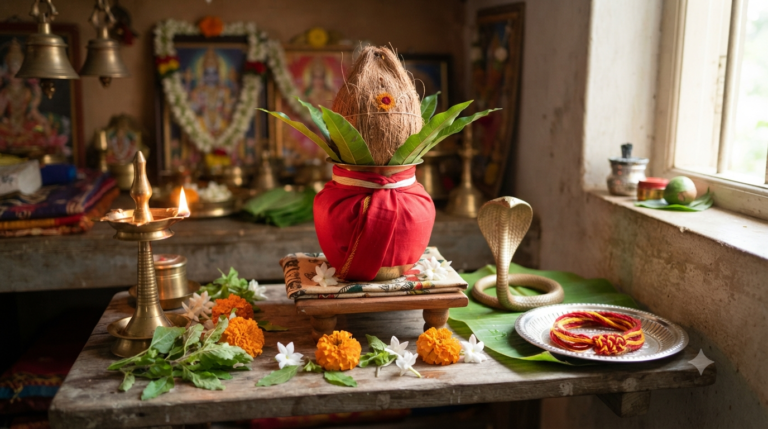
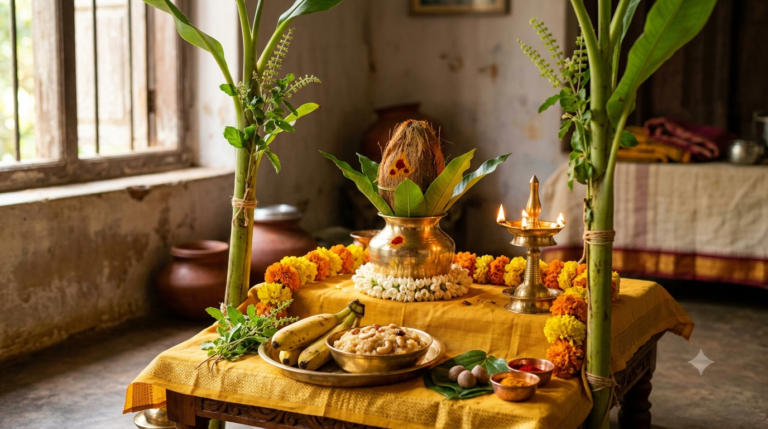
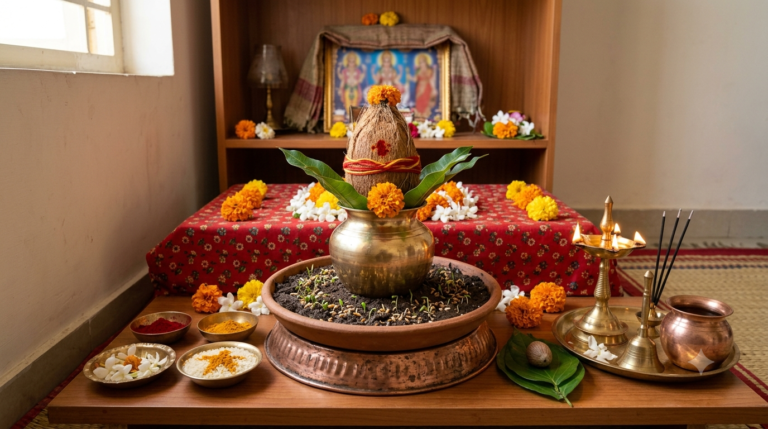
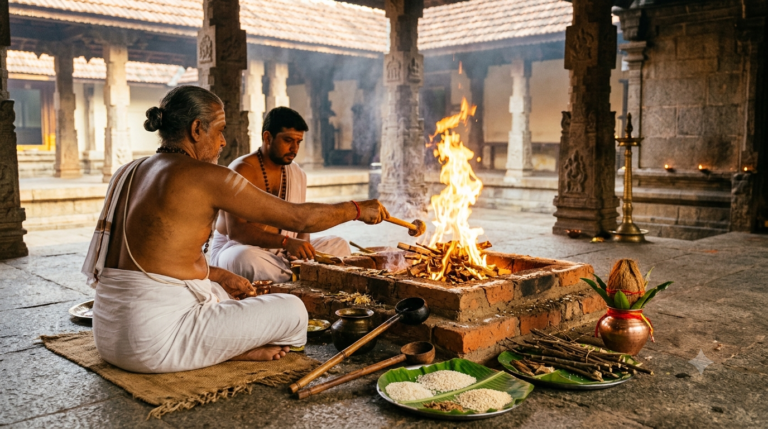
A simple home pooja is enough, and this Masa Sivaratri Pooja Vidhanam does not require a paid service, special booking, or elaborate homam. Most households focus on a clean altar, water or panchamrita abhishekam, bilva leaves, a lamp, and Shiva mantra japa.
Samagri for Masa Sivaratri Pooja Vidhanam
- A Shiva Linga or a suitable Shiva image for home worship.
- Clean water for abhishekam.
- Milk, curd, ghee, honey, and sugar if you use panchamrita.
- Fresh bilva leaves.
- Vibhuti and sandal paste.
- A ghee or oil lamp, incense, and camphor.
- Fruit or a simple sattvic naivedyam.
- A clean plate or vessel to collect abhishekam liquids.
Family customs differ, so do not treat any online checklist as a rigid rule. If your household uses fewer items, a water abhishekam and bilva offering still keep the worship simple. Avoid turning a devotional night into a shopping exercise.
Step-by-Step Masa Sivaratri Pooja Vidhanam
- Prepare during the day. Bathe, clean the pooja space, and keep the samagri ready before night.
- Take sankalpam. State your intention to observe the vratam according to your family practice.
- Light the lamp. Begin calmly once your chosen worship window starts.
- Perform abhishekam. Use water first, then panchamrita if desired, and finish with clean water.
- Offer bilva leaves. Place fresh leaves respectfully after the abhishekam.
- Chant. Recite Om Namah Shivaya, Shiva Ashtottara, Sri Rudram, or the text your family normally follows.
- Offer naivedyam and harati. Keep the closing simple and unhurried.
- Continue japa or bhajans. Stay awake only as long as your health and next-day duties allow.
- Break the fast the next morning. Follow your household parana practice and local panchang guidance.
Devotees who want a longer ritual may use Shodashopachara, the sixteen traditional offerings. However, complexity is optional. A short, attentive pooja during the correct night is more practical than rushing through a long checklist.
Masa Sivaratri Pooja Vidhanam: Fasting Rules and Safety
Fasting within Masa Sivaratri Pooja Vidhanam varies widely by family and region. Some devotees take fruits and milk, while others eat one simple sattvic meal. A smaller number keep a stricter fast, yet the strictest form should never be treated as mandatory for everyone.
If you have diabetes, kidney disease, low blood pressure, ulcers, or another condition affected by fasting, speak with a qualified doctor first. Pregnant people, older adults, children, and anyone recovering from illness should avoid a waterless fast unless a medical professional says it is safe. Do not skip prescribed medicine for a vratam.
An all-night vigil can also impair attention the next morning. Therefore, avoid long-distance driving if you have slept very little. A devotional observance should not create a preventable health or road-safety risk.
Masa Sivaratri Pooja Vidhanam vs Maha Sivarathri and Pradosham
| Observance | Tithi | How often | Main timing |
|---|---|---|---|
| Masa Sivarathri | Krishna Chaturdashi | Monthly | Nishita Kala |
| Maha Sivarathri | Krishna Chaturdashi in Magha/Phalguna | Annual | Nishita Kala and four night praharas |
| Pradosham | Trayodashi | Twice monthly | Pradosh Kaal around sunset |
Pradosham comes on Trayodashi, the tithi before monthly Shivaratri. It is closely connected with Shiva worship, but it is a separate vratam with a different timing rule. Therefore, a Pradosham pooja should not be described as a replacement for a missed Masa Sivarathri.
If you observe both, use our Pradosha Pooja at home guide for the twilight ritual. The two observances can sit next to each other in a monthly Shiva routine, yet each keeps its own tithi and worship window.
Five Mistakes That Make Monthly Shivaratri Guides Unreliable
- Recycling old dates. A 2021 or 2024 calendar is not a template for 2026 or 2027.
- Publishing one India-wide midnight time. Nishita Kala changes with local sunset and sunrise.
- Mixing calendar month names. Amanta and purnimanta systems can name the same night differently.
- Treating Pradosham as a substitute. It is a related Shiva vratam on Trayodashi, not the same observance.
- Presenting faith claims as guarantees. Marriage, prosperity, health, or other benefits belong to devotional belief, not measurable promises.
A reliable Masa Sivaratri Pooja Vidhanam should never tell you to pay a private website to “register” for a monthly home vratam. If you want a temple seva, use only that temple’s real official channel and verify the domain before paying.
What If You Miss a Masa Sivarathri?
Missing one month does not mean you should invent a compensatory ritual from an online article. In many households, devotees simply resume the observance on the next monthly Krishna Chaturdashi. However, family traditions can differ, so follow your own sampradaya when it gives a specific rule.
If midnight worship is not practical because of illness, shift work, travel, or caregiving, keep the day in a simpler devotional way. You can chant Om Namah Shivaya, read a Shiva stotra, or offer water and bilva at home when you are able. Do not label a different tithi or ritual as the missed Shivaratri itself.
For anyone beginning this Masa Sivaratri Pooja Vidhanam as a monthly practice, consistency matters more than anxiety. Mark the next few dates in advance, then set a reminder to check the city-specific Nishita Kala closer to each date.
Before You Begin the Next Vratam
The next Masa Sivarathri after 29 August 2026 is Wednesday, 9 September 2026. Confirm your own city’s Nishita Kala before the evening, then prepare the samagri in advance. The following observances fall on 8 October, 7 November, and 7 December 2026.
For 2027, the first monthly Shivaratri is Tuesday, 5 January, while Maha Sivarathri falls on Saturday, 6 March. Because lunar calendars can include adhika months, always refresh annual date lists from current panchang calculations rather than carrying a past-year table forward.
Use this Masa Sivaratri Pooja Vidhanam as a practical framework, then adapt the details to your family tradition. If your family also keeps Karthika Shiva observances, our Karthika Masam guide explains the Telugu amanta calendar context in more detail.
Masa Sivaratri Pooja Vidhanam Frequently Asked Questions
Is Masa Sivarathri the same as Masik Shivaratri?
Yes. Masa Sivarathri and Masik Shivaratri are common regional and spelling variants for the monthly Shiva observance on Krishna Paksha Chaturdashi. Search results may use Shivaratri, Shivratri, or Sivarathri, but the underlying vratam is the same.
When is the next Masa Sivarathri in 2026?
After 29 August 2026, the next Masa Sivarathri falls on Wednesday, 9 September 2026. The remaining 2026 dates are 8 October, 7 November, and 7 December. Confirm the local Nishita Kala for your city before worship.
When is Maha Sivarathri in 2027?
Maha Sivarathri falls on Saturday, 6 March 2027. South Indian amanta calendars place it in Magha masam, while North Indian purnimanta calendars call the same observance Phalguna Krishna Chaturdashi.
What is the correct monthly Shivaratri pooja time?
Nishita Kala is the traditional midnight period used for Shivaratri worship. Its exact clock time changes by location because the calculation depends on local sunset and sunrise. Therefore, use a city-aware panchang rather than one generic India-wide timing.
How many Masa Sivarathri days are there in a year?
A normal lunar year has twelve monthly Shivaratri observances. When an adhika masa is inserted, an additional Krishna Chaturdashi creates one more. The 2026 calendar included an Adhika Masa Shivaratri on 13 June.
Can I Follow Masa Sivaratri Pooja Vidhanam Without a Strict Fast?
Yes. Masa Sivaratri Pooja Vidhanam can be followed with phalahara, milk, fruit, or a light sattvic diet instead of a waterless fast. Choose a practice that fits your health and family tradition, and seek medical advice before any restrictive fast if you have a health condition.
Is Pradosham a substitute if I miss monthly Shivaratri?
No. Pradosham is a separate Shiva observance on Trayodashi and uses the sunset-based Pradosh Kaal. If you miss Masa Sivarathri, resume the monthly vratam later rather than presenting Pradosham as the same ritual.
Why do some calendars show different lunar month names?
Amanta calendars end the lunar month at Amavasya, while purnimanta calendars end it at Purnima. Therefore, the same Krishna Chaturdashi can carry different month names. The civil observance date can still be identical.