Navratri Ghatasthapana 2026 falls on Sunday, 11 October 2026, and this guide gives you the kalash samagri, household steps, and regional differences without pretending one clock time suits every city. Two independent panchang sources agree on the date, while the exact muhurat changes with local sunrise and panchang calculations. So prepare the altar and shopping list now, then confirm your own city’s window before the ritual.
Sri Vyasa Pooja is an independent devotional guide. We are not a temple, mutt, or official religious authority, and we do not take bookings, donations, or payments. Follow your family sampradaya or purohit when it differs from this household guide.
Navratri Ghatasthapana 2026 at a Glance
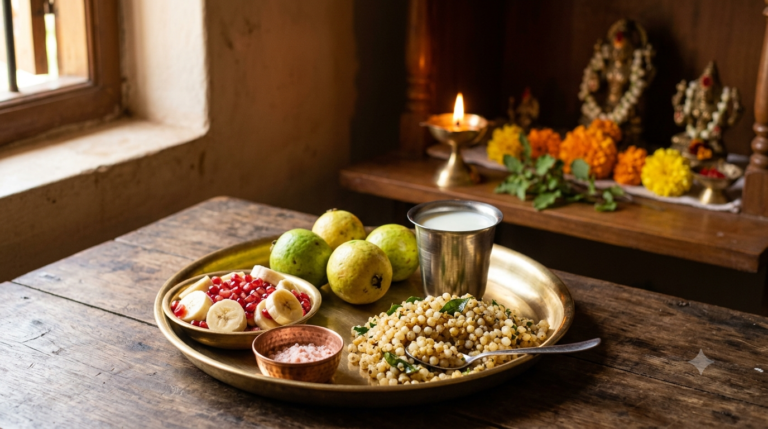
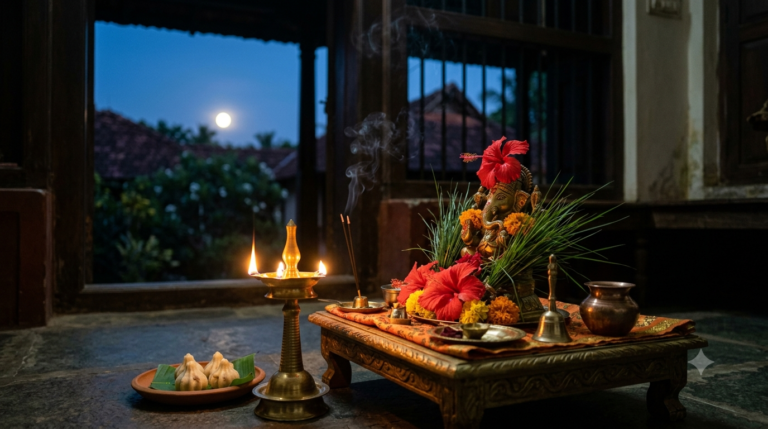
Ghatasthapana, also called Kalash Sthapana, opens Shardiya Navratri by installing a sacred pot as the focal point of Devi worship. The common household form combines a kalash, water, leaves, coconut, grains, flowers, a lamp, and daily prayer. However, the exact material list changes across regions and family traditions.
| Planning point | 2026 guidance | What to do |
|---|---|---|
| Date | Sunday, 11 October 2026 | Prepare the altar and samagri by the previous evening. |
| Lunar day | Ashwin Shukla Pratipada | Ghatasthapana belongs to the opening Pratipada of Shardiya Navratri. |
| Exact muhurat | City-specific | Check your town on a reliable panchang before starting. |
| Core setup | Kalash, water, leaves, coconut, grain bed, lamp | Use the version your household normally follows. |
| Daily care | Short morning and evening worship | Keep the area clean and disturb the setup as little as possible. |
The most useful rule is simple: do not copy a Delhi, Mumbai, Hyderabad, or Ujjain clock time into another city. Drik Panchang calculates Ghatasthapana by location, and Prokerala also shows location-based panchang timings. That is why this page gives the verified date but does not publish one universal local muhurat.
When Is Navratri Ghatasthapana 2026?
Navratri Ghatasthapana 2026 is on Sunday, 11 October 2026. Drik Panchang and Prokerala both place Shardiya Ghatasthapana on that date, so the day itself is well supported. The clock window still varies by city, because sunrise and local panchang factors shift the usable period.
Drik Panchang’s general rule prefers the first part of the day while Pratipada prevails. It also gives Abhijit Muhurta as a fallback when the main window cannot be used. Therefore, confirm the local window instead of treating a national news timing as a personal muhurat.
This distinction matters in 2026 because many search results quote a precise morning range without stating the reference city. A time can be correct for its source location yet wrong for your home. Check the location field before you rely on any screenshot or forwarded message.
Navratri Ghatasthapana 2026 Samagri Checklist
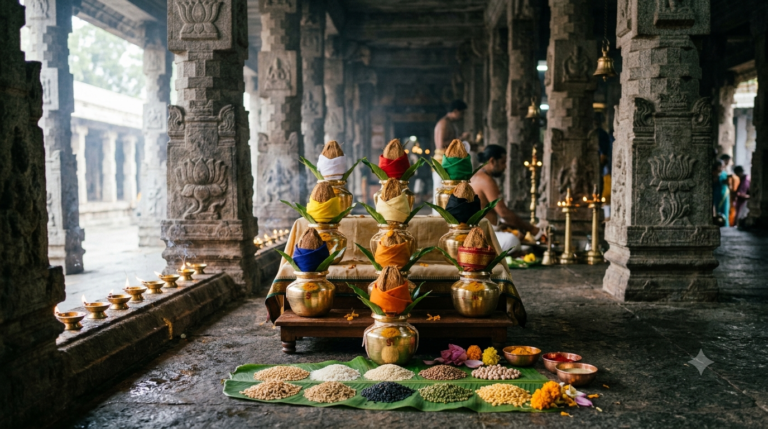
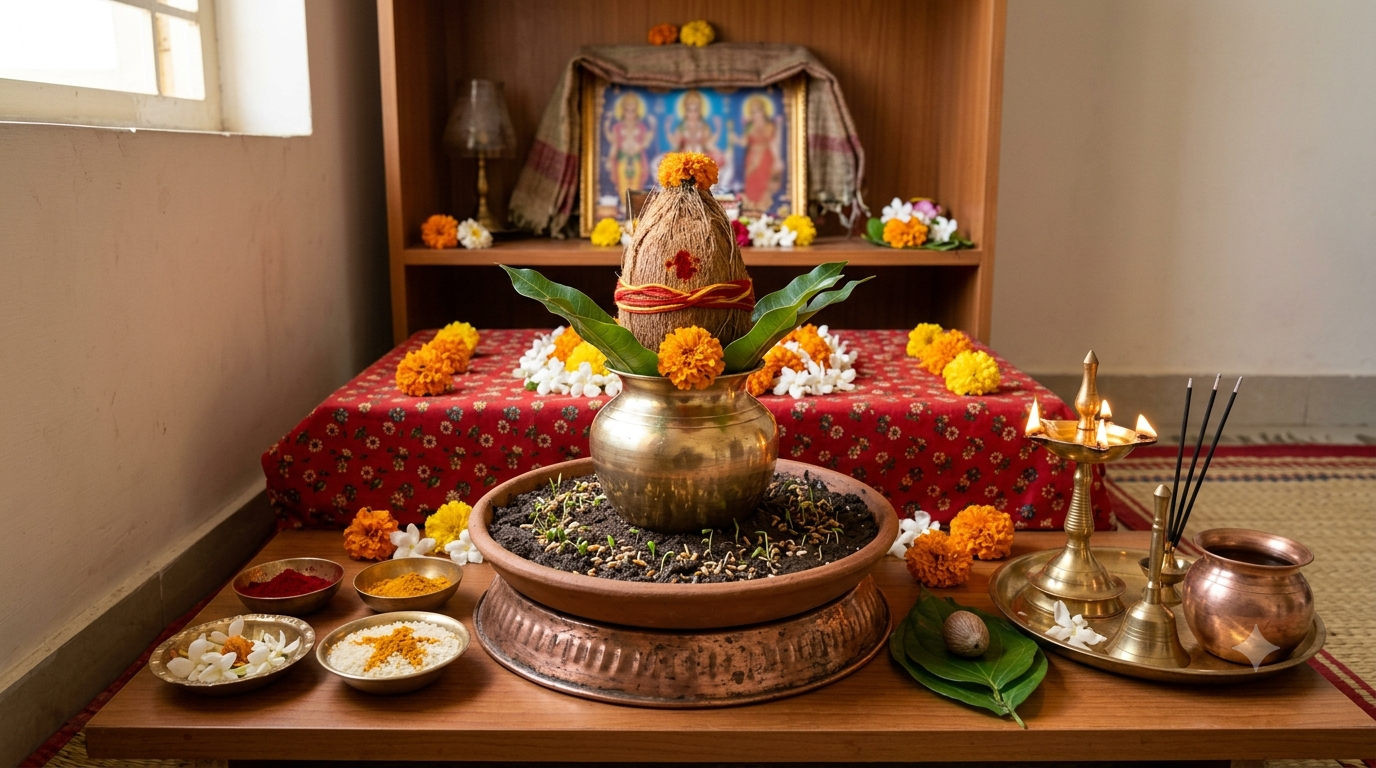
For Navratri Ghatasthapana 2026, gather the core materials first and treat decorative extras as optional. A simple setup is easier to manage for nine days, especially in a flat or busy household. The samagri below follows the common kalash-and-grain form described by panchang and Maharashtra tourism references.
| Group | Core items | Regional or optional items |
|---|---|---|
| Base | Wide clay dish or clean tray, soil | Wooden peetham, red or yellow cloth, rangoli |
| Grains | Barley or the grain your family uses | Sapta dhanya, wheat, gram, or local grain mix |
| Kalash | Clay, brass, or copper pot; clean water | Ganga jal mixed with regular clean water |
| Inside kalash | Akshata, supari, coin if customary | Durva, fragrance, turmeric piece, family-specific additions |
| Top | Mango or suitable sacred leaves, coconut | Red cloth or chunri, mauli thread |
| Puja | Turmeric, kumkum, flowers, incense, lamp | Sandal paste, garland, fruits, sweets, shringar items |
If you already keep a general puja box, compare it with the site’s Satyanarayana Pooja Samagri checklist. Many basics overlap, such as akshata, lamp supplies, flowers, fruits, and kalash items. Still, Navratri needs its own grain-bed and Devi-focused setup.
Choose Your Navratri Ghatasthapana 2026 Household Method
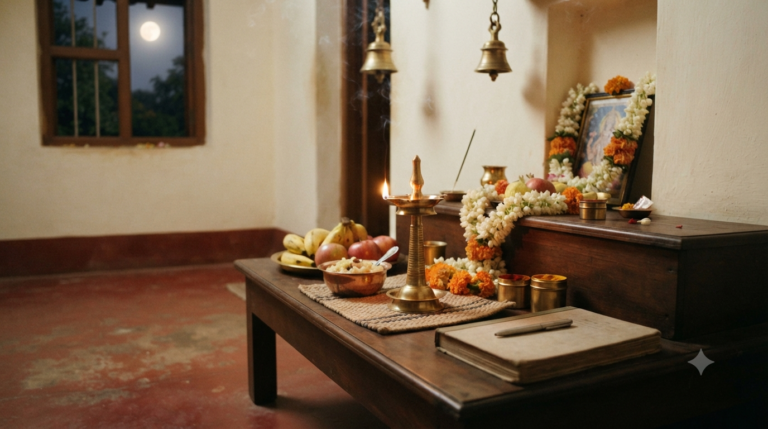
There is no single household Ghatasthapana layout used across India. North Indian and Maharashtrian homes often give strong importance to sowing barley or mixed grains in soil. South Indian homes may centre the kalash within a broader Golu, Saraswati, Durga, or family Devi arrangement.
Because of that, avoid combining every internet checklist into one oversized ritual. First decide which tradition your family actually follows. Then keep that sequence consistent, since a smaller familiar puja is usually better than an elaborate borrowed method.
If your home already has a kalasam tradition, the site’s Vara Mahalakshmi Kalasam setup guide can help with practical vessel stability and coconut placement. However, do not copy Varalakshmi-specific decoration into Navratri unless your family custom uses it.
Navratri Ghatasthapana 2026 Step by Step
Navratri Ghatasthapana 2026 can be done at home with a clear sequence and a modest altar. Read the full order before beginning, because stopping midway to search for an item makes the puja feel rushed. Keep the exact mantra style tied to your family tradition or priest.
- Clean and settle the puja space. Bathe, wear clean clothes, and wipe the altar area. Place a peetham or clean cloth where the setup can remain undisturbed.
- Prepare the grain bed. Fill a wide earthen dish with clean soil, then sow barley or your family’s chosen grain. Sprinkle only enough water to moisten the soil.
- Prepare the kalash. Tie mauli around the neck if your custom uses it. Fill the pot with clean water, then add akshata, supari, a coin, or other customary items.
- Arrange leaves and coconut. Place mango or approved sacred leaves around the rim. Set a clean coconut above them, with red cloth or thread if that belongs to your practice.
Install, Invoke and Begin Daily Worship
Once the vessel is ready, the second half of the ritual is about placing it securely and beginning worship. Keep the remaining offerings within reach, so you do not need to leave the altar repeatedly.
- Seat the kalash. Place it securely in or above the prepared grain bed. Check the balance now, because moving a top-heavy coconut later can spill the water.
- Take sankalpa and invoke Devi. State the intention to observe Shardiya Navratri with devotion. Then invite the Goddess to accept the worship according to your family’s mantra tradition.
- Offer a simple puja. Show the lamp and incense, then offer flowers, gandham, kumkum, fruit, or naivedyam. You can recite a Devi mantra, stotra, or aarti that your family already knows.
- Begin the nine-day routine. Keep the altar clean, worship morning and evening where possible, and lightly tend the grain bed. Avoid unnecessary handling of the kalash after installation.
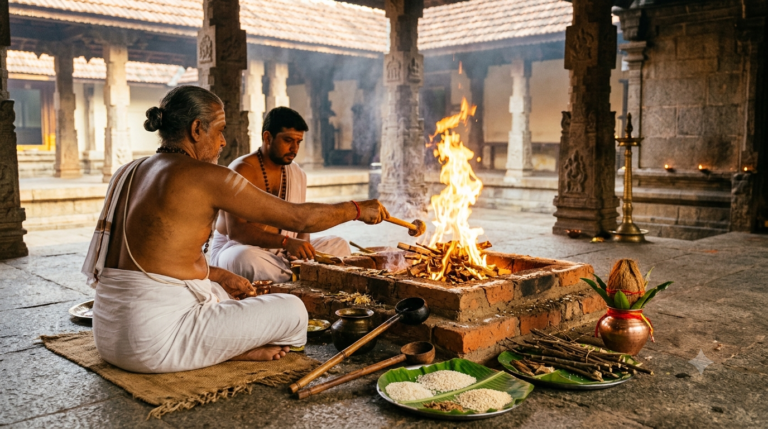
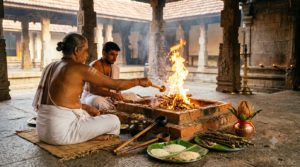
Drik Panchang’s Ghatasthapana vidhi lists the same broad structure: sowing grains, preparing the kalash, placing leaves and coconut, invoking the Goddess, and offering panchopachara worship. Maharashtra Tourism also describes the soil, barley, water-filled kalash, and daily devotional focus. Small household differences are normal.
What if you do not have every item?
Do not panic if one decorative item is missing. A clean vessel, water, simple offerings, and sincere worship can form the practical core, while grain choice and leaf type follow local custom. If your family treats a particular item as compulsory, follow that tradition rather than a generic web checklist.
For example, some homes use barley alone while others use sapta dhanya. Some prefer mango leaves, while local practice may use another sacred leaf. So ask an elder or purohit when a substitution affects your sampradaya.
Navratri Ghatasthapana 2026 Regional Practices
Regional practice changes the form more than the purpose. The shared idea is to establish a sacred centre for Devi worship at the start of Navratri. However, the vessel, grain, surrounding display, and daily observance can look very different from one state to another.
Maharashtra and much of North India
The grain bed is especially visible in many Maharashtrian and North Indian homes. Barley or other grains grow through the festival, while the kalash remains central to daily worship. Maharashtra Tourism describes this soil-and-barley form as a key part of Ghatasthapana.
Andhra Pradesh, Telangana, Karnataka and Tamil Nadu
South Indian households often fold the kalash into a wider Devi, Golu, Saraswati, or Dussehra tradition. Some families use a brass or silver kalasam with coconut and mango leaves, while others give more emphasis to dolls, books, lamps, flowers, or regional Goddess worship. Therefore, do not assume the barley tray is compulsory in every southern home.
Gujarat and western India
Gujarati Navratri is strongly associated with garba and community worship, while household forms vary. Some families keep a kalash or garbo lamp as the sacred centre, but the exact arrangement follows local and family practice. So use a Gujarati family method rather than importing a detailed Maharashtrian sequence unchanged.
Bengal and eastern traditions
Durga Puja in Bengal develops around its own ritual calendar, including bodhan and formal worship from later festival days. Household Navratri observance can still include a kalash, yet it should not be treated as identical to the North Indian nine-day barley setup. Regional Shakta practice has its own sequence.
Navratri Ghatasthapana 2026 Mistakes to Avoid
The biggest mistake is not a missing flower. It is copying a muhurat from another city and calling it universal. A second common problem is treating one regional samagri list as if every Hindu household must follow it.
- Do not overwater the grain bed. Damp soil is enough, while standing water can rot seeds and make the altar messy.
- Do not move the kalash casually. Choose a stable place before the puja, especially when pets or small children are at home.
- Do not force an Akhand Jyoti if it is unsafe. A continuously burning lamp needs supervision, a stable base, and clearance from cloth or curtains.
- Do not treat sprout height as a guaranteed omen. Seed age, water, soil, and room temperature affect growth, so spiritual interpretations remain matters of belief.
- Do not add complex mantras from random reels. Use the prayer form your family knows, or take guidance from a trusted purohit.
Another mistake is turning the setup into a decoration contest. Ghatasthapana is a devotional installation, not a requirement to buy expensive accessories. Use clean, safe materials and keep the worship manageable for the full festival.
What to Do After the Kalash Is Installed
After Ghatasthapana, keep a simple daily rhythm. Light the lamp when safe, offer fresh flowers or a small naivedyam, recite your chosen Devi prayer, and perform aarti. If you have sown grains, check the soil gently and add only a little water when needed.
Families close Navratri differently, so follow your own Ashtami, Navami, or Vijayadashami custom for kanya puja, Saraswati worship, visarjan, or removal of the setup. South Indian readers can also use the site’s Ayudha Pooja procedure when preparing for the Mahanavami phase. Its focus is tools, books, vehicles, and work instruments rather than the opening kalash ritual.
Do not discard sacred water or sprouts thoughtlessly. Many households sprinkle the water in the home, use it for plants, or dispose of natural materials respectfully. Your family custom should decide the final method.
What If You Miss the Ghatasthapana Muhurat?
Missing the preferred local window does not justify guessing a new time from social media. Drik Panchang notes Abhijit Muhurta as a possible fallback when the main morning window cannot be used, but that fallback is also location-dependent. Check a city-specific panchang or ask your family priest before proceeding.
If the entire day has passed, traditions differ on whether a later installation is appropriate. There is no safe universal answer for every sampradaya. In that case, continue simple Devi prayer and take guidance before creating a delayed formal Ghatasthapana.
The outcome is not guaranteed by buying more samagri or using a longer mantra. This is a religious observance based on faith and family tradition. The practical goal is to begin Navratri carefully, safely, and with a method you can sustain.
Safety Notes for Lamps and Fasting
If you keep a lamp for long periods, place it on a broad metal plate and away from cloth, wood edges, children, and pets. Never leave an open flame unattended. A smaller supervised lamp is safer than an Akhand Jyoti that nobody can monitor.
Navratri fasting also varies widely, and strict fasting is not suitable for everyone. Children, older adults, pregnant people, and anyone with diabetes or another medical condition should prioritise health and follow professional advice. A devotional fast should never replace needed food, medicine, or treatment.
Navratri Ghatasthapana 2026: Final Preparation
For Navratri Ghatasthapana 2026, lock in the verified date first: Sunday, 11 October. Next, prepare only the samagri your household method needs, then confirm the city-specific muhurat close to the ritual. This avoids the two most common problems: wrong timings and overcomplicated checklists.
Keep the setup stable, the grain bed lightly watered, and the daily worship realistic. Regional differences are not errors, because Navratri has many living household traditions. When your family practice conflicts with a generic online list, the family tradition deserves priority. Save this Navratri Ghatasthapana 2026 checklist for the final evening preparation.
Frequently Asked Questions
What is the date of Navratri Ghatasthapana 2026?
Navratri Ghatasthapana 2026 falls on Sunday, 11 October 2026. Both Drik Panchang and Prokerala list Shardiya Ghatasthapana on that date. However, the exact clock time should still be checked for your city.
What is the exact Ghatasthapana muhurat in 2026?
There is no single clock window that should be copied for every city. Panchang timings change with location, sunrise, and local calculations. Use a location-aware panchang on 11 October, or confirm the time with your family priest.
What are the essential Ghatasthapana samagri items?
The common core includes a kalash, clean water, coconut, sacred leaves, soil, grain, akshata, flowers, lamp supplies, and basic puja items. Barley is common in many North Indian and Maharashtrian homes. Still, grain and decoration choices vary by region.
Is barley compulsory for Navratri Ghatasthapana?
No single grain rule applies to every household. Barley is very common in the North and in Maharashtra, while some families use sapta dhanya or another local grain. Follow the method your family or priest uses.
Can I use a brass kalash instead of a clay pot?
Yes, many households use brass or copper for the main kalash. A separate clay dish often holds the soil and grains when that tradition is followed. The vessel should be clean, stable, and suitable for nine days of worship.
Can beginners perform Ghatasthapana at home?
Yes, a simple household Ghatasthapana can be manageable for beginners when family tradition permits it. Keep the setup small, read the sequence beforehand, and avoid unfamiliar complex mantras. Ask a trusted purohit when your sampradaya has special rules.
Why do different websites show different Ghatasthapana times?
Most differences come from location settings or different panchang calculation choices. A time shown for Delhi or Ujjain should not automatically be used in Hyderabad, Chennai, Bengaluru, or another city. Always check the place named beside the timing.
What should I do if I miss the morning muhurat?
Check your city-specific panchang before choosing a fallback. Some panchang systems allow Abhijit Muhurta when the main window is unavailable, but that time also changes by place. If the day has passed, ask your family priest before doing a delayed formal installation.
How long should the kalash remain in place?
Most families keep the kalash as the devotional centre through their Navratri observance and close it according to their regional Ashtami, Navami, or Vijayadashami custom. Do not move it casually once installed. Follow your household’s established visarjan or closing practice.