Chitra Pournami Pooja is an annual full-moon observance in the Tamil month of Chithirai. Devotees use the day for Chitragupta worship, prayer, charity, and honest self-reflection. Unlike a fixed-date festival, its Gregorian date changes every year, so old calendar posts quickly become wrong.
Sri Vyasa Pooja is an independent devotional guide. We are not affiliated with any temple, trust, mutt, or government body, and we do not accept bookings, donations, or payments. For the exact tithi in your city, always check a current panchangam before beginning the vratam.
Chitra Pournami Pooja at a Glance
The core of this observance stays simple even though family customs differ. Chitra Pournami falls on the full-moon tithi of Chithirai, usually during April or May. The day is especially associated with Chitragupta, whom Hindu tradition describes as the divine keeper of each person’s deeds.
- Tithi: Pournami, the full-moon day of the Tamil month Chithirai.
- Main focus: Chitragupta worship, repentance, gratitude, charity, and better conduct.
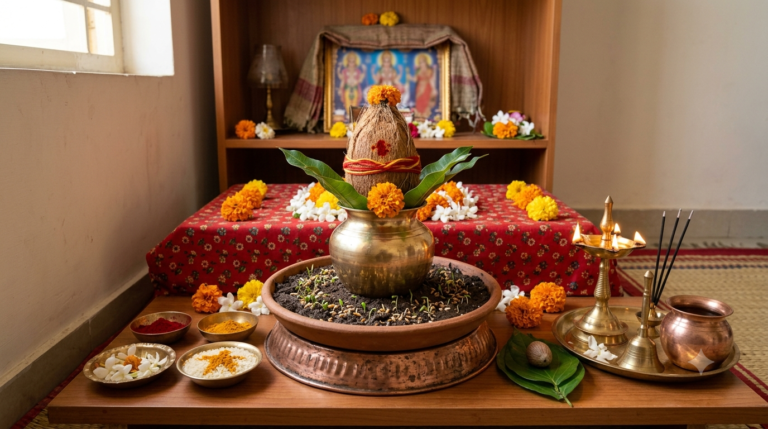
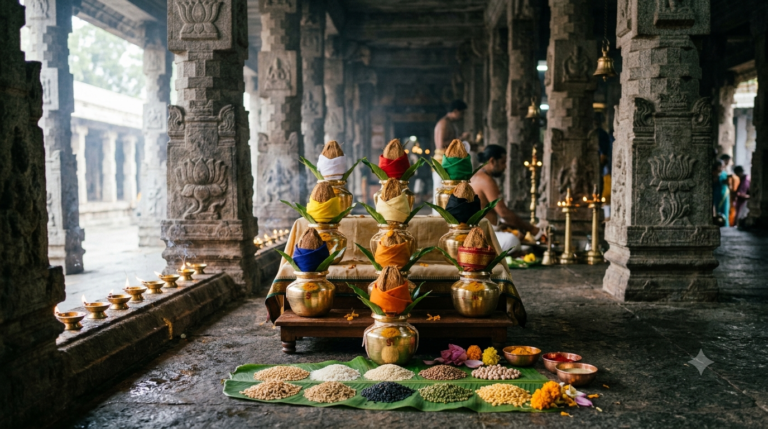
- Home worship: lamp, flowers, turmeric, kumkum, akshata, fruit, and a simple naivedyam.
- Fasting: optional and based on family practice; a strict fast is not required for everyone.
- Temple tradition: Kanchipuram has a dedicated Chitragupta Swamy Temple under Tamil Nadu HR&CE.
- Important rule: verify the annual date and local tithi instead of copying an old year’s timing.
| Element | Evergreen rule | What changes |
|---|---|---|
| Tamil month | Chithirai | Nothing |
| Lunar day | Pournami | Clock timing by place |
| Gregorian date | Usually April or May | Changes every year |
| Main observance | Prayer, reflection, charity | Family customs vary |
| Temple visit | Optional | Opening hours and crowd controls |
When Chitra Pournami Is Observed
Chitra Pournami is observed on Pournami in the Tamil solar month of Chithirai. The Ministry of Tourism’s Utsav portal also describes the festival as the Chithirai full moon, which places it in April or May. Because a tithi can begin or end between two civil dates, the correct observance date can shift by location.
That is why a permanent article should not hard-code one year’s date into its title or slug. Check a city-specific panchangam, such as Drik Panchang’s Chitra Pournami page, whenever the festival approaches. Then use the tithi that applies to your own town.
Regional naming can also cause confusion. North Indian Chaitra Purnima and Tamil Chitra Pournami can fall around the same wider lunar season, yet the linked customs are not identical everywhere. Telugu Hanuman Jayanti follows a different regional pattern, so do not merge every Hanuman observance into this festival; our Hanuman Jayanti dates by region guide explains that distinction.
Why Chitragupta Is Worshipped on Chitra Pournami
In Hindu tradition, Chitragupta records human actions and presents that moral account to Yama. Because of that symbolism, Chitra Pournami became a natural day for reviewing one’s conduct. The emphasis is not on fear, but on recognising mistakes and choosing better actions.
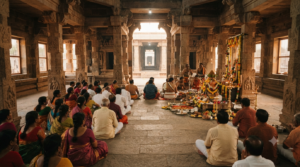
Tamil Nadu’s Hindu Religious and Charitable Endowments Department lists the Arulmigu Chithragupthaswamy Temple in Kanchipuram. Its temple history notes a Chithirai festival for Chitragupta and a procession on Pournami. That official record confirms how strongly the observance is tied to Chitragupta worship in Tamil Nadu.
Many families therefore use the day as a spiritual audit. They pray for forgiveness, give charity, and make a clear personal resolution. Any belief about karma, merit, or spiritual benefit should be understood as a matter of faith and tradition, not as a guaranteed outcome.
Chitra Pournami Pooja Samagri
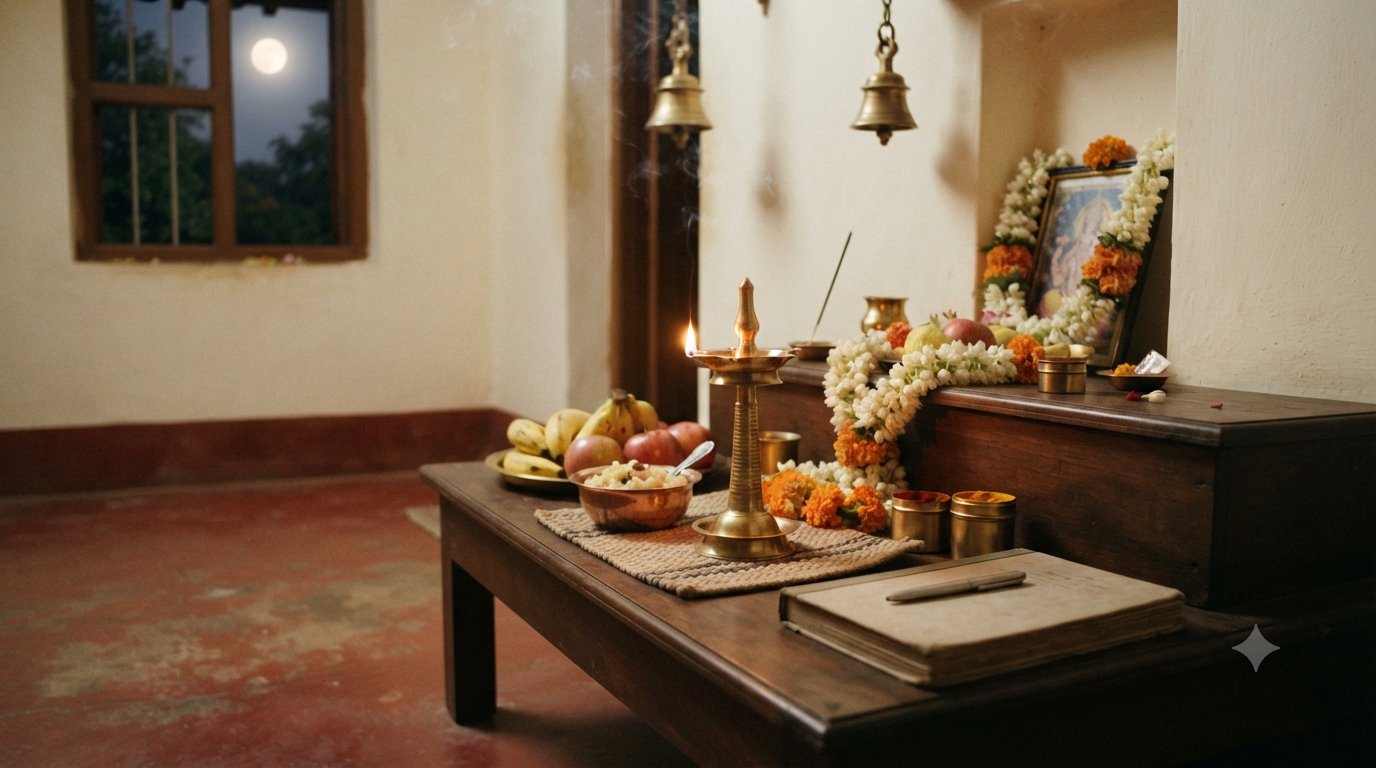
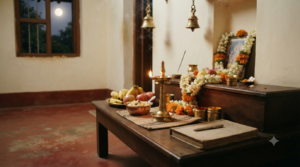
Chitra Pournami Pooja does not need expensive items. A clean altar and a few standard offerings are enough for a simple home observance. If your household has a stricter inherited method, follow that family tradition instead of adding items from random internet lists.
- Image of Chitragupta, or a clean symbolic place on the altar
- Small image of Ganesha for the opening prayer
- Turmeric, kumkum, sandalwood paste, and akshata
- Fresh flowers or a simple flower garland
- Oil or ghee lamp, cotton wicks, incense, and camphor
- Clean water in a small vessel
- Betel leaves and betel nuts if your family uses them
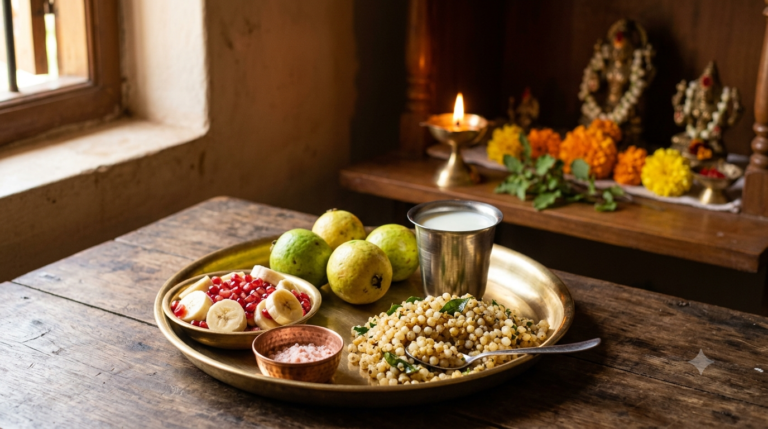
- Banana, mango, or other seasonal fruit
- Simple cooked rice, sweet pongal, or another family naivedyam
- A notebook and pen as a symbolic reminder of Chitragupta’s ledger
The notebook and pen are symbolic rather than compulsory. Some households place them near the deity because Chitragupta is traditionally shown with a writing instrument and record book. Keep the ritual meaningful rather than turning the shopping list into the focus.
Step-by-Step Chitra Pournami Pooja at Home
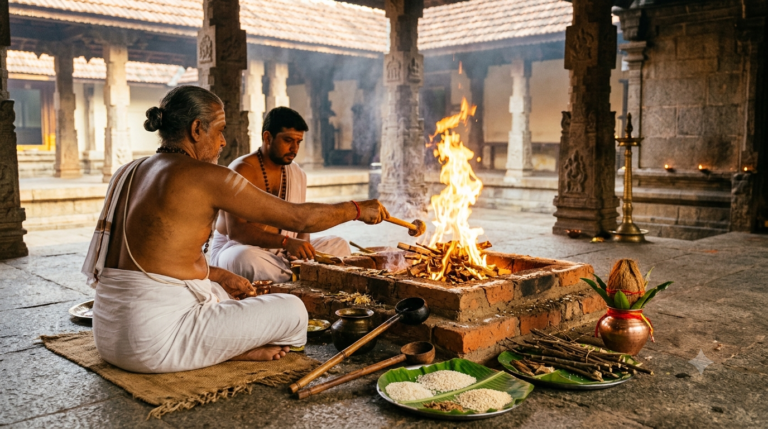
A simple Chitra Pournami Pooja at home can be completed with standard Hindu worship steps. The exact mantras and order can differ by sampradaya, so treat this as a practical family guide. If your home follows a formal sankalpa, tarpanam, or priest-led paddhati, follow that inherited method.
- Clean the pooja space. Bathe, wear clean clothes, and prepare the altar before you begin. Then keep all offerings nearby so the worship can flow without interruption.
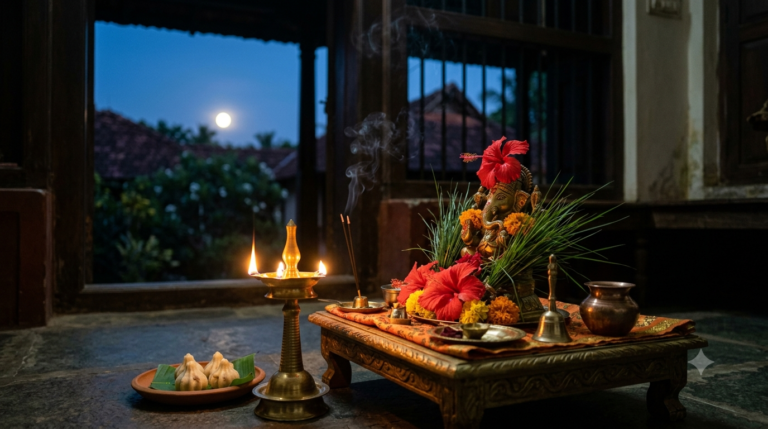
- Light the lamp. Begin with a short prayer to Ganesha. This is the familiar opening used before many Hindu poojas.
- Take a simple sankalpa. State that you are observing Chitra Pournami with devotion and with the intention to correct mistakes. A family priest may provide a formal Sanskrit sankalpa if your tradition requires one.
- Offer worship to Chitragupta. Apply sandalwood, turmeric, and kumkum where appropriate. Offer flowers, akshata, incense, and the lamp.
- Chant simply. You may repeat Chitragupta’s name or a stotra used by your family. Perfect Sanskrit is less important than attention and sincerity.
- Pause for self-review. Think about one action you regret and one habit you want to improve. This makes the symbolism of the divine ledger practical.
- Offer naivedyam. Place fruit, sweet pongal, cooked rice, or your family’s traditional dish before the deity. Then finish with camphor aarti.
- Give charity if possible. Food, rice, notebooks, clothing, or direct help to someone in need can complete the spirit of the day.
- Pray at moonrise if your family does so. Some households offer water or simply view the full moon with a prayer. Treat this as a regional custom, not a compulsory step for every devotee.
Chitra Pournami Pooja Fasting Rules
Chitra Pournami Pooja may include fasting, but there is no single fasting pattern followed by every Tamil household. Some devotees take only fruit and water until the evening worship. Others eat one simple sattvic meal, while some Tamil families traditionally avoid salt for the day.
Choose the form your family follows and your health allows. A waterless fast is not necessary for a meaningful observance. If you are pregnant, elderly, diabetic, unwell, or on regular medication, avoid a strict fast unless your doctor says it is safe.
Fasting is a devotional discipline, not a medical treatment. The purpose is restraint and attention, so a calm partial fast is better than pushing the body into weakness. If you want a broader explanation of fasting choices and safety, our Ekadashi fasting rules guide explains common Hindu fasting levels in more detail.
Naivedyam and Food Traditions
There is no single compulsory Chitra Pournami menu. Common household offerings include fruit, jaggery, sweet pongal, plain rice preparations, and simple seasonal dishes. Some Tamil families also prepare saltless food, while others follow their normal sattvic festival menu.
Do not treat one family’s recipe as a universal rule. The safest approach is to offer food your household already considers suitable for Pournami worship. If you also perform Satyanarayana worship on full-moon days, our Satyanarayana Pooja samagri guide covers that separate ritual.
After the pooja, share the food as prasadam. If you have chosen a fast, break it gently according to your health and family custom. Charity can also be part of the meal plan, since feeding others fits the day’s focus on accountable action and generosity.
Temple Worship, Kanchipuram and Tiruvannamalai
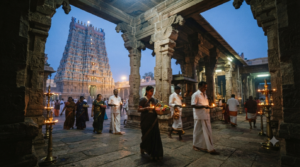
Kanchipuram is especially important because the Tamil Nadu HR&CE department administers a dedicated Chitragupta Swamy Temple there. The department’s own temple history records a Chithirai festival and a Pournami procession. If you plan a visit, check the HR&CE portal for current opening hours because temple schedules can change.
Tiruvannamalai is another major full-moon destination. The district administration states that the Girivalam route around Arunachala is about 14 km, and full-moon days attract very large numbers of devotees. The district also publishes special arrangements for Chitra Pournami when crowd management is needed.
If you plan Girivalam, treat it as a long walk rather than a casual temple round. Carry water, wear suitable footwear where permitted, and follow police or district instructions. Anyone with heart, joint, mobility, pregnancy, or heat-related concerns should take medical advice before attempting the full route.
What Most Chitra Pournami Guides Get Wrong
The first mistake is recycling last year’s civil date. Chitra Pournami follows a lunar tithi within Chithirai, so the Gregorian date must be checked again every year. A copied date can become wrong even when the ritual description remains accurate.
The second mistake is presenting one family custom as mandatory. Salt-free food, moon worship, a drawn Chitragupta kolam, formal tarpanam, and specific naivedyam all appear in different traditions. They should be described as family or regional practices unless an authoritative ritual source makes them universal.
The third mistake is mixing Chitra Pournami with every Chaitra Purnima observance across India. Regional calendars and deity traditions differ. Keep the Tamil Chithirai observance clear, then explain related customs separately.
Finally, avoid exaggerated claims. No pooja can honestly promise guaranteed wealth, marriage, health, or cancellation of every past action. The enduring value of the day lies in prayer, self-correction, charity, and disciplined conduct.
How to Keep This Festival Guide Evergreen
The best evergreen rule is simple: keep the ritual fixed and update only the annual date box. The festival identity, Chithirai month, Pournami tithi, Chitragupta worship, charity, and home pooja structure remain stable. Only the civil date, local tithi timing, temple hours, and crowd instructions need yearly checking.
When the festival approaches, verify the date for your city on a current panchangam. If you are visiting Kanchipuram, use the official Tamil Nadu HR&CE temple page. If you are going to Tiruvannamalai, check the Tiruvannamalai district Girivalam page for official route information and local notices.
This approach prevents the article from becoming stale after one season. It also protects readers from one of the most common festival-content errors: an old year in the title being mistaken for a current calendar answer.
Before You Observe Chitra Pournami
Chitra Pournami is easiest to understand as a day of worship plus moral accounting. Confirm the Pournami tithi for your city, keep the pooja simple, and follow your family’s food and fasting tradition. Then use the day for one sincere correction in conduct rather than chasing elaborate rituals.
That is the durable heart of Chitra Pournami Pooja. The date changes, but the devotional pattern does not. Prayer, responsibility, charity, and a conscious effort to do better give the festival its lasting meaning.
Frequently Asked Questions About Chitra Pournami Pooja
What is Chitra Pournami?
Chitra Pournami is the full-moon observance of the Tamil month of Chithirai, usually falling in April or May. It is closely associated with Chitragupta worship in Tamil Nadu. Devotees also pray, give charity, and review their own conduct.
Does Chitra Pournami fall on the same date every year?
No. The Gregorian date changes because the festival follows Pournami tithi, not a fixed civil date. Always verify the current year’s date and local tithi for your city before planning the pooja.
Can Chitra Pournami Pooja be done at home?
Yes. A simple home observance with a lamp, flowers, akshata, fruit, naivedyam, prayer, and charity is practical for most families. Formal mantras or specialised rites should follow your family tradition or priest’s guidance.
Is fasting compulsory on Chitra Pournami?
No single fasting rule applies to every household. Some devotees fast until evening, some take fruit, and some eat one simple sattvic meal. Health should come first, especially for pregnant, elderly, diabetic, or unwell devotees.
What should I offer to Chitragupta?
Simple offerings are enough. Flowers, fruit, cooked rice, sweet pongal, or another family naivedyam can be used. A notebook and pen are also placed symbolically in some homes because Chitragupta is traditionally linked with record keeping.
Is Chitra Pournami the same as Hanuman Jayanti?
Not everywhere. Some regional Chaitra Purnima calendars also mark Hanuman Jayanti, but South Indian customs differ by state. Telugu Hanuman Jayanti follows a separate regional calendar pattern, so the two should not be treated as universally identical.
Where is the famous Chitragupta temple in Tamil Nadu?
The Tamil Nadu HR&CE department lists the Arulmigu Chithragupthaswamy Temple in Kanchipuram. Its official history records a Chithirai festival and a Pournami procession. Check the HR&CE portal for current visitor information.
Is Girivalam common on Chitra Pournami?
Yes, Tiruvannamalai receives major full-moon crowds, and Chitra Pournami is one of the important annual occasions. The district says the Girivalam route is about 14 km. Check local notices and prepare for the physical demand before walking the full circuit.