Namakaranam is the Hindu naming ceremony in which parents formally give a newborn its name, and it carries far more meaning than most families realise. In Sanskrit, nama means name and karana means to make. So the word simply means “making a name.” Telugu families call it Barasala.
This naming rite is also one of the sixteen life rituals every child traditionally passes through. For new parents, understanding the Namakaranam ceremony in advance makes the day calmer and far more meaningful.
Most guides online reduce this samskara to a single line: the father whispers a name into the baby’s ear. That is only the final moment. Behind it sits a full tradition of purification, an auspicious date, and a naming logic drawn from the child’s birth star.
This guide walks through all of it. It also corrects the timing confusion that spreads across many pages, and it explains how the actual name is chosen. Sri Vyasa Pooja is an independent devotional guide, so we do not perform ceremonies or accept bookings. Customs also vary by family and region, so confirm the finer details with your own purohit.
Namakaranam Ceremony: Quick Facts
- What it is: the formal Hindu naming ceremony for a newborn, also called Barasala or Namakarana.
- When: usually the 10th, 11th or 12th day after birth, once the postnatal period ends.
- Who performs it: the father as the karta, guided by a priest; the mother also takes part.
- Core moment: the father whispers the chosen name into the baby’s right ear using a betel leaf.
- Where it sits: the fifth of the sixteen samskaras, or Shodasha Samskaras.
What Is Namakaranam?
Namakaranam is the Hindu rite of passage in which a baby receives its formal name. Tradition counts it as the fifth of the sixteen samskaras. Because a name shapes how a person is known for life, elders treat this naming as a sacred act rather than a casual choice. The ceremony gives the child both a social and a spiritual identity.
The word combines nama and karana, yet regional names vary widely. South Indian Telugu speakers call it Barasala, while other communities simply say Namkaran or Namakarana. Although the language changes, the core intent stays the same across the country. You can read a broad overview on Wikipedia’s Namakarana page for extra context.
The Significance of Namakaranam
The significance of the naming ceremony goes far beyond picking a pleasant sound. Sage Shankha, in the Shankha Smriti, explains the deeper purpose. The father must use the name to connect the child with three things: the kula or family line, the devata or presiding deity, and the nakshatra or birth star. A well-chosen name links all three at once.
Because of this, a traditional name does real work. It roots the child in a family and clan, so anyone hearing it can place the lineage. It carries a divine association, so calling the name becomes a small act of remembrance. It also reflects the birth star, since the qualities of that star are believed to shape the child’s nature.
This is why elders resist naming a baby purely on fashion. Families believe a name chosen through samskara invites protection and auspiciousness. It also gives a sense of belonging that a random choice cannot match. The dharma reference site Sanatan Sanstha explains the same four-fold naming logic in detail.
When Is the Namakaranam Procedure Performed?
Families traditionally perform Namakaranam on the 10th, 11th, or 12th day after birth. It happens once the initial impurity period, known as sutika or ashaucha, has passed. The Manu Smriti names the 10th or 12th day. In practice, the 11th day is the most common choice, and Telugu families usually hold Barasala then.
Here is where many websites mislead readers. Some insist on one rigid day, yet the scriptures clearly allow flexibility. The Gobhila Grihya Sutra permits the naming after ten nights, after a hundred nights, or even after one year.
If the baby or mother is unwell, this delay is not a compromise. Instead, the tradition itself writes the option in. Other recognised dates include the 16th or 18th day, while some regional customs use the 21st day, the third month, or a full hundred days after birth. Because of this wide range, families should not panic if the 11th day does not suit them.
Choosing an Auspicious Muhurta
Timing still matters, so families fix the date on an auspicious tithi, nakshatra, and muhurta. Classical texts favour stars such as Ashwini, Rohini, Mrigashira, Punarvasu, Pushya, Hasta, Swati, Anuradha, Moola, Shravana, Dhanishta, Shatabhisha, Uttara, and Revati. Astrologers also prefer the first half of the day, when Jupiter and Venus sit favourably. You can cross-check dates on a panchang such as Drik Panchang, or use a trusted panchangam before you finalise the date.
How the Baby’s Name Is Chosen
In Namakaranam, a child traditionally receives not one name but four, and each serves a distinct purpose. This four-name system comes from the Smritis. Most families today keep only one everyday name, yet the full set is worth understanding. Many parents ask their family astrologer for the syllable first, then shortlist names that also carry a good meaning.
The first is the nakshatra nama, tied to the birth star. The second is the masa nama, drawn from the deity of the lunar month of birth. The third is the kuladevata nama, the family deity’s name, given to guard the child from harm. The fourth is the vyavaharika nama, the practical, everyday name the world will use.
The Nakshatra Syllable System
The most practical piece for parents is the starting syllable. Each of the 27 nakshatras splits into four padas, or quarters, which gives 108 syllables in total. The Moon’s exact position at birth then decides which syllable your baby’s name should begin with. Classical texts like the Brihat Parashara Hora Shastra record this mapping.
So when a priest gives you a starting letter, it is not arbitrary. It reflects the precise pada the Moon occupied at the moment of birth. Parents then pick a meaningful name that opens with that sound. This is why so many Indian names feel astrologically assigned.
The Namakaranam Procedure Step by Step
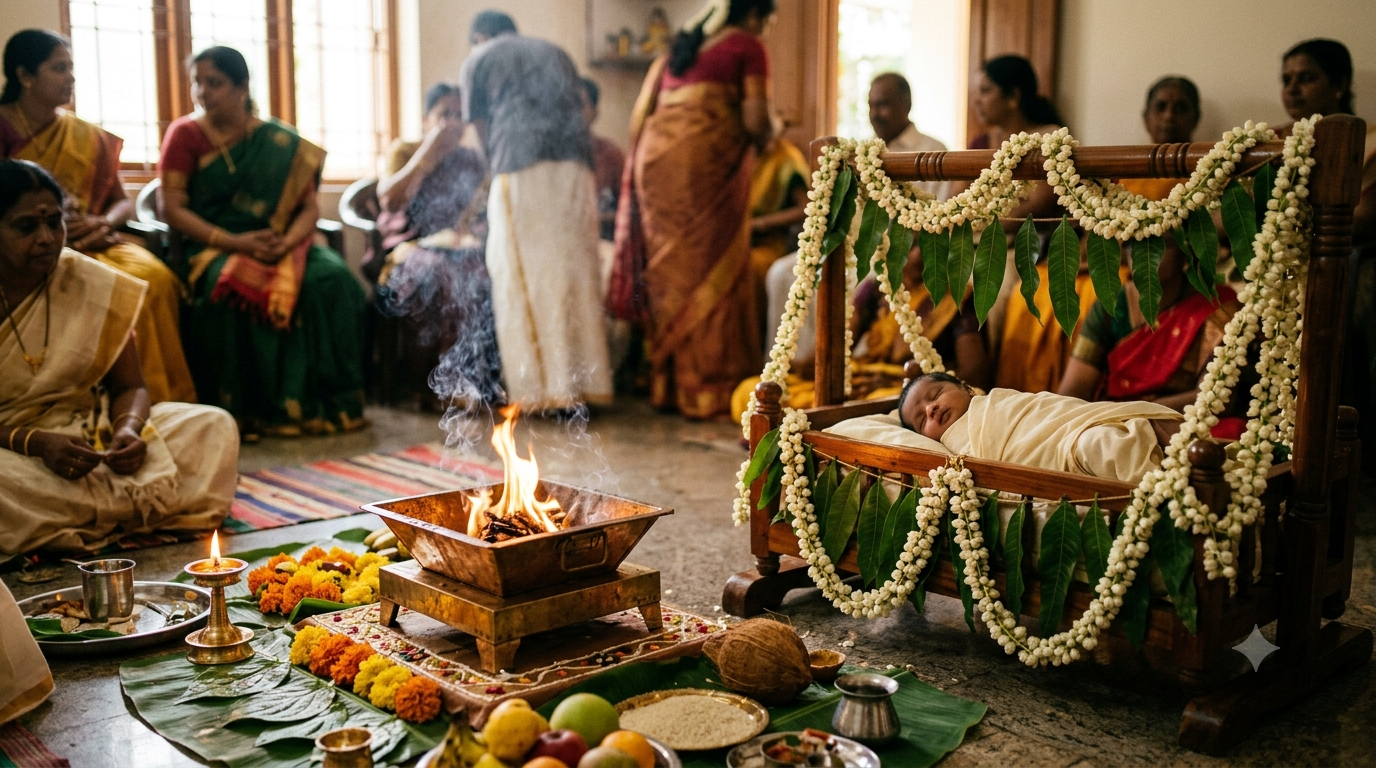
The full Namakaranam procedure follows a clear sequence, though small details shift between sampradayas. Below is the traditional flow most families follow at home or in a temple.
- Punyahavachanam: the priest first performs a purification rite. It cleanses the mother, the baby, and the home after the postnatal period.
- Bath and dressing: the mother and baby bathe, and the family dresses the child in new clothes. They apply kajal to the eyes and add a small protective mark on the cheek.
- Sankalpa and worship: the family invokes Lord Ganesha and the kuladevata. The father then makes the sankalpa, stating the child’s nakshatra and rashi.
- Homam: the priest lights a sacred fire. Prayers go out to the gods, the five elements or pancha bhootas, and the ancestors for the child’s protection.
- Naming: the father leans toward the baby’s right ear. Using a betel leaf, he softly whispers the chosen name, and the mother then repeats it.
- Blessings: elders and priests bless the child. An elder may touch a little honey to the baby’s lips, and the family offers gifts or dakshina.
The whispered name is the emotional heart of the day. Once the father speaks it into the ear, the family formally recognises the child by that name.
What You Need to Arrange
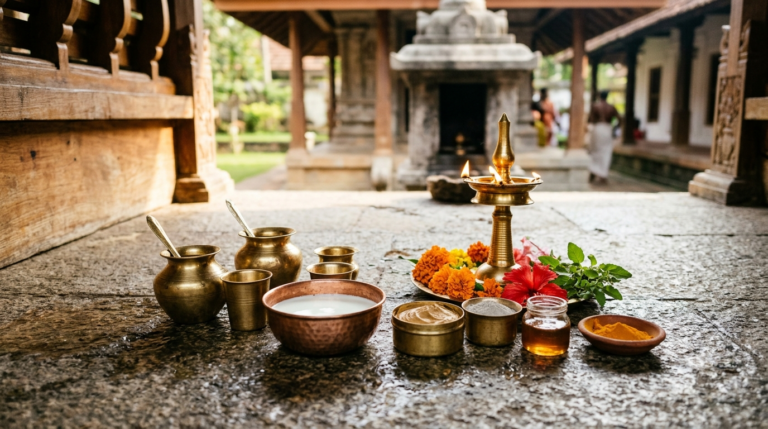
A little planning keeps the Namakaranam day calm, especially with a newborn in the house. Fix the muhurta and the purohit well ahead, because good dates fill up fast. Ask your priest for a checklist of pooja items. The exact materials differ by tradition, and by whether you perform the rite at home or in a temple.
Costs also vary a great deal. A simple home ceremony needs only basic pooja items and the priest’s dakshina, while a temple booking or a large gathering adds catering and hall charges. There is no fixed national rate. So confirm the current dakshina and any temple fee directly with your purohit or the temple office before you commit.
Keep the guest list close for the newborn’s sake, and brief one relative to manage photos and video. That way parents can focus on the baby rather than the crowd.
Health and Safety for Baby and Mother
Because the ceremony centres on a newborn and a recovering mother, their wellbeing comes first. Keep the gathering modest and the room airy, and limit direct handling of the infant by many guests.
If the baby or mother is unwell, remember that the scriptures themselves permit postponing the naming. So there is no need to rush a sick child into a crowded event. When in doubt about the baby’s health, a doctor’s advice matters more than a fixed date.
Common Mistakes and Misconceptions
Several myths trip up first-time parents. The biggest is the belief that Namakaranam must fall on one exact day, or lose its validity. As the Grihya Sutras show, the tradition offers a wide window. So a delay for genuine reasons is perfectly acceptable.
Another misconception treats the naming as a mere formality with no rules. In reality, the birth-star syllable and the family deity both guide the choice. A third error is skipping the purification step, yet the Punyahavachanam is what prepares the family for the naming. Understanding these points helps you honour the ritual properly, rather than reduce it to a photo session.
Before You Name Your Child
Namakaranam blends devotion, astrology, and family tradition into one warm milestone. Aim for the 10th, 11th, or 12th day if the baby and mother are well. Choose an auspicious muhurta, and let the birth-star syllable guide the everyday name.
Above all, do not stress over rigid dates, because the tradition itself bends around a family’s real circumstances. A calm, correctly performed ceremony matters far more than a rushed one. For a related milestone, you may also want to read about the Upanayanam ceremony, the sacred-thread samskara that comes later in a child’s life.
Frequently Asked Questions
What is the Namakaranam procedure in simple terms?
It is the Hindu naming ceremony for a newborn. The father whispers the chosen name into the baby’s right ear after a purification rite and a homam. This marks the child’s formal identity, and it is the fifth of the sixteen samskaras. Families also call it Barasala or Namkaran.
On which day is Namakaranam performed?
Most families perform it on the 10th, 11th, or 12th day after birth, once the postnatal period ends. The Manu Smriti mentions the 10th or 12th day, while the 11th is common in Telugu households. The tradition also allows the 16th day, the third month, or later if needed.
Can Namakaranam be delayed?
Yes. The Gobhila Grihya Sutra permits the naming after ten nights, a hundred nights, or even a year. If the baby or mother is unwell, postponing the ceremony is fully accepted. A delay does not reduce its validity in any way.
How is the baby’s name chosen in Namakaranam?
The name usually begins with a syllable fixed by the Moon’s nakshatra and pada at birth. Traditionally four names apply: the birth-star name, the month-deity name, the family-deity name, and the everyday name. A priest gives the starting letter, and parents then pick a meaningful name from it.
Who performs the Namakaranam ceremony?
The father acts as the karta, or main performer, while a priest guides the rituals and chants. The mother also participates, especially when she repeats the whispered name. Grandparents and close relatives usually attend to bless the child.
What is Namakaranam called in Telugu?
In Telugu, people call it Barasala, and they usually hold it on the 11th day after birth. The ritual is the same naming samskara known elsewhere as Namakarana or Namkaran. Only the regional name and a few local customs differ.
Is Namakaranam done at home or in a temple?
Both are common. Many families hold it at home with a priest, while others prefer a temple for its sanctity and convenience. The choice depends on space, budget, and family tradition. The core rituals stay the same either way.