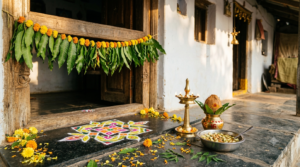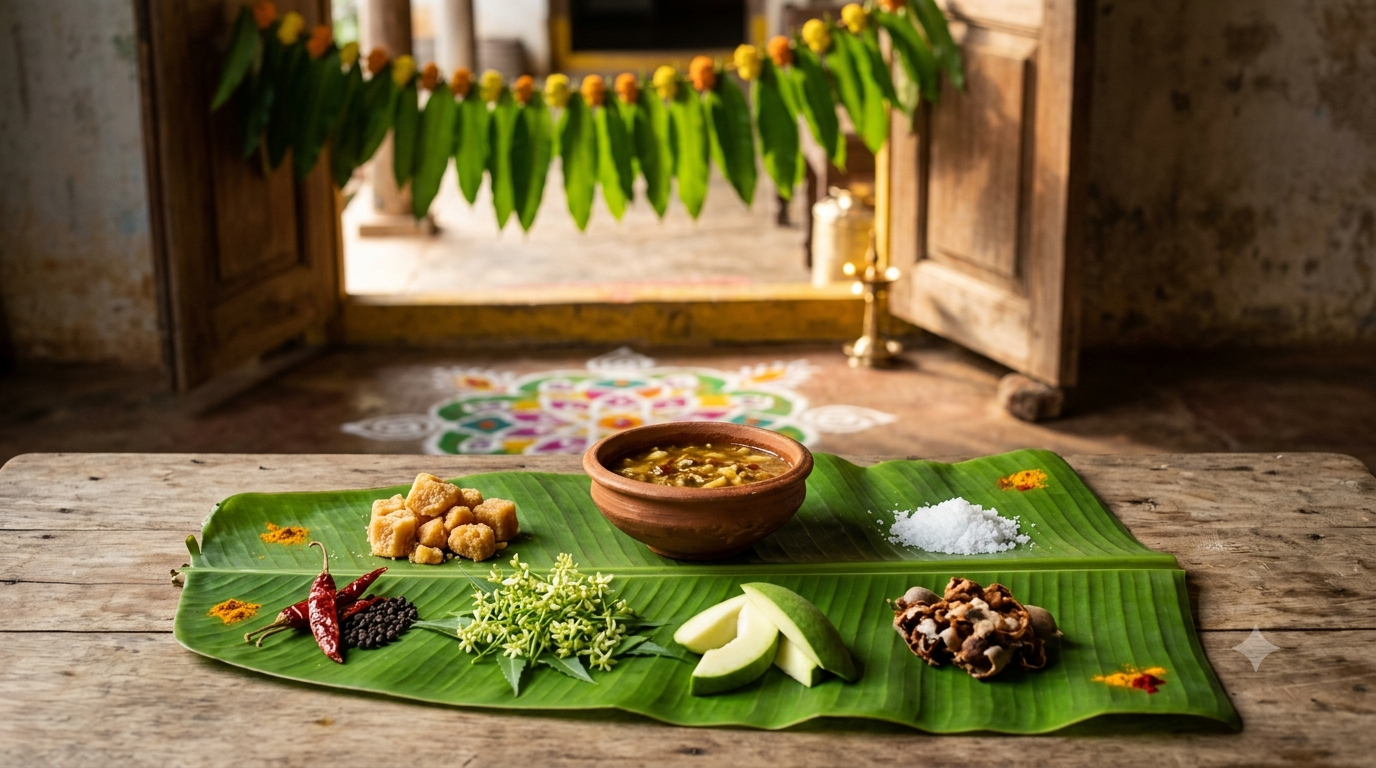
The significance of Ugadi festival goes far beyond a date on the calendar. It marks the very first sunrise of a brand-new Hindu lunar year for millions across the Deccan. Telugu and Kannada families greet the day with mango-leaf garlands, fresh rangoli, and one spoonful of a dish that tastes of everything life can throw at you.
Perhaps you have wondered why this “new year” lands on a different date each spring. Or what the six tastes really mean. This guide answers both in one place, so let us walk through the meaning, the history, the rituals, and the practical details you actually need.
Srivyasapooja is an independent guide to Hindu festivals and traditions. This page explains the day for planning and understanding, and it does not process bookings or payments. Always confirm the exact Ugadi date, muhurtam, and samvatsara name in a current panchangam or with your family priest, since regional calendars can differ slightly.
Ugadi at a Glance
- What it is: the lunar New Year for Andhra Pradesh, Telangana and Karnataka.
- When: Chaitra Shukla Pratipada, the first day after the new moon in Chaitra, usually in March or April.
- Next date: Ugadi falls on 7 April 2027 (Wednesday), after 19 March 2026.
- Signature dish: Ugadi Pachadi, blending six tastes into one bite.
- Other names: Yugadi in Karnataka, Gudi Padwa in Maharashtra, Samvatsar Padvo in Goa.
What Is the Meaning and Significance of Ugadi Festival?
Ugadi is the Hindu lunar New Year, and its name joins two Sanskrit words: yuga (age) and adi (beginning). Together, “Yugadi” means the start of a new age. Because the day opens a fresh cycle of time, tradition treats it as one of the most auspicious mornings of the whole year.
Families observe the festival on the first day of the bright fortnight of Chaitra. So it always follows the first new moon after the spring equinox. Many casual readers assume Ugadi is “always in April”, yet the real date shifts between mid-March and early April.
The Spiritual Significance of Ugadi Festival
The spiritual significance of Ugadi festival rests on renewal. It is a day to close the previous year’s account, forgive old grudges, and start clean. The sun is climbing north and spring is in full flow, so nature itself mirrors that theme of rebirth.
Devotees also treat Ugadi as one of the four-and-a-half most auspicious moments in the traditional calendar, the Sade Teen Muhurat. Because tradition considers the whole day blessed, families begin new ventures, buy gold, or sign house papers on it without waiting for a separate muhurtam. That belief is a matter of faith and Vedic tradition rather than a guaranteed outcome, yet it shapes how the day is lived.
Why the Samvatsara Name Changes Every Year
Each Ugadi begins a uniquely named year within a repeating 60-year cycle called the samvatsara. When one cycle of sixty finishes, the names simply start again. So the year that began on Ugadi 2025 carried the name Vishvavasu, while the one from 19 March 2026 is Parabhava.
For any specific year, priests announce the exact samvatsara name and its predictions fresh. It is therefore wise to confirm the current name in that year’s panchangam. The table below lists recent dates and names for quick reference.
| Ugadi Year | Gregorian Date | Samvatsara Name |
|---|---|---|
| 2024 | 9 April | Krodhi |
| 2025 | 30 March | Vishvavasu |
| 2026 | 19 March | Parabhava |
| 2027 | 7 April | Confirm in panchangam |
Notice how the date jumps from 19 March in 2026 to 7 April in 2027. That gap of nearly three weeks shows why a fixed “Ugadi is on this date” claim misleads people. The panchangam remains the only safe source.
How the Ugadi Date Is Fixed
The significance of Ugadi festival ties to a precise astronomical rule, not a fixed calendar slot. Priests set the day as Chaitra Shukla Pratipada, the first lunar day after the new moon in Chaitra. The Pratipada tithi must also prevail at sunrise for that morning to count.
When two consecutive sunrises both carry Pratipada, tradition picks the earlier day. When neither does, families choose the day the tithi begins. You can cross-check any year’s date on Drik Panchang before you plan. This careful method is exactly why a blanket “Ugadi is in April” claim so often misleads readers.
History Behind the Significance of Ugadi Festival
The history behind the significance of Ugadi festival blends mythology, astronomy, and centuries of practice. According to one tradition, Lord Brahma began creating the universe on this very day, which links the morning to cosmic beginnings.
Another well-loved legend ties the day to Lord Vishnu. A demon named Somakasura reportedly stole the Vedas and hid in the ocean. Vishnu took the Matsya (fish) avatar, recovered the sacred texts, and returned them so creation could proceed. Devotees tell both stories as devotional tradition, not as competing historical fact.
Was Ugadi Recorded in Ancient Texts?
Yes, Ugadi has a long documented past. Medieval inscriptions record major charitable donations to temples and community centres on this day, as noted in historical records of the festival. That evidence shows the festival already mattered centuries ago. The 60-year naming system also draws on classical Indian astronomy, refined by scholars such as the 12th-century mathematician Bhaskaracharya.
Ugadi Pachadi and Its Six Tastes
No ritual carries the philosophy of the day better than Ugadi Pachadi. People eat this special chutney first thing in the morning, and it deliberately blends six flavours in a single mouthful. Each taste stands for an emotion you will meet in the year ahead.
- Jaggery (sweet): happiness and good fortune.
- Neem flowers (bitter): sorrow and hard lessons.
- Raw green mango (tangy): surprises and new challenges.
- Tamarind (sour): the unpleasant moments we must accept.
- Salt (salty): the flavour of everyday life.
- Chilli or pepper (spicy): anger and moments that sting.
The lesson is beautifully simple, because life is never one flavour alone. By tasting all six at once, a person accepts joy and pain together. People eat neem only in a tiny symbolic quantity, so treat any wider health claim about it as tradition, not medical advice.
What Is the Significance of Ugadi Festival Pachadi in Daily Life?
The significance of Ugadi festival Pachadi is emotional as much as culinary. It teaches acceptance before the year even starts, which is a gentle form of mental preparation. Families often make it together, so the dish also strengthens the bond between generations.
Rituals That Show the Significance of Ugadi Festival
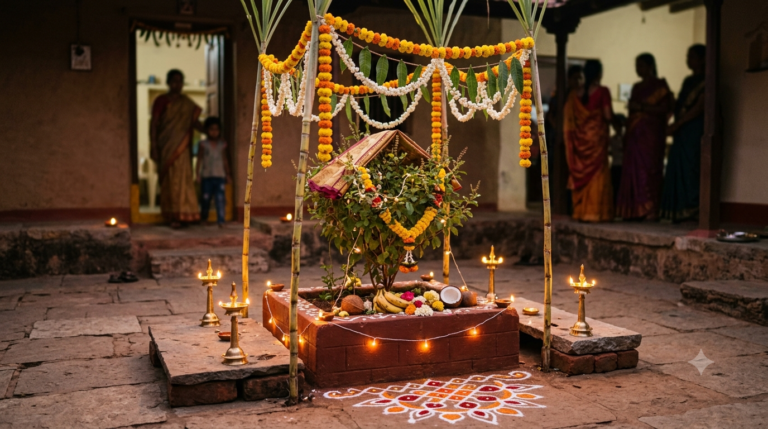
Ugadi customs are warm, practical, and easy to follow. Regional details vary, yet the core sequence stays remarkably consistent across the Telugu and Kannada heartland. Here is how most households mark the day.
- Clean the home thoroughly a day earlier, then take an oil bath at dawn.
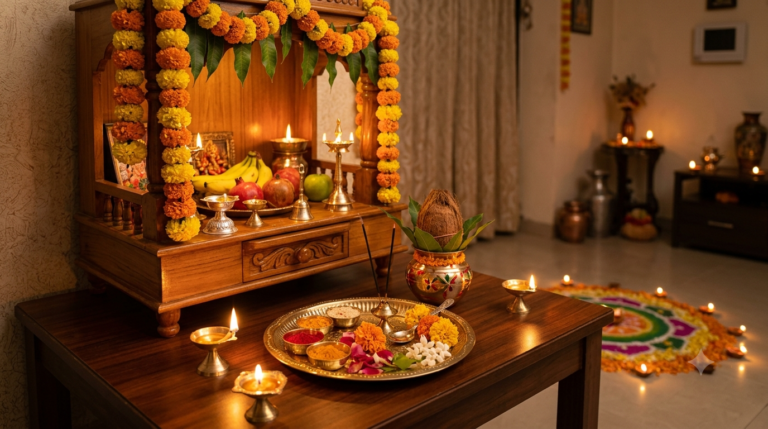
- Wear new clothes and decorate doorways with mango-leaf torana and fresh rangoli.
- Prepare Ugadi Pachadi along with festive food such as pulihora, bobbatlu, and holige.
- Offer naivedyam to the deity and pray for a prosperous year.
- Eat the Pachadi first, then share it with family and neighbours.
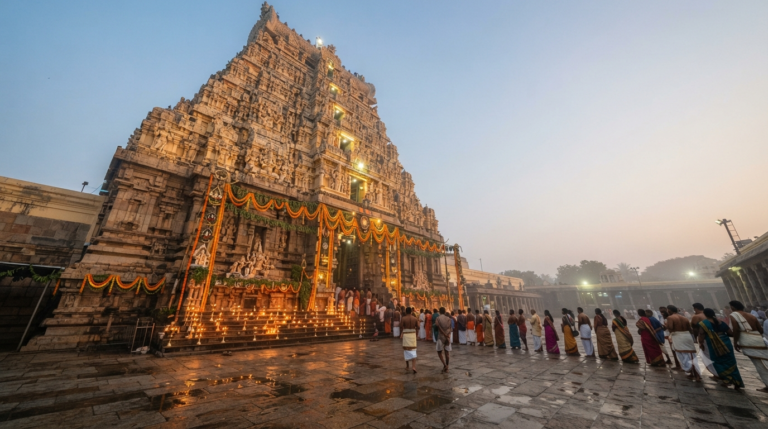
- Attend or listen to the Panchanga Sravanam at a temple, in the community, or on television.
What Is Panchanga Sravanam?
Panchanga Sravanam is the public reading of the new year’s almanac. A priest or scholar recites the coming year’s forecast, covering rainfall, harvest, and general fortune for each moon sign. Because it sets the tone for the year, this recital draws huge crowds.
Many temples and even political offices host the reading, so families often plan their morning around it. You can also follow a trusted Sringeri Peetham panchangam at home when you cannot attend in person.
Regional Significance of Ugadi Festival Across India
People celebrate the same lunar new year under different names across India, though the spirit stays identical. Karnataka calls it Yugadi. Maharashtra and Goa mark it as Gudi Padwa, when families raise a bright gudi flag outside the home for victory and good fortune.
One common mix-up is worth correcting here. Ugadi follows the lunar calendar, so it differs from the solar new years like Puthandu in Tamil Nadu, Vishu in Kerala, or Baisakhi in Punjab. Those fall in mid-April on a fixed solar reckoning, whereas Ugadi shifts with the moon.
Does Ugadi Connect to Other Festivals?
Yes, and people often miss this link. Chaitra Navratri, also called Vasanta Navratri, begins on Ugadi day. That nine-day stretch culminates in Sri Rama Navami, so Ugadi effectively opens a whole devotional season rather than a single holiday.
What Ugadi Teaches Beyond Ritual
Strip away the ritual, and the significance of Ugadi festival becomes a life lesson in one bite. The Pachadi asks you to expect sweetness and bitterness in equal measure. Many families now add simple resolutions to the morning, much like a January reset, so the old festival still feels fresh and modern.
Insider Tips Most Guides Miss
A few small habits make the day smoother, especially when you host family. These come from experience rather than any textbook.
- Buy neem flowers and raw mango a day early, because they sell out fast in local markets before Ugadi.
- Make the Pachadi fresh on the morning itself, since jaggery and mango turn watery if you mix them too soon.
- Check the sunrise-linked muhurtam in your city, as the auspicious window shifts by location.
- If you follow the Telugu panchangam, note the tithi start and end times, because families observe Ugadi when Pratipada prevails at sunrise.
Before You Celebrate
The significance of Ugadi festival finally comes down to one idea: welcome the whole of life, sweet and bitter alike, and begin again with hope. Verify the exact date and samvatsara for your year in an authoritative panchangam. Prepare the Pachadi with care, and make time for the Panchanga Sravanam. Do that, and you honour a tradition that has opened new years across the Deccan for well over a thousand springs.
Frequently Asked Questions
What is the real significance of Ugadi festival?
The significance of Ugadi festival is that it marks the Hindu lunar New Year and starts a new 60-year-cycle samvatsara. It stands for renewal, fresh starts, and accepting every flavour of life. Tradition also links the day to the beginning of creation.
Why does Ugadi fall on a different date each year?
Ugadi follows the lunar calendar, so it lands on the first day after the new moon in Chaitra. The lunar and Gregorian calendars do not match, so the date shifts between mid-March and early April. In 2026 it fell on 19 March, while in 2027 it falls on 7 April.
What are the six tastes in Ugadi Pachadi?
The six tastes are sweet from jaggery, bitter from neem flowers, tangy from raw mango, sour from tamarind, salty from salt, and spicy from chilli or pepper. Together they represent the mix of emotions in the year ahead. Eating them in one bite reminds you to accept all of them.
Is Ugadi the same as Gudi Padwa?
They fall on the same lunar day and share the same meaning of a new year. Gudi Padwa is the Maharashtrian name, and it adds the custom of raising a gudi flag. Ugadi is the Telugu and Kannada version of the same festival.
What is Panchanga Sravanam on Ugadi?
Panchanga Sravanam is the ceremonial reading of the new year’s almanac by a priest or scholar. It forecasts rainfall, harvest, and fortune for the coming year. Many families consider it the spiritual highlight of the day.
Which regions celebrate Ugadi?
People mainly celebrate Ugadi in Andhra Pradesh, Telangana, and Karnataka. Maharashtra and Goa observe the same day as Gudi Padwa, while Konkani communities call it Samvatsar Padvo. Diaspora families mark it worldwide.
Does the significance of Ugadi festival make it lucky for new starts?
By tradition, yes. Tradition counts Ugadi among the Sade Teen Muhurat, the most auspicious days when you need no separate muhurtam. Many people begin ventures, buy valuables, or move house on this day, though this belief remains a matter of faith.
What special food is prepared on Ugadi besides Pachadi?
Beyond Ugadi Pachadi, families cook festive favourites like pulihora (tamarind rice), bobbatlu or holige (a sweet stuffed flatbread), and payasam. Karnataka homes often add obbattu and kosambari. These dishes turn the day into a full family feast after the morning prayers.