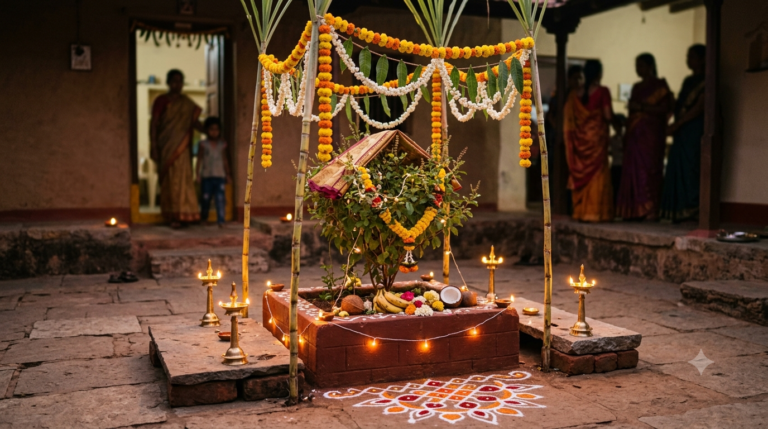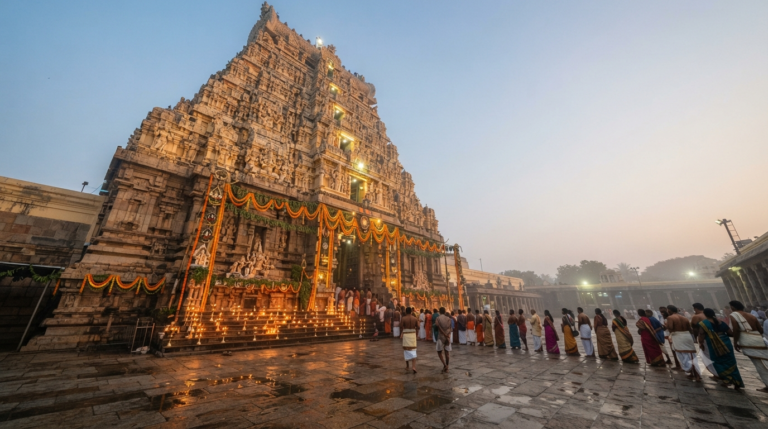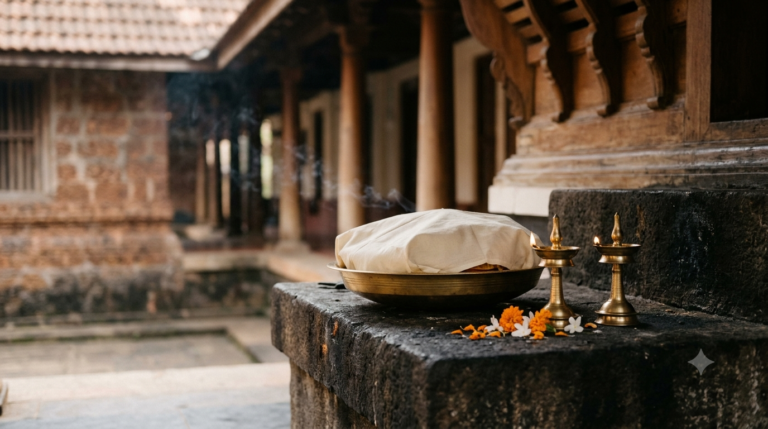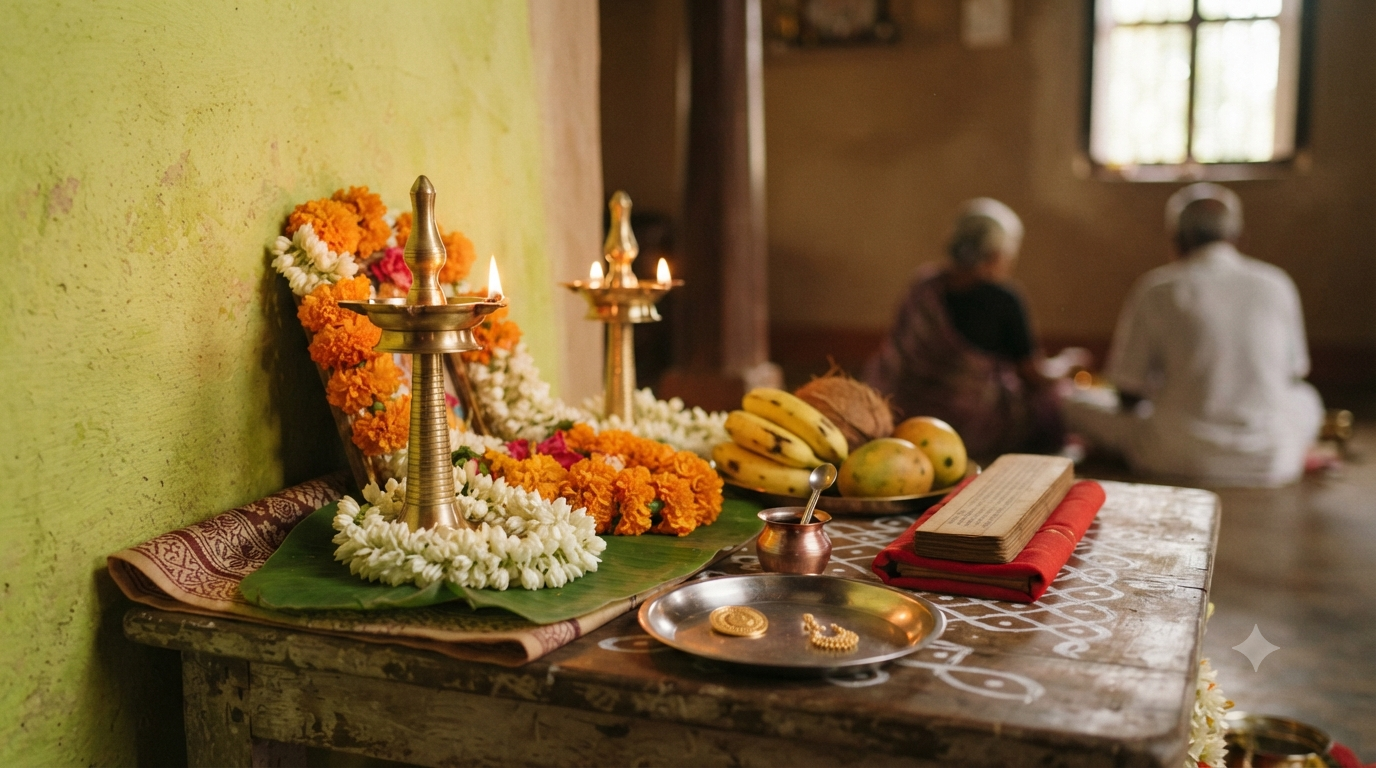
The Akshaya Tritiya story does not centre on only one deity. Hindu traditions most often connect the day with Lord Vishnu, Goddess Lakshmi and Parashurama. Other stories link Krishna, Surya and charity to its meaning.
The festival falls on Vaishakha Shukla Tritiya, the third lunar day of the bright fortnight. Therefore, its Gregorian date changes each year. The central idea is akshaya—that which does not diminish.
Independence note: Sri Vyasa Pooja is an independent devotional information website. It has no affiliation with any temple, trust or government body. This page also does not accept bookings, donations or payments.
Akshaya Tritiya Story: Which God Is Worshipped?
There is no single universal answer because Akshaya Tritiya carries several Hindu traditions. Lord Vishnu is a major focus, especially because tradition links the day with Parashurama, his sixth avatar. Many families also worship Goddess Lakshmi for prosperity. Meanwhile, some include Kubera, Krishna, Ganesha or their family deity according to local custom.
If you want one simple answer, worship of Vishnu and Lakshmi is the safest broad description of modern Hindu practice. Parashurama Jayanti is also observed around this tithi in many regions. The Government of India has separately greeted citizens for both Akshaya Tritiya and Bhagvan Parashurama Jayanti. This public observance reflects their close traditional link.
Akshaya Tritiya Festival at a Glance
- When: Vaishakha Shukla Tritiya, usually in April or May.
- Main Hindu associations: Vishnu, Lakshmi and Parashurama.
- Other traditional links: Krishna, Surya, Kubera, charity and auspicious beginnings.
- Jain significance: the first Tirthankara, Rishabhanatha, ending a long fast with sugarcane juice.
- Common observances: puja, charity, temple visits, new beginnings and, in many homes, buying gold or other valuables.
- Evergreen date rule: check a reliable local panchang each year because the Gregorian date changes.
What Does Akshaya Tritiya Mean?
Akshaya means imperishable, undiminishing or that which does not decay, while Tritiya means the third lunar day. The Indira Gandhi National Centre for the Arts records Akshaya Tritiya as the third lunar day of Vaishakha’s bright half. It also describes traditional fasting, offerings and charity connected with the day.
The Akshaya Tritiya story explains why devotees value actions they hope will produce lasting good. Devotees may begin spiritual study, donate food, perform puja or start a meaningful project. The belief is religious and cultural, so it does not guarantee wealth, business success or investment returns.
Why Lord Vishnu Has a Central Place
Lord Vishnu is one of the strongest deity associations with Akshaya Tritiya. Many devotional traditions treat Vaishakha as a sacred month for Vishnu worship. They also connect this day with Parashurama’s birth and regard him as Vishnu’s sixth avatar.
That link is stronger than the idea that Akshaya Tritiya belongs only to a wealth deity. Prosperity is part of the festival, but the older religious themes also include dharma, charity, restraint and service. So a simple Vishnu puja, together with an act of giving, fits the deeper spirit of the observance.
Parashurama Jayanti on Akshaya Tritiya
Parashurama Jayanti is traditionally observed on Vaishakha Shukla Tritiya. Devotees remember Parashurama as a warrior-sage and an avatar of Vishnu. His story emphasises the restoration of dharma, although different Puranic and regional traditions tell details in different ways.
Families that specifically keep Parashurama Jayanti may worship him directly. Others worship Vishnu and remember Parashurama as part of the day. This is why answers to “which god do people worship on Akshaya Tritiya?” often mention Vishnu first and Parashurama immediately after.
Why Goddess Lakshmi Is Widely Worshipped
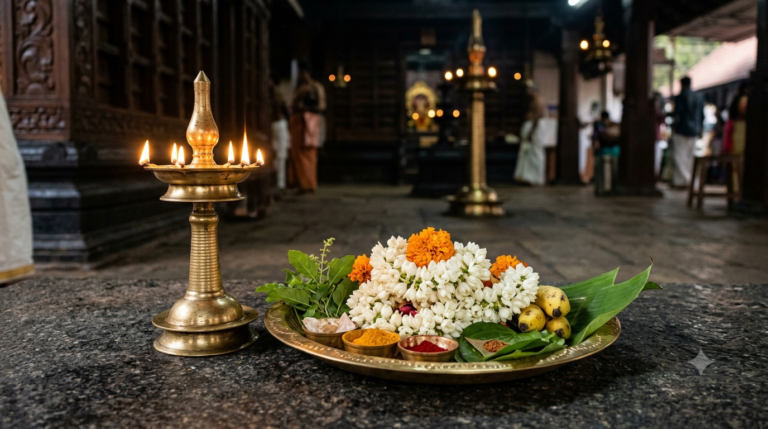
Devotees widely worship Goddess Lakshmi because Akshaya Tritiya symbolises prosperity, wellbeing and abundance. In many homes, families worship Vishnu and Lakshmi together rather than treat them as separate traditions. Devotees may offer flowers, lamps, fruits and simple naivedyam while praying for a stable and ethical household life.
Modern Akshaya Tritiya advertising often reduces the festival to gold buying. That is too narrow. Lakshmi worship in Hindu practice also represents order, generosity, cleanliness and responsible use of resources. Buying jewellery is optional; worship and charity do not require an expensive purchase.
What About Kubera?
Kubera, the deity associated with wealth and guardianship of riches, appears in many modern Akshaya Tritiya puja traditions. Some families worship Lakshmi and Kubera together. However, treat Kubera as one devotional association, not as the festival’s only deity.
The practical lesson from the Akshaya Tritiya story is simple: family tradition matters. A household may centre the day on Vishnu-Lakshmi, Parashurama, Krishna or its own ishta-devata, the chosen deity. There is no need to treat regional variation as a contradiction.
Akshaya Tritiya Story and the Akshaya Patra
The Akshaya Patra story appears in many festival retellings. However, many versions get one important detail wrong. In the Mahabharata account, Yudhishthira worships Surya, the Sun god. Surya then grants the inexhaustible vessel, which feeds the Pandavas and their guests until Draupadi eats.
Krishna enters a later episode involving Sage Durvasa. After Draupadi has already eaten, the vessel can no longer provide food. Krishna finds and eats a remaining morsel.
As a result, Durvasa and his disciples feel satisfied and leave without demanding a meal. The two episodes belong to the same wider narrative, but Krishna does not give the original vessel in the Mahabharata version.
This correction matters because many festival pages collapse the two stories into one. The Mahabharata edition hosted by Tirumala Tirupati Devasthanams identifies Surya as the giver of the Akshaya Patra. The legend fits Akshaya Tritiya symbolically because the vessel represents provision that does not run out.
Krishna and Sudama Tradition
The friendship of Krishna and Sudama is frequently retold on Akshaya Tritiya. Sudama visits Krishna with a humble gift of flattened rice, and Krishna receives him with affection. Sudama returns home and finds his poverty replaced by abundance. Therefore, devotees read the story as a symbol of grace and devotion.
However, popular retellings do not always establish the festival date from an early textual source. It is better to call this a popular Akshaya Tritiya association. That wording avoids claiming with certainty that the meeting occurred on Vaishakha Shukla Tritiya. That distinction keeps devotional storytelling respectful without turning later tradition into a hard historical claim.
The Ganga Descent Question
Many modern festival guides say the river Ganga descended to Earth on Akshaya Tritiya. That association is popular. Yet the calendar tradition explicitly dedicated to Ganga’s descent is Ganga Dussehra on Jyeshtha Shukla Dashami. Government and panchang sources describe Ganga Dussehra as Gangavataran, the descent of Ganga.
Akshaya Tritiya still has a genuine Ganga connection. The Garhwal administration’s Gangotri page says Gangotri temple traditionally opens for the pilgrimage season on Akshaya Tritiya. So the day remains important in Ganga devotion even when traditions separate the descent story.
Ganesha and the Mahabharata Tradition
A popular tradition says Vyasa began dictating the Mahabharata to Ganesha on Akshaya Tritiya. The story of Ganesha acting as Vyasa’s scribe is famous. However, early textual sources do not equally support the exact Akshaya Tritiya date. For an evergreen guide, it is safer to present the date as a later devotional association.
This does not make the tradition meaningless. Ganesha symbolises auspicious beginnings and disciplined learning, so the story suits a festival linked with starting worthwhile work. It simply needs the correct label: tradition rather than a universally established scriptural date.
Akshaya Tritiya Story in Jain Tradition
For Jains, Akshaya Tritiya has a distinct meaning centred on Rishabhanatha, also called Adinatha, the first Tirthankara. Jain tradition remembers the breaking of his prolonged fast when King Shreyansha offered sugarcane juice in the proper manner. The day therefore carries strong themes of discipline, giving and right conduct.
The Government of India has publicly described Akshaya Tritiya as an important day in the life of Lord Rishabhdev. In Jain communities, devotees may mark the completion of Varshitap, a long fasting discipline, with sugarcane juice. The Hindu and Jain observances share the calendar day, but each tradition has its own theology and ritual story.
Which Akshaya Tritiya Story Is the Main One?
There is no single story accepted everywhere as the one official Akshaya Tritiya story. The strongest recurring themes include Vishnu and Parashurama, Lakshmi and prosperity, the Akshaya Patra and charity. Jain tradition adds Rishabhanatha’s fast-breaking.
| Tradition or figure | Connection with the day | How to present it |
|---|---|---|
| Vishnu | Major deity association | Core Hindu worship tradition |
| Lakshmi | Prosperity and household wellbeing | Widely worshipped, often with Vishnu |
| Parashurama | Birth anniversary on Vaishakha Shukla Tritiya | Strong traditional association |
| Surya | Giver of Akshaya Patra to Yudhishthira | Mahabharata story connection |
| Krishna | Durvasa episode and popular Sudama story | Important, but distinguish textual and later associations |
| Rishabhanatha | Fast-breaking with sugarcane juice | Central Jain significance |
How to Observe Akshaya Tritiya at Home
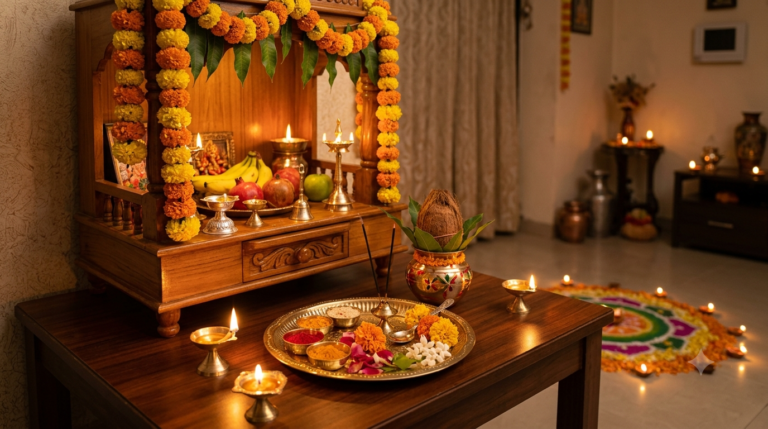
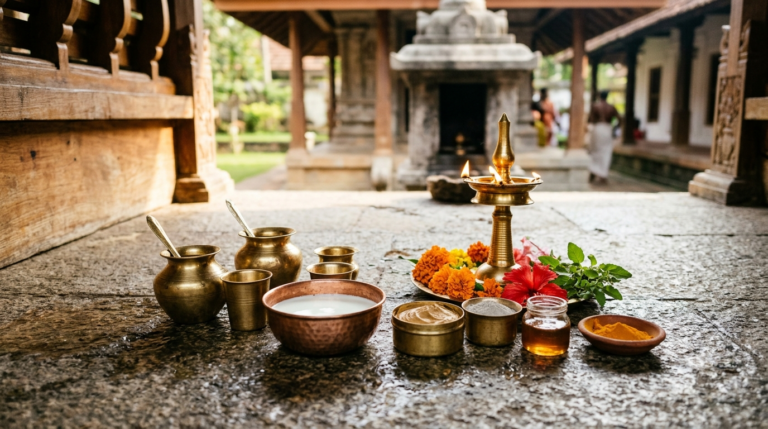
You do not need an expensive ritual to observe the day meaningfully. Begin with a bath and a clean prayer space. Worship the deity your family follows. Otherwise, choose Vishnu and Lakshmi for a broadly recognised Akshaya Tritiya practice.
- Light a lamp and offer a simple prayer to Ganesha before the main puja if that is your family custom.
- Offer flowers, fruit, water and a simple naivedyam to Vishnu and Lakshmi.
- Recite Vishnu Sahasranama, Lakshmi stotra or another prayer you already know.
- Give food, water, clothes or another useful item to someone in need.
- Begin one constructive habit, study plan, savings discipline or service activity that you can sustain.
- Check your regional panchang if your family follows a specific tithi window or puja time.
Some people fast, but fasting is optional in many households and practices vary. If you are pregnant, elderly, diabetic, taking medication or managing a medical condition, avoid a strict fast without professional advice. Religious fasting is a devotional practice, not a medical treatment.
Is Buying Gold Necessary on Akshaya Tritiya?
No. Buying gold is a widespread custom, not a compulsory religious duty. The custom reflects the festival’s idea of undiminishing prosperity. Therefore, many families choose gold, silver, utensils or another durable purchase.
Do not borrow or strain your budget only because a shop advertises an “auspicious” purchase. A small act of charity, prayer or a useful long-term habit can fit the meaning of akshaya just as well. Religious auspiciousness does not guarantee investment returns, so financial decisions should stand on their own merits.
Akshaya Tritiya Story: Common Mistakes
- “Krishna gave the Akshaya Patra.” In the Mahabharata account, Surya gives it to Yudhishthira; Krishna appears in the later Durvasa episode.
- “Akshaya Tritiya belongs to only one god.” Vishnu, Lakshmi and Parashurama are major associations, but practice varies by family and region.
- “Ganga definitely descended on Akshaya Tritiya.” That is a popular association; Ganga Dussehra is the festival specifically dedicated to Gangavataran.
- “You must buy gold.” Gold buying is a custom, not a compulsory ritual.
- “The same Gregorian date works every year.” The festival follows Vaishakha Shukla Tritiya, so the civil date changes annually.
What the Festival Ultimately Teaches
The deeper thread across the Akshaya Tritiya story traditions is not simply “buy something and become rich.” The festival joins devotion, right action, charity, food, service and beginnings meant to last. That is why the day can feel meaningful even without a major purchase or elaborate ceremony.
If your family has a fixed tradition, follow it. If not, Vishnu-Lakshmi worship and a sincere act of charity offer a simple way to observe the day. For other festival traditions and legends, you can also read our Kartika Purnima guide and Kedara Gowri Vratam guide.
Frequently Asked Questions About Akshaya Tritiya
Which Deities Are Commonly Worshipped?
Many devotees worship Lord Vishnu and Goddess Lakshmi on Akshaya Tritiya. Parashurama also matters because tradition places his birth anniversary on Vaishakha Shukla Tritiya. Family and regional traditions may also include Krishna, Kubera, Ganesha or a household deity.
What Is the Main Akshaya Tritiya Story?
There is no single universal story. Major traditions include Parashurama’s birth, the Akshaya Patra, Vishnu-Lakshmi worship and charitable observances. Jain tradition centres on Rishabhanatha ending a prolonged fast with sugarcane juice offered by King Shreyansha.
Who Gave the Akshaya Patra to the Pandavas?
Surya, the Sun god, gives the Akshaya Patra to Yudhishthira in the Mahabharata account. Krishna appears later in the story when Sage Durvasa visits after Draupadi has eaten and the vessel can no longer provide food.
Is Parashurama Jayanti Linked to Akshaya Tritiya?
Yes, Hindu tradition observes Parashurama Jayanti on Vaishakha Shukla Tritiya. Parashurama is traditionally regarded as the sixth avatar of Lord Vishnu, which strengthens the festival’s connection with Vishnu worship.
Is Lakshmi Worship Compulsory?
No single puja pattern is compulsory across all Hindu communities. Lakshmi worship is widespread because the day symbolises prosperity, while many families worship Vishnu and Lakshmi together. Follow your family tradition where one exists.
Must Devotees Buy Gold?
No. Buying gold is a popular cultural custom, not a required religious act. Charity, prayer, temple worship and beginning a useful long-term activity are also common ways to mark the day.
When Does Akshaya Tritiya Occur?
Akshaya Tritiya falls on Vaishakha Shukla Tritiya, the third lunar day of the waxing fortnight in Vaishakha. It usually falls in April or May, but the Gregorian date changes each year, so check a trusted regional panchang.
Why Is the Day Important to Jains?
Jain tradition remembers Rishabhanatha, the first Tirthankara, ending a prolonged fast after King Shreyansha offered him sugarcane juice. The event highlights disciplined fasting, proper giving and the relationship between lay followers and mendicants.