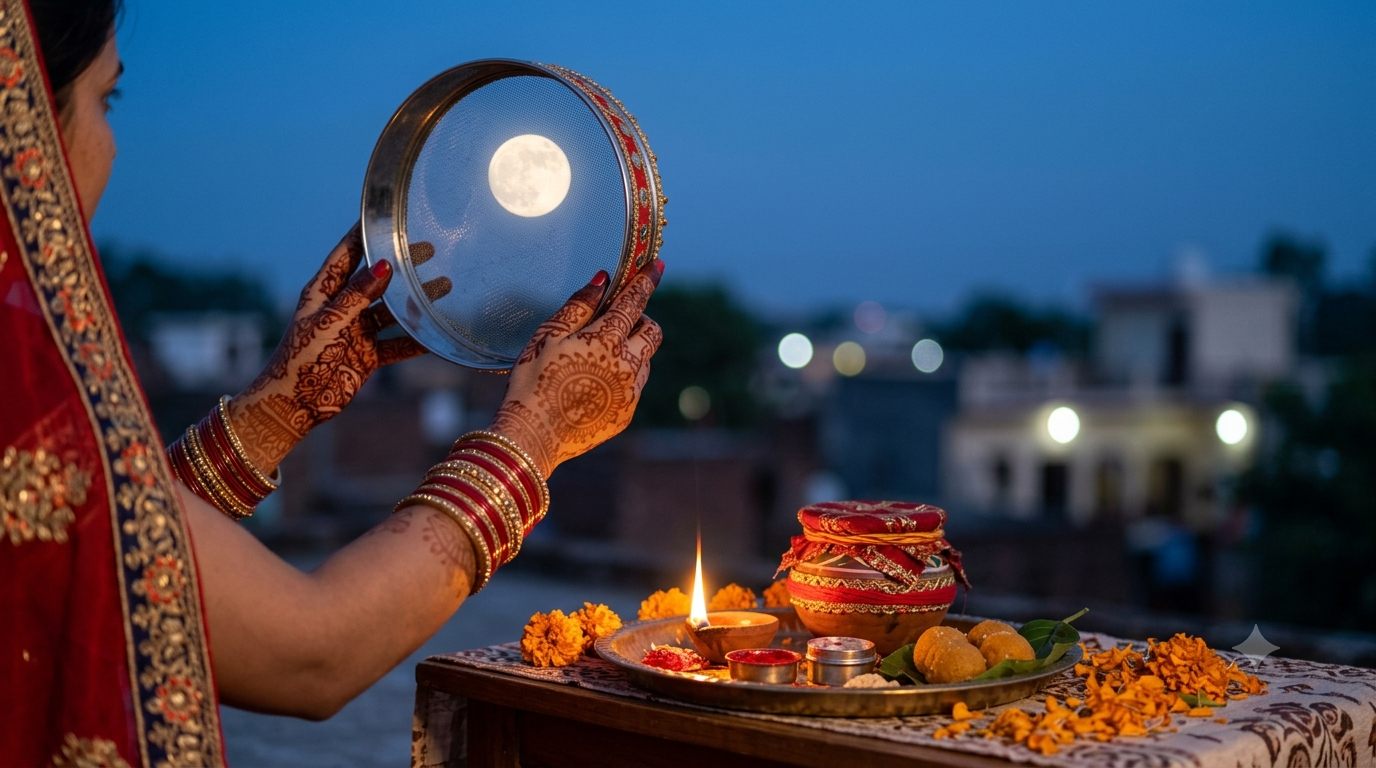
The Karva Chauth vratam is a day-long fast that married Hindu women keep for their husband’s long life. They observe it from sunrise until moonrise, taking neither food nor water. In 2026, this vratam falls on Thursday, 29 October across India. So families in Andhra Pradesh, Telangana and beyond can plan their sargi and evening puja around that date.
Because the fast is nirjala, nothing passes the lips until the moon appears. That makes timing and preparation matter a great deal. This guide covers the exact date, the moonrise window and every ritual. It also explains a detail most North-Indian pages skip, the Telugu festival our own families already know.
Sri Vyasa Pooja is an independent Telugu pooja guide. We are not affiliated with any temple trust or government body. We do not accept bookings, donations or payments. For timings on the day, always confirm with the official panchangam sources linked below.
Karva Chauth Vratam 2026 at a Glance
- Date (India): Thursday, 29 October 2026.
- Date (North America): Wednesday, 28 October 2026, since the tithi falls a day earlier there.
- Tithi: Kartik Krishna Paksha Chaturthi, also called Karak Chaturthi.
- Fasting window (New Delhi): about 6:31 AM to 8:17 PM.
- Puja muhurat (New Delhi): 5:38 PM to 6:56 PM.
- Moonrise (New Delhi): around 8:17 PM, though this shifts city by city.
- Kept by: married women mainly, plus unmarried women who wish for a good husband.
Karva Chauth Vratam 2026 Date and Moonrise Timings
The Karva Chauth vratam in 2026 is on Thursday, 29 October in India. It always lands on the fourth day of Krishna Paksha in the Kartik month. Four days later, mothers keep Ahoi Ashtami for their children. The Amanta calendar of Andhra Pradesh and Maharashtra names this month Ashwin, yet the day stays the same everywhere in India.
Moonrise is the most important moment of the day. That is because the fast breaks only after arghya reaches the moon. The catch is simple.
Moonrise is never one fixed time for the whole country. It shifts with your location, so a Vijayawada moonrise differs from a Delhi or Hyderabad one by several minutes.
| Event | New Delhi timing | What it means |
|---|---|---|
| Fasting begins | ~6:31 AM | Sargi finished before this |
| Puja muhurat | 5:38 to 6:56 PM | Best window for worship |
| Chaturthi tithi ends | ~10:09 PM | Tithi active through puja |
| Moonrise | ~8:17 PM | Fast breaks after arghya |
Treat these New Delhi figures as a reference only. Check the moonrise for your own city before you plan the evening. You can confirm your local time on Drik Panchang, which lists city-wise moonrise.
Even a ten-minute gap changes when you break the fast. If clouds hide the moon, wait a little longer, then offer arghya facing the east or south-east.
What Is the Karva Chauth Vratam?
The Karva Chauth vratam is a nirjala fast. Women take no food and no water from sunrise until they sight the moon.
The word “karva” means the earthen pot that offers water to the moon. “Chauth” simply means the fourth day. Married women worship Shiva, Parvati as Gauri, Ganesha and Kartikeya, then eat only after the moon rises.
The vrat is most popular across Delhi, Haryana, Punjab, Rajasthan and Uttar Pradesh. Its roots trace to two ideas, as noted in this background on Karva Chauth.
One root is agricultural. Women once filled a karva with grain and prayed for a good Rabi harvest. The other root is martial, because wives of soldiers fasted for a husband’s safe return from war.
The Story Behind This Vrat
Almost every family narrates the tale of Veeravati during the evening puja. Veeravati was the only sister among seven devoted brothers. She grew weak with hunger on her very first fast.
Her brothers then tricked her into breaking it early. They showed a false moon using a mirror behind a tree.
As soon as she ate, news arrived that her husband had died. Heartbroken, she held firm and kept the vrat again the next year with full sincerity. Her devotion restored her husband to life.
So the story survives as a lesson in patience and faith. The legend is a matter of tradition rather than fact, yet it explains why women wait for the true moon.
How to Observe the Karva Chauth Vratam
Observing the vrat well is mostly about pacing your day. It runs from the pre-dawn meal to the moon arghya. Here is the sequence that most families follow.
1. Sargi Before Sunrise
The day starts with sargi, a pre-dawn meal from the mother-in-law. It usually holds dry fruits, fresh fruits, sweets, mathri and something filling like feni. Eat it before the fasting window opens, because nothing passes your lips afterward. Sip enough water during sargi, since a long nirjala stretch lies ahead.
2. Shringar and Waiting Through the Day
After sargi, women bathe and dress in red or auspicious colours. This is part of solah shringar, the sixteen adornments. Mehndi, bangles, sindoor and jewellery all belong to the festive look.
Many apply henna the night before, so the colour deepens by morning. The daytime hours pass in preparation, family visits and quiet devotion.
3. Evening Karwa Puja
Women gather for the main puja before moonrise, often in a group. They set up a thali and worship Gauri, Ganesha and the Karwa Mata. An elder narrates the vrat katha to everyone present.
The women then pass their baya, the gift bundles, from hand to hand. The Delhi puja muhurat runs from 5:38 PM to 6:56 PM, though you should follow your local timing.
4. Moon Sighting and Breaking the Fast
Each woman looks at the risen moon through a sieve. She then views her husband’s face through the same sieve. Next she offers arghya, pouring water from the karva toward the moon.
Her husband gives her the first sip of water and a bite of food. That final act ends the Karva Chauth vratam. Unmarried girls sight the Pole Star instead, since they have no husband to see.
Puja Thali and Samagri
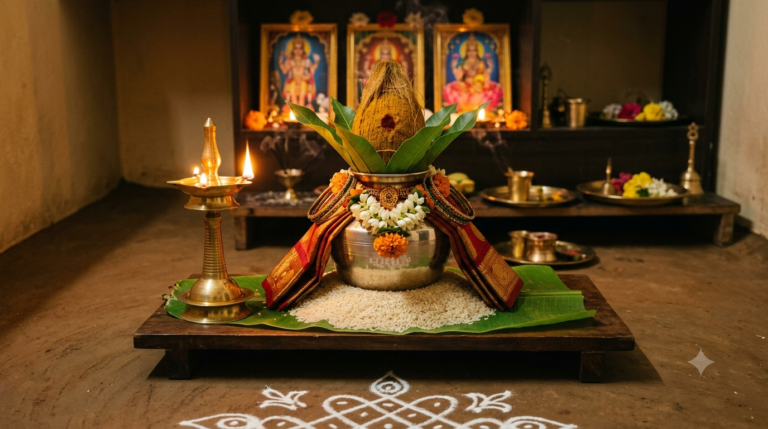
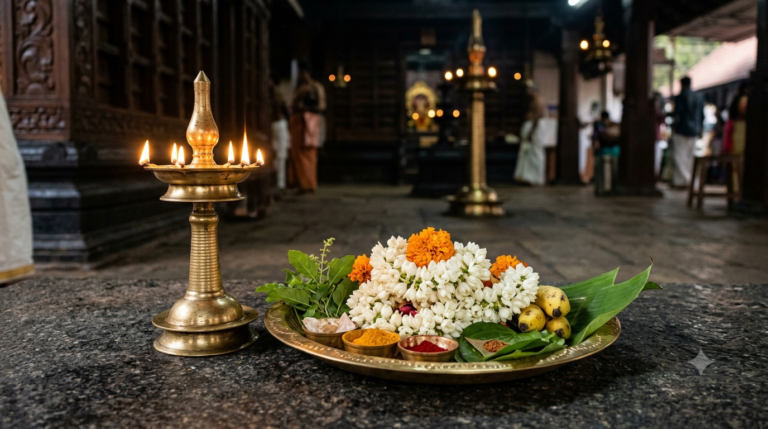
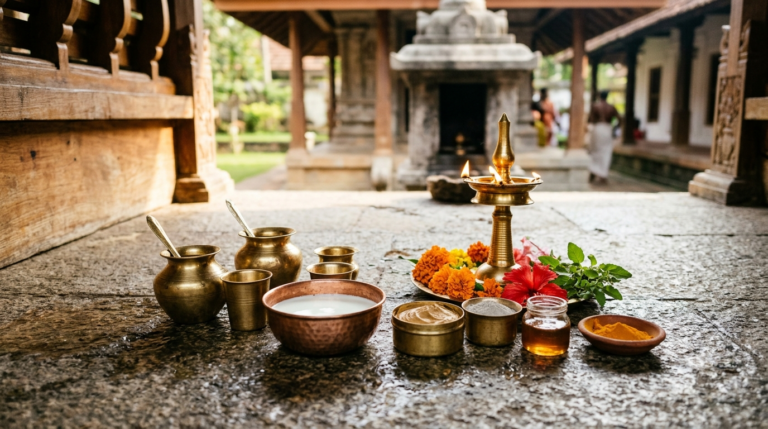
Keeping the thali ready avoids a last-minute rush. A complete Karva Chauth vratam thali holds a karva, a sieve and a diya.
It also needs sindoor, roli, kumkum, chandan, rice, flowers, fruits, sweets and water. Some families add a small image of Gauri and Ganesha. Arrange everything before the puja muhurat, so the worship flows without a break.
Karva Chauth Vratam and Atla Tadde: The Telugu Connection
Here is what most guides miss, and it matters for every Telugu family. Karva Chauth is largely a North-Indian vrat. Yet Andhra Pradesh and Telangana keep a near-identical festival called Atla Tadde.
Many call it the “Telugu Karwa Chauth”. Both fasts share the same heart, a wife praying for her husband’s long life.
Women keep Atla Tadde for Goddess Gauri on the third night after the Aswiyuja full moon. It usually falls a day before Karva Chauth. Telugu women fast without food or water, then perform an evening puja. They break the fast with small atlu, which are tiny dosas, after gazing at the moon.
Before sunrise they eat suddi, rice with curd and gongura, and they apply gorintaku for mehndi. You can follow our full Atla Taddi pooja vidhanam for the home procedure. This reference on Atla Tadde confirms the shared roots.
| Feature | Karva Chauth | Atla Tadde |
|---|---|---|
| Main region | North India | Andhra, Telangana |
| Deity | Gauri, Shiva, Ganesha | Goddess Gauri |
| Fast breaks with | Water and sweets | Small atlu (dosas) |
| Moon ritual | Arghya through a sieve | Gazing at the moon |
So two branches grow from one tradition. Your relatives may keep Atla Tadde while friends up north keep Karva Chauth. Southern women also observe related vrats through the year. These include the Kedara Gowri Vratam and the Varalakshmi Vratam, which honour Parvati and Lakshmi.
Common Myths and Mistakes to Avoid
Several errors circulate online every year. They can genuinely trip up a first-time vrati. Clearing them up protects both your fast and your peace of mind.
- “The date is the same worldwide.” Not true. India keeps it on 29 October 2026. North America keeps it on 28 October, because the tithi falls earlier there.
- “One moonrise time fits all cities.” Moonrise changes with your location. A single time copied for all of India will mislead you, so always check locally.
- “Karva Chauth is only for the north.” The south has Atla Tadde, its direct Telugu counterpart. The sentiment is truly shared nationwide.
- “Everyone must keep a strict nirjala fast.” Tradition allows a lighter fast for those who cannot go without water, such as pregnant or unwell women.
Health and Safety During the Fast
A nirjala fast means no water for well over thirteen hours. So it does place real demand on the body. Most healthy adults manage fine, yet some should take extra care. Speak with your doctor first if you are pregnant, nursing, diabetic, on medication, or recovering from illness.
Many women in these cases keep a modified vrat with fruits and water. Tradition has long accepted this gentler path.
Load up on hydrating foods and water during sargi. Then break the fast slowly rather than with a heavy meal. The vrat is an act of faith, so never treat it as a medical practice or a cure.
What First-Time Vratis Should Know
A few practical lessons make the Karva Chauth vratam far smoother. They matter most if this is your first year. Experienced women pass down these small tips.
- Eat a filling, protein-rich sargi, since it carries you further than sweets alone.
- Apply mehndi the night before, so it dries fully and darkens by morning.
- Keep the thali and karva ready by afternoon, because the evening gets busy fast.
- Note your city’s moonrise early, then keep a sieve and water within reach.
- Rest in the afternoon if you can, as caffeine withdrawal often causes headaches.
Before You Begin the Fast
The Karva Chauth vratam blends devotion, patience and warmth between families. That holds true whether you keep it up north or observe Atla Tadde in the south.
For 2026, mark Thursday, 29 October on your calendar. Plan your sargi before dawn, then confirm your local moonrise before evening. Above all, listen to your body and keep the fast in the spirit of love it was meant for. A little planning the night before turns a demanding fast into a joyful, memorable day.
Frequently Asked Questions
When is the Karva Chauth vratam in 2026?
In India, the Karva Chauth vratam falls on Thursday, 29 October 2026. North America keeps it on 28 October, because the Chaturthi tithi arrives a day earlier in that time zone.
What is the moonrise time for Karva Chauth 2026?
Moonrise in New Delhi is around 8:17 PM on 29 October 2026. It differs by city, so check your local panchangam. Southern and eastern cities often see the moon a little earlier than Delhi.
Can unmarried girls keep the Karva Chauth vratam?
Yes, unmarried girls may keep the fast to pray for a good husband. They sight the Pole Star, known as Dhruva Tara, rather than a husband’s face through the sieve.
Is Karva Chauth the same as Atla Tadde?
They are closely related but not identical. Atla Tadde is the Telugu festival of Andhra and Telangana, kept a day earlier. Women there break the fast with small dosas. Both honour Gauri and pray for a husband’s long life.
Can I drink water during the Karva Chauth vratam?
A traditional fast is nirjala, so no water is taken until moonrise. However, pregnant, nursing or unwell women may keep a lighter fast with water and fruits, which tradition accepts.
What should the sargi meal include?
Sargi usually includes dry fruits, fresh fruits, sweets, mathri and a filling item like feni. Choose hydrating and slow-digesting foods, since they help you last through the long day.
Which deities are worshipped during the vrat?
Women mainly worship Goddess Gauri, Lord Shiva, Lord Ganesha and the moon. Many homes also honour the Karwa Mata. An elder narrates the vrat katha of Veeravati before moonrise.