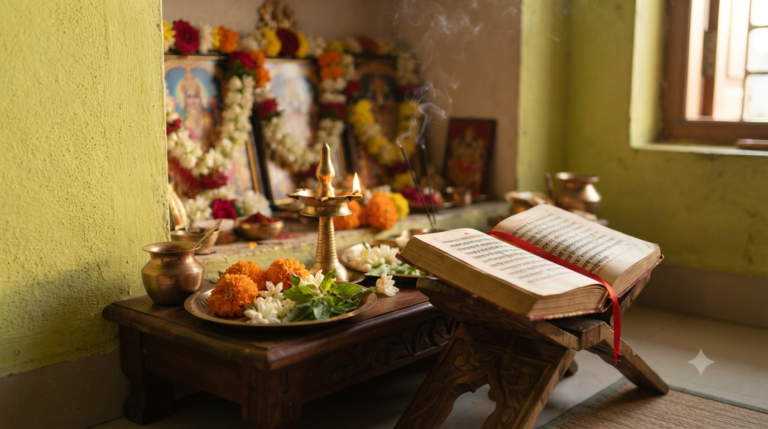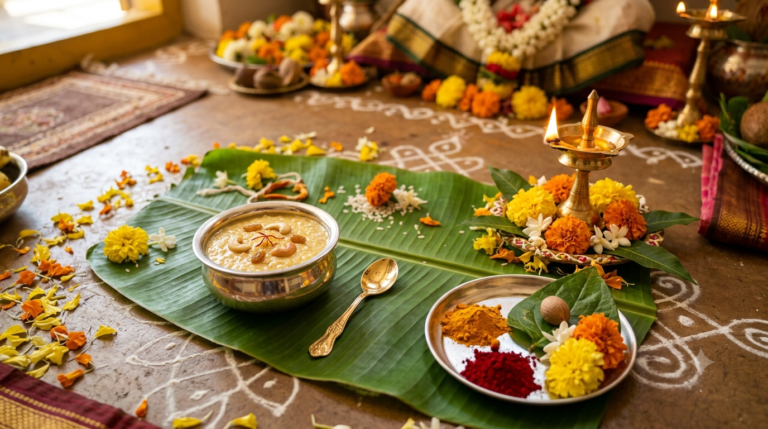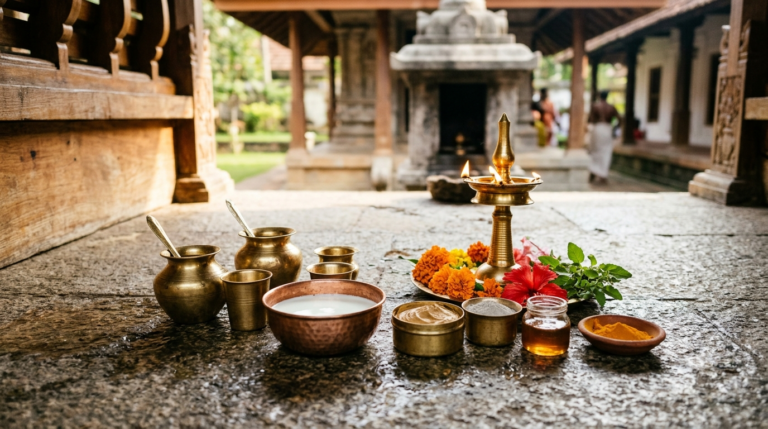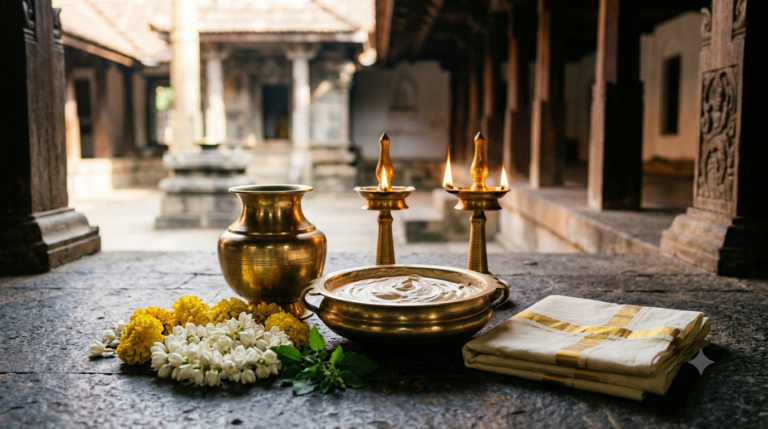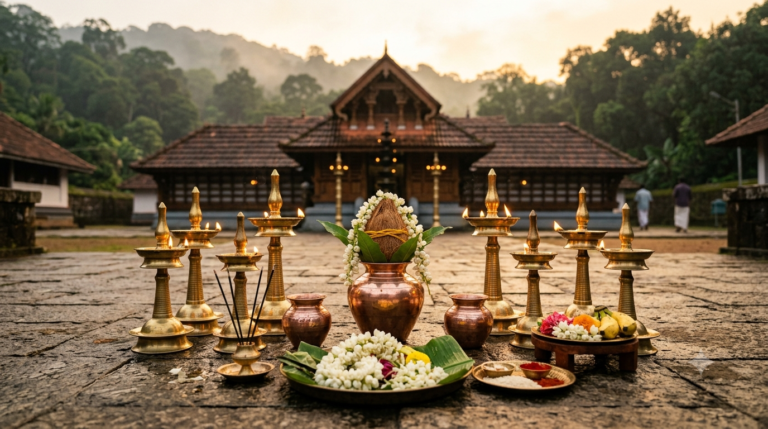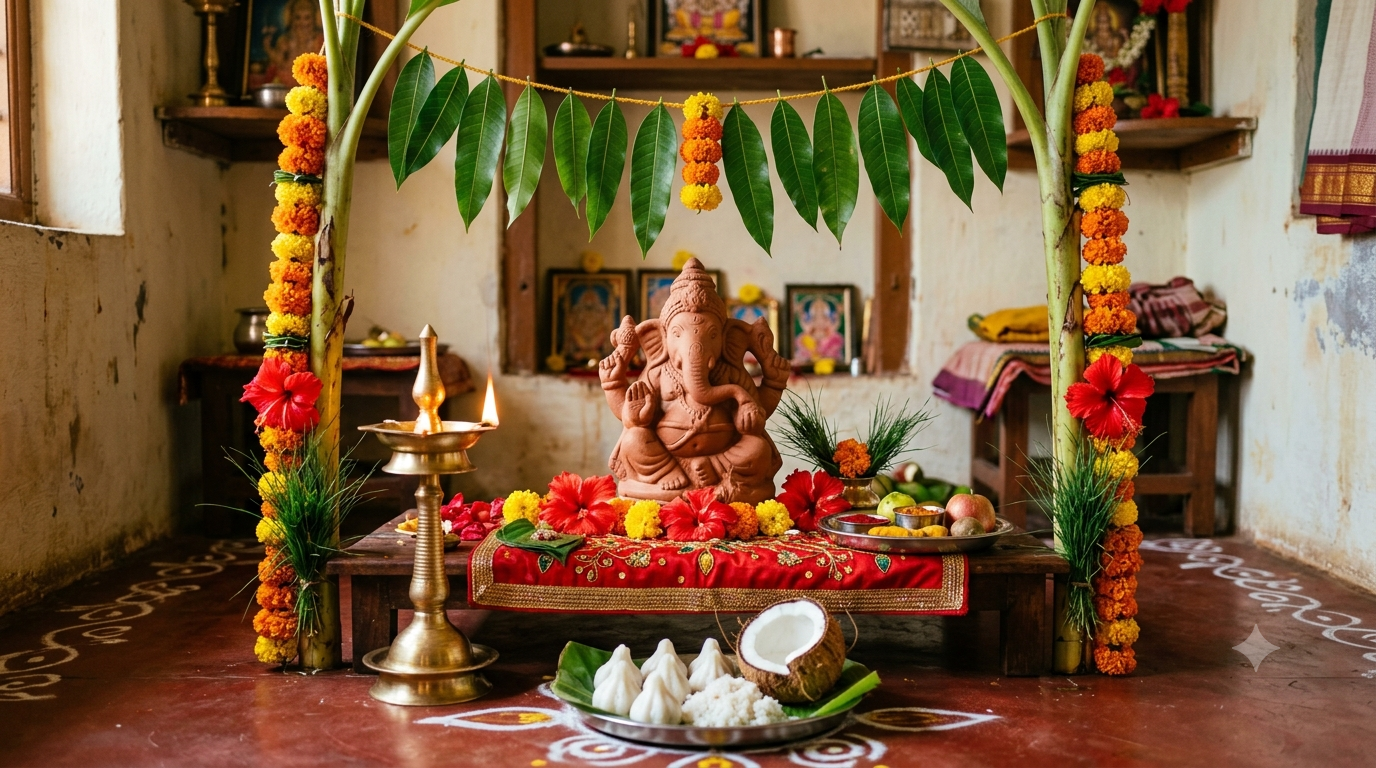
The Ganesh Chaturthi Pooja Vidhanam is the step-by-step home worship every Telugu family follows to welcome Lord Ganesha on Vinayaka Chavithi. This guide gives you the verified 2026 date, the exact muhurat window, the full samagri list, and the traditional Andhra and Telangana ritual order. You will also learn the authentic naivedyam, the mantras to chant, and the one mistake that quietly ruins many home poojas. Follow it once, and you will not need to check ten other pages.
Sri Vyasa Pooja is an independent devotional guide. We are not a temple, trust, or government body, and we take no bookings, donations, or payments. Always confirm timings on a trusted panchang for your own city before you begin.
Vinayaka Chavithi 2026 at a Glance
Here are the key facts you need before you plan the pooja. Because the muhurat shifts slightly by city, treat these Andhra and Telangana timings as a close guide, not a fixed rule.
- Festival: Vinayaka Chavithi (Ganesh Chaturthi)
- Date: Monday, 14 September 2026
- Madhyahna Puja Muhurat: around 11:02 AM to 1:31 PM IST
- Chaturthi Tithi begins: 7:06 AM on 14 September 2026
- Chaturthi Tithi ends: 7:44 AM on 15 September 2026
- Ganesh Visarjan (Nimmajjanam): Friday, 25 September 2026
Why Vinayaka Chavithi Matters
Before the Ganesh Chaturthi Pooja Vidhanam begins, it helps to know why the day carries such weight. Lord Ganesha is the Vighnaharta, the remover of obstacles, and Hindus worship him first before any new venture. Because of this, families invoke him at weddings, housewarmings, and the start of any important work.
The festival marks his birth on Bhadrapada Shukla Chaturthi. Goddess Parvati created him, and Lord Shiva later gave him the elephant head that devotees adore today. This month sits within Bhadrapada masam in the Telugu calendar. So the day blends deep mythology with a simple, joyful home ritual that any family can perform.
Ganesh Chaturthi 2026 Date and Puja Muhurat
Vinayaka Chavithi 2026 falls on Monday, 14 September, on the Shukla Paksha Chaturthi of Bhadrapada masam. The Chaturthi tithi opens at 7:06 AM that morning and runs until 7:44 AM the next day. So you may bring the idol home any time after the tithi begins, though most families install it before the midday muhurat.
The Madhyahna, or midday, window is the heart of the day. Tradition holds that Ganesha was born at midday, so the puja carries the most merit then.
| Ritual moment | Timing (IST, 2026) |
|---|---|
| Chaturthi Tithi begins | 7:06 AM, Mon 14 Sep |
| Madhyahna Puja Muhurat | ~11:02 AM to 1:31 PM, 14 Sep |
| Chaturthi Tithi ends | 7:44 AM, Tue 15 Sep |
| Anant Chaturdashi (grand Visarjan) | Fri 25 Sep |
One caution most websites skip: a single muhurat time is not correct for all of India. Because sunrise differs between Hyderabad, Vijayawada, and Visakhapatnam, your local midday shifts by a few minutes. Therefore, check an authoritative source like Drik Panchang for your exact town if you want the precise window.
What You Need Before the Ganesh Chaturthi Pooja Vidhanam
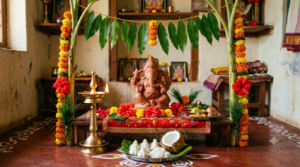
Gather everything the night before, since a hunt for missing items during the muhurat breaks your focus. A clay Ganesha idol sits at the centre of the Ganesh Chaturthi Pooja Vidhanam, and eco-friendly clay is far better than plaster of Paris.
- A clay (mannu) Ganesha idol and a wooden peeta or stool
- Fresh turmeric, kumkum, sandalwood paste, and akshata (rice mixed with turmeric)
- A brass or clay deepam, ghee or oil, wicks, and camphor
- Agarbatti, a bell, and a kalasham (pot) with water
- Mango-leaf thoranam, banana stems, corn, and sugarcane for decoration
- 21 patri (leaves), 21 blades of durva grass, and fresh flowers
- Coconut, bananas, betel leaves, and betel nuts
- Naivedyam: undrallu or kudumulu, modak, panakam, and vadapappu
Keep a red or yellow cloth ready for the peeta. Because Ganesha loves durva grass and red hibiscus above all, do not leave these out.
Step-by-Step Ganesh Chaturthi Pooja Vidhanam at Home
The traditional method follows the Shodashopachara, or sixteen forms of service. It sounds elaborate, yet each step takes only a moment. The whole Ganesh Chaturthi Pooja Vidhanam then flows without a pause. Wake early, bathe, wear fresh clothes, and clean the pooja area first.
Sthapana and Prana Pratishtha
Apply turmeric paste to the peeta and place the clay idol on it, facing east. Light the deepam and the agarbatti. Then perform Sankalpam, where you state your name, gotra, and the intention of the vratam. Invoke the Lord with folded hands, and offer akshata while chanting the Prana Pratishtha to invite his presence into the idol.
The Sixteen Upacharas of the Ganesh Chaturthi Pooja Vidhanam
Now offer the sixteen services in order. Each one is a small, sincere act of hospitality to a divine guest.
- Avahanam: welcome and seat the Lord
- Padyam and Arghyam: offer water for the feet and hands
- Achamaneeyam: offer water to sip
- Snanam: bathe the idol with panchamrutam, then clean water
- Vastram and Yagnopaveetam: offer cloth and the sacred thread
- Gandham: apply sandalwood paste
- Akshata and Pushpam: offer rice and flowers
- Patra Pooja: offer the 21 patri, naming each leaf
- Dhupam and Deepam: offer incense and the lamp
- Naivedyam: offer the sweets and fruits
- Tambulam, Neerajanam, and Mantra Pushpam: offer betel, camphor aarti, and final flowers
Finish with pradakshina and namaskaram. After that, read the Vinayaka Vratha Katha and Kalpam in Telugu aloud, since the Ganesh Chaturthi Pooja Vidhanam is incomplete without the story.
Authentic Naivedyam for Vinayaka Chavithi
Here the Telugu tradition differs from the generic guides, and this detail matters. Most pages online tell you to offer modak, which is the Maharashtrian sweet. In Andhra and Telangana homes, however, the star naivedyam is undrallu, a steamed dumpling of rice rava and moong dal.
Families also prepare kudumulu, a sweet steamed jaggery dumpling. Alongside these, offer panakam (jaggery water flavoured with cardamom and pepper) and vadapappu (soaked moong dal). So a complete plate carries undrallu, kudumulu, panakam, vadapappu, coconut, and seasonal fruit. Offer 21 pieces of the main sweet if you can, because the number 21 recurs through this vratam.
Mantras to Chant During the Ganesh Chaturthi Pooja Vidhanam
You do not need Sanskrit fluency to complete the Ganesh Chaturthi Pooja Vidhanam. A few simple mantras carry the whole worship, so learn these before the day.
The core chant is short and powerful:
Om Gam Ganapataye Namah
The most loved sloka is the Vakratunda verse, which devotees recite to clear obstacles before any new task:
Vakratunda Mahakaya Suryakoti Samaprabha, Nirvighnam Kuru Me Deva Sarva Karyeshu Sarvada
Chant either one during the aarti and while distributing prasadam. Because sincerity outweighs perfect pronunciation, chant slowly and with a calm mind.
Why You Must Not See the Moon on Vinayaka Chavithi
This rule confuses many first-timers, so here is the direct answer. On Vinayaka Chavithi, tradition asks you to avoid looking at the moon, because seeing it during Chaturthi is said to bring Mithya Dosham, a false accusation of theft.
The belief traces to the story of Lord Krishna and the Syamantaka Mani. Krishna glimpsed the moon on this tithi and faced a false charge, until he observed the vratam and cleared his name. The story is really a gentle lesson in humility and restraint rather than a rule to fear.
In practice, the moon-avoidance window is tied to the tithi and shifts by city, so a single clock time you see quoted online may not fit your town. You can confirm the exact window for your location on Drik Panchang. If you do glance at the moon by accident, devotees simply chant the Syamantaka sloka to set it right.
How Many Days to Keep Ganapati at Home
You are free to choose the length of the vratam, and there is no wrong option. Telugu families traditionally keep Ganapati for 1, 3, 5, 7, 9, or 11 days, then perform Nimmajjanam.
The grand community immersion, Nimmajjanam on Anant Chaturdashi, falls on Friday, 25 September 2026. Shorter home vratams end on odd-numbered days before that. Because the exact immersion date for a 3 or 5 day vratam depends on how your family counts the days, confirm it on a local panchang. Whichever length you pick, immerse the idol with a short aarti and a respectful farewell.
Common Ganesh Chaturthi Pooja Vidhanam Mistakes
A little care avoids the errors that trip up most households. These are practical, not superstitious, and they come from watching real home poojas go sideways.
- Using a plaster idol: plaster of Paris pollutes water and defeats the eco-spirit of the festival. Choose clay instead.
- Copying one muhurat for every city: your midday window differs from Hyderabad’s. Verify locally.
- Skipping the katha: the vratam is only complete when you read the Vinayaka Vratha Katha.
- Forgetting durva grass: Ganesha specifically loves durva and red hibiscus, so never skip them.
- Replacing undrallu with shop sweets: the home-steamed naivedyam is the heart of the Telugu offering.
Eco-Friendly Celebration and a Safety Note
An eco-conscious pooja honours both the Lord and the environment. Pick a natural clay idol, use turmeric and flower-based colours, and immerse in a bucket or tub at home if a clean water body is not near.
One gentle health note, since many observe a fast on this day. If you are pregnant, elderly, diabetic, or unwell, a strict grain-free fast can be hard on the body, so a fruit-and-milk fast or a doctor’s advice is wiser. Faith and good sense sit together well. Keep the deepam and camphor away from curtains and children, because open flames need watching.
Before You Begin the Ganesh Chaturthi Pooja Vidhanam
Vinayaka Chavithi rewards devotion far more than grandeur. A clay idol, a clean corner, durva grass, fresh undrallu, and a heartfelt Vakratunda sloka carry the whole day.
So fix your muhurat on a local panchang, gather your samagri the night before, and read the katha without rushing. Do that, and your Ganesh Chaturthi Pooja Vidhanam will feel complete, calm, and truly your own. If you also wish to visit a shrine, the swayambhu Ganesha at the Kanipakam Vinayaka temple draws devotees from across the region. Ganpati Bappa Morya.
Frequently Asked Questions
When is Ganesh Chaturthi in 2026?
Ganesh Chaturthi, or Vinayaka Chavithi, falls on Monday, 14 September 2026. The Chaturthi tithi begins at 7:06 AM that day and ends at 7:44 AM on 15 September. The main puja is done in the midday muhurat.
What is the best time for the Ganesh Chaturthi Pooja Vidhanam?
The Madhyahna, or midday, muhurat is best, roughly 11:02 AM to 1:31 PM IST on 14 September 2026. Tradition holds Ganesha was born at midday. Since the window shifts by city, check a panchang for your town.
Which Naivedyam Suits the Ganesh Chaturthi Pooja Vidhanam?
Offer undrallu (steamed rice and dal dumplings), kudumulu, panakam, and vadapappu, along with coconut and fruit. Undrallu is the authentic Andhra and Telangana offering, while modak is the Maharashtrian version.
Why should we not look at the moon on this day?
Seeing the moon during Chaturthi is believed to cause Mithya Dosham, a false accusation, linked to the Krishna and Syamantaka Mani story. If you see it by mistake, chant the Syamantaka sloka. The avoidance window varies by city.
How many days do we keep Ganapati at home?
Telugu families keep the idol for 1, 3, 5, 7, 9, or 11 days as their tradition allows. The grand immersion on Anant Chaturdashi is Friday, 25 September 2026. Any length is valid.
Can I Do the Ganesh Chaturthi Pooja Vidhanam Without a Priest?
Yes. Any devotee can perform the home vratam sincerely. The simple Shodashopachara steps, the Vakratunda sloka, and the katha are enough. Devotion matters more than perfect Sanskrit.
Is a clay idol really necessary?
A clay idol is strongly preferred because it dissolves cleanly and protects water bodies. Plaster of Paris idols pollute lakes and rivers. Clay keeps the celebration both traditional and eco-friendly.
What flowers and leaves does Ganesha like most?
Ganesha especially loves durva grass and red hibiscus flowers. The vratam also uses 21 patri, or 21 kinds of leaves. Offer these fresh for the fullest blessing.