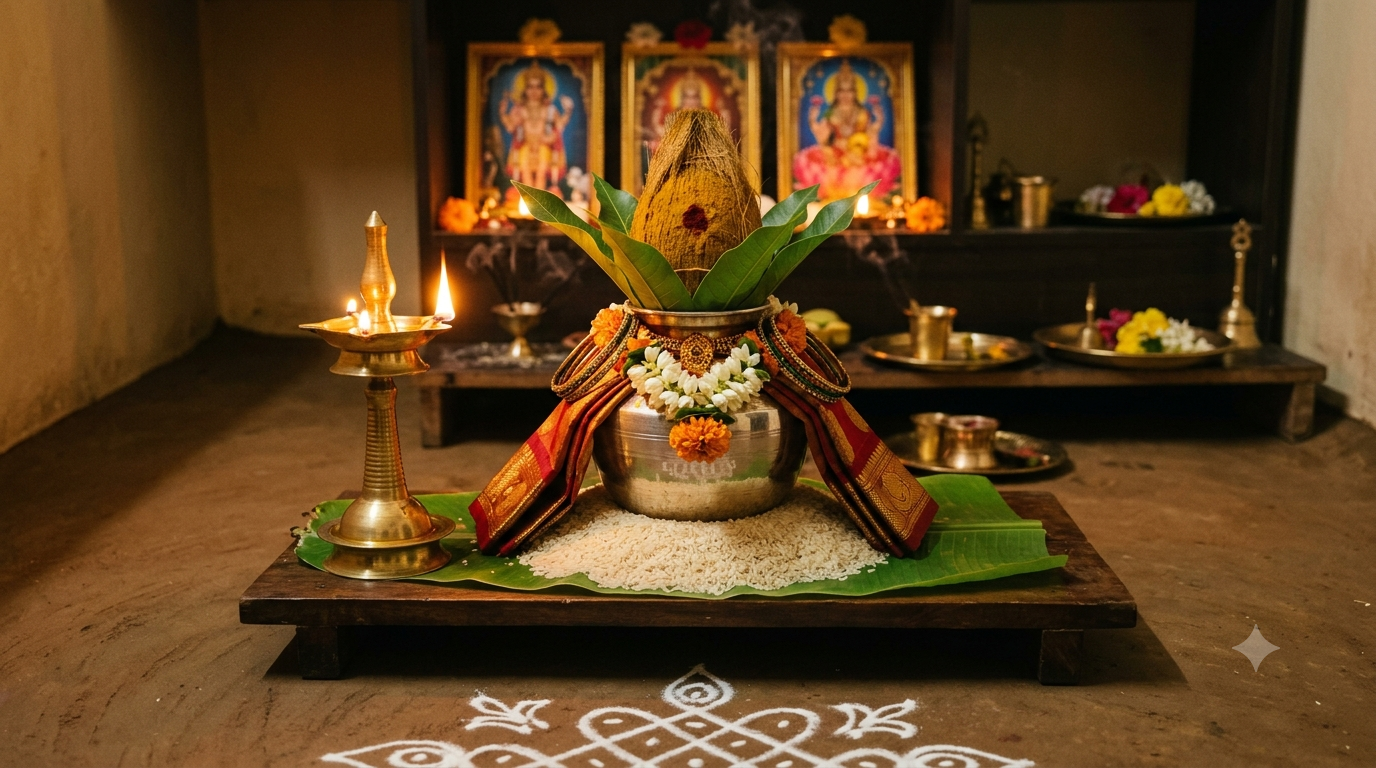
Setting up the Vara Mahalakshmi Kalasam is the heart of the entire Varalakshmi Vratam, yet most guides online rush past the one part that actually matters. The decorated pot is not a prop beside the puja. It is the Goddess, invited into your home as a living guest for the day. So getting the pot, its contents, and its face right is what turns a simple table into a sacred seat for Sri Maha Lakshmi.
This guide walks you through every step, because small mistakes here worry devotees the most. Sri Vyasa Pooja is an independent devotional guide, not an official temple body, and it takes no bookings or payments. For your exact muhurtham, always confirm with your family purohit or local temple.
Vara Mahalakshmi Kalasam at a Glance
- What it is: a pot dressed as Goddess Lakshmi, the centre of the vratam.
- Pot material: silver, bronze, brass, or copper works well; steel is fine if that is what you have.
- Fill: either raw rice or holy water, plus coins, betel nut, and turmeric.
- Top: tender mango leaves and a turmeric-smeared coconut, tail facing up.
- Face: a metal Amman mukham or a face drawn on the coconut with turmeric.
- 2026 date: observed on Friday, 21 August or Friday, 28 August, depending on your panchangam.
What the Vara Mahalakshmi Kalasam Really Represents
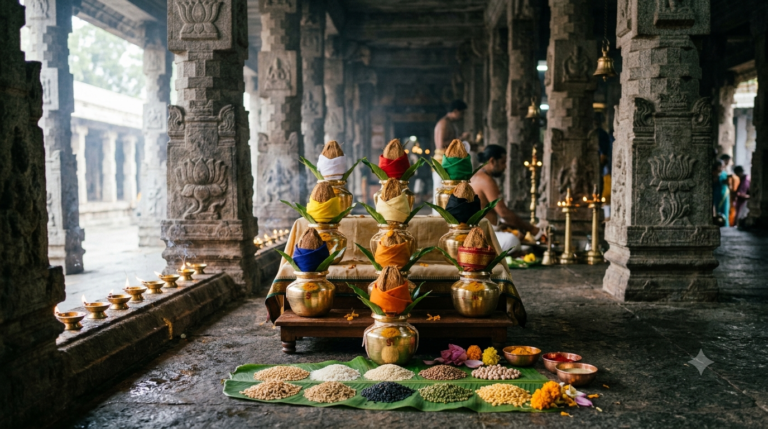
The word kalasam means a sacred pot, and the Vara Mahalakshmi Kalasam becomes the body of the Goddess herself. When you fix the face, drape the saree, and add the jewellery, you are not decorating an object. You are welcoming Sri Maha Lakshmi as a bride entering her home. Many families literally carry the pot in from the doorstep to echo that welcome.
This is why the setup carries so much feeling. Devotees believe Varalakshmi, the boon-granting form of Lakshmi, brings the blessings of all eight Lakshmis at once. Worshipping her this way is held equal to worshipping the Ashtalakshmi. The pot, then, is a seat of grace, so families treat every step with care and love.
When to Set Up the Vara Mahalakshmi Kalasam in 2026
Here is where online misinformation causes the most panic. Varalakshmi Vratam always falls on a Friday in the bright fortnight of the Shravana month, just before the full moon. In 2026, though, two dates are circulating, and both come from genuine panchangam traditions.
Many Telugu, Tamil, and Kannada calendars observe the vratam on Friday, 21 August 2026. Other panchangams, including Drik Panchang, list Friday, 28 August 2026, when the Purnima tithi stays active into the morning. Because regional almanacs count the “Friday before Purnima” differently, both dates are valid within their own tradition. So follow the panchangam your family or local temple uses, and you cannot go wrong.
One date you should ignore is 8 August 2026. That figure still appears on some pages, yet it is simply stale content left over from 2025, when the vratam fell on 8 August. Since that Friday belongs to last year, do not let an un-updated website mislead you this time.
For the precise lagna timings on your chosen date, cross-check the muhurtham for your city on Drik Panchang. Arranging a purohit early also helps, since experienced priests get booked fast near the festival.
Items You Need for the Vara Mahalakshmi Kalasam
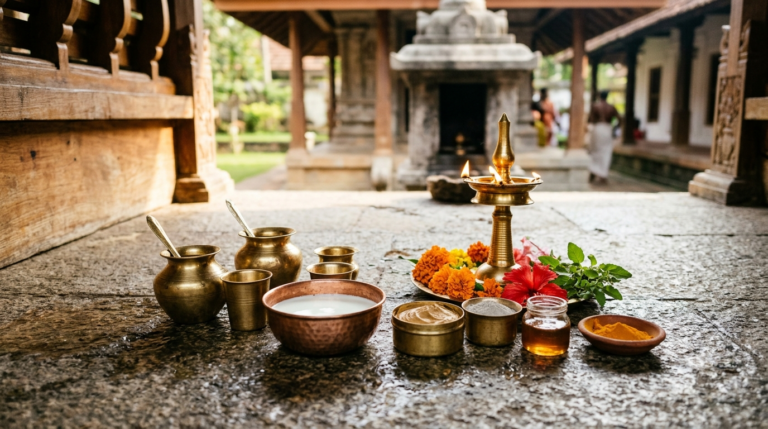
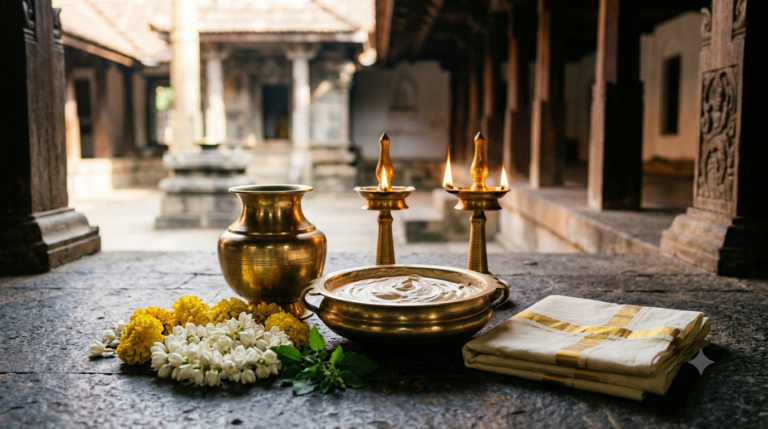
Gather everything for the Vara Mahalakshmi Kalasam the night before, because a calm setup morning matters more than a rushed one. You do not need costly or new items. Most of this already sits in a South Indian pooja shelf, and simple substitutes are perfectly acceptable.
| Item | Purpose |
|---|---|
| Silver, bronze, or brass pot | The kalasam body |
| Raw rice or holy water | Fills the pot |
| Coins, betel nut, dry dates | Placed inside for prosperity |
| Tender mango leaves | Arranged at the mouth |
| Coconut with husk | Sits on top as the head |
| Amman face or turmeric | Forms the Goddess’s face |
| New blouse piece and saree | Dresses the pot |
| Turmeric, kumkum, flowers, jewellery | Decoration and worship |
| Toram thread with nine knots | Tied on the wrist |
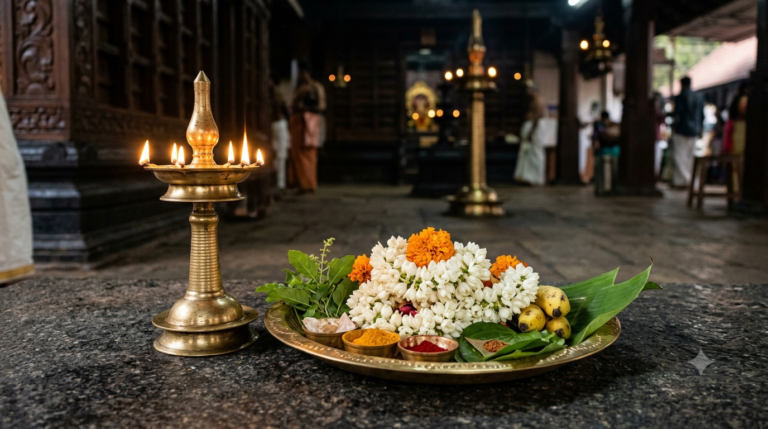
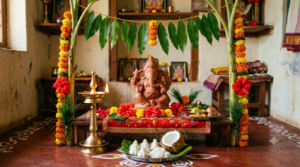
Keep a wooden plank, a banana leaf, rangoli powder, and a lamp ready too. A turmeric Ganapati is also made fresh, since every puja begins by worshipping Lord Ganesha first. For the full sixteen-step Shodashopachara ritual and mantras, the Varalakshmi puja vidhi is a helpful reference.
What Goes Inside the Vara Mahalakshmi Kalasam
Two honest traditions exist here, and neither is more correct than the other. Your family custom decides which you follow, so ask an elder if you are unsure. The direct answer: you fill the pot with either raw rice or holy water, and both carry the same blessing.
The rice-filled method
Common in Tamil homes, this method fills the pot a little over halfway with raw rice. You then tuck in a few coins, a betel nut, dry dates, and often a small piece of jewellery. Because the rice is later cooked and eaten as prasadam, families believe Annapoorna herself stays in the house.
The water-filled method
Popular across Andhra and Telangana, this method fills the pot with clean water. You add turmeric, kumkum, a few grains of akshata, coins, a betel nut, and a lime. Some add cardamom or rose water for fragrance, while others drop in black beads as their tradition allows. The next day, this water is sprinkled around the home as theertha.
How to Decorate the Vara Mahalakshmi Kalasam
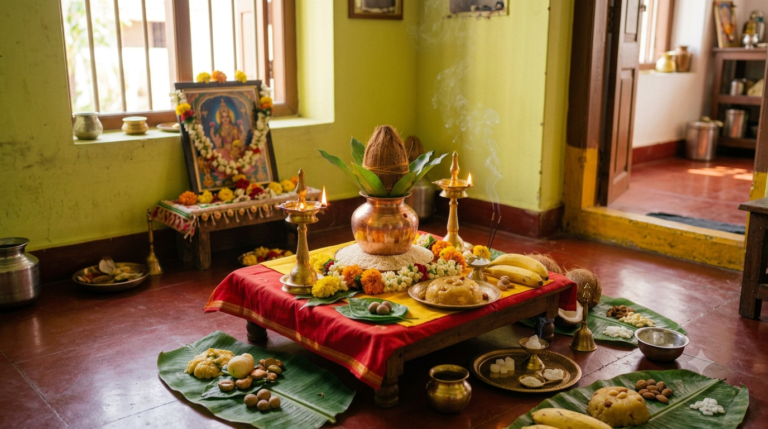
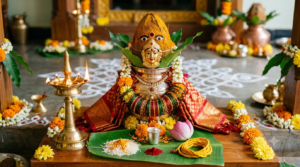
Once the pot is filled, decorating the Vara Mahalakshmi Kalasam transforms it into the Goddess. Work slowly, because a steady hand keeps the coconut and face from slipping. Follow these steps in order for a stable, beautiful result.
- Apply turmeric and kumkum dots around the pot, and draw a small swastika on the front.
- Arrange tender mango leaves around the mouth, with the leaf tips pointing upward.
- Smear a coconut with turmeric, then place it on the leaves with the tail facing up.
- Fix the metal Amman face against the coconut, or draw the face on it with turmeric.
- Fold a new blouse piece into a cone, and set it behind the face for a body shape.
- Drape a silk saree or pavadai around the pot to dress the Goddess fully.
- Add bangles, a garland, and fresh flowers, and line the eyes lightly with kajal.
Now spread raw rice on a banana leaf over the plank, and seat the finished pot on that rice. Light the lamp, keep the face towards the East, and your Goddess is ready for worship.
Rice or Water: Which Should You Choose?
If your family has no fixed custom for the Vara Mahalakshmi Kalasam, this simple logic helps you decide with confidence. Both please the Goddess equally, so choose the one that suits your household.
| Choose rice if | Choose water if |
|---|---|
| You want prasadam rice to cook next day | You want theertha to sprinkle at home |
| You follow Tamil Nadu customs | You follow Andhra or Telangana customs |
| You prefer a heavier, stable pot | You prefer the classic Kalasha form |
Common Vara Mahalakshmi Kalasam Mistakes to Avoid
Several worries repeated online are simply not true, so let us clear them up. Devotion matters far more than expensive perfection, and the Goddess responds to sincerity above all.
- “You must own a metal face.” Untrue. A face drawn on the coconut with turmeric is completely valid, and many elders prefer it.
- “You need a brand-new pot yearly.” Untrue. A clean, existing silver or bronze pot is perfect, so reuse yours happily.
- “Only gold jewellery is allowed.” Untrue. Fresh flowers alone can adorn the Goddess, while artificial ornaments work fine.
- “Only married women may perform it.” Traditionally kept by sumangalis, yet unmarried women and men may also observe it, because the blessings are universal.
- Coconut placed tail-down. The pointed fibrous end should always face upward, so check this before you fix the face.
Vara Mahalakshmi Kalasam Removal the Next Day
The pot is not dismantled on the same evening in most homes. A short concluding puja, called Punar Puja, is done the following morning at an auspicious time. This gentle closing matters as much as the setup, so do not skip it.
After the final aarti, take a little kalasam water as theertha, then sprinkle the rest around the house. If you used rice, mix it into your household rice drum and cook it, so Annapoorna stays with you. Break the coconut and turn it into a sweet, though avoid spicy dishes with it. Keep any coins in your locker, and store the metal face safely for next year.
Dispose of flowers, turmeric, and other natural leftovers under a plant or in flowing water, away from footfall. Many families untie the toram thread after three days, while others remove it on the same Saturday. Follow whichever practice your elders keep.
A Gentle Word on Fasting and Safety
Fasting is traditional on this day, but it was never meant to harm your health. Elderly devotees, pregnant women, and anyone with a medical condition should not attempt a strict fast. A light phalahar of fruit and milk, or simply sattvic food, keeps the spirit of the vratam intact.
If you take regular medication or have diabetes, eat as your doctor advises and do not skip doses. The Goddess is pleased by devotion, not by risk to your body. Also keep the oil lamp on a stable surface, well away from the draped saree, and never leave a lit flame unattended.
Insider Tips Most Guides Skip
A few practical touches make the whole morning smoother. These come from years of watching families set up the pot without last-minute stress.
- Do the rangoli early, so it dries before you seat the pot on the rice.
- Buy tender mango leaves a day ahead, because fresh ones stay firmer at the mouth.
- Place a small mirror behind the pot, since it doubles the lamp light beautifully.
- Tuck a bangle over the necklaces to hold them neatly against the coconut.
- Keep the blouse piece and saree from last year clean, so you can reuse them.
Before You Begin Your Puja
The Vara Mahalakshmi Kalasam rewards care, not cost. Fill it with rice or water as your family does, top it with mango leaves and a turmeric coconut, and dress it with love. Confirm your 2026 date with your local panchangam, gather your samagri the night before, and worship Ganapati first.
Do all this with a sincere heart, and Sri Maha Lakshmi will grace your home with health and prosperity. For a related home vow, many devotees also keep the Sri Vaibhava Lakshmi Vratham on Fridays. Some also seek darshan at a Lakshmi shrine like the Tiruchanur Padmavathi Temple during Shravana.
Frequently Asked Questions
Can I set up the Vara Mahalakshmi Kalasam without a metal Amman face?
Yes, absolutely. You can draw the Goddess’s face on the coconut using turmeric paste, which is a traditional and widely accepted practice. A metal or market-bought face is optional, not compulsory.
What should I fill the kalasam with, rice or water?
Both are correct, and your family custom decides. Tamil homes often use raw rice, later cooked as prasadam, while Andhra and Telangana homes typically use holy water, later sprinkled as theertha.
Which direction should the kalasam face?
Seat the pot so the Goddess faces East, the direction of sunrise and auspicious beginnings. If East is not practical, North is the next preferred option.
When is Varalakshmi Vratam in 2026?
It falls on Friday, 21 August or Friday, 28 August 2026, depending on the regional panchangam. Many Telugu, Tamil, and Kannada traditions follow 21 August, while Drik Panchang and others list 28 August.
Can I reuse last year’s pot and saree?
Yes. A clean, existing silver or bronze pot is perfectly fine, and a saree or blouse piece kept only for the Goddess can be reused. Buying new is a choice, never a rule.
Do I need to break the coconut on the same day?
No. In most homes the coconut is broken during the concluding Punar Puja the next morning. It is then made into a sweet prasadam for the family.
Is fasting compulsory for Varalakshmi Vratam?
Fasting is traditional but flexible. Elderly, pregnant, or unwell devotees may take fruit and milk or light sattvic food instead, as sincere devotion matters more than a strict fast.
Can unmarried women or men perform the vratam?
Yes. Although sumangalis traditionally keep it, unmarried women and men may also worship the kalasam, because Goddess Lakshmi’s blessings are meant for everyone.