The Grishneshwar Temple seva list runs from a quick jal abhishek to the full Laghu Rudrabhishek — yet here is the detail most travel blogs get wrong. Almost none of it can be booked online through any official portal. The Shri Grishneshwar Devasthan Trust arranges these sevas at its on-site counter, where temple priests guide you right up to the Shivlinga. So this guide lays out every seva, the real daily timings, the counter fees, and the one strict dress rule that catches first-time visitors off guard.
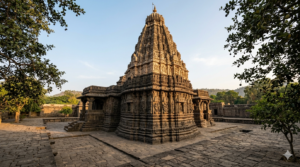
Grishneshwar Jyotirlinga sits at Verul, barely a kilometre from the Ellora Caves in Chhatrapati Sambhajinagar (formerly Aurangabad), Maharashtra. It is the twelfth and final Jyotirlinga on the traditional pan-India Shiva circuit. Because the shrine allows Sparsh Darshan, devotees can touch the lingam and perform abhishek themselves — a rare privilege.
Grishneshwar Seva at a Glance
- General darshan: free, no ticket needed.
- Sevas: abhishek, Panchamrut abhishek, Laghu Rudrabhishek, archana — arranged at the temple counter.
- Online booking: no official trust portal; “online puja” sites are third-party priest services.
- Standard timings: usually 5:30 AM to 9:30 PM, though sources differ (see below).
- Dress rule: men must enter the sanctum bare-chested; women wear saree or salwar.
- Inside the sanctum: footwear, phones and photography are not allowed.
Grishneshwar Temple Seva List: Every Pooja You Can Offer
The core of the Grishneshwar Temple seva list is abhishek — the ritual bathing of the Shivlinga. Because this is a Sparsh Darshan shrine, you perform it under a priest’s guidance inside the garbhagriha. The sevas below cover almost everything a devotee asks for, from a simple water offering to a full Vedic Rudra recitation.
| Seva / Pooja | What it involves | How to arrange |
|---|---|---|
| Jal Abhishek | Holy water poured on the Shivlinga with mantras | Temple counter |
| Panchamrut Abhishek | Milk, curd, honey, sugar and ghee, then water | Temple counter |
| Laghu Rudrabhishek | Abhishek with Rudra mantras from the Yajurveda | Counter / temple priest |
| Maha Rudrabhishek | Extended Rudra recitation, often by a group | Prior arrangement with priests |
| Archana | Sankalp in your name and gotra with offering | Temple counter |
| Aarti participation | Standing in for Mangal, Sandhya or Shej aarti | Free, alongside darshan |
Panchamrut Abhishek is the most popular choice, since it uses the classic five offerings. Laghu Rudrabhishek suits devotees seeking peace, health or relief from obstacles, because it carries the powerful Rudra mantras. Many also request a Maha Mrityunjaya Jaap through the priests, especially for a sick family member. So before you join a queue, decide which seva you actually want — it changes where you stand and what you carry.
Is the Grishneshwar Temple Seva List Available for Online Booking?
No. The Grishneshwar Temple seva list cannot be booked through any official online portal, because the Shri Grishneshwar Devasthan Trust does not run one. General darshan is free and needs no ticket. For an abhishek, archana or special pooja, you simply approach the temple reception counter on the day, pay the nominal fee, and a priest takes you inside.
This matters because several websites claim otherwise. One widely shared blog even instructs readers to “book on the official Maharashtra State Road Transport portal” — yet MSRTC runs buses, not temple tickets. That step does not exist. So if a site asks you to pay online for a “guaranteed VIP slot”, treat it with caution.
Beware Third-Party “Online Booking” Sites
Sites such as YatraDham, grishneshwartemple.com and various “Grishneshwar Services” pages do offer online puja booking. However, these are private priest-arrangement services, not the temple trust. They will arrange a panditji and the offerings for you, yet they charge a premium well above the temple’s own counter fee. Use them only if you knowingly want a pre-arranged priest — never assume they are the official temple.
Grishneshwar Temple Seva List Timings and Daily Schedule
The standard Grishneshwar Temple seva list timings run from 5:30 AM to 9:30 PM, with abhishek and aarti slots spread through the day. During the Shravan month and Maha Shivratri, the temple opens as early as 3:00 AM and stays open until about 11:00 PM to manage the rush. Honest warning: timings here are genuinely inconsistent across sources, so confirm locally before you travel.
| Ritual | Approx. time (commonly reported) |
|---|---|
| Mangal Aarti | Early morning, around 4:00–5:00 AM |
| General darshan opens | 5:30 AM |
| Madhyan (midday) bhog | Around 12:00 PM |
| Sandhya (evening) Aarti | Around 7:30 PM |
| Shej Aarti / closing | Around 9:00–9:30 PM |
Some sources report a midday break, with darshan running 5:30 AM to noon and again 4:00 PM to 9:00 PM. One listing tied to the temple’s own site even splits the day into a morning and an afternoon window with different weekday and weekend hours. Because of this gap, the safest plan is simple. Arrive before 11:00 AM, since that window is reliable in almost every version.
The Sandhya Aarti is the ritual to aim for, if your schedule allows. As the lamps rise and the bells build, the dark stone sanctum fills with sound — many regulars call it the most moving moment of the day.
Grishneshwar Temple Seva List Charges and Fees
General darshan is free, so most pilgrims pay nothing at all. For the abhishek slot, visitors commonly report a counter fee of around ₹551 per person, though the trust does not publish an official online rate card. Annadanam (free meal service) can also be sponsored at the counter. Since these amounts can change, confirm the current figure at the reception before you commit.
Here is the practical takeaway. Whatever you pay for a seva, you pay it in person at the temple — not in advance to a website. A reasonable counter fee for a Sparsh abhishek is a fraction of what third-party “online” portals quote. Therefore, carry some cash, because card and UPI acceptance can be patchy on busy days.
Dress Code: The One Rule Most Men Get Wrong
To enter the garbhagriha and touch the lingam, men must be bare-chested. You cannot wear a shirt, t-shirt, vest or even a kurta inside the sanctum. The rule is enforced strictly, so a kurta is not “good enough” — this is the single biggest surprise for first-time male visitors.
Women should wear a saree, salwar suit or other modest Indian attire. Many men carry a dhoti or angavastram and simply remove the shirt at the sanctum entrance. Footwear stays outside, and phones and cameras are not permitted near the lingam either. So pack a small bag for your shirt and footwear before you reach the queue.
How to Reach Grishneshwar Temple
Grishneshwar Jyotirlinga lies in Verul, about 30 km from Chhatrapati Sambhajinagar (Aurangabad) city and roughly 1 km from the Ellora Caves. Because the two sit side by side, most pilgrims cover the temple and the caves in one trip. The nearest airport is Chhatrapati Sambhajinagar Airport (IXU), around 30–35 km away.
- By air: Fly to Chhatrapati Sambhajinagar (IXU), then take a taxi for the 1–1.5 hour drive.
- By train: Aurangabad railway station connects to Mumbai, Pune and Hyderabad; the temple is about an hour by road.
- By bus: MSRTC runs regular services from Aurangabad, Shirdi, Pune and Nashik to the Ellora–Verul area.
Pilgrims often pair Grishneshwar with Shirdi, since the two are an easy day’s travel apart. If you are completing the Jyotirlinga circuit, this is the final shrine — so many treat the visit as a culmination rather than a stopover.
Best Time to Visit and What to Expect on the Ground
October to March brings the most comfortable weather, with cool mornings ideal for an unhurried darshan. The Shravan month (roughly July to August) is the most sacred and the most crowded, especially on Mondays, when devotee numbers can swell several times over. So if peace matters more than festival energy, choose a winter weekday.
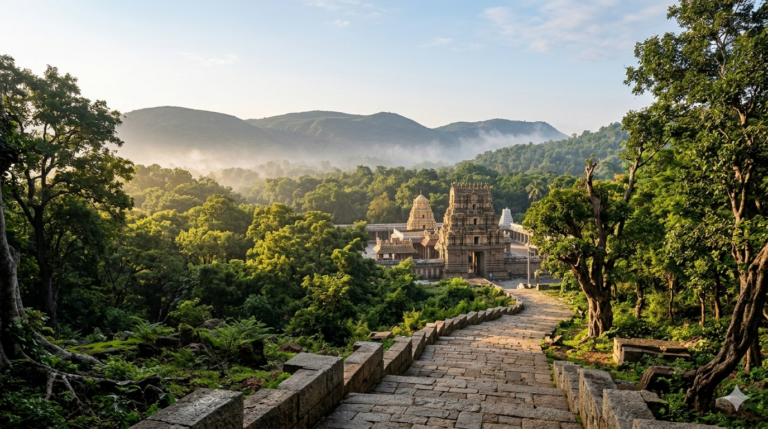
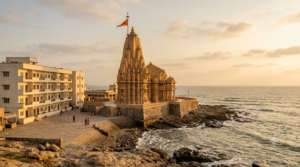
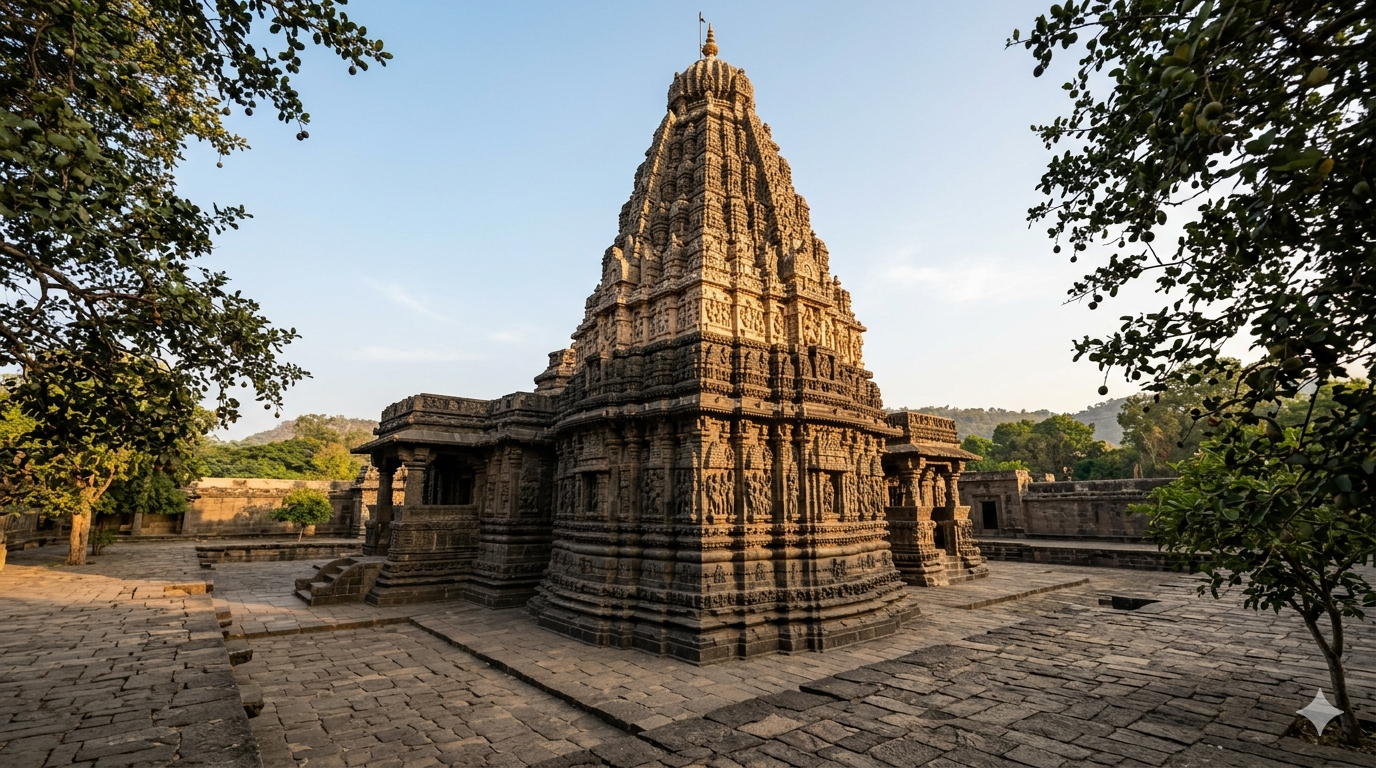
The temple itself is compact, built in the black-stone Hemadpanthi style with detailed carvings. Inside, you will see devotees clutching bilva leaves and small copper vessels for abhishek. The interior stays cool against the Maharashtra sun, and queues are usually well managed with barricades. A typical visit takes 30 minutes to two hours, depending on the season and the line.
Mistakes First-Time Visitors Make
Most disappointment at Grishneshwar comes from avoidable errors, not the temple itself. After several devotee accounts and on-ground reports, the same slip-ups repeat.
- Paying online in advance: there is no official portal, so any prepaid “VIP” link is third-party at best.
- Wrong dress: men arriving in a kurta cannot enter the sanctum until they remove it.
- Visiting on a Shravan Monday for “peace”: that is the busiest possible slot.
- Skipping the afternoon-break risk: arrive before 11:00 AM to stay safe across all timing versions.
- Confusing the temples: the correct shrine is Shri Grishneshwar at Verul, near Ellora — not a similarly named site elsewhere.
For a fuller breakdown of ticket costs and darshan categories, see our Grishneshwar darshan and ticket cost guide. If Sparsh Darshan interests you, the same privilege exists at Srisailam Sparsha Darshan. And to plan the wider circuit, our Ujjain Mahakaleshwar guide covers another major Jyotirlinga.
History You Can Feel at the Shrine
The Shiva Purana ties Grishneshwar’s origin to a devotee named Ghushma, whose pure devotion is said to have manifested Shiva here as a Jyotirlinga. The present structure owes much to two rebuilders. Maloji Bhosale, grandfather of Chhatrapati Shivaji Maharaj, restored the site in the 16th century. Later, in the 18th century, Ahilyabai Holkar rebuilt it, as she did for several Shiva shrines across India.
You can sense that layered history in the stonework. The carvings of Shiva, Parvati, Ganesha and Kartikeya are visible from the southern entrance, while the cool, dim interior carries centuries of continuous worship. For more context on the surrounding heritage, the Ellora Caves are a UNESCO World Heritage Site managed by the Archaeological Survey of India.
Before You Go
Keep three things straight and your visit will go smoothly. First, the Grishneshwar Temple seva list is booked at the counter, not online — general darshan is free, and a priest will guide your abhishek inside. Second, men must enter the sanctum bare-chested, so dress accordingly. Third, arrive before 11:00 AM and pair the trip with Ellora. For current timings and festival schedules, check official references such as Maharashtra Tourism, the Archaeological Survey of India, and the UNESCO Ellora Caves listing, and confirm seva details at the temple reception.
Grishneshwar Temple Seva List: FAQs
Can I book the Grishneshwar Temple seva list online?
No, there is no official online portal for Grishneshwar sevas. You arrange abhishek, archana and special poojas at the temple counter on the day. Sites offering “online puja booking” are third-party priest services, not the temple trust, and they charge more.
What does the Grishneshwar Temple seva list include?
The seva list includes Jal Abhishek, Panchamrut Abhishek, Laghu Rudrabhishek, Maha Rudrabhishek and Archana, plus aarti participation. Because it is a Sparsh Darshan shrine, devotees perform abhishek directly on the Shivlinga under a priest’s guidance.
Is general darshan at Grishneshwar free?
Yes, general darshan is completely free and needs no ticket. You only pay a nominal counter fee if you choose a specific seva such as an abhishek. Visitors commonly report around ₹551 per person for abhishek, but confirm the current amount on site.
What are the Grishneshwar Temple seva list timings?
The temple usually opens around 5:30 AM and closes near 9:30 PM, though some sources report an afternoon break. During Shravan and Maha Shivratri it opens as early as 3:00 AM. Arriving before 11:00 AM is the safest plan across all reported schedules.
What is the dress code for men at Grishneshwar?
Men must enter the inner sanctum bare-chested to touch the lingam. Shirts, t-shirts, vests and kurtas are not allowed inside the garbhagriha. Women should wear a saree, salwar suit or other modest Indian attire.
How far is Grishneshwar from the Ellora Caves?
Grishneshwar is roughly 1 km from the Ellora Caves, so most pilgrims visit both on the same day. The temple is about 30 km from Chhatrapati Sambhajinagar (Aurangabad) city and around 30–35 km from its airport.
When is the best time to visit Grishneshwar Temple?
October to March offers the most pleasant weather and lighter crowds, especially on weekdays. The Shravan month is the most sacred but extremely busy, particularly on Mondays. For a calm darshan, choose an early winter morning.
Are mobile phones allowed inside Grishneshwar Temple?
No, mobile phones, cameras and footwear are not permitted near the sanctum, and photography is restricted. Carry a small bag for your belongings and your shirt. Lockers or counters near the entrance can usually hold them while you go in.