Janmashtami puja vidhi at home becomes much easier once you separate the essential worship from optional family customs. The heart of the night is simple: prepare the altar, take sankalpa, worship Sri Krishna, offer abhishekam and bhog, then complete the birth celebration with arati and prayer. The details can vary by sampradaya, so this guide shows a safe household sequence without pretending that one regional method is universal.
Sri Vyasa Pooja is an independent devotional guide. We are not affiliated with any temple, matha, trust, or official religious body. We do not accept pooja bookings, donations, or payments, so use the official sources linked below for festival schedules and institutional guidance.
Janmashtami Puja Vidhi at a Glance
The Janmashtami puja vidhi usually reaches its main worship during Nishita Kaal, the traditional midnight period associated with Sri Krishna’s birth. A full shodashopachara worship uses sixteen forms of service, while many families perform a shorter home version with the same devotional core.
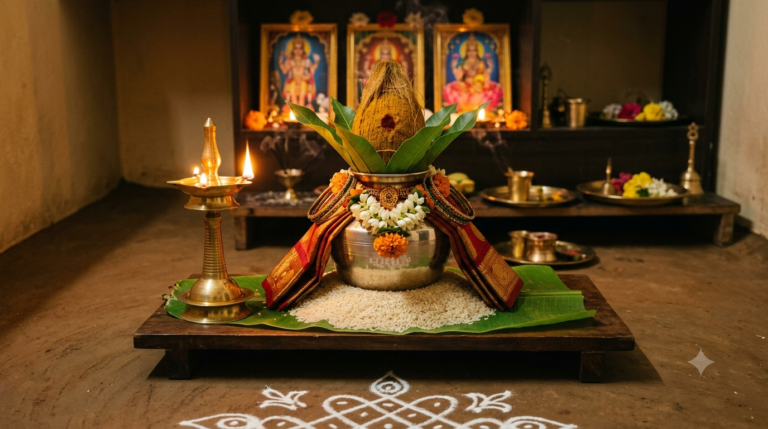
- Clean the pooja area and prepare the Krishna image or Bala Krishna vigraha.
- Keep the samagri ready before the late-night worship begins.
- Take sankalpa and start with a short prayer to Ganesha if that is your family practice.
- Invoke Sri Krishna, then offer water, flowers, gandham, dhupa and deepam.
- Perform abhishekam only if the vigraha is suitable for bathing.
- Dress and decorate Bala Krishna after the abhishekam, not before it.
- Offer naivedyam such as fruit, milk preparations, butter or family-traditional sweets.
- Complete the birth celebration with mantra, bhajan, arati and prasadam.
What Makes Janmashtami Worship Different?
Janmashtami celebrates the appearance of Sri Krishna, so the worship centres on the child form of the Lord and the midnight birth moment. That is why cradles, Bala Krishna worship, abhishekam, devotional singing and a late-night arati appear across many traditions.
Established practice also shows real variation. Drik Panchang presents a detailed sixteen-step Shodashopachara Krishna puja, while the official ISKCON Bangalore materials emphasise fasting, chanting, hearing Krishna katha and worship at midnight. Sringeri Sharada Peetham’s published celebrations include panchamrita abhisheka, Krishna Ashtottara, Vishnu Sahasranama and Bhagavata parayana.
This tells us something useful: the devotional centre stays stable even when the exact household sequence changes. So follow your family sampradaya when you know it, while using the steps below as a practical framework when you do not.
When Should You Perform the Main Puja?
The main Krishna worship is traditionally associated with Nishita Kaal, which means the local Vedic midnight period. Do not assume that every city shares the same clock time, because the window changes with location and the panchang used.
For 2026, the official ISKCON Bangalore Vaishnava calendar places Sri Krishna Janmashtami on Friday, 4 September, with fasting until midnight. Drik Panchang’s ISKCON calendar also places the observance on 4 September, although other mathas and family traditions can follow different calendrical rules.
Therefore, treat a generic internet time as a planning hint, not a universal rule. Check your own city and sampradaya before starting a time-sensitive vrata. This is especially important when Ashtami tithi and Rohini nakshatra cross midnight.
Janmashtami Puja Vidhi Samagri Checklist
The Janmashtami puja vidhi does not require an elaborate shopping list to be meaningful. Gather the essentials first, because a calm puja with fewer items is better than a rushed ritual built around an oversized checklist.
| Purpose | Useful items | If unavailable |
|---|---|---|
| Altar | Krishna image or suitable Bala Krishna vigraha, clean cloth | Use a clean framed image |
| Basic worship | Flowers, gandham, kumkum, akshata, lamp, incense | Offer what is available respectfully |
| Abhishekam | Clean water and family-approved panchamrita ingredients | Skip bathing if the image cannot get wet |
| Naivedyam | Fruit, milk sweets, butter, mishri or home-made sattvic food | Fruit and water are enough for a simple offering |
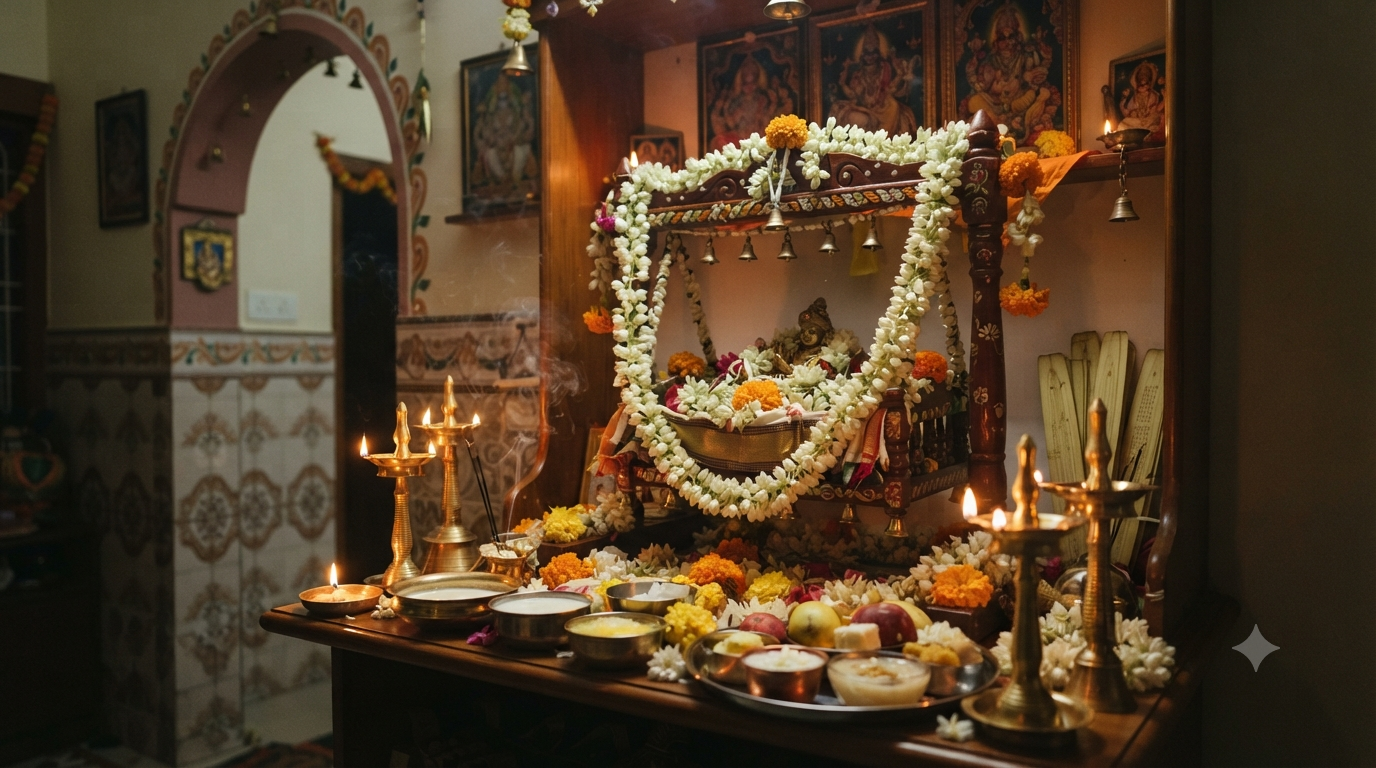
| Birth celebration | Cradle or small decorated seat, bell, arati lamp | A decorated cloth seat works |
| Prayer | Krishna mantra, bhajan book, Bhagavata passage | Chant a simple nama mantra |
Tulasi is widely offered in Vaishnava worship when available. However, family practice can differ on when leaves are collected, so prepare them earlier rather than plucking them at midnight without knowing your tradition’s rule.
Janmashtami Puja Vidhi: Step-by-Step Home Ritual
This Janmashtami puja vidhi gives a practical household order from preparation to prasadam. It keeps the sequence easy to follow, while still reflecting the main elements found in formal shodashopachara worship.
- Clean yourself and the pooja space. Bathe, wear fresh clothes and clean the altar before the late-night worship. Keep every vessel and offering ready, so you do not search for items during the puja.
- Arrange Sri Krishna on the altar. Place a Krishna image or a suitable Bala Krishna vigraha on a clean cloth. If you use a cradle, keep it nearby for the birth celebration.
- Light the lamp and settle the mind. Begin quietly before adding music or family activity. A short prayer helps everyone shift from preparation into worship.
- Take sankalpa. State your intention to worship Sri Krishna on Janmashtami according to your capacity and family tradition. If you do not know a formal Sanskrit sankalpa, a sincere prayer in your own language is better than invented wording.
- Offer Ganesha prayer if your tradition does so. Many Hindu households begin major worship by remembering Ganesha. Keep this short, because Krishna worship remains the focus of the festival.
- Perform dhyana and avahana. Meditate on Sri Krishna and invite the Lord’s presence into the worship. A simple mantra such as Om Namo Bhagavate Vasudevaya works well for household devotion.
From Upachara to Abhishekam
Once the invocation is complete, the worship moves from welcome into service. Keep these offerings orderly, because this is the point where a rushed home puja most often becomes confusing.
- Offer the basic upacharas. Give a symbolic seat, water, gandham, flowers, dhupa and deepam. Formal manuals expand these offerings in greater detail, while a home puja may keep them concise.
- Perform abhishekam when appropriate. Bathe a metal or stone Bala Krishna vigraha only if it is designed for ritual bathing. Use clean water and the panchamrita method followed in your family, then finish with clean water.
- Dry, dress and decorate Bala Krishna. Do this after abhishekam, since clothing before the bath creates unnecessary confusion. Add flowers, ornaments or a small peacock-feather decoration only if you already use them respectfully.
- Offer archana or nama japa. Krishna Ashtottara, Vishnu Sahasranama or a familiar Krishna mantra are suitable choices. Sringeri’s published Janmashtami worship includes Krishna Ashtottara and Vishnu Sahasranama, which gives household devotees a useful model.
- Offer naivedyam. Place the food before Sri Krishna and allow a quiet pause before moving it. Many homes offer butter, mishri, fruits, milk sweets or their own traditional festival dishes.
- Mark the birth celebration at midnight. Sing Krishna nama, ring the bell gently, rock the cradle if that is your tradition and perform arati. Families often read or hear the Krishna birth episode from the Bhagavata Purana at this point.
- Close with namaskara and prasadam. Offer your final prayer, ask forgiveness for mistakes and distribute prasadam. If you are fasting, follow your own vrata rule for when and how to break it.
What Does the Full Sixteen-Step Puja Include?
Shodashopachara means worship through sixteen forms of respectful service. Drik Panchang’s Janmashtami manual begins with dhyana and avahana, then moves through a sequence of symbolic hospitality to the deity.
A household puja does not need to become a memorisation test. The deeper logic is easy to understand: invite the Lord, offer a seat and water, bathe and adorn the form, offer fragrance and flowers, show light, present food and end with reverence.
If your family uses a full paddhati, follow that text exactly rather than mixing several internet lists. When no family manual exists, the shorter sequence above is safer than combining incompatible mantras from different sampradayas.
Fasting Rules: Choose Devotion Over Strain
Fasting is common on Janmashtami, yet the level of strictness varies greatly. ISKCON Bangalore’s vrata manual lists several standards, from complete fasting to water, fruit and milk, which shows that capacity matters even inside one formal tradition.
Avoid treating a waterless fast as a test of faith. Children, elderly people, pregnant women, people with diabetes, anyone taking regular medicine and those with health conditions should not copy a strict fast without suitable medical advice.
If you already follow a Vishnu fasting discipline, our Ekadashi fasting rules guide explains why fasting grades and parana timing need planning. Janmashtami is a different observance, so use that page for fasting principles rather than assuming every Ekadashi rule transfers unchanged.
Mantras and Readings for a Simple Home Puja
You do not need a large mantra collection to complete the Janmashtami puja vidhi. Choose one text you can recite with attention, because clear devotion is better than racing through unfamiliar Sanskrit.
- Simple mantra: Om Namo Bhagavate Vasudevaya.
- Nama japa: Sri Krishna, Govinda, Gopala or your family Krishna nama.
- Archana: Krishna Ashtottara Shatanamavali if you already use an authentic text.
- Longer recitation: Vishnu Sahasranama for families familiar with it.
- Scriptural reading: the Krishna birth narrative from the Tenth Skandha of the Srimad Bhagavata Purana.
- Bhajan or kirtan: simple Krishna nama singing that everyone can join.
For a temple context, the Udupi Krishna Temple guide explains the Bala Krishna tradition and the special Janmashtami observance there. Udupi’s calendar practice also reminds us why one festival date should not be copied blindly across every sampradaya.
Janmashtami Puja Vidhi: Common Mistakes to Avoid
The Janmashtami puja vidhi usually goes wrong through rushing, not through a missing decorative item. The easiest fix is to decide the order before the night begins and keep the essential samagri on one tray.
- Starting abhishekam on an unsuitable image: framed pictures, painted idols and some decorative murtis should not be soaked.
- Dressing before bathing: if you perform abhishekam, complete it before shringar.
- Copying one city’s midnight time: Nishita Kaal is location-sensitive, so check your own city.
- Mixing several traditions: one coherent family paddhati is better than five contradictory online lists.
- Making the fast unsafe: choose a fasting level your body can manage.
- Treating bhog quantity as devotion: one clean sattvic offering is enough when made sincerely.
- Forgetting the prayer after the ritual: the puja is not only a checklist, so leave time for nama, katha or quiet remembrance.
What If You Cannot Complete the Full Procedure?
A full ritual is not guaranteed to fit every household, especially when children, work schedules or health needs shape the evening. If time runs short, keep the essential worship and drop decorative extras first.
Use this fallback order: clean altar, lamp, sankalpa, Krishna dhyana, flowers, deepam, naivedyam, mantra or bhajan, arati and namaskara. If you cannot perform abhishekam, do not improvise with an unsuitable image; offer symbolic worship instead.
If you miss the exact midnight window, avoid panic or guilt. Complete your worship with sincerity, then check a trusted panchang or family priest for the observance your sampradaya recommends. A devotional practice should deepen steadiness, not create fear over technical perfection.
Why the Ritual Order Matters
The sequence follows a simple idea of sacred hospitality. You prepare the place, invite the deity, offer care, present food, celebrate the divine birth and finally close with gratitude.
That order also prevents practical mistakes. Abhishekam naturally comes before clothing, while naivedyam comes after the deity has been worshipped and adorned. So the ritual logic itself helps beginners remember what comes next.
This is also why a shorter home puja can remain coherent. You can reduce the number of offerings without reversing the devotional flow.
Before You Begin the Night
Read the full Janmashtami puja vidhi once before arranging the altar, because the midnight hour moves quickly. Keep your family’s custom first, use a trusted panchang for timing and prepare only the items you will actually use.
Above all, remember what the major traditions have in common: Krishna nama, worship, offering, remembrance and joy at the birth celebration. That shared core matters more than making every household look identical.
Janmashtami Puja Vidhi: Frequently Asked Questions
Can I perform Janmashtami puja at home without a priest?
Yes, many families perform a simple Janmashtami puja at home without a priest. Keep the worship within what you understand, while using your family paddhati for formal mantras or complex sankalpa wording.
Is midnight puja compulsory for every family?
Midnight worship is central to many Janmashtami traditions because it marks Sri Krishna’s birth celebration. However, household circumstances and sampradaya differ, so follow your own tradition and health needs rather than forcing an unsafe late-night routine.
Can I do Janmashtami puja with only a Krishna photo?
Yes, a clean Krishna image can be used for simple devotional worship. Do not pour abhishekam liquids over a framed or printed image, so offer flowers, lamp, incense and naivedyam instead.
What food can I offer as Janmashtami naivedyam?
Fruit, milk preparations, butter, mishri and home-made sattvic sweets are common choices. Family traditions differ, so use the dishes your household already prepares and keep the offering clean and vegetarian.
Is panchamrita abhishekam mandatory?
No, not every home setup requires panchamrita abhishekam. If your Krishna image is not suitable for bathing, offer symbolic worship and continue with flowers, gandham, deepam and naivedyam.
Which mantra is easiest for beginners?
Om Namo Bhagavate Vasudevaya is a simple and widely known Krishna mantra. You can also chant Krishna nama or sing a familiar bhajan if Sanskrit pronunciation makes a longer text difficult.
Can I fast with fruit and milk instead of keeping nirjala?
Yes, fasting standards differ by tradition and physical capacity. ISKCON Bangalore’s vrata manual itself lists fruit and milk as one permitted level, so a strict waterless fast is not the only devotional option.
What should I do if I make a mistake during the puja?
Correct the step if you notice it, then continue without panic. Close the worship with a sincere prayer for forgiveness, because ritual care matters but anxiety does not improve devotion.