Parashurama Jayanti significance begins with a difficult but important idea: dharma makes strength sacred only when it governs its use. Hindu tradition remembers Parashurama as a warrior-sage form of Lord Vishnu, born into the lineage of Bhrigu and associated with the axe, severe discipline, justice, repentance, and the correction of rulers who abused power.
Independence note: Sri Vyasa Pooja is an independent devotional guide. We are not affiliated with any temple, matha, trust, or religious authority, and we do not accept bookings, donations, or payments through this page.
Parashurama Jayanti Significance at a Glance
- Who devotees honour: Parashurama, the son of Sage Jamadagni and Renuka, whom Vaishnava tradition remembers as an avatar of Vishnu.
- Main scriptural setting: the Parashurama narrative appears prominently in Srimad Bhagavatam 9.15 and 9.16.
- Festival tithi: Vaishakha Shukla Tritiya, with some panchang traditions choosing the day on which Tritiya prevails during Pradosha.
- Core spiritual theme: disciplined power, resistance to injustice, responsibility for one’s actions, forgiveness, and eventual withdrawal from violence.
- Common observance: Vishnu worship, reading Parashurama katha, charity, prayer, and an optional fast according to family tradition and health.
The strongest reading of the festival is not “anger defeats enemies.” It is that power without restraint can become another problem. The Parashurama story itself includes correction, penance, and renunciation after conflict.
What Is the Parashurama Jayanti Significance?
The Parashurama Jayanti significance lies in remembering a form of divine intervention aimed at restoring dharma when rulers become destructive. Yet the same tradition refuses to make violence self-justifying. Jamadagni later rebukes Parashurama, praises forgiveness, and sends him on pilgrimage for atonement. Therefore, the festival joins courage with moral restraint.
This balance separates a careful reading from many short festival summaries. They often describe only the axe, battles, and victory. However, the Bhagavata narrative also asks what happens after someone uses force and who remains accountable for the consequences.
For a devotee, that makes the day relevant beyond mythology. Courage matters when facing injustice, but so do humility and self-correction. A righteous cause does not automatically make every response righteous.
Who Is Parashurama in Hindu Tradition?
Parashurama is the son of Sage Jamadagni and Renuka in the Bhrigu lineage. His name is commonly understood as “Rama with the parashu,” or axe. In familiar Dashavatara lists, devotees remember him as Vishnu’s sixth avatar, though individual traditions can arrange or interpret avatar lists differently.
The figure is unusual because he combines two social ideals that are often kept separate. He is born in a brahmana family associated with study and austerity, yet he becomes a formidable warrior. That combination explains why later tradition often calls him a warrior-sage.
His story also crosses major texts and eras. The Bhagavata narrates his conflict with Kartaviryarjuna and later campaigns. The Valmiki Ramayana, Bala Kanda 74, introduces him dramatically after Sita and Rama’s wedding journey begins.
Why Did Vishnu Take the Parashurama Avatar?
Within the Puranic and Vaishnava tradition, Vishnu appears as Parashurama to confront rulers who misuse power and burden the earth. The story is not a general attack on kingship. Rather, it focuses on the breakdown of rajadharma, the ethical duties of rulers, when authority becomes predatory.
Srimad Bhagavatam 9.15 tells how Kartaviryarjuna enters Jamadagni’s hermitage and later has the sage’s extraordinary cow taken away. Parashurama responds with force and kills the king. The action restores the seized cow, but the chapter does not end by simply declaring the killing righteous.
Instead, Jamadagni tells his son that he has committed a serious wrong and reminds him of forgiveness. He then instructs Parashurama to visit holy places as atonement. This moment is central to understanding Parashurama Jayanti significance because dharma applies even to the person fighting adharma.
Jamadagni’s Rebuke Changes the Meaning of the Story
One of the most important passages comes after Kartaviryarjuna’s death. In Srimad Bhagavatam 9.15.38-41, Jamadagni criticises the killing, praises forgiveness, and directs Parashurama toward pilgrimage and expiation. That sequence prevents readers from turning the avatar into a simple symbol of justified rage.
Forgiveness here does not mean that people should ignore injustice. It means that moral power needs limits. Even a powerful son acting in defence of his household must answer to a standard larger than personal anger.
This is one reason the story remains spiritually challenging. It does not give readers the easy comfort of dividing everyone into pure heroes and pure villains. Instead, it shows how anger can mix with duty and how correction can follow an act committed under a claim of justice.
Why Does the Story Say Parashurama Fought Kshatriyas Twenty-One Times?
Srimad Bhagavatam 9.16 describes Parashurama’s terrible retaliation after the sons of Kartaviryarjuna kill Jamadagni. The text says he destroys the ruling class repeatedly, using the number twenty-one. This episode belongs to a sacred narrative about a cycle of royal violence, revenge, and the burden of misused authority.
No one should use it as a religious excuse for hostility toward any present-day caste or community. Modern people are not characters inside an ancient Puranic conflict. Turning the episode into social hatred strips away the moral questions that the text itself raises.
The narrative eventually moves toward sacrifice, purification, withdrawal, and residence at Mahendra. Therefore, the arc does not end with permanent warfare. It moves from force toward renunciation, which is essential to the Parashurama Jayanti significance.
Parashurama and Rama: Why Two Vishnu Avatars Meet
The Valmiki Ramayana places Parashurama’s meeting with Rama in Bala Kanda 74-76. Parashurama arrives carrying an axe and bow, challenges Rama, and tests him with the bow associated with Vishnu. Rama accepts the challenge, and Parashurama eventually withdraws rather than continuing the confrontation.
Devotional readers often see this meeting as a transition between two expressions of dharma. Parashurama represents fierce correction after rulers have failed. Rama represents disciplined kingship and the duties of a ruler who must govern within moral limits.
That interpretation is theological rather than a modern historical claim. Still, the literary placement is powerful. One warrior associated with ending corrupt rule meets the prince who will become the model king in later Hindu memory.
If you want to compare how another Vishnu avatar responds to tyranny, our Narasimha avatar story shows a very different form of divine intervention.
Why Is Parashurama Called a Chiranjivi?
Hindu tradition remembers Parashurama among the chiranjivis, the figures believed to remain alive across long spans of sacred time. Srimad Bhagavatam 9.16.26 says that after giving up the force of arms, he remains at Mahendra mountain and receives honour from perfected beings.
The point is not simply supernatural longevity. Symbolically, Parashurama’s continuing presence keeps his question alive: what should a person do with great power after the immediate crisis has passed? The answer in the story is not endless combat. It is penance, teaching, and withdrawal.
Later traditions connect him with warriors and teachers across epic narratives. These traditions reinforce the idea that his role changes over time, from active fighter to enduring master of disciplined knowledge.
When Is Parashurama Jayanti Observed?
Parashurama Jayanti falls on Vaishakha Shukla Tritiya, the third lunar day of the bright fortnight of Vaishakha. It is closely associated with Akshaya Tritiya, so many calendars place the observances together. However, devotees should not assume that every panchang will always assign both observances to the same civil date.
Drik Panchang applies a Pradosha-vyapini rule for Parashurama Jayanti because tradition places the birth time in the early part of the night. Akshaya Tritiya can use a different tithi-selection rule. Therefore, a split can occur when Tritiya spans two Gregorian dates.
For an evergreen article, the safest guidance is simple: check the current year’s city-specific panchang or your family sampradaya before fixing the date. Panchang timings depend on location, sunrise, and the rule used for the observance.
How Can You Observe Parashurama Jayanti at Home?
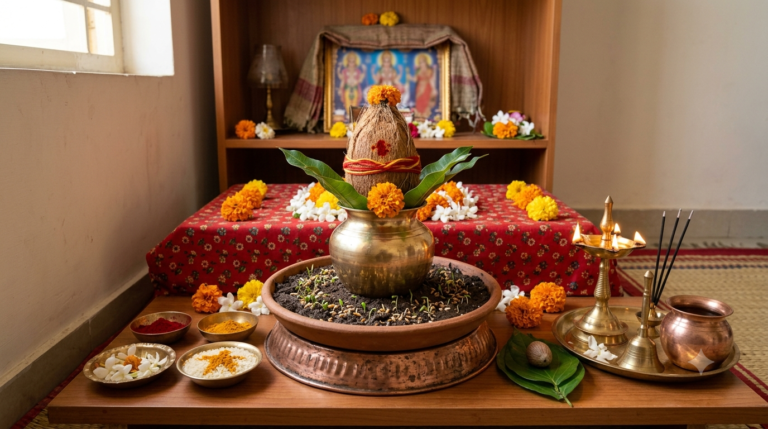
A simple home observance can focus on Vishnu worship, scripture, restraint, and charity. You do not need an elaborate ritual unless your family or Guru tradition prescribes one. In fact, a shorter practice that you understand is better than copying a complex vidhi from an unsourced video.
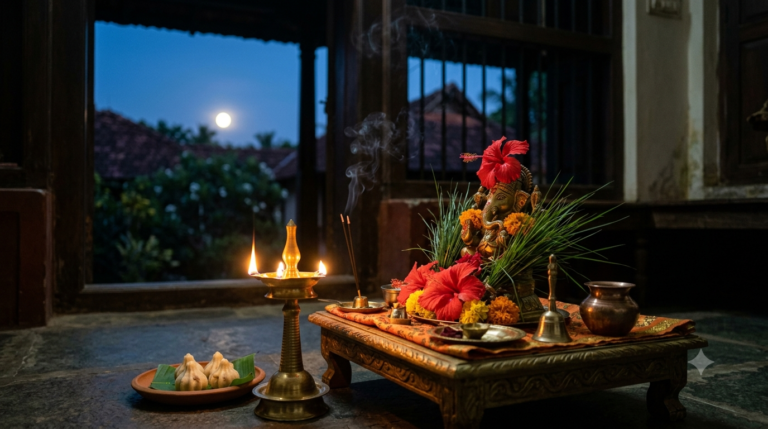
- Begin with cleanliness and sankalpa. Bathe, clean the prayer space, and make a simple intention to honour Vishnu in the Parashurama form.
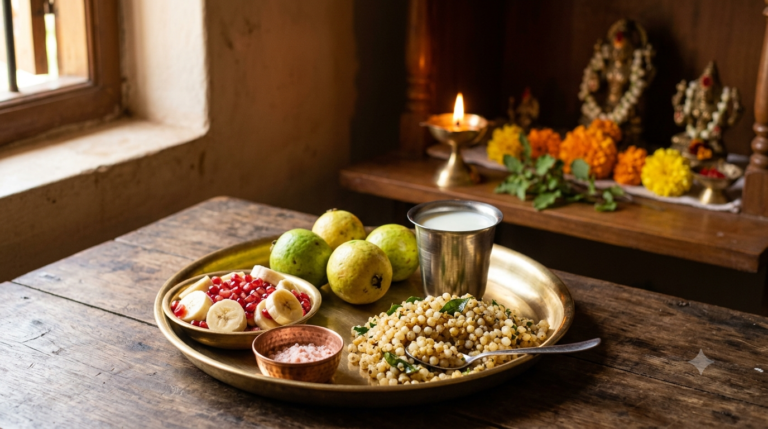
- Light a lamp and offer simple items. Flowers, fruit, water, and other customary Vishnu offerings are enough for a basic home puja.
- Read the story carefully. Read Srimad Bhagavatam 9.15 and 9.16 rather than relying only on a short social-media summary.
- Chant a familiar Vishnu prayer. If your family has no specific Parashurama mantra, a known Vishnu nama or Vishnu Sahasranamam practice is a grounded option.
- Give in charity. Food, education support, or another transparent form of dana fits the wider spirit of Vaishakha Tritiya observance.
- End with reflection. Choose one lesson about courage, restraint, forgiveness, or responsible use of authority and apply it in daily life.
Is fasting compulsory on Parashurama Jayanti?
No single fasting rule applies to every Hindu household. Some devotees keep a vrat, while others worship without a strict fast. Follow your family tradition, and do not treat fasting as a test of devotion when health makes it unsafe.
Children, pregnant people, older adults, and anyone with diabetes or another medical condition should avoid severe fasting unless a qualified clinician says it is safe. A simple meal and sincere prayer remain valid devotional choices.
Parashurama Jayanti Significance Through Five Spiritual Lessons
The Parashurama Jayanti significance becomes clearer when the whole story is read rather than only its battles. Five themes stand out because they connect the avatar’s power with responsibility.
- Dharma is above personal power. Parashurama is powerful, yet Jamadagni still corrects him. No one becomes morally infallible because they can defeat an opponent.
- Anger can begin in a just grievance and still require restraint. The theft at the hermitage and Jamadagni’s murder are serious wrongs, but the narrative still forces readers to examine retaliation.
- Forgiveness is not weakness. Jamadagni explicitly praises kshama, or forgiveness, after his son’s first violent response.
- Atonement matters. Pilgrimage and purification appear inside the story, which means consequences are part of dharma rather than an embarrassment to hide.
- Power needs an endpoint. Parashurama’s later withdrawal to Mahendra gives the story an ending beyond victory.
These lessons make the festival more demanding than a celebration of courage alone. They ask devotees to examine how they use strength in family life, work, leadership, debate, and conflict.
Common Mistakes About Parashurama Jayanti
The first mistake is reducing Parashurama to “the angry avatar.” Anger is present, but so are discipline, obedience, correction, atonement, and renunciation. A one-word label misses the moral movement of the narrative.
The second mistake is saying the story teaches hatred of Kshatriyas. The Puranic conflict concerns rulers inside a sacred narrative about failed kingship and revenge. Readers should not turn it into hostility toward living communities.
The third mistake is promising guaranteed worldly benefits from worship. Prayer, charity, and fasting are acts of faith. No one should sell them as certain methods for wealth, legal victory, health cures, exam success, or defeating enemies.
The fourth mistake is assuming Parashurama Jayanti and Akshaya Tritiya must always share one Gregorian date. They share Vaishakha Shukla Tritiya, but panchang selection rules can differ. Our guide to the significance of Simhachalam Chandanotsavam shows why Akshaya Tritiya date rules can matter in real festival planning.
What Does Parashurama Jayanti Significance Mean Today?
Today, Parashurama Jayanti significance is most useful as a lesson in ethical strength. The festival honours courage against injustice, but it also warns that force can outlive its rightful purpose. Authority must answer to dharma, and a person must remain open to correction even after winning.
That message applies to more than rulers. Parents, teachers, managers, religious leaders, public officials, and ordinary citizens all hold some form of power. The story asks whether that power protects, humiliates, serves, or simply reacts.
There is also a lesson for online religious discussion. Defending tradition does not require insulting another caste, sect, or faith. If a festival about dharma becomes a reason to spread contempt, the method has contradicted the message.
Parashurama Jayanti Significance in One Line
The Parashurama Jayanti significance is the remembrance that courage must serve dharma, while even justified power needs restraint, accountability, forgiveness, and the wisdom to stop. Parashurama’s story is powerful precisely because it contains battle and penance, anger and correction, action and withdrawal.
For a meaningful observance, read the source story, offer a simple prayer, give something useful in charity, and reflect on one place where your own strength needs better discipline. That keeps the festival connected to character rather than slogans.
Frequently Asked Questions
Is Parashurama the sixth avatar of Vishnu?
In common Vaishnava Dashavatara lists, yes. Devotees remember Parashurama as Vishnu’s sixth avatar, born to Sage Jamadagni and Renuka. Individual traditions may arrange avatar lists differently, so “sixth” refers to the widely used Dashavatara sequence.
What is the main Parashurama Jayanti significance?
The main Parashurama Jayanti significance is the disciplined use of power for dharma. The story also includes correction, forgiveness, atonement, and withdrawal. Therefore, the festival is not only a celebration of martial courage.
Is Parashurama Jayanti the same as Akshaya Tritiya?
They are closely linked because both relate to Vaishakha Shukla Tritiya. However, festival-selection rules can differ when Tritiya spans two civil dates. Check a current city-specific panchang rather than assuming both observances always share the same Gregorian date.
Why does Parashurama carry an axe?
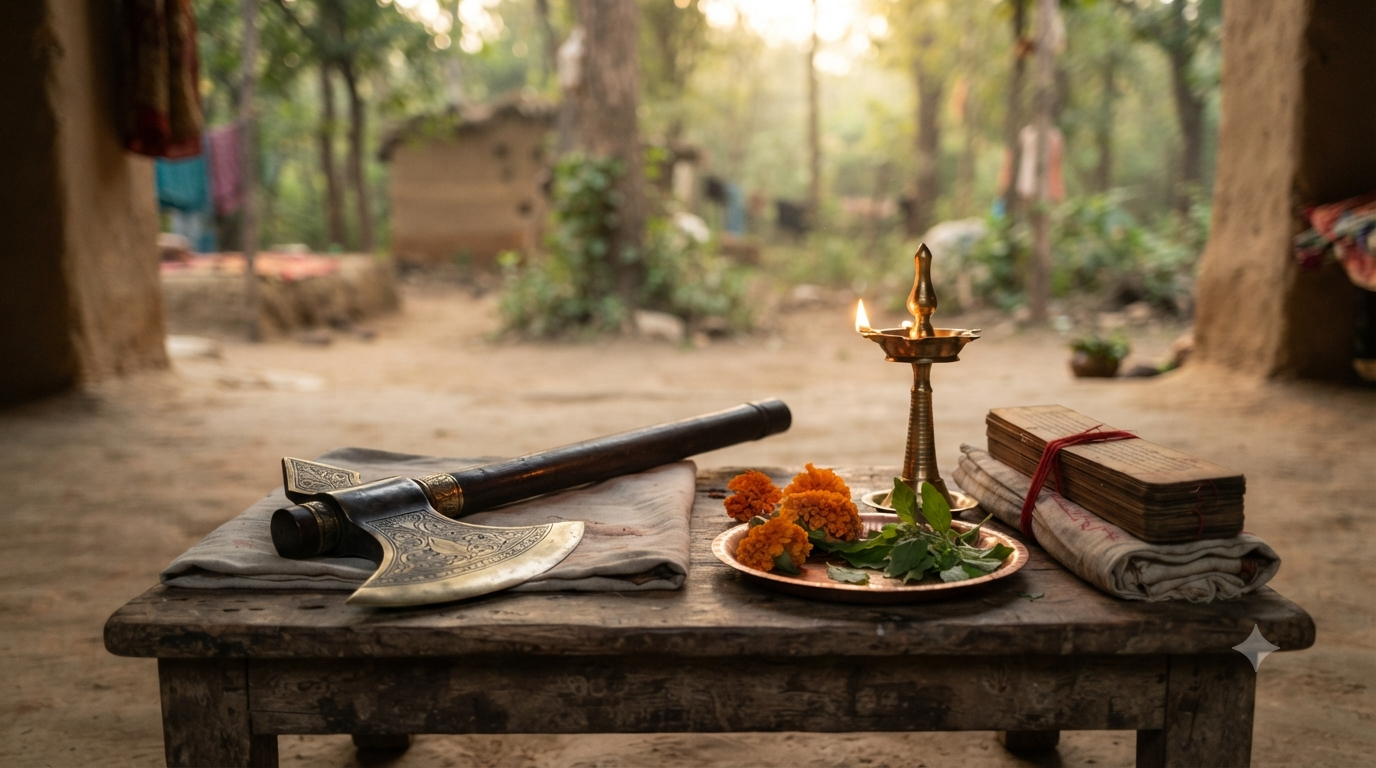
The axe, or parashu, is the weapon most closely associated with Parashurama and gives him his familiar name. In devotional symbolism it represents decisive power. Yet the wider story shows that power must remain under discipline and dharma.
Why did Parashurama fight Kartaviryarjuna?
Srimad Bhagavatam 9.15 connects the conflict with Kartaviryarjuna’s seizure of the extraordinary cow from Jamadagni’s hermitage. Parashurama kills the king and returns the cow. Jamadagni then criticises the killing and instructs his son to undertake atonement.
Did Parashurama really destroy all Kshatriyas?
The Bhagavata uses sweeping sacred-narrative language and says Parashurama eliminated the ruling class twenty-one times. Readers should not turn that ancient episode into a claim about modern caste groups. Its religious setting concerns corrupt rule, revenge, and restoration of dharma.
What happened when Parashurama met Lord Rama?
Valmiki Ramayana Bala Kanda 74-76 describes Parashurama confronting Rama and testing him with the Vishnu-associated bow. Rama accepts the challenge, after which Parashurama withdraws. Devotional readers often interpret the meeting as a transition between two forms of Vishnu’s dharma.
Can I celebrate Parashurama Jayanti without fasting?
Yes. Fasting customs vary, and devotion does not depend on a severe fast. You can pray, read scripture, chant Vishnu names, give charity, and eat according to your health needs and family tradition.
Is worship on Parashurama Jayanti guaranteed to bring success?
No religious observance can responsibly guarantee wealth, victory, health, or success. Devotees may pray for courage and clarity as matters of faith. The stronger scriptural lesson centres on discipline, accountability, and commitment to dharma.