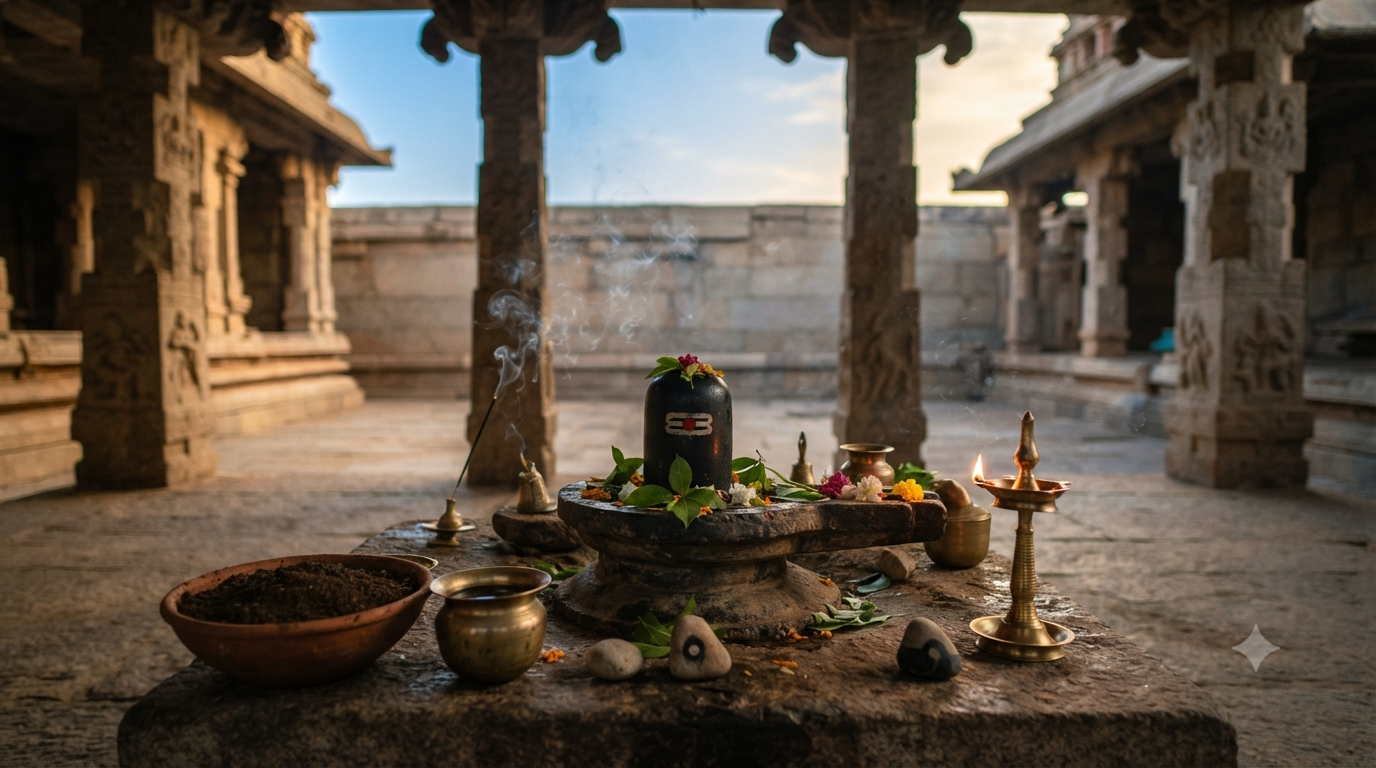
Pancha Bhootha Lingas present Lord Shiva through the five great elements of earth, water, fire, air and space, while Shiva Panchayatana worship honours Shiva alongside four other principal deities. These two traditions share a fivefold sacred vision, yet they are not the same practice. Understanding that difference makes the symbolism behind both much clearer.
Sri Vyasa Pooja is an independent devotional guide. We are not affiliated with any temple, mutt, trust or government department, and we do not accept bookings, donations or payments.
What Are Pancha Bhootha Lingas?
Pancha Bhootha Lingas are five forms of Shiva associated with the Pancha Mahabhutas, or five great elements. In this tradition, earth is Prithvi, water is Appu or Jala, fire is Agni, air is Vayu and space is Akasha. Tradition links each element with a major Shiva kshetra in South India.
The five shrines are Ekambaranathar at Kanchipuram, Jambukeswarar at Thiruvanaikaval, Arunachaleswarar at Tiruvannamalai, Srikalahasteeswara at Srikalahasti and Nataraja at Chidambaram. Four stand in Tamil Nadu, while Srikalahasti lies in Andhra Pradesh. The Tamil Nadu HR&CE Department explicitly identifies Kanchipuram as a Prithvi Pancha Bhoota Sthalam, while Andhra Pradesh tourism identifies Srikalahasti with the Vayu Linga.
Pancha Bhootha Lingas at a Glance
| Element | Shiva Shrine | Place | Traditional Symbolism |
|---|---|---|---|
| Earth (Prithvi) | Ekambaranathar | Kanchipuram | Stability, form and support |
| Water (Appu/Jala) | Jambukeswarar | Thiruvanaikaval | Flow, nourishment and purification |
| Fire (Agni) | Arunachaleswarar | Tiruvannamalai | Light, transformation and awareness |
| Air (Vayu) | Srikalahasteeswara | Srikalahasti | Breath, movement and life-force |
| Space (Akasha) | Nataraja | Chidambaram | Subtle space, openness and formless presence |
This table is a map of sacred symbolism, not a scientific classification. Hindu philosophical traditions use the five elements to describe levels of manifested existence and experience. Therefore, devotional meanings should be understood within that religious and philosophical setting.
Why the Five Elements Matter in Shaiva Tradition
The Pancha Mahabhutas provide a way to contemplate creation from the tangible to the subtle. Earth is the most solid and graspable. Water flows, fire transforms, air moves and space allows everything else to exist.
Shaiva worship turns this philosophical sequence into sacred geography. Instead of treating Shiva as confined to one image or one temple, the five element shrines invite devotees to recognise Shiva throughout the physical world. So the linga gives devotees a focus for contemplating the element itself as sacred.
This is why the five temples are more than a checklist for pilgrimage. Together, they form a teaching: divinity is not separate from the world of matter, energy, movement and space. The spiritual value lies in seeing unity through apparently different forms.
The Five Pancha Bhootha Lingas and Their Significance
1. Prithvi Linga at Ekambaranathar, Kanchipuram
Ekambaranathar Temple represents Prithvi, the earth element. The official Tamil Nadu HR&CE temple history describes Kanchipuram as one of the Pancha Bhoota sites and notes the sand linga in the sanctum. Earth therefore symbolises steadiness, embodiment and the ground on which spiritual life unfolds.
The temple tradition connects Goddess Parvati with worship beneath the sacred mango tree. For a devotee, the deeper lesson is simple: spiritual practice needs grounding. Prayer, study and meditation become meaningful when they shape ordinary conduct, patience and responsibility.
Official reference: Tamil Nadu HR&CE – Ekambaranathar Temple.
2. Appu Linga at Jambukeswarar, Thiruvanaikaval
Jambukeswarar Temple represents Appu or Jala, the water element. The temple is traditionally associated with water present around the linga in the sanctum. Its very name, Appu Linga, keeps the elemental identity at the centre of worship.
Water suggests adaptability, nourishment and cleansing. It also shows how spiritual life cannot remain rigid. A person may hold firm values while still responding with compassion to changing circumstances, much as water keeps its nature while taking the shape of its vessel.
Official reference: Tamil Nadu HR&CE – Jambukeswarar Akilandeswari Temple.
3. Agni Linga at Arunachaleswarar, Tiruvannamalai
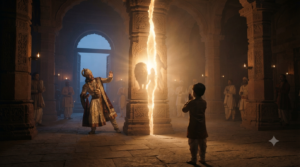
Arunachaleswarar Temple represents Agni, the fire element. The official temple history preserves the well-known Shaiva legend in which Shiva appears as an immeasurable column of light before Brahma and Vishnu. Arunachala Hill itself carries this fiery symbolism in local devotion.
Fire is both illuminating and transformative. In spiritual interpretation, it can represent the light that exposes pride, confusion and false certainty. It also suggests tapas, the disciplined heat of practice that gradually changes the practitioner.
Official reference: Tamil Nadu HR&CE – Arunachaleswarar Temple.
4. Vayu Linga at Srikalahasti
Srikalahasti represents Vayu, the air element. Andhra Pradesh government sources describe the temple as one of the Pancha Bhoota Linga sites and identify its principal form as the Vayu Linga. The shrine stands on the Swarnamukhi river and remains one of South India’s major Shaiva kshetras.
You cannot hold air in the hand, yet life depends on it. That makes Vayu a natural symbol for breath, movement and an unseen sustaining presence. For devotees, the element can become a reminder that not everything real is visible or fixed.
If you are planning a separate visit, see our Srikalahasti Rahu-Ketu Pooja guide. For state information, see Andhra Pradesh Tourism and the AP Endowments temple portal.
5. Akasha Linga at Chidambaram
Chidambaram represents Akasha, commonly translated as space or ether. Here devotees worship Shiva as Nataraja, the cosmic dancer, while the Chidambara Rahasya points toward a subtler, formless understanding. Government and heritage sources connect the shrine with the Akasha aspect of the Pancha Bhoota tradition.
Space is different from the other four elements because it is not grasped like earth or seen like fire. Yet every form appears within space. Chidambaram therefore gives the fivefold teaching its most subtle expression: form can lead the mind toward the formless.
Official reference: Chidambaram Municipality – Thillai Nataraja Temple.
Pancha Bhootha Lingas and Shiva Panchayatana: What Is the Difference?
Pancha Bhootha Lingas are five Shiva kshetras linked with the five elements, while Shiva Panchayatana is a five-deity worship arrangement with Shiva as the central chosen deity. The other four are Vishnu, Devi, Surya and Ganesha. So one is primarily an elemental Shaiva sacred-geography tradition, while the other is a multi-deity domestic or temple worship framework.
This distinction matters because the word “five” can make the two ideas look interchangeable. They are not. The Pancha Bhoota scheme asks how devotees contemplate Shiva through the fabric of creation. Panchayatana asks how devotees can honour several major forms of the Divine without denying their chosen centre.
What Is Shiva Panchayatana Worship?
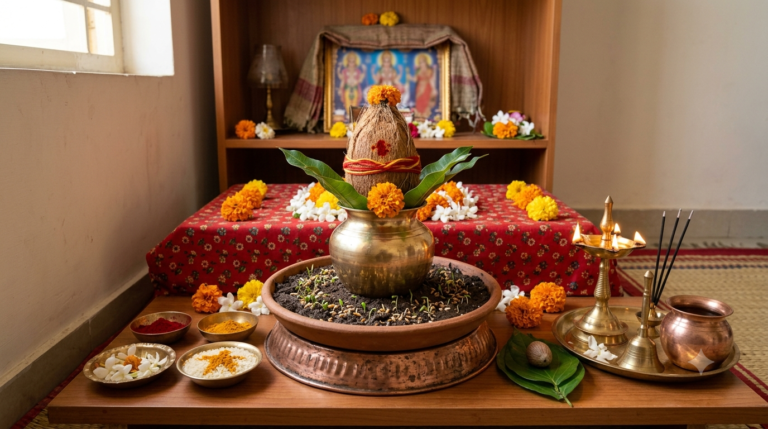
In Panchayatana Puja, devotees worship five deities together: Shiva, Vishnu, Devi, Surya and Ganesha. A devotee can give the central place to an Ishta Devata, or chosen deity. When Shiva occupies the centre, devotees commonly describe the arrangement as Shiva Panchayatana.
The Kanchi Kamakoti tradition describes Panchayatana Puja using these five deities and also records the use of natural sacred stones as their symbols. The system is strongly associated with the Smarta tradition and with the teaching legacy of Adi Shankaracharya, although five-shrine arrangements are historically older than Shankara himself.
For background on the wider Advaita lineage, our Sringeri Sharada Peetham significance guide explains why Shankara’s institutions remain central to later Hindu intellectual and devotional history.
Authoritative reference: Kanchi Kamakoti Peetham – Panchayatana Puja.
Shiva Panchayatana Is Not the Same as Five Shiva Lingas
A common misunderstanding is to imagine Shiva Panchayatana as five lingas representing five forms of Shiva. In the standard five-deity Panchayatana pattern, that is not the idea. Devotees honour Shiva with Vishnu, Devi, Surya and Ganesha, while the chosen deity holds the central place.
Another source of confusion comes from temple architecture. “Panchayatana” can also describe a layout with one main shrine and four subsidiary shrines. Archaeological and architectural sources use the term in that structural sense, so readers should always check whether a text is discussing worship, theology or architecture.
This also explains why we should not describe a Pancha Bhootha pilgrimage as a Panchayatana pilgrimage. Both use a fivefold pattern, but the five members are different and the spiritual logic is different.
How Pancha Bhootha Lingas Connect with Panchayatana
The strongest connection is philosophical rather than procedural. Both traditions teach unity without erasing diversity. The Pancha Bhoota temples show one Shiva through five elements, while Panchayatana worship honours five divine forms within one sacred arrangement.
In other words, the Pancha Bhoota approach moves from one deity toward many expressions of creation. Panchayatana moves from several deities toward a shared sacred centre. Neither needs to cancel the other. Instead, both train the devotee to see difference without losing the intuition of an underlying unity.
This is especially important in Smarta practice, where devotion to one chosen deity can coexist with reverence for other principal forms. A Shaiva need not become less devoted to Shiva by honouring Vishnu, Devi, Surya and Ganesha. The arrangement makes that theological hospitality visible.
Spiritual Significance of Pancha Bhootha Lingas
The spiritual significance of Pancha Bhootha Lingas lies in turning the natural world into a field of contemplation. Earth teaches steadiness, while water teaches adaptability. Fire teaches transformation.
Air teaches subtle movement, while space teaches openness and the limit of what form can express. Together, these images move from the tangible toward the subtle.
These meanings are interpretive, so treat them as religious symbolism rather than scientific claims or guaranteed spiritual results. Devotees may experience the temples through bhakti, philosophy, pilgrimage or family tradition. The shared thread is reverence for Shiva as present in and beyond the elements.
A useful way to approach the five shrines is to ask one question at each stage: what does this element reveal about dependence, change and presence? That turns the pilgrimage from temple collection into reflection.
Do the Five Temples Have to Be Visited in a Fixed Order?
No authoritative source makes one travel order universally mandatory, so avoid treating a popular route as a binding rule. Some modern guides recommend an earth-to-space sequence, while others plan the circuit according to geography. Unless your guru, family tradition or sampradaya prescribes an order, it is safer to treat the sequence as devotional preference rather than a binding rule.
This matters because pilgrims often feel they have “done it wrong” if their route changes. Sacred intent does not need to become travel anxiety. If you undertake the circuit, confirm current temple timings on official sources and plan around distance, rest and festival crowds.
How Are Pancha Bhootha Lingas Different from Jyotirlingas?
Pancha Bhootha Lingas classify five Shiva shrines through the elements, while the twelve Jyotirlingas form a separate sacred group linked with Shiva’s radiant linga manifestations in Puranic tradition. A temple belonging to one group does not automatically belong to the other.
This is another place where online lists often merge unrelated Shiva circuits. Keep the categories distinct: Pancha Bhoota concerns earth, water, fire, air and space; Jyotirlinga concerns the twelve celebrated Jyotirlinga kshetras. For an example of that second tradition, read our Nageshwar Jyotirlinga guide.
Can You Practise the Meaning at Home Without Visiting All Five Temples?
Yes. A devotee does not need to complete a long pilgrimage before reflecting on the five elements. Simple Shiva worship, meditation on the Pancha Mahabhutas, reading Shaiva texts and respectful Panchayatana Puja can all become home practices when they fit one’s family tradition.
However, formal ritual procedures should follow the guidance of your family priest, guru or sampradaya, especially when mantras, nyasa or initiated practices are involved. A general internet article should not replace lineage-specific ritual instruction.
For a simple Shiva observance connected with temple tradition, you may also read our guide to the importance of Pradosha Pooja.
What Beginners Commonly Get Wrong
- “Bhootha” does not mean a ghost here. In this context it refers to the great elements, or Mahabhutas.
- The five Pancha Bhoota sites are not five Panchayatana deities. The first are Shiva temples; the second are Shiva, Vishnu, Devi, Surya and Ganesha.
- Panchayatana can mean worship or architecture. Context decides whether the word refers to a puja arrangement or a five-shrine temple plan.
- A fixed pilgrimage order is not universally binding. Follow your own lineage if it prescribes one.
- Symbolic meanings are matters of religious interpretation. So do not turn them into medical, scientific or guaranteed-benefit claims.
Pancha Bhootha Lingas: The Deeper Takeaway
Pancha Bhootha Lingas teach a form of Shaiva vision in which the world itself becomes a reminder of Shiva. The five temples give earth, water, fire, air and space a sacred address, yet their combined lesson points beyond geography. The same elements are present wherever embodied life unfolds.
Shiva Panchayatana adds a second insight. Devotion can have a clear centre without becoming narrow. Shiva may stand at the centre, while Vishnu, Devi, Surya and Ganesha remain honoured within the same sacred field.
Keep the two traditions distinct, and their relationship becomes richer rather than weaker. One reveals unity across the elements. The other reveals harmony across divine forms.
Frequently Asked Questions
What are the five Pancha Bhootha Lingas?
The five are Prithvi at Ekambaranathar in Kanchipuram, Appu at Jambukeswarar in Thiruvanaikaval, Agni at Arunachaleswarar in Tiruvannamalai, Vayu at Srikalahasti and Akasha at Chidambaram. Together they represent earth, water, fire, air and space in Shaiva tradition.
What does Pancha Bhootha mean?
Pancha means five, while Bhootha or Bhuta in this context refers to an element or constituent of manifested nature. The five Mahabhutas are earth, water, fire, air and space. Here the word does not mean a ghost or spirit.
What is Shiva Panchayatana?
Shiva Panchayatana is a Panchayatana worship arrangement in which Shiva occupies the central place. Devotees honour Vishnu, Devi, Surya and Ganesha around that centre. The system allows strong devotion to Shiva while preserving reverence for other principal deities.
Are Pancha Bhootha Lingas and Panchayatana Puja the same?
No. Pancha Bhootha Lingas refer to five Shiva temples associated with the five elements. Panchayatana Puja honours five deities together. Their shared fivefold symbolism creates a philosophical connection, but the two traditions have different members and purposes.
Who are the five deities in Panchayatana Puja?
The standard five are Shiva, Vishnu, Devi, Surya and Ganesha. The devotee’s chosen deity may occupy the centre. Therefore, devotees call a Shiva-centred arrangement Shiva Panchayatana, while another devotee may place a different Ishta Devata at the centre.
Is there a compulsory order for visiting the Pancha Bhoota temples?
There is no single travel order that should be treated as universally compulsory. Some traditions or teachers may recommend a sequence, while many pilgrims plan by geography. Follow your guru or family tradition if it gives specific instructions.
Is Panchayatana only a puja method?
No. Panchayatana can also describe temple architecture with one central shrine and four subsidiary shrines. Therefore, the word may refer either to a worship arrangement or to a five-shrine architectural plan, depending on context.
Can I worship the five elements at home?
You can reflect on the five elements through simple prayer, meditation and Shiva worship at home. However, formal mantra-based or initiated rituals should follow a qualified guru, priest or family tradition. Devotional reflection does not require claiming special powers or guaranteed outcomes.