Online purohit booking is now the normal way families arrange a house-warming or a naming ceremony. Most platforms sell you a date and a price. Yet they skip the one detail that decides whether the ritual matches your family’s practice. That detail is sampradaya, the ritual tradition your household follows.
Get it wrong and you sit through a technically complete pooja. It will still feel foreign to everyone in the room. This guide covers what to check, what it honestly costs, and where the real risks sit.
About this guide: Sri Vyasa Pooja is an independent devotional guide. We also arrange our own purohits through our app. We are not affiliated with, endorsed by, or the official website of any temple, devasthanam or trust. For temple sevas, seva tickets and darshan slots, book only on that temple’s own official portal.
Online Purohit Booking at a Glance
- What it is: arranging a qualified priest for a home or hall ceremony through an app, website or WhatsApp desk.
- What decides suitability: your Veda, shakha and sutra, because these fix the procedure, not the language the priest speaks.
- Typical listed prices: Indian platforms publicly list Satyanarayana Vratam from roughly ₹1,800, and Griha Pravesham from about ₹5,100.
- Biggest dispute: who supplies the samagri, so settle that in writing before paying anything.
- Tax note: conducting a religious ceremony is exempt from GST under entry 13(a) of Notification 12/2017-Central Tax (Rate).
- Not covered: temple sevas and archanas, since those run only through the temple’s own counters or portal.
What Online Purohit Booking Actually Covers
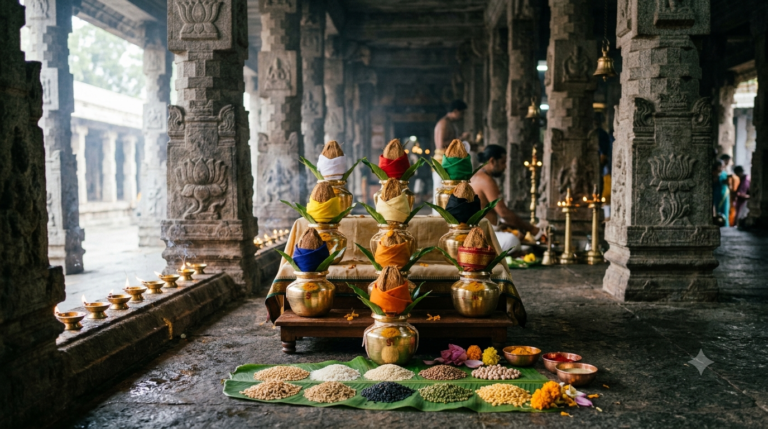
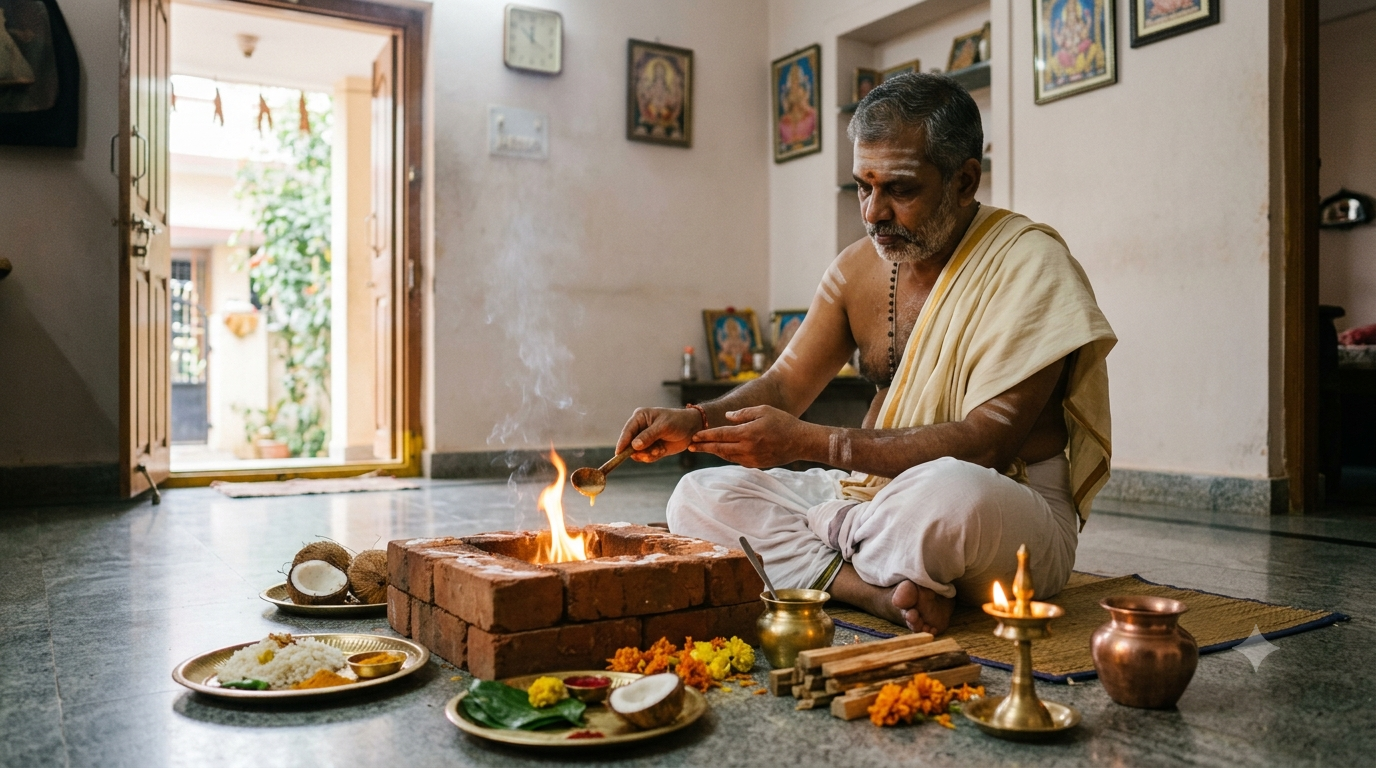
Online purohit booking covers ceremonies performed at your home, farmhouse, office or a rented hall. A priest travels to your address on an agreed muhurtham. He brings or checks the ritual materials, then performs the sankalpam and the main procedure.
Astrology and muhurtham consultations usually come bundled alongside. Temple-premises rituals are a separate matter entirely, as a later section explains.
The everyday list stays fairly consistent across India. Families book for Griha Pravesham, Namakaranam, Annaprasana, Upanayanam, Satyanarayana Vratam, Ayushya Homam and Navagraha Homam. Shraddha and tarpanam rites also form a large share, though these need a priest who handles apara karma.
Not every priest performs every rite. Many purohits deliberately keep to auspicious ceremonies and decline funerary rites. Others specialise in them. Ask directly at enquiry stage, because a late substitution on the morning of a shraddha is genuinely distressing.
The Sampradaya Check Almost Every Platform Skips
This is where online purohit booking listings mislead people most. Nearly every platform sorts priests by language. So you pick “Telugu pandit” or “Tamil vadhyar” and assume the match is done. Language only decides how the priest explains things to you.
It does not decide the procedure he follows. That comes from somewhere else entirely.
Veda, shakha and sutra decide the actual procedure
Hindu domestic rituals follow grihya sutras, the manuals attached to each Vedic branch. Take a family following Yajurveda with the Apastamba sutra. It performs Upanayanam differently from a Bodhayana family, though both may speak Telugu at home. Mantra order, the number of ritual steps and several offerings all shift.
So ask three questions before you confirm any online purohit booking. Which Veda does the purohit follow? Which shakha and sutra?
Then ask whether he regularly performs this samskara for families of your sutra. A confident, specific answer is a good sign. A vague one is worth walking away from.
Language is not the same as tradition
A Kannada-speaking Smarta family and a Kannada-speaking Madhva family follow visibly different procedures. Iyer and Iyengar households in Tamil Nadu differ again. Since platform filters rarely capture this, the burden sits with you at enquiry stage. Your grandparents or the family’s traditional purohit can usually name the sutra in one sentence.
What Online Purohit Booking Costs in India
Online purohit booking has no single national rate. Dakshina has always been set by custom, region and the scale of the ritual. Indian platforms do publish starting prices, and those give a useful floor.
Satyanarayana Vratam commonly starts between ₹1,800 and ₹3,500. Griha Pravesham runs from about ₹5,100 to ₹8,000. Large homams such as Maha Mrityunjaya begin near ₹16,000.
Treat those as listed platform starting prices. They are not a benchmark for what a priest should be paid directly. A purohit engaged through your own family network may quote quite differently, while metros run higher than district towns. Always confirm the final figure in writing before the date.
Understanding what sits inside a quote matters more than the headline number. Here is how a typical quote breaks down.
| Component | What it covers | Who usually pays |
|---|---|---|
| Dakshina | The priest’s offering for conducting the ceremony | Host, directly or via the platform |
| Additional ritviks | Assistant priests needed for larger homams | Host, charged per priest |
| Samagri | Ritual materials, firewood, ghee, cloth, flowers | Varies, so confirm it |
| Travel | Transport to your address, plus outstation stay | Host, often billed separately |
| Platform fee | Coordination and scheduling charge | Host, where one is levied |
The assistant-priest line surprises people most often. A full Chandi Homam or Sudarshana Homam needs several ritviks. So a quote built for one priest will not hold. Ask how many priests the ritual needs before you compare two platforms on price.
Who Brings the Samagri
Samagri confusion causes more spoiled mornings than any other online purohit booking issue. Some services deliver a full kit a day ahead. Others send a checklist and expect you to shop. A few assume the host arranges everything, and all three models are legitimate.
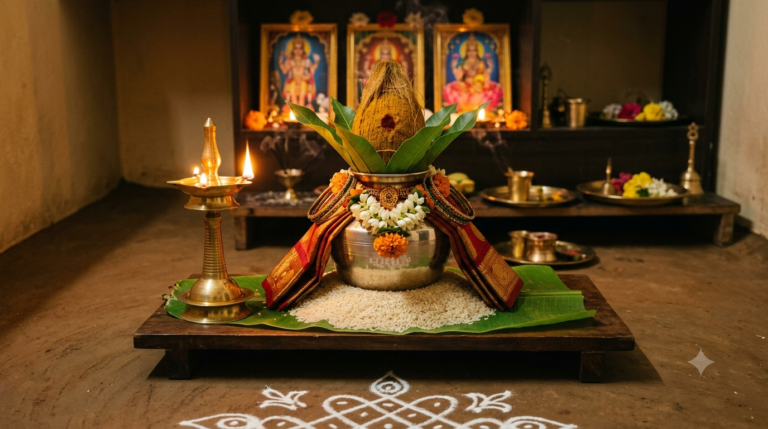
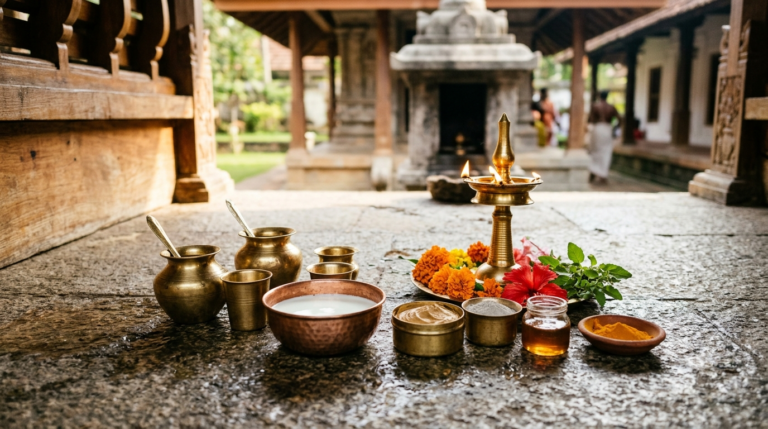
Trouble starts because the model is rarely stated clearly on the booking page. So get a written list at least three days ahead. Fresh items usually fall to the host regardless of package: flowers, fruit, betel leaves, banana stems and coconuts. Firewood, samidha and ghee for a homam should be settled explicitly, since these carry real cost.
Muhurtham Decides the Date, Not Your Calendar
Most booking flows ask for your preferred date first, which is backwards. The auspicious window comes from the panchangam. For several samskaras it also depends on the janma nakshatra of the person concerned. Pick a convenient Saturday first and you may land a slot no purohit will endorse.
Ask for the muhurtham consultation before you lock a date. A good online purohit booking desk offers two or three windows and explains why each works. Some platforms confirm any date you name without asking a single detail about your family. Treat that as a warning rather than good service.
How to Book a Purohit Online, Step by Step
A careful online purohit booking follows roughly this order.
- Name the exact ritual, since “pooja at home” is too vague for an accurate quote.
- Share the Veda, shakha and sutra your family follows, along with your gotra.
- Request muhurtham options before you commit to a calendar date.
- Confirm how many priests the ritual needs and how long it runs.
- Settle the samagri split in writing, item by item where possible.
- Ask for a written confirmation carrying the date, time, address and total amount.
- Keep the payment trail on the platform rather than sending money to a personal number.
That written confirmation is the single most useful protection you have. Verbal agreements over a phone call leave you with nothing if the priest fails to arrive. A message trail gives you something concrete to escalate.
Red Flags to Check Before You Pay
Devotional services attract fraud because urgency and faith travel together. A family with a fixed muhurtham three days away will pay quickly and ask questions later. Scammers rely on exactly that.
Watch for full advance payment demanded to a personal UPI ID or an individual’s account. Be wary when there is no written confirmation and no registered entity name. Missing office addresses and no way to reach a human are equally poor signs. Steep “urgent muhurtham” surcharges and pressure to pay within the hour complete the picture.
If money has already gone, act fast. Report financial fraud on the National Cyber Crime Reporting Portal or call the 1930 helpline. The Indian Cyber Crime Coordination Centre operates that line round the clock.
Service disputes take a different route. The National Consumer Helpline accepts grievances on 1915 in seventeen languages. It runs daily from 8 AM to 8 PM, except on national holidays.
Is GST Payable on a Priest’s Dakshina?
No, and this is worth knowing before you read an invoice. Entry 13(a) of Notification 12/2017-Central Tax (Rate) covers it. Dated 28 June 2017, it exempts services supplied by a person by way of conduct of any religious ceremony. The amount charged for conducting the ceremony therefore falls outside GST.
The nuance matters though. Samagri is a supply of goods. A platform’s coordination fee is a separate service, so either may attract tax on its own terms.
A tax line on your invoice is not automatically wrong. Ask what it applies to. Rates and entries do get revised, so check the current position on the Central Board of Indirect Taxes and Customs site. This is general information rather than tax advice, so consult a qualified professional for anything material.
Safety Notes for a Homam at Home
A homam is a live fire in your living room, and apartment layouts were not designed for one. Ventilate the room properly and open windows well before the kunda is lit. Keep the fire clear of curtains, false ceilings and synthetic mats. A bucket of water or an extinguisher should stay within reach.
Smoke deserves genuine care. Anyone with asthma, COPD or another respiratory condition should sit well away from the kunda. Stepping out during the heaviest offerings is sensible. Elderly participants and young children need the same consideration.
Many housing societies also restrict open flame. Check before you book rather than on the morning itself.
Fasting carries its own risk. Vratams are observed as a matter of faith and family tradition. They are not medical treatments. Anyone who is pregnant, diabetic, elderly or on regular medication should speak to a doctor first.
Ritual remedies for doshas and grahas are similarly matters of belief and Vedic tradition. Never treat them as a substitute for medical care.
Where Online Purohit Booking Does Not Apply
This limit trips up a lot of families. Online purohit booking arranges a priest for your own premises. It does not get you a temple seva, an archana slot or a darshan ticket. Temples run those through their own counters and portals, under their governing boards.
Be suspicious of anyone selling a TTD seva or a Guruvayur vazhipadu through a private desk. Those bookings belong on the temple’s own official channel. Our guides to the Purohit Sangam at Tirumala and the TTD Kalyana Vedika explain how each process works. The Kukke Subramanya parihara pooja guide covers Karnataka’s system.
What First-Time Families Get Wrong
Booking too late is the most common error. Muhurtham seasons cluster, so Akshaya Tritiya, Ugadi and the Karthika month fill up weeks ahead. Aim for three to four weeks of notice during peak periods.
Comparing prices without comparing scope is the second. One quote may include four ritviks and full samagri. Another covers a single priest and nothing else. Read both line by line before deciding.
Families also forget the practical staging. Ask what floor space the kunda needs and whether the priest wants a raised platform. Check how long the ceremony runs, since a four-hour Griha Pravesham needs seating planned in advance. Ask what the household should prepare the previous evening too.
One more habit is worth building: note down what was performed. Families lose track of which samskaras were completed for which child. A short record saves real confusion years later. Our guides to Ganesh Chaturthi pooja vidhanam and Varalakshmi Vratam help you follow along.
Before You Confirm the Booking
Treat the enquiry as a conversation rather than a checkout. Name the ritual precisely, state your sutra, and ask for muhurtham options. Confirm the priest count, then settle samagri in writing. Those five steps prevent almost every problem families report afterwards.
Sri Vyasa Pooja arranges purohits through our own app. You are equally free to engage a family purohit directly. Either route to online purohit booking works when the sampradaya matches and the terms stay clear. For anything inside a temple, go to that temple’s official portal instead.
Frequently Asked Questions
Is online purohit booking reliable?
Online purohit booking is reliable when the platform gives you a named priest, a written confirmation and a traceable payment method. Reliability drops sharply when a service refuses to confirm details in writing. The same applies when it demands full advance payment to a personal account.
How far in advance should I book a purohit?
Two to three weeks is comfortable for most home ceremonies. During peak muhurtham seasons, stretch that to four weeks or more, since experienced priests get committed early. Shraddha rites tied to a fixed tithi need the same lead time.
Can a purohit perform a pooja over video call?
Yes for several rituals, including japam, parayanam and certain parihara poojas performed on your behalf elsewhere. Ceremonies requiring your physical participation need the priest present. Griha Pravesham and Upanayanam are obvious examples, so confirm which model applies before paying.
Do I need to know my gotra to book a purohit?
Yes, because the sankalpam names your gotra, and the priest cannot proceed properly without it. Ask an elder in the family if you are unsure. The Veda, shakha and sutra are equally worth knowing. A purohit can often work them out from the gotra and region.
What should I do if the purohit does not turn up?
Contact the platform immediately and ask for a replacement, since most services keep backups for exactly this. Keep every message and payment record. If the matter stays unresolved, raise a grievance with the National Consumer Helpline on 1915.
Is a temple priest better than a purohit booked online?
Neither is inherently better, because the two roles differ. Temple priests conduct worship for the deity inside that temple. A purohit performs domestic samskaras at your home. What matters is training, experience with your ritual and a matching sampradaya.
Can I negotiate the dakshina?
Dakshina is traditionally an offering rather than a fee, so haggling sits awkwardly with most families and priests. A platform quote, however, is a commercial price you may reasonably compare. Ask what the figure includes instead of asking for a discount.
Does online purohit booking work for shraddha and tarpanam?
Yes, though you must specifically request a priest who performs apara karma, as many purohits handle only auspicious ceremonies. State the rite clearly at enquiry. Confirm the tithi with the desk, since these dates follow the lunar calendar.