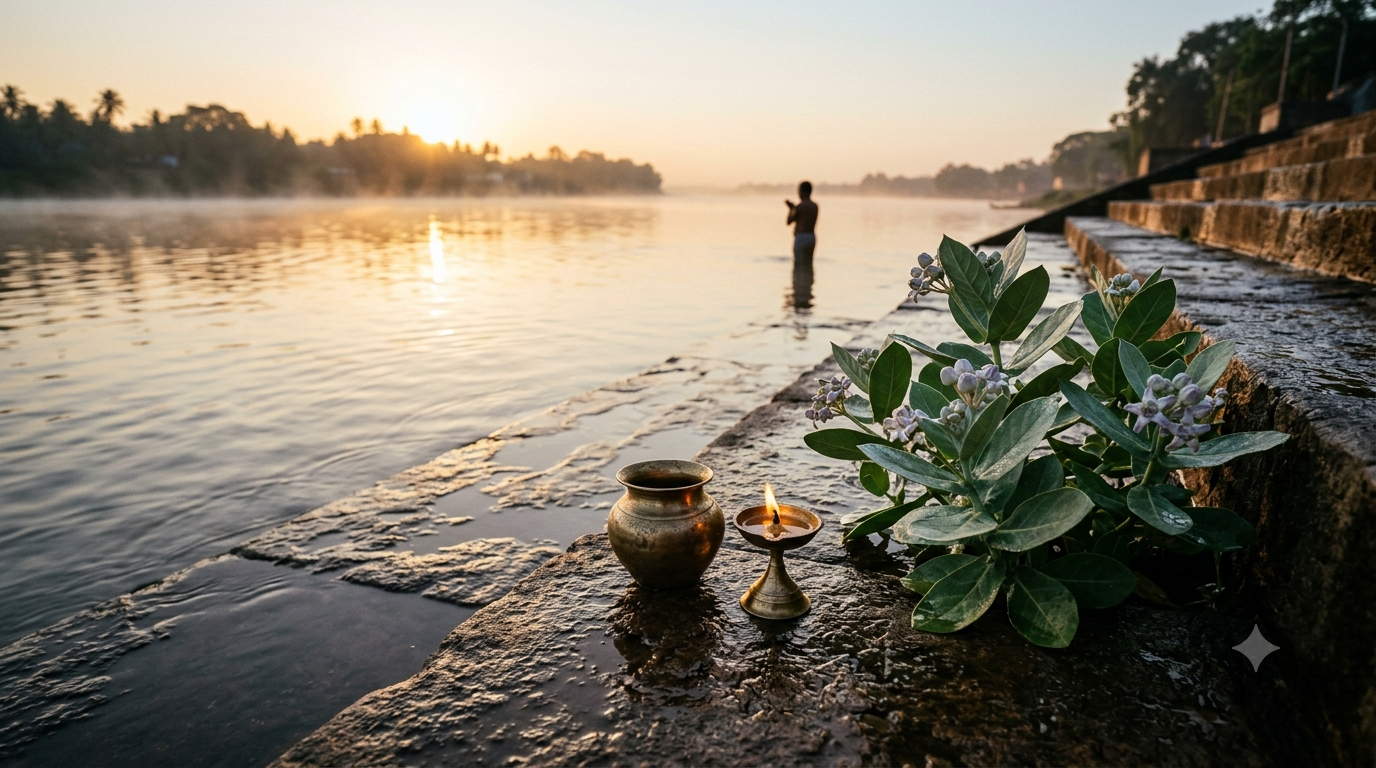
The next Ratha Saptami date is Saturday, 13 February 2027, and the hour that matters most opens roughly 96 minutes before sunrise. Most pages print the date and stop there. That leaves out what devotees actually need on the morning itself. So this guide covers the bathing window, the puja vidhi, the correct leaf, and what happens at Tirumala and Arasavalli.

Sri Vyasa Pooja is an independent pilgrim guide. We are not affiliated with, endorsed by, or the official website of any temple, trust or devasthanam. We accept no bookings, donations or payments, so please use each temple’s official channel for reservations and announcements.
Ratha Saptami Date at a Glance
- Next Ratha Saptami date: Saturday, 13 February 2027 (Magha Shukla Saptami)
- Previous occurrence: Sunday, 25 January 2026
- Other names: Magha Saptami, Surya Jayanti, Achala Saptami, Arogya Saptami
- Core ritual: Arunodaya snanam with arka leaves, then Arghya offered to the rising sun
- At Tirumala: a one-day Brahmotsavam with seven vahana sevas
- At Arasavalli: a three-day Andhra Pradesh state festival since December 2024
- Free to attend: no ticket exists for the vahana processions
When Is the Next Ratha Saptami Date?
The next Ratha Saptami date falls on 13 February 2027, a Saturday. It is observed on Saptami, the seventh day of the bright fortnight of Magha month. Because the festival follows the lunar tithi rather than the Gregorian calendar, the date shifts each year. The 2026 Ratha Saptami date fell on 25 January, so the gap between the two years is nearly three weeks.
The tithi timings and the bathing window differ by city, since both depend on your local sunrise. For your own location, check the Drik Panchang Ratha Saptami page and set your city before noting the times.
Why the Ratha Saptami Date Moves Every Year
The Hindu lunar month runs shorter than the solar month, so festival dates drift backwards each year until an adhika masa corrects them. That is why the Ratha Saptami date can land anywhere from mid-January to mid-February.
This matters for a practical reason. Many older articles still repeat that the festival arrives “in February or March”. March is simply wrong, and it has never been correct. Ratha Saptami always follows Vasant Panchami by two days, which itself falls in the same January-to-February band.
A second habit worth dropping is the year-stamped search. Devotees often type the coming year alongside the festival name, yet the tithi is what fixes the day. If you know the tithi rule, you can locate the date in any panchangam without waiting for a news article.
Snan Muhurat: The Most Important Hour
Once the Ratha Saptami date is fixed, your local bathing window matters next. The ritual bath belongs to Arunodaya, the pre-dawn window before sunrise. Traditional texts fix Arunodaya at four ghatis, which works out to about 96 minutes. Bathing inside this window is believed to bring health and longevity, and the festival earns its Arogya Saptami name from exactly that belief.
How to Find Your City’s Bathing Window
Take your local sunrise time for the festival day and count back roughly one hour and thirty-six minutes. That gives a working Arunodaya window. Because sunrise varies by several hundred kilometres of longitude, a single national timing is meaningless.
You will still see pages quoting one exact minute for the whole country. Treat any such figure as indicative only, and confirm your own city’s sunrise before setting an alarm. Panchangams published by your family’s mutt remain the most reliable source here.
Ratha Saptami Puja Vidhi at Home
When the Ratha Saptami date arrives, the home ritual is short, and it needs no priest. Devotees traditionally follow these steps in order.
- Rise during Arunodaya, well before sunrise, and prepare the bathing water.
- Place arka leaves on the head, both shoulders, the knees and the crown while bathing. Seven leaves is the customary count.
- Wear clean clothes, then face east as the sun rises.
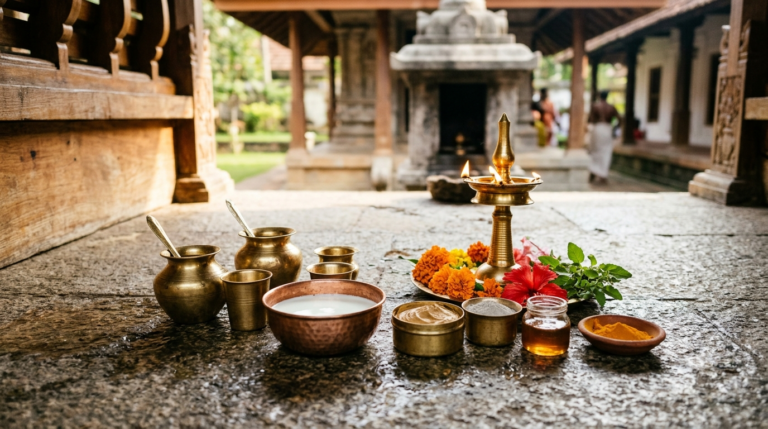
- Offer Arghya by pouring water slowly from a small kalash, standing with folded hands in namaskara mudra.
- Repeat the Arghya offering while reciting the names of Surya. Twelve repetitions is the traditional number.
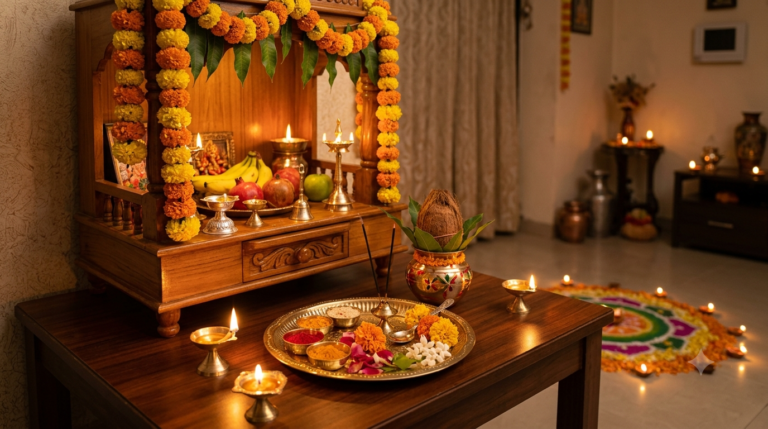
- Light a ghee lamp, then offer dhoop, camphor and red flowers.
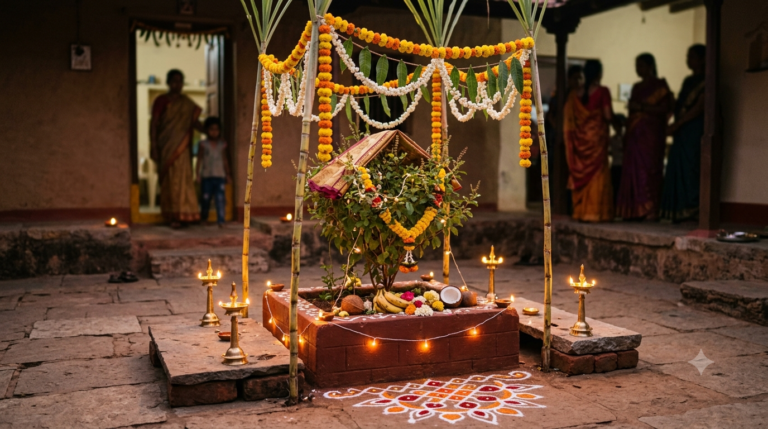
- Boil milk with rice in a clay pot placed facing the sun, and let it overflow as a symbol of abundance.
- Draw a small chariot or a sun motif in rangoli at the doorway if your family keeps that custom.
Naivedyam varies by region. Andhra households often prepare chalimidi and pongali, while Karnataka families favour a simple payasa. Tamil homes may offer sweet pongal instead.
The Arka Leaf Confusion Worth Clearing Up
The leaf used for the Ratha Saptami bath is arka, known as jilledu in Telugu and erukku in Tamil. Botanically it is Calotropis gigantea, the giant milkweed that grows wild along roadsides across South India.
A translation error has spread widely online. Several pages render jilledu as “district leaf”, because jilla means district in Telugu. That reading is wrong, and it sends devotees looking for a plant that does not exist. Ask for jilledu aaku at any flower stall and you will get the correct leaf.
One caution deserves mention. Arka sap is a milky latex that irritates skin and eyes, so handle the leaves by the stalk and rinse your hands afterwards. Keep the sap away from small children entirely.
Ratha Saptami Date and the Seven Vahanas at Tirumala
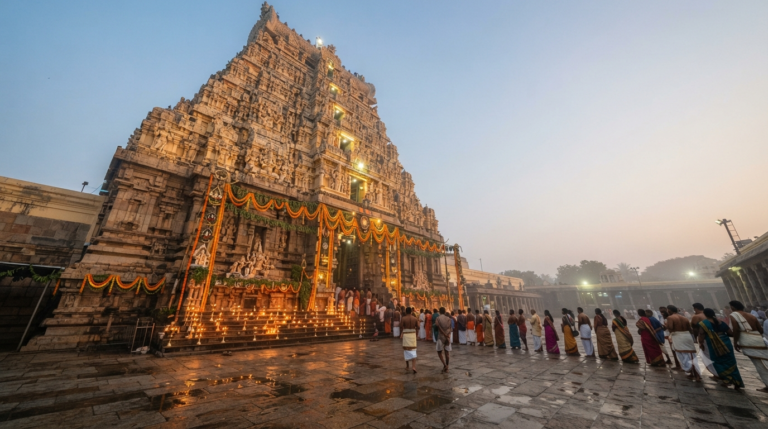
Tirumala observes the day as a one-day Brahmotsavam, which devotees call the Mini Brahmotsavams. Sri Malayappa Swamy, with Sridevi and Bhudevi, processes along the four Mada Streets on seven different vahanams between dawn and night. No other single day in the Tirumala calendar offers all seven.
| Vahanam | Typical slot | Note |
|---|---|---|
| Surya Prabha | Early morning | Opens the day, around sunrise |
| Chinna Sesha | Mid morning | Serpent mount |
| Garuda | Late morning | Draws the largest crowd |
| Hanumantha | Early afternoon | Shortest procession |
| Chakrasnanam | Afternoon | Ritual bath, not a vahanam |
| Kalpavriksha | Late afternoon | Wish-granting tree form |
| Sarva Bhoopala | Evening | Borne by four kings |
| Chandra Prabha | Night | Closes the day |
Slots run roughly from 5.30 am to 9 pm, though the devasthanam adjusts them each year. Confirm the released schedule on the TTD news portal before you travel.
Arjitha Sevas Are Cancelled That Day
Because the processions absorb the whole temple staff, TTD cancels several paid sevas on Ratha Saptami. In January 2026 the devasthanam suspended Kalyanotsavam, Unjal Seva, Arjitha Brahmotsavam and Sahasra Deepalankara Seva. Suprabhatam, Thomala Seva and Archana were performed in ekantham instead.
So if you hold an arjitha seva ticket for that date, check the announcement before travelling. Refund and rescheduling rules come from TTD directly, never from a third-party site. If you are planning the wider trip, our guide to the Srinivasam Complex at Tirupati covers counters, buses and rooms.
There Is No Ratha Saptami Darshan Ticket
This is the single most useful correction we can offer. The vahana processions happen on the open Mada Streets, so anyone standing there can watch them without any ticket at all. Nothing is sold for the processions themselves.
Sites advertising “Ratha Saptami darshan ticket booking” are conflating the free processions with ordinary darshan quotas. Special Entry Darshan and arjitha sevas are separate products, released through TTD’s own monthly schedule. Book those only at the official TTD portal, and treat any other seller as unverified.
Arasavalli: A State Festival Since 2024
In December 2024 the Government of Andhra Pradesh declared Ratha Saptami a state festival, celebrated over three days at the Sri Suryanarayana Swamy temple in Arasavalli, Srikakulam district. The first observance under that status ran from 2 to 4 February 2025.
Arasavalli is one of the few working Surya temples in India, built in Kalinga style and traced to the seventh century. The shrine sits about 1.6 km from Srikakulam town. Its alignment is remarkable: sunlight reaches the deity’s feet twice a year, in February and again in June.
State-festival status changed the scale of the event. Endowments officials now present pattu vastrams on the government’s behalf, and mass Surya Namaskaram sessions are organised across the town. Details for each year appear on the Srikakulam district portal.
Other Surya Temples Worth Knowing
Konark in Odisha is the most famous sun temple in India, though it is a monument rather than a living shrine. Worship no longer happens there, so devotees visit for the architecture instead.
Modhera in Gujarat follows the same pattern. Gollala Mamidada near Kakinada, however, remains an active Surya temple where Ratha Saptami is observed with abhishekams. Vaishnava temples also mark the day, since Surya is regarded as an aspect of Vishnu in that tradition.
Fasting Rules and a Health Note
Fasting on Ratha Saptami is optional, not obligatory. Many devotees keep a partial fast until the Arghya is complete, then eat a simple sattvic meal. Others observe nothing beyond the bath.
The pre-dawn cold bath deserves real caution in the North Indian winter. If you have a heart condition, high blood pressure, or joint problems, use warm water indoors rather than a river or canal. Elderly devotees should not bathe unaccompanied in open water.
Anyone who is pregnant, diabetic, or on regular medication should speak to a doctor before fasting. Faith practices are matters of tradition and belief; they are not medical treatments, and they should never replace prescribed care.
What Most Guides Get Wrong
After reading dozens of Ratha Saptami pages, four errors keep recurring. Each one costs devotees either time or accuracy.
- A single national timing. Snan muhurat is local. A Hyderabad figure will not work in Delhi.
- “February or March”. The window is mid-January to mid-February, and it always has been.
- Ticketed processions. The Tirumala vahana sevas are free to watch from the Mada Streets.
- “District leaf”. A mistranslation of jilledu, which means arka.
One further point rarely appears anywhere. Because Ratha Saptami often falls close to Vaikuntha Ekadashi in the Tirumala calendar, hill accommodation can stay tight across that whole stretch. Our Vaikuntha Ekadashi guide explains how that crowding builds.
Before You Go
Fix three things and the rest falls into place. Note your city’s sunrise for the Ratha Saptami date of 13 February 2027, buy jilledu leaves the previous evening, and decide whether you are observing at home or travelling. If Tirumala is the plan, book darshan through TTD’s own schedule and arrive the day before.
For a broader devotional calendar, our Karthika Masam guide covers the other major solar and lunar observances of the season. Timings and arrangements do change, so confirm current details with the temple before you finalise travel.
Ratha Saptami FAQs
What is the Ratha Saptami date in 2027?
The Ratha Saptami date in 2027 is Saturday, 13 February. It falls on Magha Shukla Saptami, the seventh day of the bright fortnight of Magha month. The previous observance was on 25 January 2026.
What time should I take the Ratha Saptami bath?
Bathe during Arunodaya, the window of roughly 96 minutes before your local sunrise. Because sunrise varies by city, there is no single correct national time. Check your city’s sunrise and count back about an hour and thirty-six minutes.
Which leaves are used for the Ratha Saptami snanam?
Arka leaves, called jilledu in Telugu and erukku in Tamil, from the Calotropis gigantea plant. Seven leaves are traditionally placed on the head, shoulders, knees and crown while bathing. The sap irritates skin, so handle them by the stalk.
Do I need a ticket for Ratha Saptami at Tirumala?
No ticket exists for the vahana processions, which take place on the open Mada Streets. Ordinary darshan and arjitha sevas are booked separately through TTD’s official portal. Any site selling a dedicated “Ratha Saptami ticket” is misrepresenting the event.
Is fasting compulsory on Ratha Saptami?
Fasting is optional and varies by family custom. Many devotees fast only until the Arghya offering is complete. Consult a doctor first if you are pregnant, diabetic, elderly, or on regular medication.
Why is Ratha Saptami also called Surya Jayanti?
The day marks the symbolic birth of Surya, so devotees celebrate it as his jayanti. It also represents the moment Surya turns his seven-horse chariot towards the northern hemisphere. That turn signals the end of winter and the start of the harvest season.
Can Ratha Saptami be observed without a priest?
Yes, and most families do exactly that. The bath, the Arghya, the lamp and the milk offering all belong to household practice. A priest is needed only for temple abhishekams or larger homams.
Where is Ratha Saptami celebrated as a state festival?
At the Sri Suryanarayana Swamy temple in Arasavalli, Srikakulam district, Andhra Pradesh. The state government granted the three-day status in December 2024. Srikakulam district authorities publish the arrangements each year.