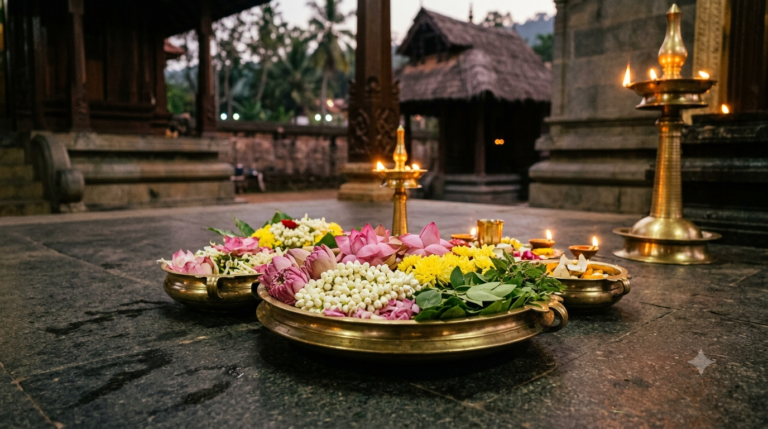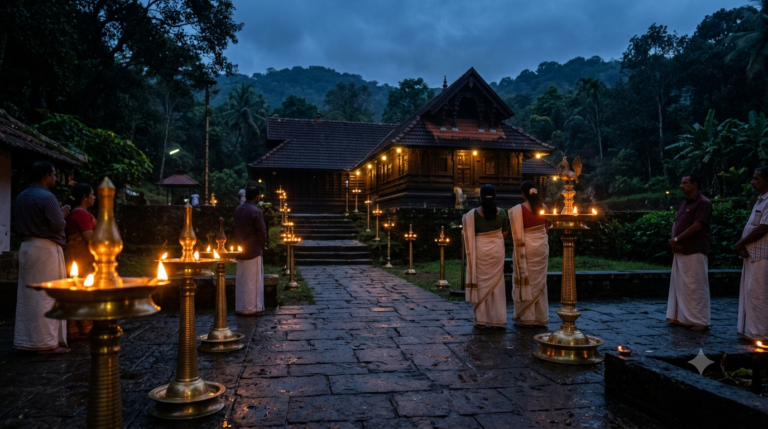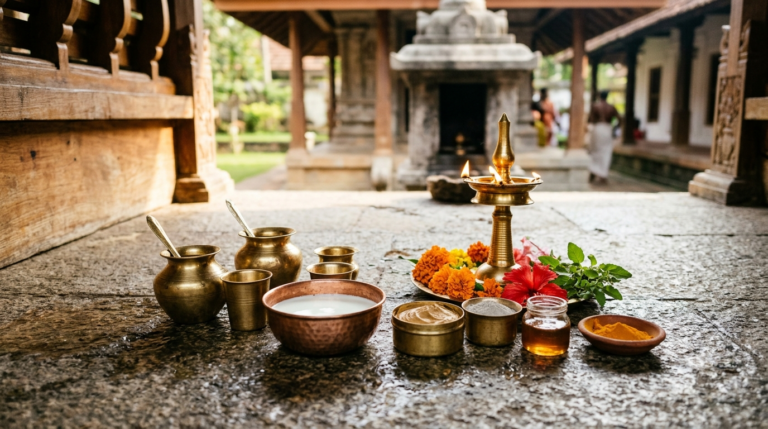
The famous Rama temples in South India are spread across four states, and they do not all work the same way, which is exactly where most trip plans fall apart. Bhadrachalam sits on the Godavari in Telangana. Vontimitta stands in a Kadapa village under TTD, while Hampi’s most photographed Rama shrine holds no deity at all. This guide separates the genuinely important shrines from listicle filler, because a pilgrim needs administration, timings and Ramayana logic rather than adjectives.
Sri Vyasa Pooja is an independent pilgrim guide. We are not affiliated with, endorsed by, or the official website of any temple, devasthanam or endowments department. We do not accept bookings, sevas, donations or payments. Use the official portals linked below for every reservation.
Rama Temples in South India at a Glance
- Bhadrachalam, Telangana — the Sri Sita Ramachandraswamy Temple, run by the Telangana endowments administration, where Nithya Kalyanam happens daily.
- Vontimitta, Andhra Pradesh — a TTD-administered shrine and a centrally protected monument, famous because it holds its Kalyanam at night.
- Tirupati, Andhra Pradesh — the Kodandarama Temple, the easiest Rama darshan to add to a Tirumala trip.
- Kumbakonam, Tamil Nadu — the Ramaswamy Temple, called the Southern Ayodhya since all four brothers stand together.
- Dhanushkodi, Tamil Nadu — the Kothandaramaswamy Temple, the only structure that survived the 1964 cyclone.
- Thriprayar, Kerala — the starting shrine of the four-temple Nalambalam Yatra.
- Hampi, Karnataka — one active Rama temple by the river, plus one celebrated ruin with no worship.
Why South India Holds So Many Rama Shrines
Two very different forces built this map. The first is the Ramayana itself, because the exile route runs south through Dandakaranya, into Kishkindha, and finally to the sea crossing at Rameswaram. Places along that line became sacred long before anyone laid stone.
The second force is royal patronage. Most surviving structures date from the Vijayanagara and Nayaka centuries, roughly the fourteenth to seventeenth, when kings adopted Rama as a model of righteous rule. So a shrine can be ancient in memory yet fairly recent in masonry, and both facts are true at once.
Together, the Rama temples in South India stack these two layers on top of each other. Understanding that split helps you plan. If you want narrative sites, follow the epic. If you want carving and scale, follow the dynasties instead.
Bhadrachalam: The Most Visited of the Rama Temples in South India
The Sri Sita Ramachandraswamy Temple at Bhadrachalam stands on the banks of the Godavari in Bhadradri Kothagudem district, Telangana. Devotees call it Dakshina Ayodhya, and among the Rama temples in South India it draws the heaviest single-day crowds. Its fame rests on Kancherla Gopanna, the seventeenth-century revenue officer remembered as Bhakta Ramadasu, who rebuilt the shrine and then went to a Golconda prison for it.
Priests perform the celestial wedding here every single day as Nithya Kalyanam, which few other Rama shrines do. On Sri Rama Navami the state government presents Talambralu on behalf of the people, so crowds swell into lakhs. Book any Arjitha Seva well ahead through the official portal.
Timings are where online sources disagree badly. The official Telangana temple portal lists Sarva Darshan in windows of roughly 8.30 to 11.00 in the morning, 12.30 to 1.00 in the afternoon, and 3.00 to 8.30 in the evening. Many blogs instead publish 4.30 AM to 9.00 PM, because they merge early seva hours with public darshan. Confirm your slot on the official Bhadradri temple portal before you travel.
Reaching it takes planning, since the nearest railhead is Bhadrachalam Road at Kothagudem, about 40 km away. Road buses run from Hyderabad, Warangal, Vijayawada and Rajahmundry. Our Bhadrachalam Brahmotsavam guide covers the festival week in more detail.
Vontimitta: Where the Sita Rama Kalyanam Happens at Night
Vontimitta lies about 25 km from Kadapa town in Andhra Pradesh, and Tirumala Tirupati Devasthanams administers it today. The Archaeological Survey of India also protects the sixteenth-century structure as a monument of national importance. Local tradition credits two reformed brigands, Vontudu and Mittudu, with raising the whole temple in a single day.
Sculptors cut the images of Rama, Sita and Lakshmana from one rock, which is why the place also carries the name Ekasila Nagaram. Another rarity catches visitors off guard: Hanuman does not appear in the main sanctum. A separate Hanuman shrine sits outside the complex instead.
Why the Vontimitta Kalyanam Is Not on Rama Navami Noon
Almost every temple performs Sita Rama Kalyanam at midday on Rama Navami, in Abhijit lagna. Few Rama temples in South India break that pattern, yet Vontimitta does. The wedding here takes place at night on Chaitra Shukla Chaturdashi, the day before the full moon, so that moonlight falls on the ceremony.
Devotional tradition explains it through a promise Rama made to Chandra, who missed the original noon wedding. The Andhra Pradesh government has officially conducted this Kalyanam since 2015. Read our detailed Vontimitta Seetha Rama Kalyanam guide before booking travel around the festival.
One practical warning matters here. The temple counter sells daily darshan and Antaralaya tickets, not the internet, although certain weekly and monthly sevas do appear on the TTD portal. Any website promising instant Vontimitta darshan booking deserves suspicion.
Kodandarama Temple, Tirupati: Closest of the Rama Temples in South India
If your yatra already includes Tirumala, this is the simplest Rama darshan to add. The Kodandarama Temple sits in Tirupati town with its own tank, the Sri Ramachandra Pushkarini, and TTD manages it alongside the hill shrine. Historians trace the Dravidian structure to around the tenth century.
Rama Navami here unfolds over several days rather than one. Hanumantha Vahana Seva marks the birth day, Sita Rama Kalyanam follows on Dasami, and Pattabhisheka Mahotsavam comes on Ekadasi. A three-day float festival runs in April at the temple tank. Check schedules on the TTD official website.
Ramaswamy Temple, Kumbakonam: The Southern Ayodhya
This Tamil Nadu shrine gives you something no other major Rama temple does. Rama sits crowned in Pattabhishekam form with Sita beside him, while Lakshmana, Bharata and Shatrughna all stand present. Hanuman appears holding a veena rather than a mace. No other of the major Rama temples in South India shows all four brothers together like this.
Govinda Dikshitar, minister to the Thanjavur Nayakas, built it in the sixteenth century. The mandapam rests on 64 monolithic pillars, and 219 painted panels carry the Ramayana across the walls. Because it is one of five Vishnu temples tied to the Mahamaham festival, the twelve-year cycle brings enormous crowds.
The Tamil Nadu Hindu Religious and Charitable Endowments Department administers the temple, and entry is free. Published timings cluster around 6.00 AM to about 12.30 PM and 4.00 PM to 9.00 PM, though sources vary by half an hour. Ring the temple office or ask locally on the morning of your visit.
Kothandaramaswamy Temple, Dhanushkodi
About 12 km from Rameswaram town, on the thin road running toward Dhanushkodi, this shrine stands with sea on both sides. Tradition marks it as the spot where Vibhishana surrendered to Rama and later received the crown of Lanka. Painted panels inside narrate the episode.
Among coastal Rama temples in South India, none carries a starker survival story. When the 1964 cyclone erased Dhanushkodi town, this temple was the only structure left standing. The sanctum holds Rama, Sita, Lakshmana, Hanuman and Vibhishana together.
Pair it with the Ramanathaswamy Temple, which is a Shiva Jyotirlinga linked to Rama rather than a Rama temple itself. Our Rameshwaram darshan timings guide explains that circuit. Carry water and a cap, since the approach offers almost no shade.
Nalambalam Yatra: Four Rama Temples in South India in One Day
Thriprayar Sree Rama Temple sits on the Karuvannur river in Thrissur district, under the Cochin Devaswom Board. The idol is unusual because Rama appears four-armed, holding conch, discus, bow and garland. Meenoottu, feeding the river fish, remains its best known offering.
The temple is also the first stop of the Nalambalam Yatra. Pilgrims visit four shrines in fixed order on a single day: Rama at Thriprayar, Bharata at Koodalmanikyam in Irinjalakuda, Lakshmana at Thirumoozhikkulam, and Shatrughna at Payammal. Devotees consider the sequence itself essential.
The yatra is traditionally undertaken during Karkidakam, the Malayalam month falling roughly mid-July to mid-August. Darshan at Thriprayar is generally available from about 3.00 AM to 12.30 PM and again from 5.00 PM to 7.30 PM, as listed by the Koodalmanikyam Devaswom Nalambalam page. Start before dawn if you want all four before the afternoon closes.
Hampi: One Rama Temple Works, One Does Not
This is the correction that trips up more visitors than any other. Hampi has two celebrated Rama shrines, yet only one is a living temple.
The Kodandarama Temple stands beside the Tungabhadra at Chakratirtha, at the end of Virupaksha Bazaar. Rama, Sita and Lakshmana rise in tall relief from a single boulder, and worship continues here daily. Tradition places Sugriva’s coronation at this spot after the slaying of Vali.
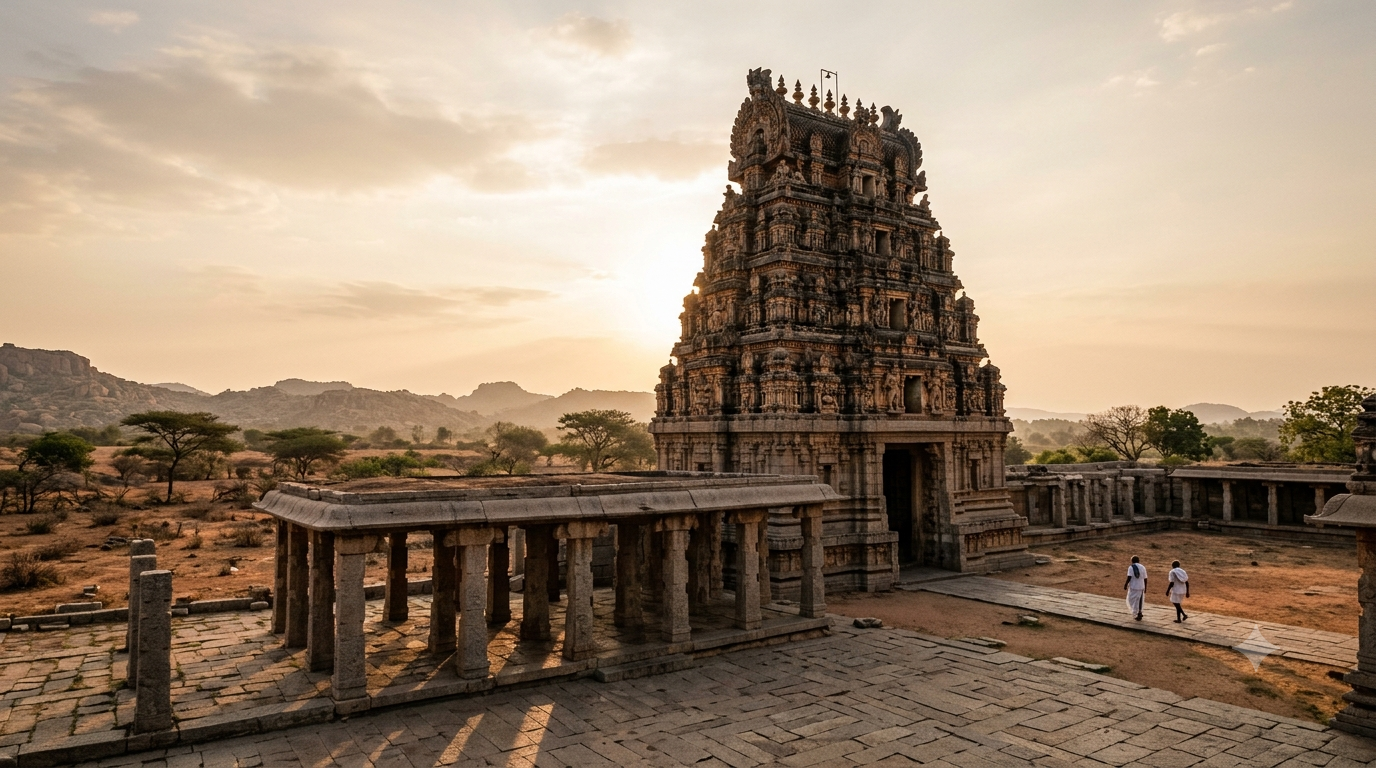
Hazara Rama Temple, inside the royal enclosure, is a different case entirely. Devaraya II built it in the early fifteenth century as the private chapel of the Vijayanagara kings, and its walls carry hundreds of Ramayana panels.
The sanctum, however, stands empty and no priest performs puja there, because the site functions as a protected heritage monument. Visit it for the carving, not for darshan. Devotees looking for active worship nearby often continue to the Yantrodharaka Hanuman shrine.
Rama Temples in South India: Comparison Table
| Temple | State | Administered by | Typical darshan window |
|---|---|---|---|
| Bhadrachalam | Telangana | Telangana endowments | Morning, midday and evening slots |
| Vontimitta | Andhra Pradesh | TTD and ASI | Morning and evening, counter tickets |
| Kodandarama, Tirupati | Andhra Pradesh | TTD | Morning and evening |
| Ramaswamy, Kumbakonam | Tamil Nadu | Tamil Nadu HR and CE | Roughly 6 AM to noon, 4 PM to 9 PM |
| Kothandaramaswamy | Tamil Nadu | Local administration | Daytime only |
| Thriprayar | Kerala | Cochin Devaswom Board | Early morning and evening |
| Kodandarama, Hampi | Karnataka | Local temple committee | Daytime only |
Treat every window above as indicative, because festival days, eclipses and local rituals shift them without notice. Always confirm on the official portal or by phone on the morning of travel.
Which Rama Temples in South India Suit Your Trip?
Pick by purpose rather than by fame, and the itinerary writes itself.
- For festival scale: Bhadrachalam on Rama Navami, or Vontimitta for the moonlit Kalyanam a few days later.
- For art and architecture: Kumbakonam for painted Ramayana panels, and Hampi for stone narrative carving.
- For the Ramayana storyline: Rameswaram with Dhanushkodi, since the sea crossing episode plays out across that stretch.
- For a single-day merit circuit: the Kerala Nalambalam, which needs an early start but no overnight stay.
- For a short add-on: Kodandarama in Tirupati, easily fitted around a Tirumala darshan.
Four Myths About the Famous Rama Temples in South India
Aggregator pages repeat these errors constantly, so check your plan against them.
Myth one: Hazara Rama at Hampi is a working temple. It is not, since the sanctum stands empty and no daily puja happens there.
Myth two: Vontimitta performs its Kalyanam at noon on Rama Navami. The temple holds the ceremony at night on Chaturdashi, a day before Pournami.
Myth three: Vontimitta daily darshan can be booked online. Only certain weekly and monthly sevas appear on the TTD portal, while daily tickets stay at the counter.
Myth four: Ramanathaswamy at Rameswaram is a Rama temple. It is a Shiva Jyotirlinga connected to Rama’s story, and the actual Rama shrine is at Dhanushkodi.
Visiting Rama Temples in South India: What Experienced Pilgrims Do
Small habits save whole days when you string several Rama temples in South India into one trip. Because these shrines sit far apart, travel time usually decides the itinerary more than darshan time does.
- Treat Bhadrachalam and Vontimitta as separate trips, since the road distance between them runs several hundred kilometres.
- Reach Kerala’s Nalambalam temples before dawn, because the order cannot be rearranged once shrines close for the midday break.
- Carry a government photo ID everywhere, as most seva counters ask for it.
- Avoid April and May in Rayalaseema and Ramanathapuram, when daytime heat becomes genuinely punishing.
- Ask the temple office directly about timing changes rather than trusting a search snippet.
A brief health note deserves space too. Several of these visits involve long open walks, sun exposure and fasting, so pilgrims who are elderly, pregnant, or managing a medical condition should carry water and medication. Consult a doctor before fasting or attempting a long walk if you are at risk. Ritual and faith remedies are matters of tradition and belief, never a substitute for medical treatment.
Before You Go
The Rama temples in South India reward depth over speed on this route. Choose two or three shrines that share a region, then give each of them a full unhurried morning. Bhadrachalam and Vontimitta anchor the Telugu states, Kumbakonam and Dhanushkodi cover the Tamil trail, while Thriprayar and Hampi round out Kerala and Karnataka.
Verify timings on the official portal within a day of travel, because published schedules shift around festivals. Book only through official channels, and treat any third-party site offering darshan tickets with real caution.
FAQs About Rama Temples in South India
Which is the most famous Rama temple in South India?
Bhadrachalam’s Sri Sita Ramachandraswamy Temple in Telangana is the most visited of the Rama temples in South India, and devotees call it Dakshina Ayodhya. Its daily Nithya Kalyanam and state-honoured Rama Navami celebrations draw the largest crowds of any southern Rama shrine.
Why is Vontimitta called Ekasila Nagaram?
Ekasila means a single stone. Sculptors cut the images of Rama, Sita and Lakshmana at Vontimitta from one rock, so the settlement took the name. Tradition also credits two reformed brigands with building the temple in one day.
Can I do the Nalambalam Yatra in one day?
Yes, and that is the traditional practice during Karkidakam. Begin at Thriprayar before dawn, then move to Koodalmanikyam, Thirumoozhikkulam and Payammal in that fixed order. Hiring a car makes the sequence far easier to complete.
Is there an entry fee at these temples?
General darshan is free at most of them, though special or Antaralaya darshan carries a small ticket at some shrines. Seva rates vary by temple and change periodically, so confirm the current amount on the official portal.
Which Rama temple is closest to Tirupati?
The Kodandarama Temple in Tirupati town is the nearest, and it sits within the city itself. Vontimitta is the next option, reachable in roughly three hours by road toward Kadapa district.
When is the best season to visit?
October to February suits most Rama temples in South India, because heat and humidity drop sharply then. March and April bring Rama Navami crowds, which is excellent for atmosphere but difficult for accommodation and queues.
Does Hampi have an active Rama temple?
Yes. The Kodandarama Temple beside the Tungabhadra at Chakratirtha remains in worship. Hazara Rama in the royal enclosure, despite its fame, has an empty sanctum and functions purely as a heritage monument.
Do these temples have a dress code?
Every shrine expects traditional modest clothing, and some enforce it strictly. Men generally wear dhoti or trousers with an upper cloth, while women wear saree or salwar. Footwear stays outside in all cases.