Veda Vyasa Jayanti honours the sage whom Hindu tradition remembers as a great organiser and transmitter of sacred knowledge. The day is not only a birthday remembrance, because its deeper theme is the continuity of teaching. It asks devotees to honour the Guru, study carefully, preserve context, and pass wisdom forward with humility.
Independence note: SriVyasapooja.in is an independent devotional guide. We are not affiliated with any temple, mutt, trust, or religious institution, and we do not accept bookings, donations, or payments through this page.
Veda Vyasa Jayanti at a Glance
- Who is honoured: Maharishi Veda Vyasa, also called Krishna Dvaipayana and Badarayana in traditional sources.
- Why he matters: Hindu tradition credits Vyasa with classifying the Vedas, composing the Mahabharata and eighteen Puranas, and setting out Vedantic teaching in the Brahma Sutras.
- Main spiritual theme: gratitude to the Guru and responsibility toward the transmission of knowledge.
- Common observances: Guru worship, scripture reading, prayer, charity, remembrance of teachers, and disciplined study.
- Date point: Ashadha Purnima is widely observed as Vyasa Purnima or Guru Purnima. Some Madhwa communities also mark Vedavyasa Jayanti on Vaishakha Shukla Trayodashi.
The clearest way to understand Veda Vyasa Jayanti is this: it celebrates both a revered sage and a duty. Knowledge has to be received faithfully, understood with guidance, and transmitted without careless distortion.
Why Is Veda Vyasa Jayanti Spiritually Important?
Veda Vyasa Jayanti is spiritually important because Vyasa represents the Guru as a bridge between revelation and human understanding. Tradition remembers him for arranging vast bodies of sacred teaching into forms students could learn and preserve. Therefore, the festival joins reverence with responsibility rather than stopping at ceremonial remembrance.
A teacher does more than possess information. A true Guru explains it so the next generation can understand, question, practise, and preserve it. Vyasa became an enduring symbol of that work, so the day naturally connects personal gratitude with the wider Guru Parampara.
The Dakshinamnaya Sri Sharada Peetham, Sringeri describes Vyasa Poornima as a day for honouring the Brahma Vidya Guru Parampara. Its explanation also credits Bhagavan Veda Vyasa with classifying the Vedas, setting out the Brahma Sutras, and composing the Mahabharata and Puranas.
Who Was the Sage Behind the Tradition?
Maharishi Veda Vyasa stands at the centre of Hindu sacred tradition. The Mahabharata presents Krishna Dvaipayana Vyasa as a figure within the epic and as the sage associated with its composition. Later Hindu traditions also connect him with the Vedas, Brahma Sutras, and Puranic literature.
The name “Vyasa” carries the sense of arranging, dividing, or compiling. That title fits his remembered role because tradition portrays him as one who made an immense sacred inheritance easier to transmit. His significance therefore rests as much on preservation as on authorship.
Devotional and academic ways of describing Vyasa are not always identical. Claims about authorship, chronology, and divine status belong to different interpretive frameworks. A careful devotional guide can respect traditional belief while making that distinction clear.
Veda Vyasa Jayanti and the Four Vedas
Veda Vyasa Jayanti is closely linked with the traditional account that Vyasa classified Vedic knowledge into Rigveda, Yajurveda, Samaveda, and Atharvaveda. Sringeri explicitly lists this fourfold classification among the reasons devotees honour him. The point is not only that there are four collections, but that organisation itself can serve preservation.
A teaching can be profound and still disappear if nobody can learn or transmit it. Structure, memory, commentary, and disciplined study therefore become part of religious service. This is one reason Vyasa remains relevant in an age of fragments, screenshots, and quotations stripped from context.
For modern readers, the lesson is practical. Do not confuse collecting information with understanding it. Read a text in context, use a reliable commentary, and learn how a tradition explains difficult passages before repeating them as settled conclusions.
Why the Mahabharata Matters
The Mahabharata gives the festival much of its wider cultural depth. Hindu tradition associates Vyasa with an epic that examines dharma through family duty, political power, vows, grief, war, and spiritual instruction. The Bhagavad Gita appears within this larger moral world rather than as an isolated text.
The epic rarely reduces dharma to a simple checklist. Instead, people face competing duties and imperfect choices, so judgment matters. That makes the Mahabharata especially suitable for a day centred on the value of wise teaching.
A meaningful observance can therefore include close reading instead of only ritual. Choose one episode, identify the duties in conflict, and ask what desire or fear shapes each decision. Then compare your first reaction with a trusted commentary or teacher.
How the Brahma Sutras Fit the Tradition
The Brahma Sutras matter because Hindu tradition also remembers Vyasa, or Badarayana, as the sage who systematised Vedantic inquiry in concise aphorisms. Sringeri describes the work as summing up the message of the Upanishads. This links the festival not only with preserving texts, but also with disciplined interpretation.
A sutra is extremely compact, so it cannot usually be read like ordinary prose. It needs explanation and a teaching tradition. That fact itself illustrates the theme of Guru Parampara: a text may remain on a page, yet understanding still depends on guidance.
This is why different Vedanta schools produced major commentaries on the Brahma Sutras. The existence of those commentarial traditions shows that serious study involves reasoning, debate, and inherited methods rather than isolated quotations.
Is Veda Vyasa Jayanti the Same as Guru Purnima?
Often yes, but not in every community. Ashadha Purnima is widely called Vyasa Purnima and Guru Purnima, so many devotees honour Veda Vyasa and the whole Guru lineage on that full-moon day. Some Madhwa traditions also preserve a separate Vedavyasa Jayanti on Vaishakha Shukla Trayodashi.
The distinction matters because search results often present one calendar rule as universal. The Sringeri Sharada Peetham performs Vyasa Puja on Ashadha Purnima; in 2026 it held the observance on 29 July. Madhwa festival sources, meanwhile, identify Vaishakha Shukla Trayodashi as Vedavyasa Jayanti.
So the safest rule is simple: follow the panchang, mutt, or Guru tradition your family actually uses. For the year-specific Ashadha observance, see our Guru Purnima 2026 guide.
Why Festival Dates Differ by Tradition
Veda Vyasa Jayanti dates differ because Hindu sampradayas do not always preserve the same birth-remembrance calendar. Ashadha Purnima carries the broad Vyasa Purnima and Guru worship association. Some Madhwa communities separately observe Vedavyasa Jayanti during Vaishakha, especially on Shukla Trayodashi.
This difference does not require declaring one tradition wrong. Hindu calendars often preserve lineage-specific observances, so a festival name may point to more than one ritual context. Problems begin only when a page hides that context and prints one date as universal.
If you share a date publicly, name both the tithi and tradition. “Vyasa Purnima on Ashadha Purnima” is clear. “Madhwa Vedavyasa Jayanti on Vaishakha Shukla Trayodashi” is also clear.
The Guru Parampara Connection
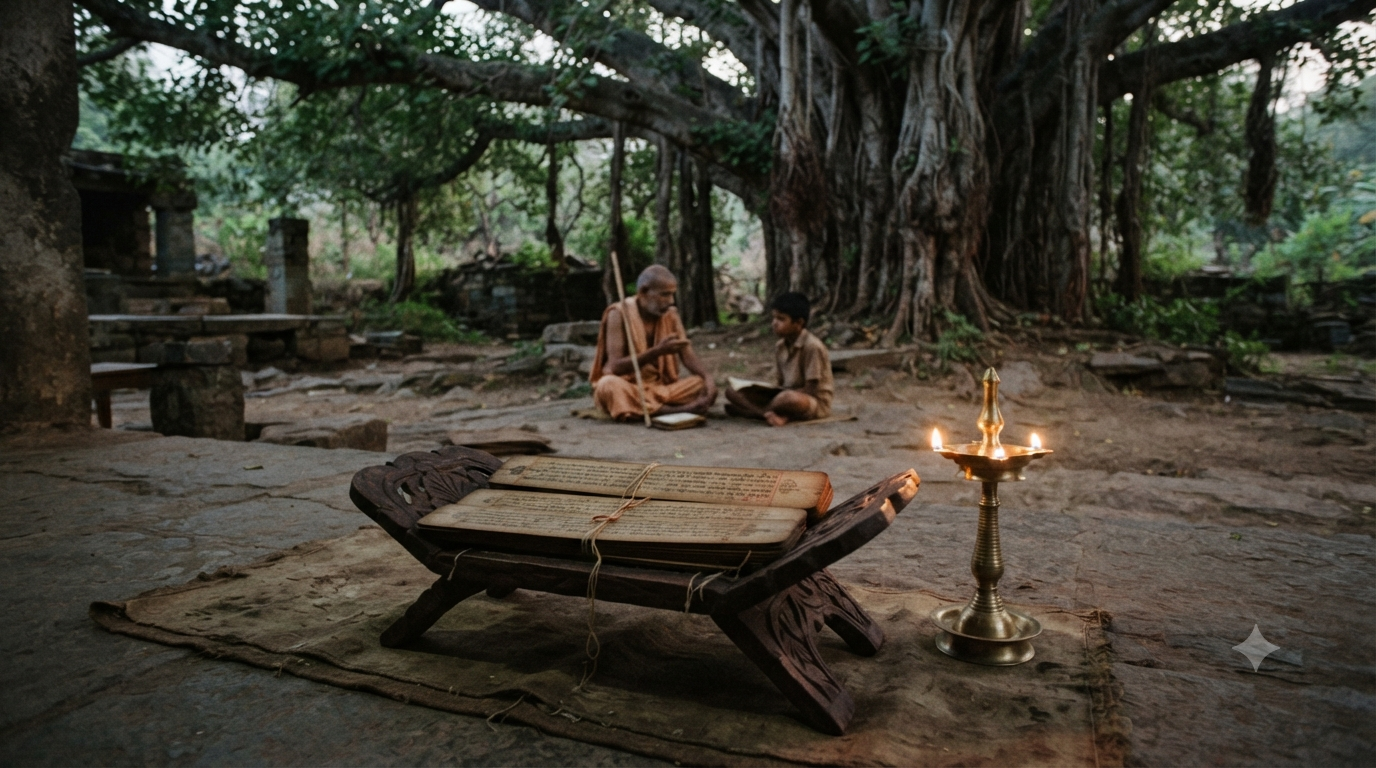
Veda Vyasa Jayanti also honours the principle that wisdom reaches us through a chain of teachers. A scripture may survive physically, yet understanding still depends on explanation, correction, practice, and lived example. Guru Parampara is the continuity that carries these elements from one generation to the next.
Chinmaya Mission explains Vyasa Purnima as a day to remember the entire Guru lineage and to live at least one teaching sincerely. That emphasis moves the festival from admiration toward practice.
For a concrete example of an institution built around such continuity, read our guide to the significance of Sri Sringeri Sharada Peetham. Its Guru Parampara shows how teaching survives through people, institutions, study, and ritual memory together.
How Can You Observe the Day at Home?
You can observe Veda Vyasa Jayanti at home with a simple routine centred on gratitude and study. No elaborate ritual is necessary for a general household observance. However, if your family follows a specific sampradaya or Guru, that tradition should take priority over a generic online procedure.
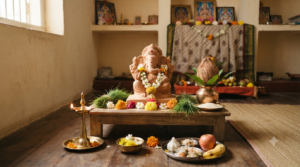
- Prepare the prayer space. Bathe, clean the area, and begin with a simple sankalpa to honour Vyasa and your teachers.
- Light a lamp. Offer flowers, fruit, or another simple item before a scripture, Guru image, or devotional symbol used in your home.
- Remember the Guru Parampara. Offer pranams to parents, teachers, spiritual guides, and those who helped you learn.
- Read one text slowly. Choose a passage from the Bhagavad Gita, Mahabharata, Upanishads, or another text respected in your tradition.
- Reflect in writing. Record one teaching you understand better and one action you want to change.
- Offer service or dana. Support education, food service, a temple, a genuine teaching institution, or a person who needs help.
If your Guru or mutt prescribes a formal Vyasa Puja, follow that method instead. Avoid copying complex rites from unverified videos, because ritual details can differ by lineage.
What Should You Read and Study?
There is no single compulsory reading list for every Hindu tradition. A useful choice is a text linked with Vyasa’s remembered contribution, followed by careful reflection. The Bhagavad Gita is accessible, while the Mahabharata gives wider ethical context.
- Bhagavad Gita: for disciplined action, devotion, knowledge, and self-mastery.
- Mahabharata: for difficult questions about dharma, duty, leadership, and consequence.
- Upanishadic passages: for students following a Vedanta teaching tradition.
- Brahma Sutra study: best approached through a qualified teacher and a recognised commentary.
- Puranic narratives: choose texts and commentaries respected within your own sampradaya.
The aim is not to finish the most pages. Read enough to understand one idea properly, because depth is closer to the spirit of the day than speed.
Five Spiritual Lessons from Veda Vyasa Jayanti
The spiritual value of Veda Vyasa Jayanti becomes clearer when its themes are applied to ordinary life. Vyasa represents more than scholarship. He represents a disciplined way of receiving, organising, testing, and transmitting knowledge.
- Context matters. A verse removed from its setting can become easier to share and easier to misuse.
- Humility improves learning. Even a serious student needs teachers, commentaries, questions, and correction.
- Preservation is active work. Knowledge survives because people teach, copy, explain, translate, and practise it carefully.
- Gratitude should become conduct. Thanking a teacher matters more when you also live one sound teaching.
- Wisdom is not information volume. Knowing many quotations is less useful than understanding how one principle changes a decision.
These lessons also explain why the festival speaks strongly to the digital age. Information can travel instantly, while understanding still takes time. Vyasa’s remembered legacy points toward the slower work.
What Beginners Get Wrong
The first common mistake is treating every Veda Vyasa observance as the same calendar event. Ashadha Purnima has the broadest Vyasa Purnima association, while some Madhwa communities preserve a Vaishakha Trayodashi Jayanti. Always name the tradition when dates differ.
The second mistake is presenting devotional authorship claims as if modern textual history uses exactly the same framework. A respectful article can state what Hindu tradition attributes to Vyasa without pretending every academic question is closed.
A third mistake is turning Guru devotion into unquestioning obedience. Reverence does not cancel ethics, discernment, or appropriate boundaries. A genuine teaching relationship should deepen clarity and responsibility, not excuse manipulation.
Finally, avoid reducing the festival to guaranteed benefit claims. Devotees may pray with faith, yet the day is not a guaranteed method for wealth, exam results, health cures, or instant relief. Its central practices are gratitude, study, self-discipline, and service.
Veda Vyasa Jayanti: The Deeper Meaning
Veda Vyasa Jayanti ultimately celebrates the continuity of wisdom. Vyasa is remembered as a sage who did not merely know; he arranged, taught, and transmitted. That makes the day a festival of responsible learning as much as devotion.
If you keep only one practice, make it meaningful. Thank a teacher, study one passage properly, and put one sound teaching into action. The gesture may be small, yet it reflects the principle behind Guru Parampara.
That is also the strongest modern lesson of the day. Sacred knowledge survives when each generation receives it with care and hands it forward without making itself the centre of the tradition.
Frequently Asked Questions
Is Veda Vyasa Jayanti the Same as Guru Purnima?
Often, yes. Ashadha Purnima is widely called Vyasa Purnima and Guru Purnima, so devotees honour Vyasa and the Guru lineage together. However, some Madhwa communities also observe a separate Vedavyasa Jayanti on Vaishakha Shukla Trayodashi.
Why Is Vyasa Honoured on Veda Vyasa Jayanti?
Hindu tradition honours Vyasa as a foundational transmitter of sacred knowledge. Therefore, Vyasa Purnima became closely linked with gratitude toward the entire Guru Parampara. The day honours both the sage and the principle of teaching itself.
What Is the Main Spiritual Significance of Veda Vyasa Jayanti?
The main significance is gratitude for sacred knowledge and for the teachers who preserve it. The festival encourages disciplined study, respect for Guru Parampara, careful transmission, and the practice of what one learns.
Which Scriptures Are Traditionally Associated with Veda Vyasa?
Hindu tradition associates Vyasa with the Mahabharata, the classification of the four Vedas, the Brahma Sutras, and eighteen Puranas. Modern scholarship approaches authorship and chronology differently, so devotional attribution and academic analysis should be distinguished.
Can I Observe Veda Vyasa Jayanti Without a Personal Guru?
Yes. You can honour Veda Vyasa, remember parents and teachers, read scripture, offer service, and reflect on those who guided your learning. A personal initiating Guru is not required for a simple household observance centred on gratitude.
What Offerings Are Suitable for Veda Vyasa Jayanti?
Flowers, fruit, a lamp, and sincere prayer are suitable in many households. More important than an elaborate offering is respectful study and gratitude. Follow your family or sampradaya if it has a prescribed Vyasa Puja procedure.
Why Do Some Veda Vyasa Jayanti Calendars Show Vaishakha?
Some Madhwa traditions preserve a distinct Vedavyasa Jayanti during Vaishakha, especially on Shukla Trayodashi. Ashadha Purnima, meanwhile, is widely observed as Vyasa Purnima and Guru Purnima. Check the calendar followed by your mutt or family tradition.
What Is a Meaningful Way to Observe Veda Vyasa Jayanti?
Combine devotion with learning. Offer pranams to your teachers, read one sacred passage slowly, reflect on its meaning, and practise one lesson during the day. Service or educational charity can extend that gratitude beyond the prayer room.