Simple Vinayaka Chaturthi Pooja is a practical home worship method for families who want to honour Lord Ganesha without turning the festival into a difficult ritual. You can keep the altar modest, use a few traditional offerings, and follow a clear order from sankalpa to aarti. This beginner method focuses on the essential acts of devotion while leaving detailed Shodashopachara worship to families who already follow it.
Sri Vyasa Pooja is an independent devotional guide and is not affiliated with any temple, trust, or religious authority. We do not accept bookings, donations, or payments; follow your family tradition or a trusted purohit where practices differ.
Simple Vinayaka Chaturthi Pooja at a Glance
Simple Vinayaka Chaturthi Pooja at home can be understood in five parts: prepare a clean altar, make a sankalpa, offer simple worship to Ganesha, present naivedyam, and finish with aarti and namaskaram. Madhyahna, the midday period, is traditionally preferred on Ganesh Chaturthi, although local panchang timings vary by city and year.
- Best for: first-time families and devotees performing a short home pooja without a priest.
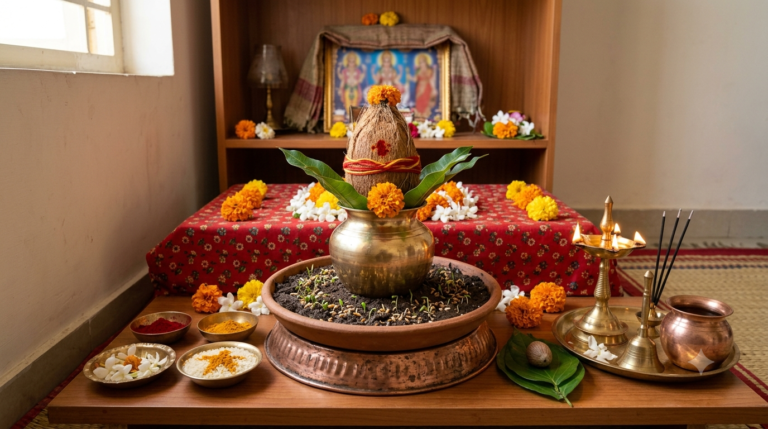
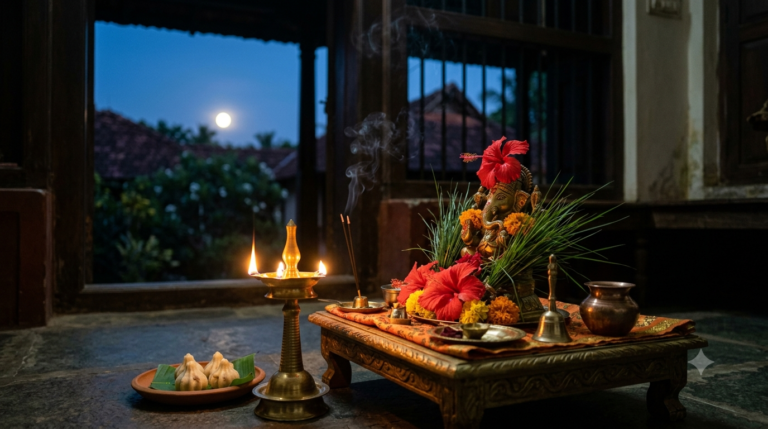
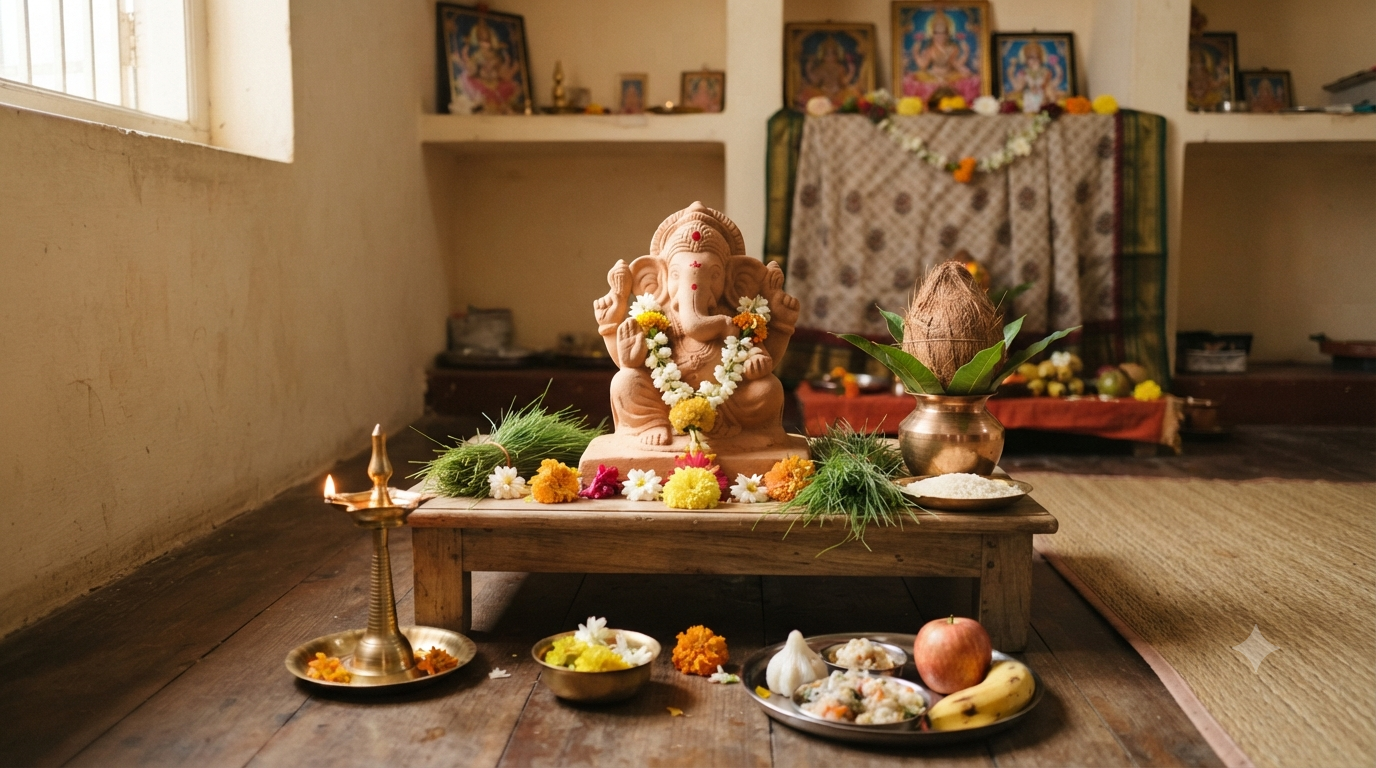
- Basic items: Ganesha murti, lamp, flowers, durva grass, sandalwood or kumkum, fruit, coconut, and a sweet.
- Easy mantra: “Om Gam Ganapataye Namah.”
- Naivedyam: modak, kudumulu, undrallu, laddu, or another family offering.
- Key distinction: a permanently worshipped home Ganesha is not treated like a newly brought temporary festival murti.
For the full traditional sequence with Shodashopachara steps and detailed ritual order, use the site’s Ganesh Chaturthi Pooja Vidhanam. This page stays deliberately simple so a beginner can complete the pooja calmly.
Why Simple Vinayaka Chaturthi Pooja Differs From a Full Vidhanam
A full Ganesh Chaturthi pooja can include sixteen formal offerings, longer mantras, anga pooja, twenty-one-name worship, kalasham, and family-specific procedures. Drik Panchang’s Ganesha Chaturthi Puja Vidhi describes the sixteen-step Shodashopachara form and places Deepa Prajwalan and Sankalpa before those core steps.
This shorter method is not a replacement for a hereditary family vidhanam. Instead, it gives a respectful minimum sequence for someone who would otherwise feel lost. If your home already follows a Telugu kalpam, vratha katha, or priest-led procedure, continue that tradition.
The distinction also helps this article avoid competing with the site’s full ritual page. Readers looking for the spiritual meaning rather than the procedure can use the separate guide to the significance of Vinayaka Chaturthi.
What You Need for Simple Vinayaka Chaturthi Pooja
You do not need an expensive pooja kit for Simple Vinayaka Chaturthi Pooja. Gather the basics before you sit down, because a calm sequence matters more than a large pile of items. Your family may add kalasham, vastram, sacred thread, panchamrit, patri leaves, betel, or other offerings according to custom.
| Item | Purpose | Simple option |
|---|---|---|
| Ganesha murti | Main focus of worship | Temporary clay murti or existing home murti |
| Deepam | Lamp offering | Small oil or ghee lamp |
| Flowers | Pushpam offering | Fresh local flowers |
| Durva grass | Traditional Ganesha offering | Use what your family custom allows |
| Sandalwood and kumkum | Gandham and tilak | Use the items normally kept in your home altar |
| Fruit and coconut | Naivedyam | One seasonal fruit can keep it simple |
| Sweet | Festive naivedyam | Modak, kudumulu, undrallu, or laddu |
| Incense | Dhupam | Optional if smoke is a concern |
For a temporary festival murti, natural clay is the safer environmental choice. The Central Pollution Control Board’s revised idol-immersion guidelines encourage clay or natural materials, safer colours, and responsible handling of flowers and decoration waste.
How to Prepare for Simple Vinayaka Chaturthi Pooja
Clean the worship area first, then bathe and wear fresh clothes according to your family practice. Place the murti on a stable plank, low table, or home altar. Keep flowers, water, naivedyam, and the lamp within easy reach before you begin.
Keep fire safety in mind because loose cloth, paper decorations, flowers, camphor, and children can make a small altar risky. Place the lamp on a firm surface, and never leave a flame unattended. If incense affects anyone with asthma or smoke sensitivity, skip it or use the alternative your family accepts.
If you brought home a temporary clay murti, handle it gently and avoid unnecessary bathing if the clay or natural colours may soften. A simple sprinkle of clean water is enough for a beginner method when a full abhishekam is not part of your family practice.
Simple Vinayaka Chaturthi Pooja: 10 Easy Steps
The following Simple Vinayaka Chaturthi Pooja sequence keeps the ritual clear without claiming that every Hindu household uses the same order. Family and regional traditions may add steps, repeat names, or use different naivedyam. Where your inherited custom differs, follow that custom.
Simple Vinayaka Chaturthi Pooja Steps 1 to 5
- Light the lamp. Sit quietly for a moment, then light the deepam. You may light incense too if everyone at home is comfortable with smoke.
- Begin with purification. Families with a formal achamanam practice can follow it. Beginners can wash their hands, settle the mind, and begin with a short prayer.
- Take sankalpa. State that you are performing Vinayaka Chaturthi worship with devotion for the well-being of the family. If your family uses a formal Sanskrit sankalpa, follow that version.
- Offer dhyana. Sit before Ganesha and focus the mind on the deity. Offer a flower while beginning your prayer.
- Use Avahana only where appropriate. A newly brought temporary festival murti may receive Avahana according to family custom. For a Ganesha already installed and worshipped daily at home, skip Avahana and Pratishthapana.
Simple Vinayaka Chaturthi Pooja Steps 6 to 10
- Offer gandham, akshata, flowers, and durva. Apply sandalwood or the mark used in your household, then offer flowers and durva with care.
- Chant a simple Ganesha mantra. Repeat “Om Gam Ganapataye Namah” slowly. You may also recite a familiar Ganesha prayer used by your family.
- Offer dhupam, deepam, and naivedyam. Present the lamp, incense if used, fruit, coconut, and your prepared sweet. Keep hot lamps away from the murti and decorations.
- Perform aarti and namaskaram. Sing your family Ganesha aarti or circle the lamp while chanting Ganesha’s name. Then bow and sit quietly for a moment.
- Share prasadam and continue worship as planned. Distribute the offered food after the pooja. If a temporary murti stays for more than one day, continue a short daily prayer until the family’s chosen visarjan day.
Formal Prana Pratishtha is a more detailed ritual than this beginner list. Therefore, this page does not reproduce advanced installation mantras as if they were compulsory for everyone. Families with a formal installation tradition should follow their purohit or inherited procedure.
Simple Vinayaka Chaturthi Pooja Mantra Options
Simple Vinayaka Chaturthi Pooja does not require a long mantra book for a beginner. The easiest chant is “Om Gam Ganapataye Namah,” repeated slowly with attention. Clear, calm recitation is better than rushing through a long Sanskrit sequence you do not know.
You may also recite the familiar “Vakratunda Mahakaya” prayer if it belongs to your household practice. Regional aarti songs, Telugu vratha katha, or a family Ganesha stotram can be added after the main offerings. The fuller ritual guide linked above is the better place for an extended mantra sequence.
Best Time for Simple Vinayaka Chaturthi Pooja
Ganesh Chaturthi worship traditionally favours Madhyahna, the midday period. Drik Panchang notes that Ganesha Puja can also take place during morning or evening periods, while Madhyahna remains the preferred festival period. Exact clock times change by location and by year.
Use a reliable panchang for your city instead of copying one national muhurat. A timing calculated for Delhi, Hyderabad, Bengaluru, or another city should not be treated as universal. If family duties make the preferred period difficult, ask your family purohit how your tradition handles an alternative time.
This article stays evergreen for that reason. It explains the correct timing principle without publishing a city-specific annual clock time that will become wrong next year.
Permanent and Temporary Murtis in Simple Vinayaka Chaturthi Pooja
This is the most important correction for beginners. A temporary Ganesh Chaturthi murti and a Ganesha already worshipped daily at home do not follow the same installation and farewell rules. Mixing the two can lead readers to perform unnecessary Avahana, Pratishthapana, or Visarjan.
| Situation | Beginning | After the festival |
|---|---|---|
| New temporary festival murti | Follow family custom for Avahana and installation | Visarjan according to family practice and local rules |
| Permanent home Ganesha | Continue normal daily worship; skip new installation rites | Do not immerse the permanent murti |
Drik Panchang specifically says that a Ganesha already installed and worshipped daily at home should skip Avahana and Pratishthapana. It also distinguishes that murti from a temporary festival installation at the end of worship.
Do You Need 21 Leaves, 21 Durva, or 21 Sweets?
The number twenty-one appears in many Ganesha traditions, yet the exact practice varies by region and family. A fuller pooja may include twenty-one leaves, repeated names, durva offerings, or a larger count of sweets. A beginner home pooja should not turn into a shopping emergency because one traditional item is unavailable.
If your family follows a twenty-one-item offering, prepare it in advance and keep that tradition. Otherwise, use clean, suitable offerings and focus on the sequence you can complete respectfully. Avoid treating patri leaves or ritual ingredients as medical remedies; their role here is devotional.
Naivedyam for Simple Vinayaka Chaturthi Pooja
Telugu homes often make undrallu or kudumulu for Vinayaka Chavithi, while modak is strongly associated with celebrations in Maharashtra. The variation is normal because regional food traditions differ. There is no need to replace your family naivedyam merely because another region uses a different sweet.
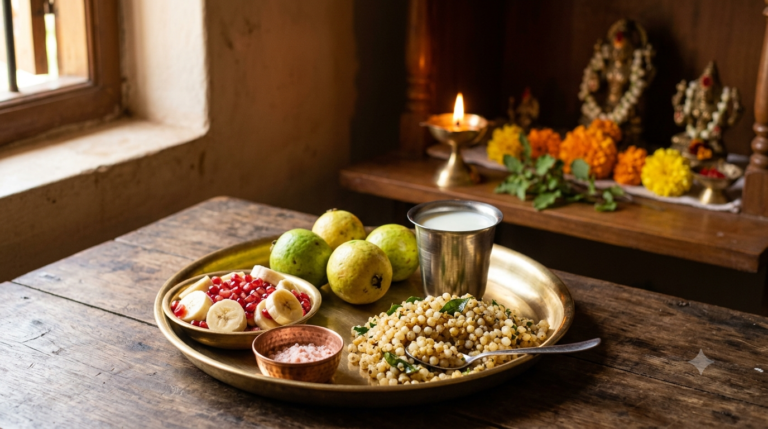
A simple plate may contain one sweet, fruit, coconut, and water. Families who prepare a larger meal can add their customary dishes. Keep food hygiene in mind, especially with milk or coconut preparations, and prepare quantities that the household can consume respectfully as prasadam.
For readers interested in the meaning behind these offerings rather than the cooking list, the separate Vinayaka Chaturthi significance guide gives the broader devotional context.
Common Simple Vinayaka Chaturthi Pooja Mistakes
Most mistakes happen when people combine several online checklists without checking which tradition or murti type each list assumes. One page may describe a temporary installation, while another describes daily home worship. A third may give a city-specific muhurat as though it applies everywhere.
- Do not immerse a permanently worshipped home Ganesha merely because a festival guide mentions Visarjan.
- Do not copy one city’s Madhyahna clock time for every location.
- Do not assume modak is the only acceptable sweet in every region.
- Do not treat advanced Prana Pratishtha formulas as a compulsory DIY step for every beginner.
- Do not leave lamps, camphor, or incense unattended.
- Do not place plastic decorations, synthetic material, or mixed worship waste into natural water bodies.
The practical rule is simple: follow your family tradition where it exists, and keep the beginner method modest where it does not. That approach prevents both ritual anxiety and avoidable mistakes.
Can You Perform Simple Vinayaka Chaturthi Pooja Without a Priest?
Yes, many households perform a simple home Ganesha worship themselves when their family tradition permits it. The basic sequence can remain modest: sankalpa, flowers and durva, mantra, naivedyam, aarti, and namaskaram. You do not need to imitate every advanced step shown in a long ritual video.
However, ask your family purohit when your household follows a hereditary sankalpa, formal Prana Pratishtha, detailed kalasham procedure, or a specific vratha kalpam. This is especially useful when a temporary murti will stay for several days and your family follows a defined daily worship schedule.
Eco-Friendly Visarjan After Simple Vinayaka Chaturthi Pooja
If you bring home a temporary clay Ganesha, plan the farewell before the festival begins. CPCB guidance supports clay or natural materials, safer colours, and responsible disposal of worship material. It also promotes managed immersion arrangements rather than adding non-biodegradable waste to lakes and rivers.
Follow your local municipal or pollution-control instructions because public immersion rules can change by city. Where local rules permit home immersion for a small natural-clay murti, households may use a clean container and handle the settled clay responsibly afterward. Do not assume that any nearby lake, river, or beach is an approved immersion point.
Remove flowers, plastic, foil, cloth decorations, and other non-clay material before immersion. This keeps the devotional act separate from waste disposal and makes cleanup much easier.
Simple Vinayaka Chaturthi Pooja Final Checklist
For Simple Vinayaka Chaturthi Pooja, prepare only what you will genuinely use. Confirm your local Madhyahna period, arrange the altar safely, and keep your family custom ahead of a generic internet list. A short pooja done attentively is better than a rushed ceremony assembled from conflicting instructions.
- Clean altar and fresh clothes ready.
- Lamp, flowers, durva, sandalwood or kumkum, fruit, coconut, and sweet arranged.
- Local panchang checked for the festival day.
- Sankalpa made according to family custom.
- Permanent and temporary murti rules kept separate.
- Mantra, naivedyam, aarti, and namaskaram completed.
- Flame and smoke safety followed throughout.
- Temporary clay-murti visarjan planned under local environmental rules.
If your Telugu family also observes Gowri worship before Vinayaka Chavithi, see the separate Gowri Tadiya Pooja Vratha Vidhanam. Keeping the two observances in separate guides makes each procedure easier to follow.
Simple Vinayaka Chaturthi Pooja FAQs
Can I perform Simple Vinayaka Chaturthi Pooja without a priest?
Yes, many families perform Simple Vinayaka Chaturthi Pooja themselves when their tradition permits it. Keep the worship to sankalpa, simple offerings, mantra, naivedyam, aarti, and namaskaram. Ask a purohit if your family follows formal installation rites or a detailed hereditary procedure.
What samagri do I need for Simple Vinayaka Chaturthi Pooja?
A lamp, flowers, durva grass, sandalwood or kumkum, fruit, a sweet offering, and a Ganesha murti can form a basic setup. Coconut and incense may also be added. Family traditions can require more items, so use those where relevant.
What is the best time for Simple Vinayaka Chaturthi Pooja?
Madhyahna, the midday period, is traditionally preferred for Simple Vinayaka Chaturthi Pooja on the festival day. Exact timings differ by city and year, so check a reliable local panchang. Do not use a clock time copied from another location as a universal muhurat.
Can I use my regular home Ganesha murti?
Yes, you can worship an existing home Ganesha murti. However, a murti already worshipped daily should not receive a fresh Avahana or Pratishthapana as though it were newly installed. It also should not be immersed as a temporary festival murti.
Is modak compulsory for the pooja?
No single sweet is compulsory across every regional tradition. Modak is strongly associated with Ganesha, while many Telugu homes prepare undrallu or kudumulu. Offer the naivedyam used in your family when it is available.
Do I have to offer exactly 21 durva blades or 21 leaves?
The number twenty-one is important in several Ganesha worship traditions, but the exact offering varies. Follow the full count when your family custom requires it. A beginner pooja does not become invalid merely because every optional item was unavailable.
Should I immerse my regular Ganesha murti after the festival?
No. A permanently worshipped home Ganesha should not be immersed merely because Ganesh Chaturthi ends. Visarjan applies to a temporary festival installation according to family practice, while the permanent murti continues in normal home worship.
What should I do if I miss the preferred Madhyahna period?
Do not invent a universal fallback time. Check your local panchang and ask your family purohit if your household needs an alternative worship period. The answer can change with location, tithi, and tradition.
Is a natural clay murti better for home Ganesh Chaturthi?
Natural clay is the safer environmental choice for a temporary immersion murti. CPCB guidance encourages clay or natural materials and responsible immersion practices. Local authorities may add specific rules, so check your city’s current instructions before Visarjan.