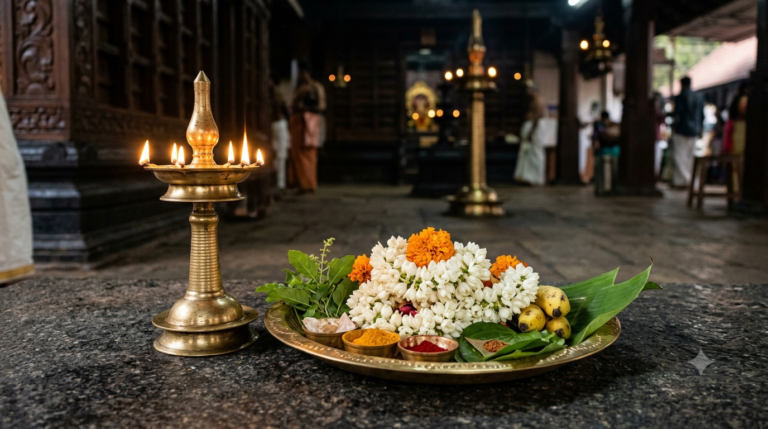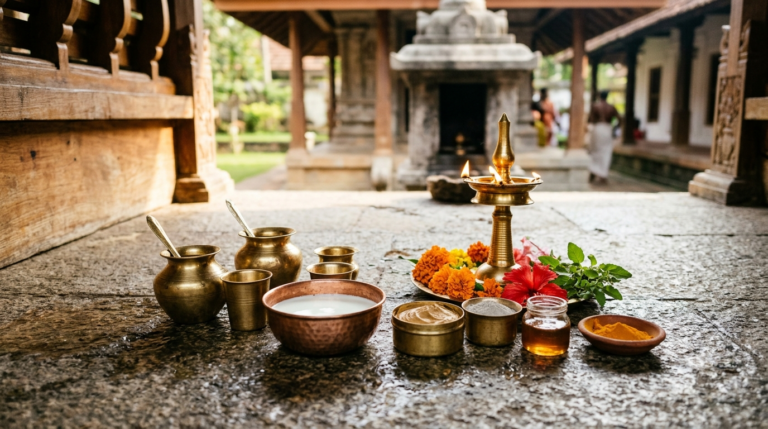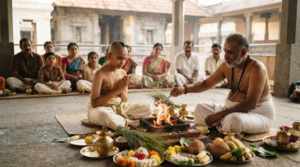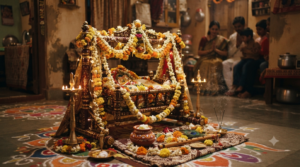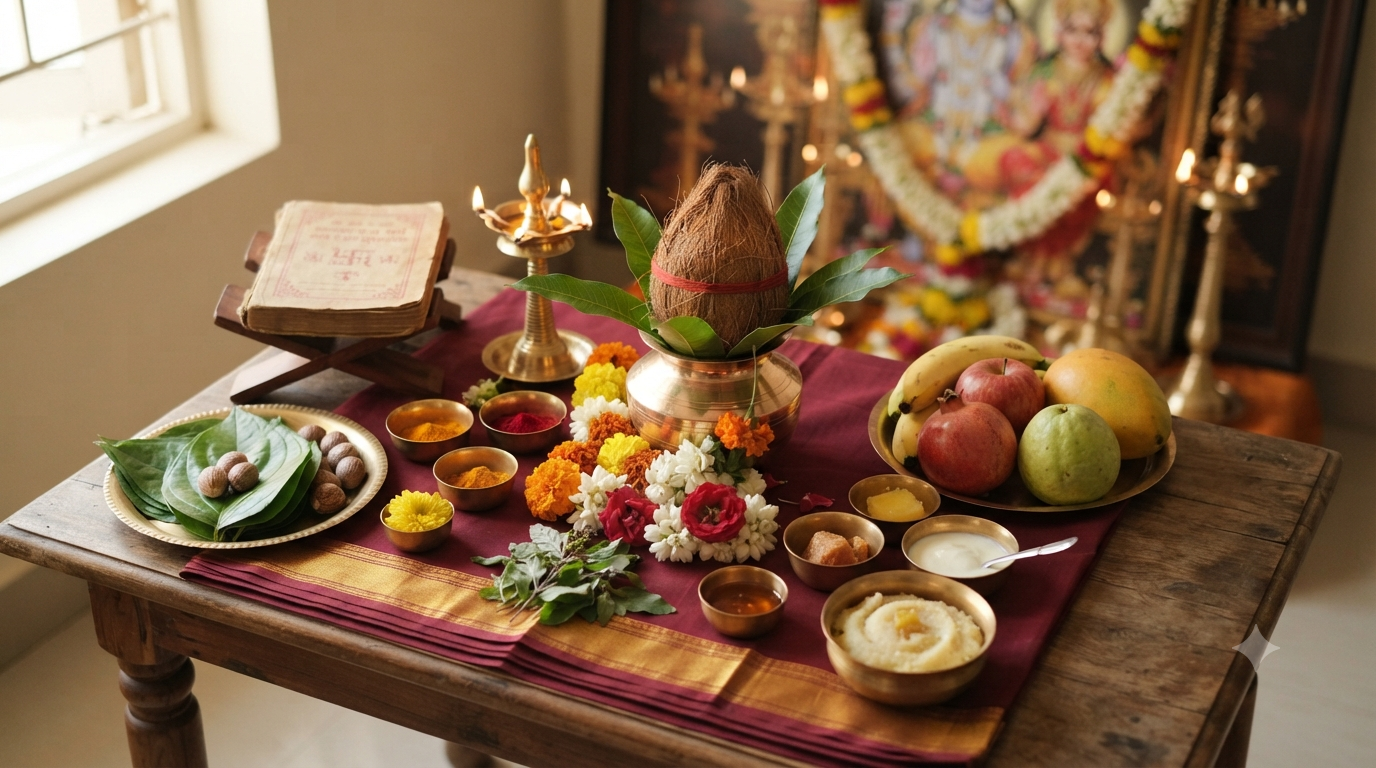
Satyanarayana Pooja Samagri is easier to prepare when you separate the essential worship items from optional, family-specific materials. The core home puja needs a clean altar, Lord Satyanarayana image, kalasha, lamp, offerings, prasadam, and the five-chapter katha. Exact counts vary by region and family tradition. Therefore, a long shopping list is not a fixed religious rule.
This evergreen guide focuses on what devotees actually need, how to arrange it, and the order of the home procedure. It also separates optional items from essentials. In addition, it explains what to do when something is unavailable and why the katha matters.
Independent guide: Sri Vyasa Pooja is an independent devotional information site. We are not affiliated with any temple, mutt, or trust, and we do not accept puja bookings, donations, or payments. For priest services or temple rituals, use the relevant temple’s official channel.
Satyanarayana Pooja Samagri at a Glance
Prepare in five groups: altar items, kalasha items, daily offerings, naivedyam ingredients, and the katha text. Temple material lists differ widely, which shows that quantities depend on the scale of the worship rather than one universal number.
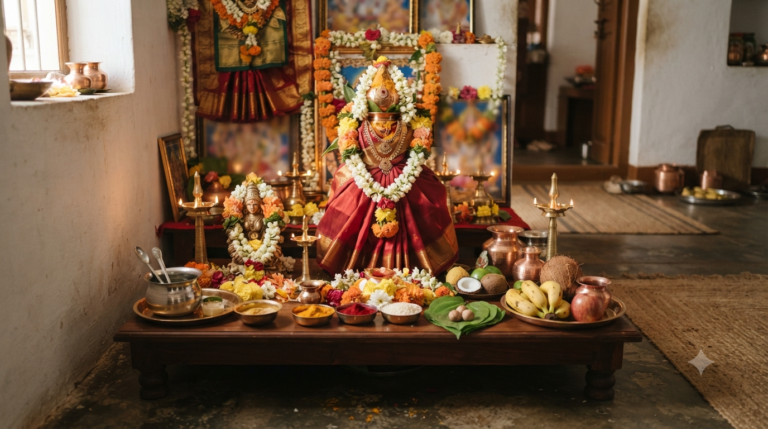
- Main deity: a clean picture or idol of Lord Satyanarayana or Lord Vishnu.
- Kalasha setup: kalasha, clean water, rice, mango leaves if used in your tradition, and coconut.
- Basic offerings: turmeric, kumkum, sandal paste or powder, flowers, Tulsi if available, fruits, betel leaves, and betel nuts.
- Deepa and fragrance: lamp, cotton wicks, ghee or oil, incense, camphor, and matches or a lighter.
- Panchamritam: milk, curd, ghee, honey, and sugar.
- Prasadam: rava or sooji, ghee, sugar or jaggery, banana, cardamom, and dry fruits according to family custom.
- Reading: a trusted Satyanarayana Vratam katha text containing all five chapters.
If a family priest gave you a separate list, follow it because that vidhi may need extra vessels or ritual materials. Prepare the core Satyanarayana Pooja Samagri first. Then add tradition-specific items only when your chosen procedure calls for them.
Satyanarayana Pooja Samagri: Core Items You Need
The following table is a practical home checklist, not a fixed shastric quantity chart. Current temple lists differ sharply on coconuts, betel leaves, rice, flowers, and vessels. Therefore, use this Satyanarayana Pooja Samagri list for planning and confirm special counts with your purohit.
| Category | Items | Practical note |
|---|---|---|
| Deity and altar | Deity picture or idol, clean cloth, platform | A picture is sufficient for a simple home setup. |
| Kalasha | Kalasha, water, rice, mango leaves, coconut | Some detailed procedures use more than one vessel. |
| Tilak and offerings | Turmeric, kumkum, sandal paste, akshata | Small bowls or packets are enough for a family puja. |
| Flowers | Loose flowers, garland if desired, Tulsi leaves if available | Use fresh offerings and avoid waste. |
| Lamp and fragrance | Deepam, cotton wicks, ghee or oil, incense, camphor | Keep a safe plate under lamps and camphor. |
| Tambulam | Betel leaves and betel nuts | Counts vary greatly by regional procedure. |
| Fruit and coconut | Bananas, mixed fruits, coconuts | Five fruit varieties are common in many temple lists. |
| Panchamritam | Milk, curd, honey, ghee, sugar | Prepare fresh in a clean bowl. |
| Prasadam | Rava, ghee, sweetener, banana, cardamom | Recipe changes by region and family tradition. |
| Utensils | Bell, spoon, cups, plates, aarti plate | Use clean household vessels reserved for puja if possible. |
| Text | Satyanarayana katha or puja book | Make sure it contains all five chapters. |
Why the Quantities Vary
The Hindu Temple and Cultural Center of Iowa lists five fruit varieties, coconuts, flowers, panchamritam, rice, a kalasha, and a deity picture. Balaji Matha & Temple lists a similar core set but different counts. Therefore, the quantity itself is not the heart of the worship.
What Is Optional or Tradition-Specific?
Several materials often appear on long internet checklists even though not every household uses them. Navadhanyam, extra kalashas, vastram, rose water, turmeric sticks, homa samagri, and extra deity pictures may belong to regional versions. Priest-led procedures may also ask for additional vessels.
That does not make those items wrong. It simply means the Satyanarayana worship has several living regional forms. If your family traditionally performs Navagraha puja, kalasha worship, or a homa as part of the vratam, prepare those materials too. Otherwise, do not add complicated steps merely because an online list looks more elaborate.
This distinction is especially useful for first-time families. A short, careful home puja with the katha and prasadam is better than an overloaded setup that creates stress and confusion.
When Should You Perform Satyanarayana Pooja?
Satyanarayana Pooja has no single compulsory calendar date, while Purnima or Pournami remains the most widely observed choice. Drik Panchang allows morning or evening worship. Evening puja is common because devotees can then end the fast with prasadam.
If you choose Purnima, check the tithi for your own city because it may begin or end at different clock times. A morning puja can sometimes fall outside Purnima tithi even when the civil date looks correct. Therefore, use a current panchang instead of copying a year-old timing from another article.
Families also perform the vratam for a housewarming, wedding-related observance, new beginning, thanksgiving, or fulfilment of a vow. For the meaning of the vratam and the five katha chapters in detail, see our Satyanarayana Vratam meaning and katha guide.
Satyanarayana Pooja Samagri Checklist Before You Begin
Arrange the Satyanarayana Pooja Samagri before the main worship. Then you will not need to search for items after the sankalpa begins. Keep edible offerings covered, wash fruits and leaves, and place lamp materials away from loose cloth or paper.
- Place the deity picture or idol on a clean altar cloth.
- Keep the kalasha, coconut, water, rice, and leaves together.
- Put turmeric, kumkum, sandal, akshata, flowers, and Tulsi in separate small bowls.
- Prepare the lamp, wicks, ghee or oil, incense, camphor, bell, and aarti plate.
- Keep fruits, betel leaves, betel nuts, coconuts, and naivedyam ready.
- Mix fresh panchamritam shortly before the worship if your procedure uses it.
- Prepare prasadam before or during the early part of the puja, depending on family custom.
- Keep the complete five-chapter katha text within easy reach.
Also keep plain drinking water nearby for family members, especially if anyone is fasting. Good preparation protects the devotional mood because the puja can then move from one stage to the next without repeated interruptions.
Satyanarayana Pooja Procedure at Home
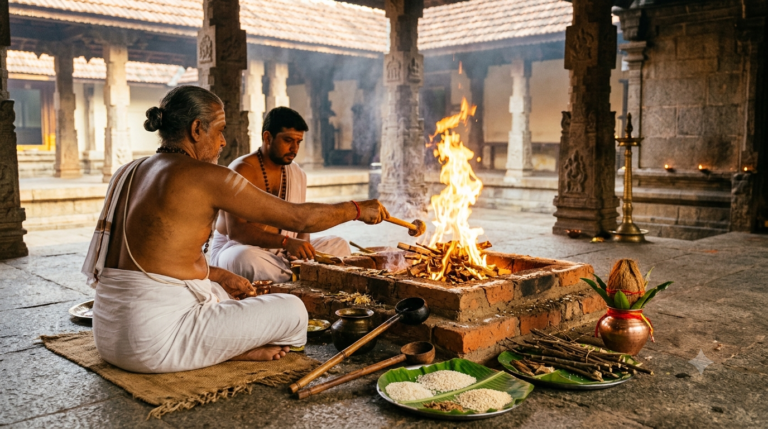
A simple home Satyanarayana Pooja follows a clear order. Begin with purification, Ganapati worship, sankalpa, and kalasha worship. Then worship Lord Satyanarayana, offer naivedyam, read the five-chapter katha, perform aarti, and share prasadam. Priest-led versions may add Navagraha puja, more mantras, or homa steps.
1. Clean the Space and Prepare Yourself
Bathe, wear clean clothes, and prepare a quiet worship space. Place the altar where everyone can sit safely, and arrange the items before lighting lamps. Many families prefer the worshipper to face east or north when practical, but household tradition should guide the final arrangement.
2. Set Up the Deity and Kalasha
Place the Lord’s image or idol at the centre of the altar. Set the kalasha on rice or a clean plate according to family custom. Then fill it as your chosen vidhi directs. Mango leaves and a coconut commonly complete the setup.
Do not worry if another family uses a different number of leaves or an extra kalasha. Those details can change with sampradaya and the priest’s procedure.
3. Light the Lamp and Begin with Ganapati Worship
Light the deepam safely, then begin with a prayer to Lord Ganesha. The purpose is to start the ceremony with clarity and without obstacles. A simple household version may use a short Ganesha prayer, while a priest-led version can include a fuller invocation.
4. Take the Sankalpa
The sankalpa states that you are undertaking the vratam with a clear intention. Traditional wording may include your name, gotra if known, place, lunar details, and purpose. If you do not know the full Sanskrit formula, use a trusted puja book. Otherwise, ask a priest instead of improvising long mantras.
5. Worship the Kalasha and Associated Deities
Many procedures invoke Varuna in the kalasha and honour other deities before the main Satyanarayana worship. Some family traditions also include Gauri, Navagraha, or additional preliminary prayers. Follow the sequence in the text or priestly tradition you have chosen, since this is one area where regional versions differ.
6. Perform the Main Satyanarayana Worship
Offer sandal, akshata, flowers, Tulsi, incense, lamp, fruit, and naivedyam with devotion. More detailed versions follow shodashopachara, the sixteen traditional services offered to the deity. A simpler home puja may condense these offerings while keeping the same devotional order.
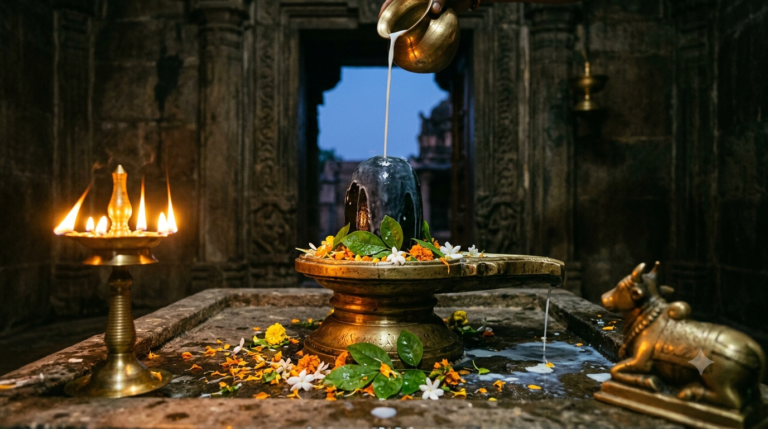
If your tradition performs abhishekam to a suitable idol or Saligrama, panchamritam may be used there. Do not pour liquids over a framed picture or any object that could be damaged.
7. Offer Naivedyam and Prasadam
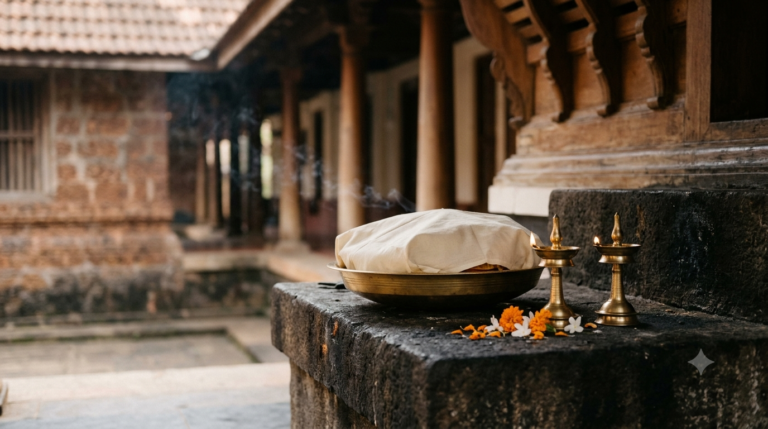
Place the prepared sweet, fruits, coconut, and other food offerings before the Lord. The food remains naivedyam while it is being offered and becomes prasadam after the worship. Keep the preparation sattvic and consistent with your household custom.
8. Read or Listen to All Five Katha Chapters
The Satyanarayana katha is not a decorative extra after the puja. Drik Panchang presents the tradition as five chapters, and listening to the katha forms a central part of the vratam. Read all five without rushing, or listen while another family member or priest reads.
If you want a short overview before the ceremony, our five-chapter Satyanarayana katha summary explains the sequence and themes.
9. Complete Aarti and Share Prasadam
Finish with aarti, namaskara, and prayers of gratitude. Then distribute prasadam to everyone present and share the meal according to your family observance. If you kept a fast, break it in the way your tradition allows and avoid overeating immediately afterwards.
Prasadam to Add to Your Satyanarayana Pooja Samagri
Prasadam is an important part of Satyanarayana Pooja Samagri, but no single pan-Indian recipe exists. South Indian temple lists commonly mention rava kesari or sooji halwa, while other traditions use sheera or panjiri. Banana, ghee, sugar, milk, cardamom, and dry fruits appear in many household versions.
| Tradition or name | Common base | Planning note |
|---|---|---|
| Rava kesari / sooji halwa | Semolina, ghee, sugar | Common in many South Indian homes and temple lists. |
| Sheera | Semolina, ghee, sugar, often banana | Common in western and central Indian practice. |
| Panjiri-style offering | Roasted flour or semolina with ghee and sugar | Used in some northern traditions. |
Tulsi is closely associated with Vishnu worship. Therefore, many families include clean Tulsi leaves when their tradition calls for them. If you also chant Vishnu names, see our Vishnu Sahasranamam guide. It gives useful background without mixing that chant into the required vratam sequence.
Why the Five-Chapter Katha Matters
The katha teaches truthfulness, gratitude, keeping one’s promise, respecting prasadam, and returning to devotion after neglect. The five chapters are therefore more than stories told for atmosphere. They give the worship its moral framework.
For that reason, a rushed material-heavy puja that skips the katha misses one of the ritual’s defining elements. If time is limited, reduce decoration rather than cutting the katha into a token reading. A trusted text is more important than a large pile of optional samagri.
Fasting Rules and a Health Note
Many devotees fast on the day of Satyanarayana Pooja, but the strictness varies by family and physical capacity. Drik Panchang describes fasting as part of the observance. It also notes the common practice of breaking the fast with prasadam after evening worship.
Do not treat a waterless fast as compulsory when your health makes it unsafe. Pregnant people, older adults, children, and anyone with a medical condition should use a gentler form. People taking regular medication should also follow medical advice. Devotion is a religious practice, not a substitute for healthcare.
Common Mistakes to Avoid
- Treating quantities as sacred fixed numbers: temple lists themselves vary, so follow your chosen vidhi rather than copying the largest shopping list online.
- Skipping the katha: the five chapters are central to the vratam and should not be reduced to an afterthought.
- Assuming Purnima is the only valid day: Purnima is widely preferred, but the worship is also performed for family occasions and vows.
- Copying an old muhurta: tithi timings depend on date and location, so check a current panchang for your city.
- Adding rituals you do not understand: an elaborate Navagraha, homa, or abhishekam sequence should follow a reliable text or priestly guidance.
- Using a rigid prasadam recipe: rava kesari, sheera, and related offerings vary regionally.
- Making the fast unsafe: choose a form that suits your health instead of assuming severity equals devotion.
What If an Item Is Missing?
If one Satyanarayana Pooja Samagri item is missing, first check whether it is core or optional. Do not panic or abandon the worship. Keep the core setup simple and follow your family tradition.
A clean Lord Satyanarayana picture, basic offerings, lamp, naivedyam, katha, and sincere prayer form a workable core. You do not need every item from a temple event list.
For items tied to a specific ritual step, do not invent a substitute. This includes kalasha, abhishekam, and homa materials. Ask your family priest or use a trusted puja manual. If no priest is available, choose the simpler home procedure rather than adding steps you cannot complete correctly.
Before You Start the Vratam
Prepare the Satyanarayana Pooja Samagri several hours in advance. Keep the fruits, flowers, lamp supplies, panchamritam ingredients, and katha text ready. Then decide which procedure you are following, because mixing several online versions creates more confusion than devotion.
The strongest evergreen approach is simple. Use a reliable panchang, follow one coherent puja sequence, and read all five katha chapters. Also treat Satyanarayana Pooja Samagri quantities as practical guidance rather than immutable rules. That keeps the vratam respectful, manageable, and faithful to living household tradition.
Frequently Asked Questions
Can I perform Satyanarayana Pooja at home without a priest?
Yes. Many families perform a simple Satyanarayana Pooja at home with a trusted puja text. A priest remains helpful for first-timers or elaborate Vedic procedures.
If you are unsure about mantras or regional customs, simplify the ritual. For sankalpa or homa details, seek qualified guidance instead of improvising.
What are the most important Satyanarayana Pooja Samagri items?
The main Satyanarayana Pooja Samagri includes the deity image, kalasha setup, flowers, lamp, turmeric, kumkum, fruits, panchamritam, prasadam, and katha text. Keep all five katha chapters available. Betel leaves, betel nuts, Tulsi, coconut, and clean puja vessels are also common across many traditions.
How many coconuts, betel leaves, and fruits do I need?
There is no universal fixed count because current temple lists request different quantities for the same puja. Five kinds of fruit are common, while coconut and tambulam counts vary with the procedure. Buy a modest family quantity, then follow any specific count given by your priest or household tradition.
Is Purnima compulsory for Satyanarayana Pooja?
No. Purnima is the most widely preferred day, but Drik Panchang states that there is no fixed day for the worship. Families also perform the vratam for major life occasions, thanksgiving, or a fulfilled vow. If you choose Purnima, confirm the local tithi timing first.
Is Tulsi required for Satyanarayana Pooja?
Tulsi is closely linked with Vishnu worship and many households include it in the offering or prasadam when available. However, exact ritual requirements differ by sampradaya. If your family’s puja text or priest gives specific instructions, follow that tradition rather than treating one online checklist as universal.
What prasadam is best for Satyanarayana Vratam?
Rava kesari, sooji halwa, sheera, and related sweet offerings are common, but there is no single recipe used across India. Many versions use semolina, ghee, sugar, banana, milk, cardamom, and dry fruits. Prepare the version your family traditionally offers and keep it fresh and sattvic.
Do I have to fast for the whole day?
Fasting is traditional, but the level of restriction varies. Many devotees break the fast with prasadam after the puja, while others follow a lighter family practice. Choose a safe form if you are pregnant, elderly, unwell, diabetic, or taking regular medication, and seek medical advice when needed.
How long does Satyanarayana Pooja take?
There is no fixed duration. The length depends on preliminary prayers, priestly guidance, and how fully the five katha chapters are read. Set aside uninterrupted time and avoid rushing the katha. A careful shorter procedure is better than an elaborate one completed in haste.
Where can I check the current Purnima tithi and puja guidance?
Use a current panchang for your city because tithi boundaries change by date and location. Drik Panchang’s Satyanarayana dates explains the Purnima timing issue, while its Satyanarayana pujan vidhi gives the ritual outline. For material-list comparison, see the Hindu Temple and Cultural Center of Iowa puja items page.