Most explanations of the Holi festival significance stop at one line: good defeats evil. That answer is true, yet it flattens a festival carrying four separate meanings across two very different days. One day is loud, wet and public. The other is quiet, ash-scented and older than the colour play by centuries.
This guide covers what each day means, when Holi falls next, why the bonfire timing follows a rule most articles skip, and how to play safely. Because sources openly disagree about the 2027 dates, we also show which one the panchang supports.
Sri Vyasa Pooja is an independent devotional guide. We hold no affiliation with any temple, mutt or trust, and we take no bookings, donations or payments. For seva reservations, always use the temple’s own official portal.
Holi Festival Significance at a Glance
If you read only one section, make it this one. The meaning, the confirmed dates and the safety basics all sit here in short form.
- Holi runs over two days: Holika Dahan on the evening of Phalguna Purnima, then Rangwali Holi the next morning.
- The next Holi falls on Monday, 22 March 2027, while the bonfire burns on the evening of Sunday, 21 March 2027.
- Four traditions stack up inside the Holi festival significance: devotion over tyranny, the burning of desire, divine love in Braj, and the spring harvest.
- Holika Dahan needs Pradosh Kaal while Purnima still runs, and it must clear the Bhadra window first.
- Colour play carries real skin and eye risk, so preparation matters more than most guides admit.
Holi Festival Significance: What the Two Days Actually Mean
The Holi festival significance splits cleanly across two days. Night one, Holika Dahan, marks the burning away of ego, arrogance and old grievance through the story of Prahlada. Day two, Rangwali Holi, celebrates renewal, forgiveness and the divine love of Radha and Krishna. Together they walk a community from destruction into joy.
Holika Dahan: the night the ego burns
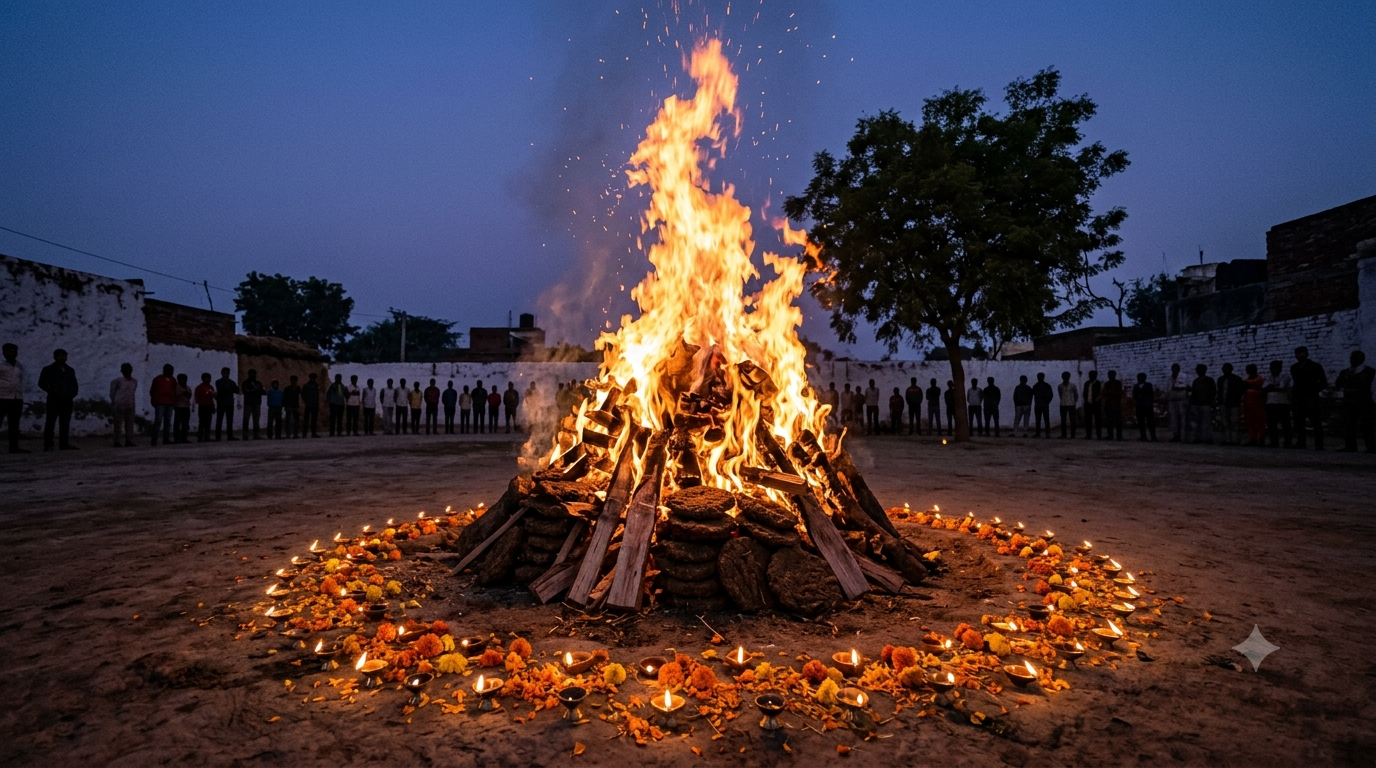
Families gather after sunset around a woodpile that has grown for days. They offer whole grains, coconut and dried cow-dung cakes, then circle the flames while chanting. The ash left behind next morning, called vibhuti, carries its own weight, since devotees mark their foreheads with it for protection.
The fire itself is not really the point. Instead, what people throw into it matters. Old grudges, pride and last year’s bitterness go in along with the grain.
If you are drawn to festivals built around flame rather than colour, our guide to Karthika Masam and its month of lamps covers the same idea in a longer form.
Rangwali Holi: the day the rules relax
The morning after the bonfire, streets fill with gulal and coloured water. Social rank thins out for a few hours, because a face covered in pink tells you nothing about caste, income or age. That temporary flattening is the whole point, not a side effect.
Families visit each other with gujiya, thandai and puran poli. Elders receive colour on the feet instead of the face, so respect survives the chaos.
When Is Holi? The Dates and the Rule Behind Them
Holi follows the full moon of Phalguna, so the Gregorian date shifts every year between late February and late March. Holika Dahan falls on Purnima evening. Rangwali Holi follows the next morning, on the first day of Chaitra Krishna Paksha.
| Year | Holika Dahan | Rangwali Holi |
|---|---|---|
| 2027 | Sunday, 21 March | Monday, 22 March |
| 2028 | Friday, 10 March | Saturday, 11 March |
Both years cross-check against Drik Panchang and independent institutional calendars. For 2029 and beyond, confirm the date on a panchang before booking travel, since regional tithi rules can move the observance by a day.
Why sites disagree about Holi 2027
Search for the 2027 date today and you will find 21, 22 and 23 March all presented as the main festival day. One large festival portal even lists 21 March on its Holika Dahan page and 23 March on its Holi page. Both cannot be correct.
The panchang settles it. Drik Panchang places Holika Dahan on Sunday, 21 March 2027, and Rangwali Holi always follows the very next morning, so 22 March is the main day. Listings showing 23 March have slipped the festival forward by twenty-four hours.
Bhadra: Why “After Sunset” Is Not the Whole Timing Rule
Holika Dahan needs three conditions at once. Purnima tithi must be running, the ritual must fall inside Pradosh Kaal after sunset, and the Bhadra window must have passed. Most popular articles mention only the first two.
Bhadra is a period traditional almanacs treat as unfavourable for auspicious acts. When Bhadra overlaps Pradosh Kaal, priests either wait for it to end or use the later Bhadra Puchha segment. Skipping that check is the single most common Holika Dahan mistake.
Muhurat windows also shift by city, because sunset times differ across India. Published Delhi windows for 2027 run from roughly early evening to late evening, though treat any single figure as approximate. Confirm your own city’s window on the Drik Panchang muhurat page about a week before the festival.
Timing genuinely feeds the Holi festival significance here. If the fire goes up during an inauspicious window, tradition holds that the symbolism of the act weakens, which is why priests fuss over a thirty-minute difference.
Holi Festival Significance in Scripture: Four Layers, Not One
The Holi festival significance draws on four separate traditions that grew together over centuries. Treating them as a single story is exactly what makes most explanations feel thin.
Prahlada and Holika: where the Holi festival significance begins
The seventh canto of the Bhagavata Purana tells of Hiranyakashipu, a king who demanded worship as a god. His son Prahlada kept worshipping Vishnu instead. The king’s sister Holika, immune to fire, sat in a blazing pyre holding the boy. Prahlada walked out unharmed while Holika burned to ash.
Devotion, not force, wins that story. So the bonfire carries her name rather than his, a detail most retellings skip entirely.
Kama Dahana and the southern reading
South Indian tradition remembers a different fire altogether. Shiva, deep in meditation after Sati’s death, opened his third eye and burned Kama, the god of desire, to ash. Tamil Nadu marks this as Kaman Pandigai, which explains why Holi feels far quieter across much of the south.
Radha, Krishna and the colour play
Braj gives Holi its colours. Krishna, self-conscious about his dark skin, asked Yashoda what to do about fair-skinned Radha. She told him to colour Radha’s face however he liked, and the entire tradition of gulal grew out of that answer.
The harvest layer beneath the Holi festival significance
Beneath the mythology sits a farming calendar. Phalguna Purnima marks the rabi harvest coming in, so grain thrown into the bonfire works as thanksgiving as much as symbolism. Seventeenth-century literature already described Holi as an agricultural festival.
How Holi Festival Significance Changes Region by Region
Regional practice shifts the emphasis in small but real ways, so what you see in Mathura will not match Chennai at all.
- Braj (Mathura, Vrindavan, Barsana): celebrations run over a week, including Lathmar Holi and Phoolon wali Holi with flower petals.
- West Bengal and Odisha: Dol Jatra, where devotees carry Radha-Krishna idols on decorated swings through the streets.
- Punjab: Sikhs observe Hola Mohalla at Anandpur Sahib, featuring martial arts displays rather than colour throwing.
- Maharashtra and Goa: Shimga and Rangpanchami, where the colour play arrives five days after the bonfire.
- Tamil Nadu: Kaman Pandigai, built around the Kama Dahana story instead of gulal.
- Manipur: Yaosang, a six-day festival blending Holi with the local Thabal Chongba dance.
Nepal celebrates it as Phagu Purnima, while its hill districts observe the day before the Terai does. Across the Caribbean, diaspora communities know it as Phagwah.
A Simple Two-Day Checklist
Each day carries the Holi festival significance differently, so plan them as two separate outings rather than one long celebration.
On Holika Dahan evening
- Check your local Pradosh Kaal and the Bhadra window before you leave the house.
- Carry your offering: whole grains, a coconut, turmeric, and dried cow-dung cakes if your community uses them.
- Circle the fire an odd number of times, usually three or seven, while offering water.
- Collect a little ash next morning if your family keeps that practice.
On Rangwali Holi morning
- Oil your skin and hair first, since dry colour grips clean skin and then refuses to shift.
- Wear old cotton clothing covering your arms and legs.
- Start with elders, applying gulal to the feet, before moving on to friends.
- Finish before the afternoon heat, then bathe properly and rehydrate.
Playing Holi Safely
Colour play carries documented risk, so this section matters more than the mythology if you have young children at home.
Cheap synthetic gulal often contains industrial dyes and metal salts. Dermatologists across India report a spike in contact dermatitis and eye injuries every year right after the festival. Natural colours from turmeric, beetroot and flowers cost more, yet they wash out without damage.
Protect your eyes first. Sunglasses help, and contact lens wearers should switch to spectacles for the day, since pigment trapped under a lens can scratch the cornea. If colour does enter your eye, rinse with clean water rather than rubbing.
Bhang thandai deserves a plain warning. Its effects arrive slowly and hit harder than most people expect, and it reacts badly with alcohol and several medicines. Anyone with a heart condition, a psychiatric history or a pregnancy should skip it and ask a doctor if unsure.
Spare a thought for animals and water too. Street dogs and cattle suffer badly from thrown colour, while water balloons waste thousands of litres during a season when many districts already run short.
Holi Festival Significance Beyond the Colour Play
Plenty of devotees skip the gulal entirely, though the Holi festival significance still holds completely for them. The festival works as an annual reset whether or not you throw powder at anybody.
Some families keep a partial fast until the bonfire is lit, following the same discipline described in our guide to the significance of Ekadashi Vratam. Others use the day for danam, giving food or clothing to people who need it.
Temple visits, bhajans and recitation of the Narasimha stotra are common wherever the Prahlada story leads. Forgiveness remains the older custom, though. Calling a relative you have not spoken to since last year fits this festival better than any amount of colour.
What Beginners Get Wrong About Holi Festival Significance
- Treating Holi as one day. Missing the bonfire night means missing half the festival.
- Assuming the date holds steady. It moves by up to three weeks, so never plan travel from last year’s date.
- Buying colour on festival morning. Safe natural stock usually sells out days earlier.
- Applying colour to strangers without asking. Consent matters, and Braj crowds in particular turn rough quickly.
- Lighting the fire the moment the sun sets, without checking whether Bhadra has cleared.
Before the Bonfire Is Lit
Holi rewards a little planning. Confirm your city’s Holika Dahan window on a panchang, buy natural colours a week early, and oil your skin before stepping out. If you want the older experience, spend the evening at the bonfire instead of saving your energy for the morning.
The Holi festival significance survives either way. Whether you sit quietly beside the fire or spend the morning drenched in gulal, both days ask the same thing of you: let last year go.
For the wider Telugu and Kannada calendar, Holi sits roughly a fortnight before the lunar new year. Our guide to the significance of the Ugadi festival picks up almost exactly where this one ends.
Holi Festival Significance: Frequently Asked Questions
What is the Holi festival significance in one sentence?
Holi marks devotion defeating tyranny on the bonfire night, then renewal, forgiveness and divine love on the day of colours. Both meanings run together across the two days.
When is Holi in 2027?
Rangwali Holi falls on Monday, 22 March 2027, while Holika Dahan burns on the evening of Sunday, 21 March 2027. Listings showing 23 March have shifted the festival by a day.
Why does the Holi date change every year?
Holi follows Phalguna Purnima in the Hindu lunisolar calendar, so it tracks the moon rather than the Gregorian month. The date therefore moves between late February and late March.
Is Holika Dahan the same as Holi?
No. Holika Dahan is the bonfire on Purnima evening, while Holi, or Rangwali Holi, is the colour festival next morning. Many calendars list only one of the two dates, which causes most of the confusion.
Can non-Hindus play Holi?
Yes. Most communities welcome guests, provided you treat the bonfire ritual with the respect you would give any place of worship. Always ask before applying colour to anyone.
What should I do if colour gets in my eyes?
Rinse immediately with clean water for several minutes and avoid rubbing. If irritation, blurring or pain continues, see a doctor the same day, since some synthetic pigments contain metal salts.
Are natural Holi colours actually safer?
Generally yes. Turmeric, beetroot, indigo and flower-based powders wash out without the harsh reactions synthetic dyes cause. Still, patch-test on your forearm first if you have sensitive skin.
Why is Holi quieter in South India?
Southern tradition centres on Kama Dahana, the burning of the god of desire, rather than the Braj colour play. Tamil Nadu observes it as Kaman Pandigai, so you will see bonfires and temple rituals more often than gulal.